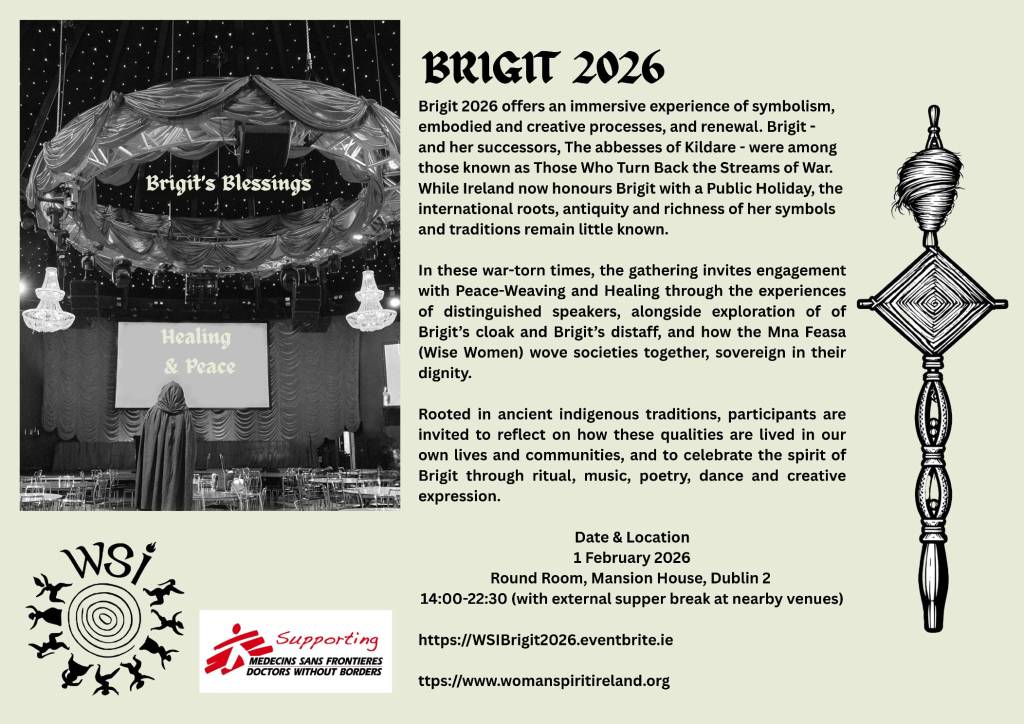
I’m delighted to be working with Woman Spirit Ireland (WSI) for the 2026 Brigit Festival “Brigit’s Blessings: Healing and Peace Weaving”. I’m looking forward to reading from Mantles, my collaborative exploration of Brigid with visual artist Margo McNulty. Other speakers and performers include Rosari Kingston, Michelle Le Baron, Mary Condren, Bridget O’Connell-Regan, Mari Fitzduff, Moya Cannon, Ruth Marshall, Anne O’Reilly, Grace Wells, Nuala Hayes.
Kevin, You’re very welcome to my Writers Chat series. We’re going to chat about your third novel Youth (The Lilliput Press: Dublin, 2023) which is set in Balbriggan, your hometown. We’re publishing this on Bloomsday as a nod to the importance and wonder of place in the novel.
Cover of “Youth” by Kevin Curran showing a wall, railings upon which sits a young man looking away from the camera.
SG: Let’s start with the title. As I was reading Youth, there were a number of phrases that were repeated so often (for example, “Allow”, “If yuno, yuno”, “that’s a bar”) that I found myself giving the novel alternative titles. However, Youth encompasses not only the communal essence of your four protagonists but also the main theme. Can you talk about the process in naming this novel?
KC: Starting out the working title was ‘Wandering Rocks’ which you can probably guess came from Joyce’s Ulysses. That chapter and the way Joyce swept along the city streets and dipped in and out of people’s lives was one of the main inspirations for the novel. The title Youth was then settled on a year or two later. I seem to like one-word titles as I get embarrassed talking about my work to friends, family and colleagues, and I find a one word response to, ‘what’s your book called?’ keeps things simple and avoids any strange looks or explanations.
SG: That’s interesting, as I picked up on threads relating to Ulysses so it’s like shadows of your first thoughts are still there. On the topic of themes – and so often they only emerge through the writing rather than follow the intentions of the author – it felt to me, though much of the narrative is overtly downbeat, at times despairing, and many of these youth are trapped in circumstance, ultimately Youth is a novel of hope. Would you agree?
KC: 100%. You can’t be around the kids I’ve been around for over a decade and see how they interact with each other and face into the challenges they face and not feel hope. Balbriggan is Ireland’s most diverse and youngest town, so I like to say Balbriggan is Ireland’s future now. And from what I see, the kids aren’t interested in all the anti-immigration rhetoric. In my home town and the school I teach in, diversity and multi-culturalism is a way of life, second nature. Kids from all nations and cultures sit beside each other and become friends despite what noise you hear online. That’s what I experience every day. There’s your hope.
SG: Indeed. It’s like life itself is hopeful, and the online “life”…well, you’ve said it. I’m really interested in the role language plays in Youth. For me, this is what makes it such a stand-out book. While I struggled, at first, to get into the rhythm of not only the voices of our four narrators, but the intent and reciprocation of their language with each other, internally (for example, Tanya), and then with the responsible (or not so responsible) adults in their lives. Could you talk about your intention and the writing process here?
KC: Each character comes at language in a very different way, whether consciously or not.
Angel is trying to fit in and find his tribe through language, which in his case is London slang, his friends’ parents’ African slang, and Dublin slang.
Princess is creating herself through her language, and is mindful that how she speaks will define her.
Dean’s language has been infiltrated by the internet and porn and toxic masculinity and Tanya’s language has been lost to an unfiltered internet flow of reported speech without much thought given to what she is reporting or how she is reporting it. Her language is immediate.
The writing process for everyone – apart from Princess – was to keep the vocabulary quite tight and to work then within the rhythm and confines of a limited vocabulary. In Angel’s case (with thanks to my students) I was able to create a fairly comprehensive slang dictionary that became the foundations for all of Angel’s language, and then Dean and Tanya’s language was again always limited in expression to keep the rhythm and flow. Princess was the only language in an aesthetic sense that I really pushed.
SG: Youth is also being released as an audio book which will be really superb – it struck me that it is a novel that is lyrical in its movement – almost musical (alongside Pelumi’s input) – and yet also cinematic. Place, pace and rhythm are essential components – characters? – in this novel. It feels as if you walked the streets of Balbriggan, if not literally, then in your head, like Joyce did for Ulysses but at the same time, Youth taps into the universality of human experience. Could you comment on this?
KC: Like you said, I literally walked the streets of Balbriggan for the six years I wrote the book. Even up until the last night before submitting the final draft to the publisher, I was down Mainstreet checking out what type of button was on the traffic light – whether it was a silver circle or silver triangle – to make sure everything I put in about the town was as on point as possible.
Throughout the writing of the book I would either take pictures of things, like the pavements (to get the names of manhole covers, look at the chewing gum stains on the paths) or stand in the street (not obviously – because that would look too weird) and see where the shadows fall and how the street felt at certain times of day and night etc.
I was hoping the deeper I went on Mainstreet and into the town and the estates and the particulars of the place, the more it would become real for the reader, and by extension more universally felt by the reader. It’s the old John McGahern thing isn’t it, the local and the universal.
SG: Thank you for such an insight into your process – and that time, and care, and dedication to place really shows in the writing. Structurally, the narrative of Youth is told in four voices – two male, two female – with every character trying to get beyond their circumstances. It felt, at times, that the voices merged, in particular, the more the lives of Dean and Angel criss-crossed, the more scripted their language and narrative seemed, and as this happens, they start to find ways to be their whole selves not a choreographed online version – through unlikely connections/love and by engaging in every day life tasks – behind the deli in SuperValu; cutting hair. But despite this, they both continue to try and fit into a version of gang culture that is, at times comical, and others, frighteningly dangerous. Dean observes: “Begrudgery, yeah. But something else. Control and an ability to define you. People in this town want power over you.” Could you talk about the theme of power and masculinity through the experiences of Dean and Angel?
KC: Masculinity was central to the book from the early stages. I remember when Moonlight by Barry Jenkins came out I wanted to show the movie to one of my TY classes. 50% of the class would have been Black-Irish and I always tried to bring some sort of representation into the texts we studied. But when the kids heard about the content of the film they didn’t want to watch it. This got me thinking about Angel and Pelumi in particular and how the façade of a dominant, strong, overtly hetro-sexual lad had to be on show all of the time and how drill music in particular with its hyper violent and mysoginistic lyrics again demanded the people rapping take a certain stance. I would talk to some rappers about this (who have since become quite successful within the genre) and they would say it was a pose to gain views, listens, traction, and once they had this they could soften their stance and transition into hip-hop and not be such a caricature.
Dean, with his father being a famous boxer, and literally famous for fighting, offered an interesting insight into the world of masculinity, power and violence when seen through the prism of expectations and family reputations. In Balbriggan growing up (as with all towns I’m sure) there were always family names that carried weight – they were known to be tough and to be involved in fights. But I grew up with some of the lads, and then I taught their sons and daughters and nephews and nieces and you see behind the façade again of this tough living, hard fighting exterior and you realize the pressures they’re under to be this type of person.
SG: Oh that’s a great film and I could see how you’d have loved to use it to initiate real conversations about masculinities. However, if Dean and Angel have family history and circumstances stacked up against them, then Princess and Tanya are overtly fighting and kicking back against patriarchy and a version of toxic masculinity that they try to (subtly and not so subtly) break down. I was interested in the roles of their mothers (and Tanya’s grandmother) in their narratives. I loved how Tanya’s mother gives stark yet loving advice (“Listen to me. That sorta shit isn’t normal. And everyone doesn’t do it.”). In contrast, Princess’s mother is mainly absent, caring for her own mother in Nigeria. Can you talk a little about female relationships and grandmother/mother/daughter bonds in Youth?
KC: In the novel in general I tried to keep parents as absent as possible so as to let the teenage characters live as freely as possible. But in the case of Dean, his father’s influence became larger as the drafts continued, and Tanya’s father was central to her story. But in the case of Princess and Angel, I wanted to especially cut them off from any adult influence to give a sense of them having to live this 2nd generation life in the town on their own terms. You will notice they are the two who need to work and who basically have to navigate their futures alone.
So, I kept Princess’s mother’s influence sparse because of this need to highlight how alone Princess is in dealing with the obstacles of being the ‘first’ in her family to be born in Ireland and have to deal with this dichotomy.
Florence Adebambo read the voice of Princess in the audiobook and I felt Florence portrayed this brilliantly. Florence was able to subtly show the difference between Princess and her mother and sister. Florence gave the mother a strong Nigerian-Irish accent, and Becky a slighter less pronounced accent, whereas Princess’s accent is unmistakably Irish.
Tanya on the other hand, being Balbriggan born, has the full matriarchy behind her. Her granny was always intended as a strong support, someone we could see Tanya could be herself around and show the reader her softer side around. Tanya’s mother on the other hand was always there to highlight the generation gap, even though, as we learn in the book, there is only 17 years between Tanya and her mother.
But every woman in the book I think comes across as a strong woman, with strong opinions and strong character. It was important Tanya was not seen as a victim, and no other woman for that matter was seen as weak and ‘needing’ the males in the novel.
SG: You’re a teacher yourself, and I liked how you shone a light on both the pressures of and opportunities the education system seemingly offers. For Princess, in particular, achieving in school is what will help her out of her familial and social constraints. She has a colour-coded system of highlighting her text books and uses this same science to observe behaviour, at times with great humour. Observations on trying to obtain work experience in a pharmacy:
“This is my future, my life after all. I’m like, why worry about how you look to this girlo with the blonde hair and Fanta skin? I’ve been raised to stick up for myself. Fight for everything”
“No one should be doing what I’m doing for free…Luminous yellow highlighter, general observation: Cynicism doesn’t come without a cost. Pink highlighter, specific life-advancement threats: Other people will let you down.”
Can you talk a little about the role of education in Youth.
KC: My grandfather grew up in the tenements and through scholarships, made his way to UCD. I was his first grandson to go to UCD and he gave me half the fees for a Masters in Literature in UCD (the other half was funded by the money I got for my 21st party from friends and family!!) I was the only student from my school to go to UCD in my year and even though it was a lonely experience, it was character defining one.
Obviously as a teacher, education is incredibly important to me. I tell my Leaving Cert students every year that the Leaving Cert is the one opportunity they will have in their life to sit and compete with their peers from richer houses, towns and schools – fee paying schools who charge thousands of euros a year – and they can challenge them on an even footing. I know a lot of people give out about the current Leaving Cert exam, but from an English teaching perspective, the exam really gives the students from my DEIS school an opportunity to even up the disadvantages in society they might have faced earlier in their lives, and they will probably face later in their lives. So, yeah, education and libraries as sanctuaries for learning, are central to the core message in Youth.
SG: But not only sanctuaries for learning but for transformation. So much of living in Youth happens on and is dictated by social media – not only for the youth, but also for characters like Barry. From the outset, was this your intention or did this aspect of the narrative evolve with the characters and story? Did you engage in research about social media and the youth?
KC: When you’re around teenagers like I am for the number of years I have been, you can’t help but observe how social media is beginning to alter how teenagers behave and interact. I wrote the story ‘Saving Tanya’ in 2014 for the ‘Young Irelanders’ anthology. In that story I was quite specific with the social media platforms being used, but I learned from that story to kind of pull back from the actual specifics of the platforms but to still deal with social media.
In the case of Tanya I wanted to show that even though she thinks her phone and social media is her comfort blanket, it’s actually smothering her slowly.
The actual form for Tanya’s chapters came quite late in the drafts. I had her firstly as a ‘Living with the Kardashians’ documentary type thing, and then I changed her to a script, but then, finally, I landed on the current form, which I think works brilliantly to display the all-pervasive nature of social media in a teenager’s life, but also to show the real, lived experience behind the posts.
As for Barry, his social media output seems to be representative of a lot of angry, keyboard warriors from his generation.
Research wasn’t too heavy. I was able to chat to my classes – from sixteen year olds to eighteen year olds, and we would discuss what they felt about social media, and what they experienced on-line. The feedback from the girls was eye-opening. Just the hassle almost every girl gets on-line from weirdos (mostly adult men) sending them DMs shocked me.
I also went onto Tik-Tok for a while to get a sense of the dynamic of it. Jesus, that was rough. I deleted the app as soon as I didn’t need to research any more. That place is insane!
SG: All that for your art! Hats off, I’ve not even watched a Tik-Tok! So, we’ll end this Writers Chat, Kevin, with some short questions:
Do you subscribe to or watch anything on YouTube? I don’t subscribe to anything on Youtube, but for the past four months since I finished the novel (and have had a bit of time in the evenings) I reckon I have watched every interview Zadie Smith has given on Youtube. I also watched a lot of Claire Keegan interviews and old writers too like Lorraine Hansberry and Arthur Miller on Youtube. Fascinating insights into craft.
Music as you write – and if so, what music? No music. I need total silence and just the sound of the street outside when I write.
Mountains or Sea? Sea. Always the sea. I won’t bore you with my swimming stories, but I swim all year round. And no, I don’t wear a Dryrobe.
Ha! Longhand or laptop? Always longhand first. Even in the edits stage when I need to extend a scene, add a small bit in here or there, I always write longhand. I find a pen and paper, no technology, no light from the screen, no flashing icons, creates the closest connection with the story and the page.
What are you reading now? A Kestral for a Knave by Barry Hines, Elizabeth Strout’s Olive Kitteridge, Flannery O’Connor’s Mystery & Manners, Toni Morrison’s Recitatif….the list goes on.
Some great reading there – I recently returned again to Mystery and Manners. I always get something new each time I read those essays.Thanks for such brilliant engagement with my questions and I wish you much success with Youth which can be purchased here.
Follow Kevin Curran on Twitter: @kevlcurran
Thank you to The Lilliput Press and Peter O’Connell Media for an advance copy of Youth.
Photograph of Kevin Curran against a wall of colourful graffiti. Photograph by Elaine McGrath used with kind permission.
Mia Gallagher (MG): Who do you believe were your major influences on your artistic practice?
Mario Sughi (MS): I’m not that sure Mia. Many times we confuse what we like with what might influence our work! You can like something and maybe just being influenced by something you don’t like I certainly like Francis Bacon (but I can’t see Bacon influencing my work) same for Giacometti (I went to see his exhibition today beautiful) I like his drawings and small sculptures. I like David Hockney (not everything) I prefer his early works (60 and 70), Alex Katz & Matisse (and I try to understand them! and to learn from them). I like Kafka, and Milan Kundera and I prefer Tolstoy to Dostoyesky, I like Beckett & Joyce, I like Piero della Francesca (but I can’t say they influence my work).
When it come to painting images come first but the quality of a painting (the brushes strokes and technique some time can make the difference and being the most interesting thing in the painting that is why I like some great American abstract masters, Franz Kline and even Richard Diebenkorn, and on the other side for the same reason I don’t like too much pop art. I like Fairfield Porter a lot I find Alice Neel very interesting but bit too illustrative/illustrator same for Paula Rego (I prefer Alice Neel to Rego). Hopper for me is not that interesting (voyeuristic and artificial, too illustrative). I met Alex Katz in person: I like his paintings and his writing same for Fairfield Porter (never met him of course). And what they do and write make a lot of sense (Alex Katz even more sense than Matisse at times). I like Lucien Freud for the image, not for the painting ( I don’t like his brushes strokes! not at all), and I like many many more, Manet, Chantal Joffe, Goya, Giotto….
Paul and Francesca, 2021 Image provided by and used with kind permission of Mario Sughi
MG: To what extend do you identify yourself and/or your work as Italian/European/Dublin…
MS: I’ m either on the bus or the dart and I’m looking at other people (they are Dubliners). My observation point is one that I really like (possibly one of advantage for me) – I have been here (Dublin) for so long that I can get very close to them – to that group of people – without almost being noticed, and yet I can still see them from an external point (of course) and this has nothing to do with being Italian Irish European. This has never been this my preoccupation; culturally speaking (probably) I must be Italian especially when it comes to work and European (when it comes to culture, mentality, etc) and Irish (when it comes to drinking Guinness in a pub).
Selfportait with fettuccine and Guinnesss, 2010 Image provided by and used with kind permission of Mario Sughi
SG: Mario, can you speak of your process in motion?
MS: Well…U walk the streets or seat at a bar looking at people walking or u move through town u feel attract and touched by some of the people there and you start following them with your eyes then when you paint or draw (or write) you hope you will be able to have that fleeting moment/image (as it appeared to u) present (still live) in your work. I want just to show it without having to add anything else (it has to be almost unconscious).
SG: I love the notion, Mario, of still living in the work, showing it still raw and unconscious.
MG: Mario, to what extent, if at all, you feel your Dubliners might be different to other images of the city and its people?
MS: If you draw an old lady smoking on a bench with a plastic bag in her hand alone in Stephen’s Green people will see and recognise her as a character. I would like to be able to draw her in a way that people probably will not even recognize her as a Dubliner (or not even as an old lady). As long as the image I create will maintain its optical energy and a some sort of plausible link with that lady I will be very happy with my work.
Red on green (A place to rest), 2017 Image provided by and used with kind permission of Maria Sughi
MS:…. and then there are people who say that my work is far too saturate, too colourful to be representative of real people! (so in other words is not serious!) but I think … maybe is just too colourful for them! not for me, for what I see…I think that under this regard we are quite similar as we only care to portray people the way we see them, we don’t have to be conventional!
SG: So much of what artists and writers do comes down to perspective and interpretation, doesn’t it!
Sarah and the yellow paper, 2020 Image provided by and used with kind permission of Mario Sughi
Thanks to Mia Gallagher and Mario Sughi for taking part in my Writers/Artists Chat Series and being so generous and open about their individual and collaborative processes.





 Shauna Gilligan Writer