
Paul, you’re very welcome back to my Writers Chat series. We last talked about The Garden (New Island, 2021). Today we’re delving into Paradise House (Somerville Press, 2025), named as one of The Irish Times’ most anticipated books of the year and which Dermot Bolger describes as “an intriguing feat of deft imaginative power.” I thoroughly enjoyed the gripping narrative which gave me lots of “aha!” moments.

SG: Let’s start with the origin story of this astounding novel, which I’m guessing stems from your love of Dublin, James Joyce, and F. Scott Fitzgerald?
PP: Yes, that’s absolutely right. Paradise House began, I suppose, as an act of literary trespass. I’ve always been fascinated by Dublin as a city shaped by absences—Joyce’s being the most mythic of all. But rather than following him into exile, I wanted to imagine what might have happened had he stayed. What if Stephen Dedalus never set sail, but instead opened a cinema—one filled with ghosts, flickering dreams, and revolution in the air?
The Fitzgerald influence came later. There’s a Gatsby-like energy to Kinch—his flair for performance, his aching desire to reshape the world around him, and, of course, the parties. The novel became, in a way, a meeting place between Joyce’s lyric interiority and Fitzgerald’s doomed glitter.
SG: Like The Garden, your writing in Paradise House deftly captures place and its people. Through atmospheric writing you evoke, at times, a sense of magic realism, and, at others, Joyce’s own Dublin writings. Dublin, here is a city:
whose streets were busy, and dirty with impish, innocent and smiling children. Dublin with its trams, and their reassuring, but lonely clicks…a city of half-truth, and half-light. A city of ash-pits, old weeds, and offal
We re-discover Dublin through the eyes of narrator-hero Jacob Moonlight he, working for Kinch (Joyce) as a projectionist in his cinema Paradise, wanders, often with Greta, around the city during a hot summer. Someone saying a Latin Mass passes them by alongside a child holding a doll like a baby. Another scene involves “the last lobster in the Monto.” Another again, on a Saturday night in July, Kinch turns the upstairs bar “into a kind of tropical misted atrium with bowls of fruit, flowers, sugared water, and live butterflies.”
How much fun did you have writing scenes such as these?
PP: Far too much. There’s something liberating about slipping the leash of strict realism and leaning into the surreal textures of a city already halfway to myth. Those scenes—the lobster, the butterflies, the tropical mist—all emerged quite naturally once I gave myself permission to let Paradise House become not just a setting but a living metaphor.
I was interested in the kind of Dublin that could exist if it were dreamed rather than remembered. And Moonlight, as a newcomer, sees the city with fresh eyes—it gives everything a slightly enchanted, uncertain quality. Writing those passages often felt like walking through fog with a torch: you only see a little ahead, but it’s enough.
SG: What a great description of the writing process – one which actually echoes this reader’s experience. Kinch declares that “Dublin is a city of memory… Sometimes, I feel like I am going to bump into myself walking around the corner of Dame Street.” Paradise House is essentially an homage to a Dublin that could have been. Writing the novel, did you find yourself following ghosts and what-if trails? Did you enjoy writing the Great Gatsby-style parties where people laugh so hard, they sneeze champagne?
PP: I absolutely followed the ghosts. That’s really how the novel evolved—through a series of hauntings. The ghosts of Joyce and Nora, of lost causes and unmade films, of streets that change but never entirely forget. Dublin is wonderfully suited to that kind of spectral layering.
The Gatsby-style parties were pure joy to write. They allowed me to explore Kinch’s performative side—the grand gestures, the theatre of it all—but also the melancholy behind the music. The champagne sneezes were fun, of course, but there’s always something bruised beneath the glitter. Kinch is a man building illusions while the world burns just outside the velvet curtain.
SG: In the characters of Kinch and Stuart, you cast the cold eye of hindsight on early twentieth-century revolutionary politics and hope. Paradise House doesn’t shy away from the laughter, the wily jibe, and the seditious joke of history. How important for you was this narrative thread?
PP: Vital. I think we’re often given the binary of solemn revolution or frivolous art—as if you can’t laugh while marching, or paint while fighting. But in truth, laughter and creativity are deeply political. They’re forms of resistance.
Kinch and Stuart offer contrasting ways of navigating the shifting Ireland of the time—one through spectacle and ambiguity, the other through ideology and action. But neither escapes the mess of history. What mattered to me was honouring the spirit of the time, which was full of talk, wit, song, irreverence. These were not cardboard heroes—they were people, with all the contradictions that entails.
SG: Yes, the honouring of wit within a tumultuous time is a stand-out feature of the novel. There is also a wonderful crossover and reimagining of history, literature, fact, and fiction in Paradise House. Can you talk about your research for this novel?
PP: The research was layered—part historical, part literary, and part intuitive. I read widely around the period: Joyce’s biographies, the Rising, WWI recruitment, cinema history in Dublin. But I didn’t want to be trapped by footnotes.
The novel plays fast and loose with history—it’s speculative, playful. So, while the bones of it are grounded in fact, the spirit is more dreamlike. I also revisited Calvino, Chekhov, Gatsby, and of course Joyce. I wasn’t quoting them as much as listening to their rhythms—trying to capture their ghosts in the room without needing to say their names aloud.
SG: “Life is…for enjoying, not just surviving.” Can you discuss how this reflects what you wanted to explore in the novel?
PP: That line sits at the heart of the book, I think. It speaks to Moonlight’s slow awakening, and to Kinch’s failed promise. The novel is about joy—not as escapism, but as a defiant act. In a world full of dislocation and dread, moments of beauty, intimacy, absurdity… they matter.
Kinch dreams of miracles happening in Paradise House, but ultimately it’s the human moments—walking through the city, falling in love, sharing a drink—that offer salvation. For me, writing the novel was a way of reclaiming those small, luminous moments in a city—and a literature—so often shadowed by survival.
SG: Rather than “love,” it seems to this reader that it is art—and the expression of it—that brings people together in Paradise House. Would you care to comment on this?
PP: Yes, I think that’s beautifully put. Art in Paradise House is a kind of currency—it’s how people connect when language or politics or emotion fail. The act of creating, performing, or even just witnessing something together offers the characters a fragile sense of belonging.
For Kinch, art is both mask and mirror. For Moonlight, it becomes a way of understanding the world—and himself. And for Norah, perhaps, it’s a refuge. So yes, while love is a force in the novel, it’s often filtered through, or made possible by, the sharing of art. Maybe that’s my way of suggesting they’re the same thing in different clothes.
SG: Indeed! We’ll end this Writers Chat, Paul, with some short questions:
• Dublin or Wicklow? Dublin for ghosts, Wicklow for breath.
• Oh lovely! Cinema or theatre? Cinema. The flicker, the dark, the possibility.
• Whiskey or Champagne? Whiskey in winter. Champagne for the parties Kinch throws.
• What’s the last film you saw in a cinema (and what cinema)? The Zone of Interest at the Lighthouse — chilling, brilliant, unforgettable.
• My favourite cinema (right back to the early beginnings!). What are you writing now? A new novel, Nine Days from Heaven, about Samuel Beckett in the French Resistance. It’s about silence, betrayal, and the long pause between action and meaning.
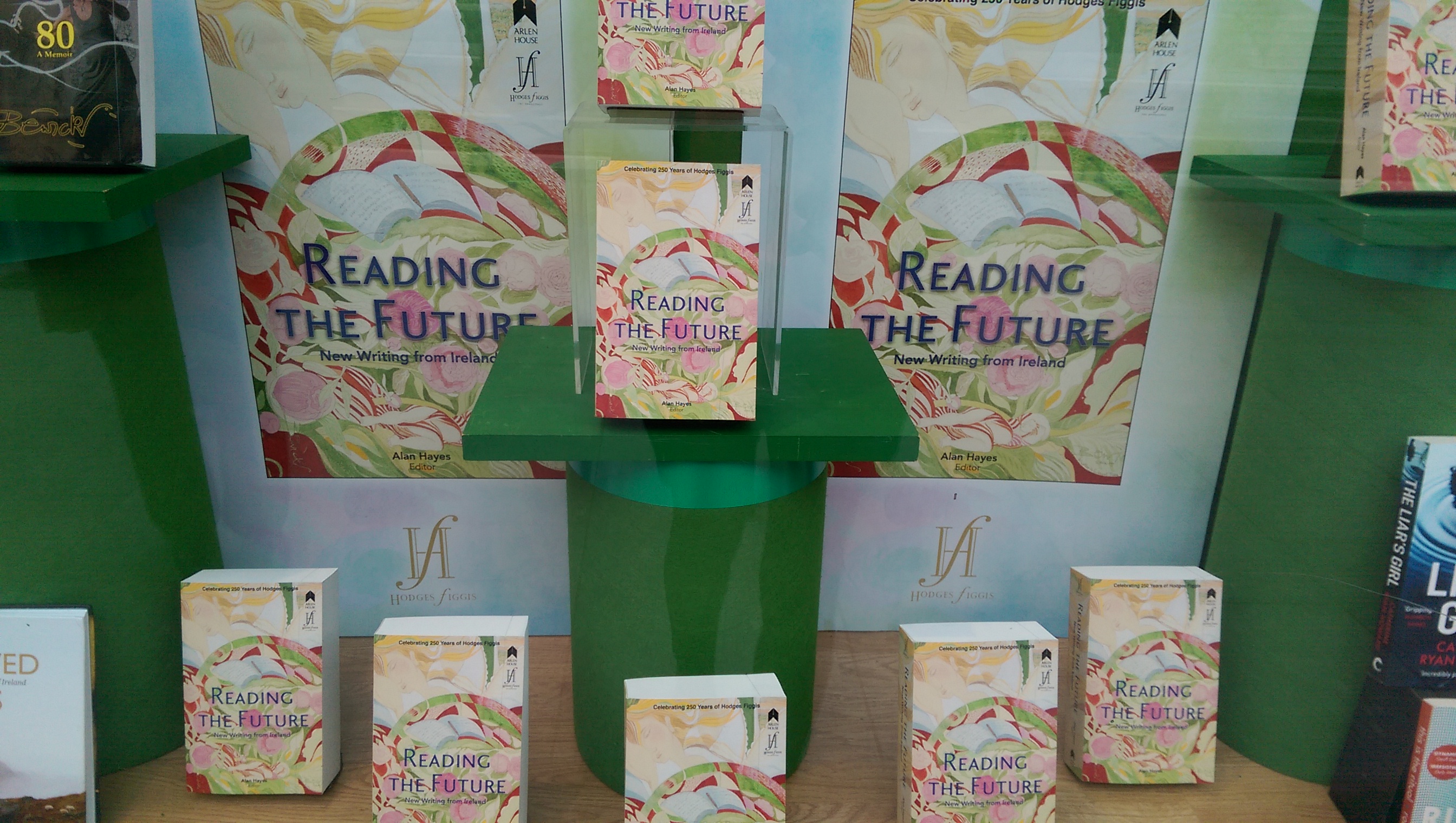
That sounds intriguing, Paul. Thanks for being so generous with your answers and I wish you much deserved success with Paradise House which Professor Anne Fogarty will launch on Tuesday, May 13th at 6 PM in Hodges Figgis, Dublin.
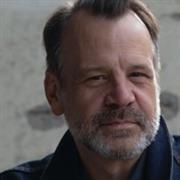
Professor Paul Perry is the award-winning and critically acclaimed author of several books of poetry and prose. A winner of the Hennessy Prize for Irish Literature, he is a poet, novelist, and screen-writer, and Professor of Creative Writing at University College Dublin where he directs the Creative Writing Programme.
Thank you to Somerville Press for the advance copy of Paradise House.

![IMAG0278[1]](https://shaunagilliganwriter.com/wp-content/uploads/2018/04/imag02781.jpg)

 Shauna Gilligan Writer