
The fourth post in my “Writers Chat” series is mix of old and new chats: a re-post of a chat with Nuala O’Connor from August 2015 on her third novel Miss Emily and a new preview chat about Becoming Belle which Sebastian Barry has declared to be “luminous”. Becoming Belle will be published in August 2018.

What a beautiful cover, Nuala. So tell me about this stage in the publishing process – after the writing, editing, and proofs… and before the publication date (August 2018).
NUALA: This is the easy part because all the difficult work is done. Now it’s time for gentle pre-publicity (sending out advance copies to key people: journalists and literary types of all hue) before the real PR push starts. I’m taking a week out in May to write articles, essays etc. about the book for promo purposes; I’m hoping by devoting a week to it, that I’ll get a lot done. It’s a time consuming business. I won’t be able to write much on my novel-in-progress during the promotional months for Becoming Belle. That’s maybe the only downside as the act of writing keeps me balanced in myself. And sane…
SG: The story of Belle sounds utterly fascinating. Tell us how you came to write about her and her links to Ballinasloe.
NUALA: Like a lot of things, I tried her out first in a poem (a pretty crappy vilanelle). Then I wrote a flash about her. When I keep returning to a subject, it’s begging for more. I moved to Ballinasloe 13 years ago and researched the history of the town and soon came across this music hall girl who had married the local Viscount amid some scandal. She was a beauty and much loved in Ballinasloe; I was interested in knowing more about this maverick English woman who ended up in rural Ireland as the Countess Clancarty, despite being a dancer and not being from gentry.
SG: When can we get our hands on Becoming Belle?
NUALA: It is published here, there and all over in August 2018. I really can’t wait for people to read about Belle – she is feminist, feisty and fresh. I gave my parents an advance copy of the book and my Da said he ‘fell in love’ with Belle. What better review could you get?
Wow, that is surely the best review any writer could get – that your reader falls in love with your heroine. I can’t wait to read it in August 2018!

Q&A (originally published in August 2015) with Nuala about Miss Emily
*****
I start this blog post with a confession. I have always considered my tastes to reside in the modern. Miss Emily, set in the late nineteenth century however, is written in O’Connor’s beautiful lyrical prose with feminist leanings. The novel not only brings us into the world of the reclusive poet Emily Dickinson, but also Ada Concannon, a feisty Dubliner who follows in the footsteps of her aunt and uncle in the hope of better prospects in Amherst, Massachusetts.
I raise my hands, humbly, and declare that I was hooked from the first page with the complex characters of Emily and Ada, the lush imagery and bountiful senses, and a story that, from the start, gets you asking questions, and reading on. As a fan of Dickinson’s poetry, Miss Emily gave me a unique glimpse into her sense of self as a writer. Many of Emily’s sections are poetic in themselves, beautiful prose. Consider these musings, for example:
“I write by night now, when nothing thrums but my lamp…The house sleeps; Amherst sleeps. Only I endure. And when my pencil tires of flicking word arrows onto the page, there is the moon to admire, full-faced and lovely, a bright coin…”
Miss Emily, however, could also be enjoyed and relished by readers not familiar with – or even interested in – Dickinson as a writer. Here’s quite an accomplishment: O’Connor manages to hook you into this well-paced story while also providing convincing and fascinating glimpses into the life – imagined – of such a known poet.

Thank you, Nuala, for a wonderful read – on a northern Spanish beach (as per above photo!). I’m delighted to be part of Miss Emily Blog Tour!
There is a wonderful sense of place in Miss Emily from the Dublin Liffey and life as a maid downstairs to the workings of the kitchen, the stables, and herb garden in the Dickinson household in Amherst.
“The goddess Pomona has been around the orchard scattering her goodness: everything is floral and abundant, while the apple maggots and cabbage worm do their best to undo it all.”
The sense of place – and the atmosphere throughout the novel – seems to me to be as connected to the characters – Ada and Miss Emily – as it is to their respective countries – Ireland and America. In some way, Ada echoes Emily’s attachment to the indoors, how rushes of homesickness hit her at times. It strikes me that Miss Emily is not just about Emily Dickinson.
NUALA: Ada, the young maid, is the active character in the story, given Emily’s reclusiveness, which is beginning to be her preferred state by 1866, when the novel is set. The novel is about cross-generational friendship, the maid-mistress relationship, emigration and loyalty. It’s also about what it means to be a female maverick in the nineteenth century and what the consequences of that can be. And, yes, it’s about place – setting is important to me in fiction. For my own sake I need to inhabit the places I write about and really feel the setting loom large around me. The research for that – flora, fauna, architecture – is part of the thrill of writing for me.
I was enthralled by the day-to-day detail of living, and working – of course reflected in the beautiful covers of the US and UK editions, and in the novel from the instructional gift Ada receives from Mrs Dickinson (The Frugal Housewife by Mrs Child) and all the advice it gives, to the vision of Emily Dickinson lowering a basket full of delicious gingerbread for the children. Did you have fun researching and playing around with historical details such as these?
NUALA: The research was a joy. I research as I write, mostly, and unearthing new and interesting details about domestic life in the nineteenth century was always a pleasure. I baked Emily’s recipes, I bought myself an old glass churn and made butter, I (squeamishly) watched YouTube videos on how to skin hares. I studied The Frugal Housewife and made it, as Mrs Dickinson suggested, Ada’s second Bible. I read close on thirty books by or about Emily in the course of the research – about her relationships, her poetry, her life in general. I wanted to get things right, to be loyal to her; I fell deeply for her warmth and wit while writing the book.
That joy really comes through in the novel, Nuala. Now tell me about the baking. I just adored the scenes with Emily and Ada in the kitchen, the dynamics between them and how each of their personalities seem to shine, and their friendship bloom, as they bake.
“I take dried pears from their jar; they were as pink as plums when picked, with crinoline hips and the flesh of candies. Now they curl – silenced yellow tongues – in my hand. I glance at Ada, and she is smiling roundly, forgetting now her Daniel and his saving of her from the lion. She uses her hands to mix together raisins and citron rind; the smell is glorious.”
In fact, I wished there were recipes at the back of the book – perhaps there will be on your website?
NUALA: I love to cook and bake, and that was what drew me back to Emily later in life, having studied her poetry at school. Some of the articles I have written, for Reader’s Digest in Canada for example, featured recipes, as does the Penguin Book Club Guide to the book. Some of Emily’s recipes (tweaked by me) can also be found at my cooking blog, The Hungry Veggie Her Coconut Cake is a sweet, buttery, easy cake – I make it all the time now for visitors. My cousin Clodagh and I are going to bake some of Emily’s cakes for the launch (details below).
How wonderful – I’ll try those recipes out and look forward to samples at your launch! I relished the way the themes of gender and equality are peppered through the book, and with Ada as our perceptive observer, some of the expectations of women can be seen – tenderly – in the relationship between Emily and Susan, her sister-in-law, and how, through her poetry and solitude, Emily manages to escape some of these expectations.
“I simply do not feel comfortable in a throng; my head gets addled, and I long for peace. And Sue may not comprehend either the writer’s absolute need for quiet and retreat, the solace of it…I put my lips to her cheek and tell the curl of ear, ‘I prefer to have you alone. That way you are all mine.’”
NUALA: Women were expected to marry in nineteenth century Amherst, so Emily and her sister Vinnie were an unusual pair of spinsters. But they were well-to-do – their father was a lawyer and when he died their lawyer brother looked after them. So, in a sense, they had the luxury of being rebels. The Dickinson family were eccentric, they were clever and good leaders, important in the town, but they did things in their own way. Emily loved her sister-in-law Sue fervently – Sue was editor, friend and confidante to her.
I really enjoyed the way their relationship developed so tenderly over the course of the book. Yet there are also strong, and complex, male characters in Miss Emily: Emily’s brother Austin is an interesting character who, I can say, without revealing the plot, grows and changes through the novel; Patrick seems to be the antithesis to Daniel yet both are believable characters who provide yet another kind of insight into the Dickinsons, and, interestingly, reveal certain views of the Irish and class.
NUALA: I made Austin Dickinson quite anti-Irish in the novel – he may not have been as racist as I portrayed him. Ada and Emily are both such sweet, decent creatures, I needed the contrast of the fiery Austin, blowing in and out with his mad red hair, negative opinions and grumpy face. He and Emily were very close as children but once he became a responsible citizen and husband, Austin became more serious.
Patrick and Daniel are two sides of the Irish emigrant: the drunken layabout and the hard-working, go-ahead type.
And a question more than a comment, will we discover, in the future, what became of Ada and Daniel?
NUALA: I was asked this question a lot on my American book tour – I think it’s a good sign because it means people like the characters, and care enough about them, to hope for a good future for them. I have no plans to return to Ada and Daniel but I feel that life went well for them in the end: deep love, happiness – the whole shebang!
Sounds great! Nuala, I’d love to hear you read from Miss Emily. I know you have already given some readings (for example at the West Cork Literary Festival), where might we next find you with Miss Emily in hand?
NUALA: I will read a little from the book at my launch in The Gutter Book Shop, Dublin, Friday 28th August, 6.30pm. (All welcome!)
Other confirmed appearances:
- Thursday 3rd September: Shorelines Arts Festival, Portumna, Co. Galway
- Saturday 19th September: Spirit of Folk Festival, Co. Meath
- Sunday 18th October: Kildare Reader’s Festival, Riverside Arts Centre, Newbridge, Co. Kildare
- Thursday 29th October: Blackbird Books, Navan, Co. Meath
- Wednesday 25th November: Crescent Arts Centre, Belfast
I’ll be there on Friday 28th! And of course, we can keep up to date with your blog and website. Thanks again, Nuala, and I wish you continued and further success with the wonderful Miss Emily.

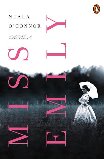
THE DRAW FOR A SIGNED COPY OF MISS EMILY TOOK PLACE ON AUGUST 28th ….and the winner was Shirley McClure.
 Brian Kirk


 Shauna Gilligan Writer