
Stephanie, You are very welcome to my WRITERS CHAT series. Congratulations on your third collection of poetry Island.

SG: Firstly, tell me about how Island was conceived as a series of narratives and how you went about structuring the collection, in particular your own personal links to the place and stories.
Stephanie: Many thanks, Shauna. It’s lovely to join you and talk a little about Island. The starting point for the collection was my ancestral connection to Copeland Island.
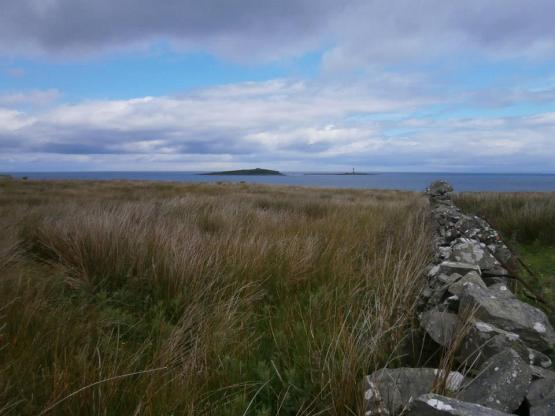
The Copeland Islands lie to the north-east of Donaghadee, Northern Ireland and are separated from the mainland by a channel a mile wide at its narrowest point. The archipelago comprises of Mew Island, Lighthouse Island and the largest of the three, Copeland Island, where my family lived. My great-great grandparents, Richard Clegg and Esther Emerson, were both born and raised on Copeland Island and lived their whole lives there. They married in 1845 and had nine children. They are buried in the tiny graveyard at the island’s edge.
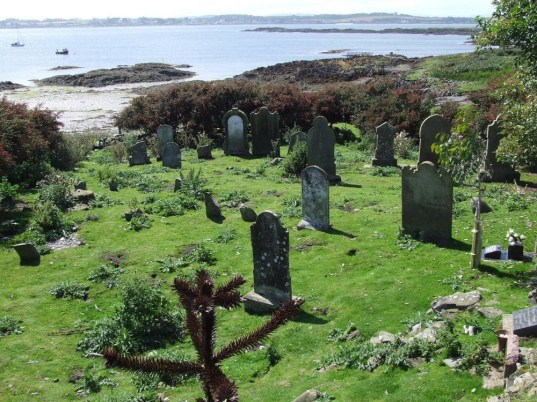
The island is now uninhabited. The last three elderly residents left for the mainland in 1947. However, at the time Esther and Richard were bringing up their family, they were part of a small but bustling community. I was keen to find out more about them and their way of life and provide some sort of record before it was forgotten.
I was lucky enough to secure a Career Enhancement Award from the Arts Council of Northern Ireland in 2013 to research and write the Copeland poems. Some of these poems were published in the pamphlet Copeland’s Daughter as a result of winning the Poetry Business Poetry Competition in 2016. However, it was clear from quite early on, that this work would result in a full collection. Island moves beyond Copeland Island to the Northern Ireland coastline and includes other islands such as Coney Island, Skellig Michael and Ischia.
SG: What a rich and wonderful family history you have to draw on, Stephanie. I loved how the imagery in many of the poems is so specific that it is universal. I’m thinking here of lines from Part 1 such as ‘smile-filled skin’ in “On Finding an old photograph in a drawer” and “What Mum Knew” and, in Part 11, “Copeland’s Daughter” and the moving “Wedding Night” which has the sense of being about your family?
Stephanie: Poems such as Copeland’s Daughter, Wedding Night, Her Precious Cargo and Esther refer to my great-great grandmother. She married on the 25th August 1845, and strangely, I married on the same date 160 years later!
I felt strongly that I had to write about the lives of my island ancestors, but I did wonder how the poems would be received – given the very specific place and time and people. I would have been happy to keep this as a family project of sorts, but as the individual poems were accepted for publications and began to win prizes, it became obvious they were connecting with others. I was reading some of the poems at Wordsworth’s Dove Cottage and there were knowing nods from the audience. As you say, the themes of displacement, of belonging or not belonging, are universal.
SG: I love the serendipity of your wedding taking place on the same day as that of your great-great-grandmother. The next question has two parts. Firstly, you manage to paint the beauty of nature while evoking the harshness of the land and life. In “As was the custom” and “Winter” the reader is taken in, almost by the whisper of the sea, and then shocked into the reality at the end of the poem.
Secondly, it’s not only nature that tricks the ships into false security. It’s the games people play – for example in “The Clipper’s Captain”, “The Islander’s New Clothes”, “An Excise Man comes calling” and “Biding Time.” Tell us a little about the stories behind these poems.
Stephanie: It is easy to see how people are drawn to island life and why they romanticise the notion, but my research showed time and time again, just how demanding the reality was. The islanders could be cut off from the mainland for weeks on end and spent their lives at the mercy of the elements. Searching newspaper archives for mention of the Copeland Islands, around this time, a similar series of events is reported again and again. Despite the lighthouse and the foghorn, ship after ship struck the rocks in bad weather.
I completed most of my research over the autumn and winter months and when I finally got over to visit Copeland Island what I found was unexpected – tiny bones littering the fields, torn limbs lying close to rabbit holes. I write about the experience in ‘Visiting the Island of my Ancestors’.
Poems such as The Clipper’s Captain, Her Precious Cargo, The Islander’s New Clothes deal with a specific shipwreck. On the morning of the 7th January 1854, the islanders witnessed the American clipper ship, The Mermaid, driven on to the south-west side of the Copeland Island in gale force winds. The ship was reported as one of the finest vessels of her time and was only nine months old when she was wrecked. Her twenty-nine crew and three passengers were rescued by the islanders and spent the night in Richard Clegg’s barn before sailing to the mainland and onwards to England. The ship’s cargo of silk, satin, muslin, linen and carpet, went down with the ship and for weeks floated along the sound and gathered in bales on the nearby shores. It was reported that the islanders did not let this go to waste.
SG: We’re all, in a way, products of where we come from and this is another theme throughout the collection but what is most interesting is the sense you show of what it is when you don’t belong. For example, in “Molly and the Islanders”, “Esther” and “A Sea View” there is a disconnectedness between the people and the land and sea.
Stephanie: Molly was a real person. She was a young bride who had honeymooned on Copeland Island and was determined to move there and live happily ever after. She didn’t last six months before moving back to the mainland.
I suppose I was echoing some of my own feelings in these poems as well as reflecting on the experiences of the women I write about. For example, I had an historical connection to this place and yet was removed from it. The Cleggs are family on my father’s side, but growing up, it was my mother who told us stories about both sides of our family. My mother died when she was just 46 years old. When she died, a lot of family history went with her and I wished I’d paid more attention to those stories she told us growing up and had tapped into this precious archive in her mind before it was too late.
SG: Water is constant in Island and I enjoyed how it both weighs and emotionally weighs. In “Weak as Water” we’re reminded how the character
had forgotten the weight of water – /how it erodes rock, how the sea advances/and recedes, even with neap tides, even as/the sun and moon oppose each other.
There’s something around the cycle of life and death, the continuation despite death.
I had planned to call the collection ‘The Weight of Water’ until a poet friend pointed out the fairly recent novel of the same name. I was certainly conscious of the cycle of life and death when writing these poems and I’ve touched a little on this above. Without living grandparents or my mother to help me discover my links to the island, I determined to do so myself. Within my family, I felt it was important that this history be passed onto my own children but, beyond the family ties, I didn’t want this bustling chapter of the island’s history to be forgotten.
The fact too, that this was one period within the island’s history. There is a before and after – monks retreating from Bangor Abbey to a tiny island in the sea, a specialist Bird Observatory.
SG: Yes, the weight of water is fitting but then again the final title, Island manages to contain that notion too. I’m interested in the overlap of history and stories and I loved how you combined the stories of history and the sensory memories in “Electricity”, “August 25th”, “The Sweetest Thing” and “The Science of Tears”. Can you tell us a little about the research you had to do for these poems?
When I was carrying out my research, it was quite difficult to move beyond the facts and figures of census materials and birth, death and marriage registers to get closer to the human experience. I had to use my imagination but in doing so it felt important to make the poems as authentic as possible when it came to details of the physical island and the flora and fauna.
As well as statistical records, I browsed newspaper archives, read geographical reports, interviewed members of local historical societies and met people with links to the islands. I visited the island to explore, make notes and take photographs. The few small cottages that remain on the island are now privately owned and used for occasional summer visits, so you cannot stay on Copeland Island. Armed with my research, I spent a week writing on Rathlin Island, listening to the sea and the seals in the harbour. At the start of the week, the rain lashed, and the wind howled but by the end of the week there was glorious sunshine and stunning sunsets. It was bliss.
SG: What a most wonderful description of your research!
I shared “Winter” with one of my adult creative writing classes and we had a lovely discussion about the rhythm, your use of a ‘chorus’ and how this begged for the poem to be read aloud, echoing the movement of the tides. The group have a few questions for you:
- Did you start writing the poem as an ode to the last verse or did the last verse come as a shock to you too? That’s a really interesting question. The last verse did come as a shock to me. I was drawn in by the rhythm while I was writing the poem and was surprised by what emerged. That’s one of the things I love about writing poetry – even if you start out with a particular intention the poem goes off in its own direction.
- Is the island of “Winter” a lighthouse island? Copeland Island, the island of ‘Winter’, is the biggest of the three islands. Over the years there has been a lighthouse on each of the other islands – first on Lighthouse Island, as the name suggests, and now on Mew Island. The lighthouse, or at least the beam of light, would have been a part of the islanders’ daily lives.
- There’s a practice off the coast of England that involved misleading ships so that they would crash and the loot could be taken. Are these lines a reference to this practice: ‘we run to the shore to save all we can’. The reference here is to the lives they might save – as mentioned above, ships running into difficulty off the islands was common at this time. There was no suggestion of this practice in any of my research. The island was so close to the mainland that people in Donaghadee could see the ships at the mercy of the currents or when they were hitting the rocks. However, during my week on Rathlin, a local guide told me about this practice and the reports of the Clipper’s captain waving a gun at the islanders as they tried to help save the crew and passengers from the sinking ship suddenly made more sense. Perhaps he was worried they were planning to steal the cargo.
Thank you so much for such open and generous answers. Island is a collection I’ll return to again and again.
Lastly, 3 fun questions, Stephanie:
- Boat or Plane? I’m not a huge fan of either – I am a terrible traveller and suffer with motion sickness. I’ll opt for ‘plane’ as the destinations can be well worth feeling a bit rough on the journey.
- What was your favourite childhood poem? In my final year at primary school, our class had to learn and recite Tennyson’s ‘The Eagle’ and it stuck. I loved the sounds in my mouth, the pace and emphasis the teacher taught us and that wonderful notion of the ‘azure world’.
- What are you reading now? I have just finished Liz Nugent’s new novel ‘Skin Deep’ which had me hooked and kept me reading late into the night. I tend to have quite a few poetry collections on the go at any one time. I’m currently reading Kathleen McCracken’s ‘Tattoo Land’, Polly Atkin’s ‘Basic Nest Architecture’ and Pascale Petit’s ‘Mama Amazonica’.
Join Stephanie on a Cross-Border Reading Tour:

Keep up to date with Stephanie on her website

 Gabriel Fitzmaurice ‘The Irish A.A. Milne’ (Declan Kiberd)
 Shauna Gilligan Writer