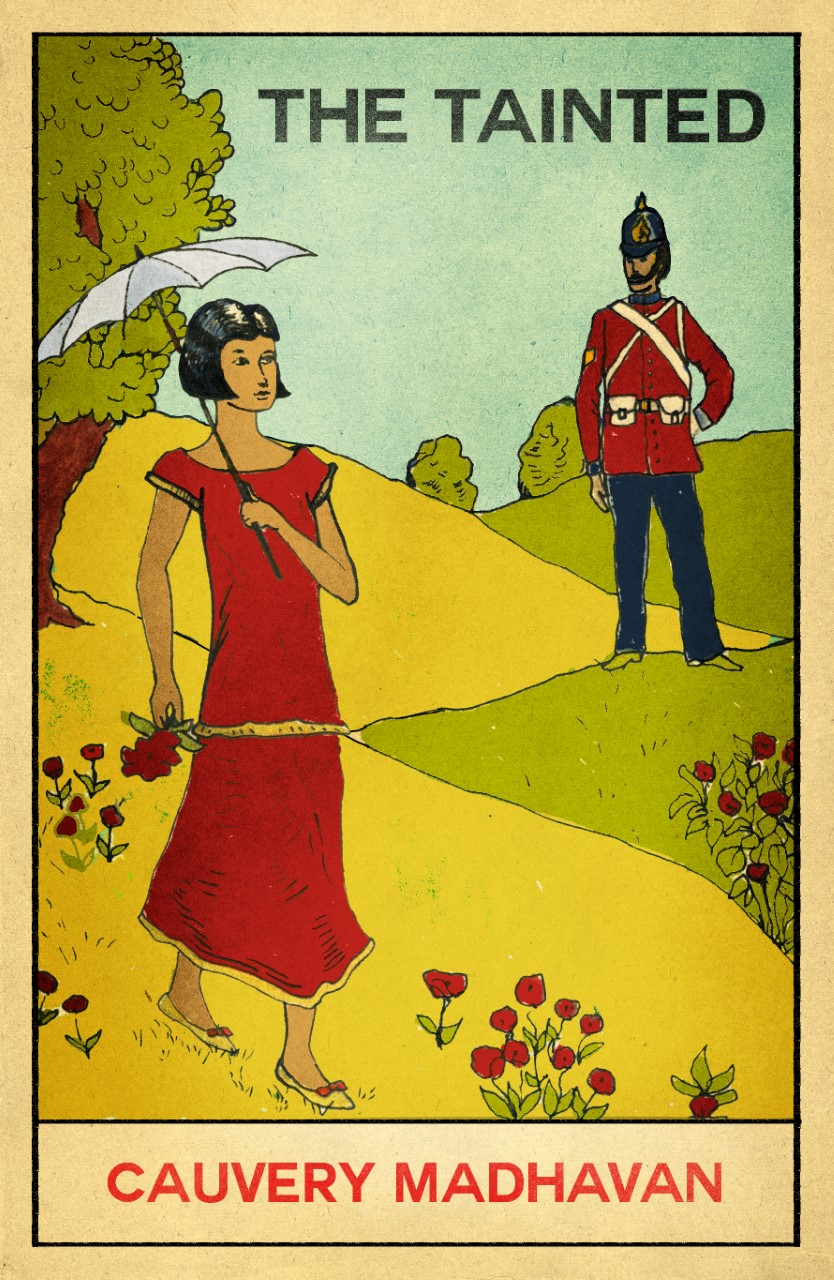
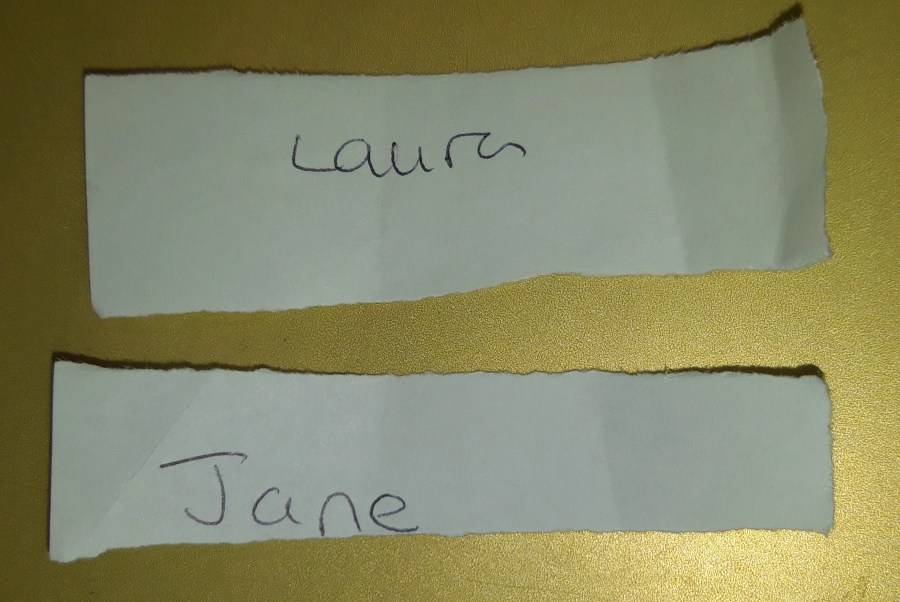
Congratulations to Laura and Jane on each winning a signed copy of The Tainted by Cauvery Madhavan. Thank you to my son who did the honours of pulling out two folded pieces of paper with his eyes tightly shut! Please contact me so that we can arrange to get The Tainted to you!
Thanks to all the readers who engaged with our WRITERS CHAT and to everyone who took the time to comment. All greatly appreciated!
Next up is another WRITERS CHAT – this time with TWO writers….Watch this space!
Stay connected with Cauvery via her website and don’t forget to pre-order The Tainted from Hope Road or The Gutter Bookshop prior to the official publication date of April 30 2020.
Cauvery, Welcome back to our Writers Chat. Thank you to our readers who read without commenting and to readers who also commented. Some interesting questions and thoughts!
Here in PART TWO of our Writers Chat we talk a little bit more about the stunning landscape of India that you capture so well and we also delve into the parallels The Tainted has with our current world – migration, money and power as motivators and movers. I have some fun questions for you and you have some wonderful reading recommendations!
We also have our giveaway – two signed copies of The Tainted – READERS simply COMMENT ON PART ONE or PART TWO of THIS WRITERS CHAT and you’ll be in the draw!
You really bring alive the wonder and colour of India and I felt it even more now that travel is an impossibility for much of the world’s population due to the pandemic Covid-19 that is sweeping across the globe. We follow Michael, in the Connaught Rangers in 1920, walk with him across “the parched red earth” (22), pots of marigolds, grass blinds to keep out the heat, see how “The camp followers…cried their wares unceasingly: tea, tailoring services, mynah birds and tame mongooses, coffee, postcards of naked women, cigarettes, fruit, buns and cakes, nasty-looking herbs and potions…” (33).
The crowds, noise and speed at which live is lived is also well captured. At the train station, when Michael surprises Rose (alighting from her first-class carriage) with a tin of caramels, we see that The Nandagiri Mail is a “sight to behold…Long before the train came to final stop, all hell broke loose as coolies jumped into the still-moving carriages and passengers tried to ready themselves at the doors to alight, all at the same time…” (60).
Later in the novel, we follow Richard on the search for the places depicted in his grandfather’s paintings of India so that he can photograph them. We encounter the scent of jasmine on May, the Yuravas and the stunning scenery, along with plenty of colourful clothes from saris to veshtis and kurtas. How difficult was it not to let the story disappear into the sensual landscape?
It was so very hard Shauna! In fact my writing stalled for a very long time because of the landscape. I was fearful that I’d never be able to absorb it right into my bones, enough to be able to evoke it in my writing. I was so taken with every place I went to research. I’m an Army Officer’s daughter so the very particular world of a garrison town was very familiar to me; it’s where I grew up. All the sights and sounds of India were part of my childhood and early adult years (I left India for Ireland when I was 24). Yet, going back to India with a project set in the 1920s, revealed a country I didn’t know at all and it was very exciting.
I couldn’t get enough of trekking in the Nilgiri mountains – I hired a guide who took me deep into the heavily forested tribal areas where I could get a sense of what the famed and unique sholas were like before deforestation decimated them. I remember being startled by a strange animal call one morning, as we trudged through thick jungle to see a wattle extraction kiln, only to be casually told it was probably a nearby leopard! I visited Masinagudi forest and Theppakadu Elephant Camp in the lower Nilgiris timing my trip just before the monsoon arrived, so I could picture the forest and its environs exactly as it would have been on the day of that fateful tiger hunt. Much of the administrative buildings in the smaller provincial towns of India haven’t changed a lot since the days of the Raj so eyeballing them was very useful. Once knew I was going to write this book and even before I put finger to keyboard, every journey to India became a field trip – thousand of photographs of everything I saw from the fantastical to the mundane remain on a cloud server somewhere! I wanted to work everything I saw, smelt and felt into my book, but of course I couldn’t. I could though very easily write a companion volume on the landscape, public and personal, urban and rural – I’ve so much material!
Finally, I must mention the Kurinji flower. I would have loved to have waited to see the once in 12-year flowering of the Kurinji with my own eyes, but of course had to make do with photographs and written accounts of the incredible sight of many million acres of the Nilgiri range covered in the bluish purple bloom. But the next flowering has been in my calendar for a while – September 2030!
Neelakurinji flower in bloom in Munnar – Darkroom/Balan Madhavan/Alamy Stock Photo (purchased and provided by Cauvery Madhavan)
Thank you so much for this stunning photograph! And I very much like the idea of a companion volume on the landscape – I’d love to read it!
Moving on to our last discussion point. Migration, money and power are motivators and movers in the narrative. We recognise a world in which female sexuality is shameful and those who transgress are sent away, out of sight – in the hope that they will be forgotten. In pre and post independence India and Ireland there are parallels of sorrow and hope. Like all good historical fiction, The Tainted is relevant to and speaks to our world today. Was this a conscious part of your writing?
Even as I read your question I realise that all those things – money, migration, power and the shaming and blaming of women are still today’s stories, still absolutely relevant. It’s almost like time has stood still and nothing has changed. The similarities between India and Ireland are quite startling. Both countries have over many centuries obsessed with religion, allowed religious rites to overtake faith (this is an important distinction) and and worse still, allowed men to have absolute control over those religious rites, the keys to the pearly gates. That female sexuality has been made a shameful thing is not surprising given the male dominated structure of religion in both countries. Fortunately for Ireland things seem to be changing for the better there is more tolerance, more understanding of differences. India is going through turbulent times – religious fundamentalism of any sort always bodes the worst for women.
I never consciously set out to write a book that would tie up issues from the past to problems of the present. But I’ve realised this Shauna: the one constant for writers of fiction is human nature – it just never changes. And so prejudices are still the same and the push back against class, caste and religious discrimination will go on valiantly. Apart from the fact that 2020 marks the 100th anniversary of the Mutiny, it is such a great time for The Tainted to be published – to come out when so many in Ireland, the New Irish are trying, many very successfully, to find a sense of belonging and forging identities that retain something from the land of their births and moulding it firmly around the the best of their Irish selves.
Yes, I do think The Tainted has tapped into much of what our world is going through right now in relation to belonging and identity.
We’ve come to the end our chat, Cauvery, and we have some quick pick questions before your wonderful list of recommended books and films!
Madras or Dehli? Madras !!! Though it’s called Chennai now.
Oh goodness – yes, of course, I’m still in The Tainted! Coffee or tea? Coffee, South Indian style.
Kindle or Paperback? Paperback.
Cat or dog? I’ll have to pass or won’t be able to look at my cat or dog in the eye!
What is your inspirational quote? ‘Karma is a bitch’, Anon.
What are you reading right now? India after Gandhi, by Ramchandra Guha
Thank you so much, Cauvery, for the time, care and energy you put into our very engaging WRITERS CHAT. I wish you much deserved success with The Tainted!
Thanks also to Hope Road publications for providing me with a pre-release copy of The Tainted.
A selection of Cauvery’s recommended books for further reading:
The Devil To Pay: The Mutiny of the Connaught Rangers, India July 1920 by Anthony Babington
The Raj Quartet by Paul Scott
Plain Tales from the Hills by Rudyard Kipling
Death Under The Deodars by Ruskin Bond
English, August by Upamanyu Chatterjee
The Man-Eaters of Kumaon by Jim Corbett
Eden Gardens by Louise Brown
Belonging by Umi Sinha
Bugles and the Tiger by John Masters
Burmese Days by George Orwell
Ragtime in Simla by Barbara Cleverly
A selection of Cauvery’s recommended films:
Bhowani Junction
Staying On
Bow Barracks Forever
Before The Rains
Lagaan
Shakespeare Wallah
36 Chowringhee Lane
The Rains Came
And now to our giveaway! Readers, simply comment on this blog and your name will go into a hat for one of TWO signed copies of The Tainted posted right to your door. We all have plenty of reading time these (unfortunate) days so best of luck, everyone! The draw will take place on Wednesday 8th April 2020.
Stay connected with Cauvery via her website and don’t forget to pre-order The Tainted from Hope Road or The Gutter Bookshop prior to the official publication date of April 30 2020.
Cauvery, You are very welcome to my WRITERS CHAT series. Many congratulations on your third novel, The Tainted (Hope Road: London, 2020 – Publication date 30th April 2020). Your previous novels Paddy Indian (2001) and The Uncoupling (2003) were received with acclaim with Sue Leonard declaring The Uncoupling “a gem of a novel.”
I read The Tainted over the span of a few cold days in late December in front of a fire, and was very moved. On the surface, the novel deals with the mutiny of the Connaught Rangers in India but it tackles much more than that mutiny – spanning generations we see the affects of colonialism in the form of class, caste and race on ordinary people’s lives.
This is your first public interview about The Tainted – and what an in-depth WRITERS CHAT! We are presenting it in two parts. PART ONE, below, concentrates on your extensive – and fascinating – historical research, the timeline of The Tainted, character development and place and identity (something close to my heart!).
We also have a giveaway of two signed copies of The Tainted – – READERS: to be in with a chance of winning a copy, simply comment on this WRITERS CHAT and I’ll add your name to the draw.
Let’s start with the context and your research. You deftly entwine Indian society and politics with that of Ireland and Europe. We’re told that the twenty-seven men who died of cholera in hospital when the Regiment was first posted in 1913 were lucky because within a few years they would have died in the French trenches. Tell me about the historical research which must have been exciting. Did you travel to Nandagiri and consult archival material such as newspaper reports, hospital records, letters, birth and death records and so on?
I did Shauna. I made a decision fairly early on in the project, to completely immerse myself in the period: so I confined all of my reading to books, magazines, periodicals in the years from about 1910 up to 1947. I watched scores of movies, Hollywood and Bollywood set in the Indian sub continent and Ireland too, that spanned those years. Two films come to mind straightaway: Bhowani Junction starring Ava Gardner and Stewart Granger, and the evocative and poignant Bow Barracks Forever. If you liked The Tainted, I think these two movies will resonate too. I reconnected with books from my teenage and early twenties reading Somerset Maugham, John Masters and Ruskin Bond amongst many, many others. For an Irish perspective some of the writers I read were Sebastian Barry, JG Farrell, William Trevor, Elizabeth Bowen and Kate O’Brien. Happily, I also discovered Barbara Cleverly and her detective stories set in India during the Raj.
Sometimes while writing things would come to a complete full stop till I checked out a detail. When I began research for the chapter on the tiger hunt at Masinagudi, I ended up taking an unexpectedly long 6-month break from writing to read all of Jim Corbett’s books, in order to get my head around the intricacies of hunting big game using elephants and beaters. For a visual guide I poured over many series of wonderful sketches and drawings in the Illustrated London News. They were big into hunting, fishing and shooting in the Tropics. A good few months later I felt I was an armchair expert and, may I add, one with a special interest in pigsticking!
Many an evening ended leafing through The Army and Navy Catalogue from 1915 which I kept by my bedside. It definitely gave me a feel for the things that were important to people as they lived their lives thousands of miles away from home. Literally anything could be ordered from folding canvas baths to a marble angel for a headstone. The mail order catalogue was a truly fascinating window into the daily lives of every class of the European and the very wealthy Indians too.
To get an understanding of the contemporaneous attitude towards and the treatment of diseases like syphilis and malaria, as well as mental health issues and conditions in mental asylums, I turned to the work of medical historians and military archives. Additionally, I did field trips to eyeball some of the older mental hospitals in India – very many have still retained and use their old buildings.
I was forever hungry for visual references – I think many writers tend to be, for you need to have settings very clearly in your minds eye: people and places of that era that you can instantly conjure up as you write. I dug up many excellent documentaries about soldiering in the Raj and found art galleries and museums very useful, specially photographic exhibitions. Of course, the military are great at archiving every detail of their war and peacetime activities so there was a lot of material that was available between the three countries. Luckily for historians and novelists a good many young army officers were bored stiff for most of their time in India, constricted as they were for months at a time by the relentless heat or the incessant rains – they wrote extensively, books, diaries and long letters chronicling their lives and travels in the sub continent. And of course there were scores of very articulate and descriptive accounts of daily life by the women of the Raj: wives, daughters and sisters, from Vicerines living in grand splendour to hardy missionaries heroically making do in remote ‘up country’ camps. Their writings were often published in popular women’s magazines of the day and were a very good source for me. I managed to get sets of bound volumes from antiquarian dealers and even though I’ve moved on to writing my next novel, I still love reading them.
Selection of pages from the 1915 Army and Navy Catalogue
Post Independence, the Anglo Indians diaspora who had scattered all over the world contributed to their own nostalgic newsletters and journals, full of accounts of bygone life, recipes and photographs. Collectively they were an eye opener to life attitudes and the cultural norms of that time.
So you can see Shauna, there was plenty of information to be mined. My problem was I got lost in that mine and didn’t emerge for a good few years! A lot of my research was accidentally tangential: you know I’d start looking at one thing and end up exploring something else, often in the course of the same morning. And even though it meant that so much of the research remained unused and never featured in any form or fashion in the book, it gave me such a clear picture of the period and I hope that has translated into what the reader gets from my book.
That is just incredible, Cauvery and, of course, when you describe the different types of sources you also so accurately describe many of the themes in The Tainted.
The timeline is split between 1920/45 and 1982. By using a split timeline you are able to capture the changes in Indian society and how the injuries of colonialism span generations. In a way I was reminded of the legacy of trauma that bell hooks talks about in her book Can you talk about this in relation to the generational span of the novel, in particular the Aylmers?
When I began the book, Shauna, I had planned to write a novel based on 1920 Mutiny of the Connaught Rangers. I fictionalised the regiment so I could have artistic licence and my story was to be an account of how an Irish regiment, I called them the Kildare Rangers, serving in the British army in the Raj mutinied and how their actions, in those few weeks, panned out. I was barely into writing the first three chapters when I realised that apart from the circumstances of the mutiny, there was a whole different, and indeed far more complex story waiting to be told, one that needed to be told – the aftermath of the mutiny and its ramifications on multiple generations of families in two countries on two separate continents. So I did change focus considerably and having read the book you know that much of the story takes place after the mutiny.
All three groups of characters in my novel are tainted by association and trauma that has come down through generations and it’s this baggage, and their search for identity and a final sense of belonging that has formed the basis of my book. The Anglo Irish Aylmer family had a long tradition of valiant service in the British army. When Colonel Aylmer and his wife went out to India, it was at the height of the Raj and given the observance of protocol and precedence of those days, they assumed the role of de facto King and Queen of the garrison town of Nandagiri where the regiment was stationed. In any army, ancient or modern, valour and loyalty are sacred. For the soldiers to have mutinied under the Colonels watch, amounted to loss of honour of the worst sort. It was a reflection of his abilities as the commanding officer and a huge stain on his otherwise glorious military career.
The Aylmers had the best of times in India, because not only were they the Colonel and the Memsahib ruling the roost in Nandagiri, but away from Ireland, they could also shed their Anglo-Irish identity. When they returned to Ireland, in the wake of Irish freedom, the change in their circumstances was nothing short of dramatic. The Aylmers not only had to reckon with the loss of their prestigious position but they also had to confront all the prejudice and dangers that came with them being Anglo-Irish in a newly independent Ireland. You can imagine how hard it must have been to carry the burden of an ignominious end to a military career all the while coming to terms of their changed status in Ireland. It’s a little wonder they hardly spoke of India! Their children grew up in Ireland with just a few memories that quickly faded, all mention of India was totally avoided, their personal affects from their time in the East stored away and much later even the budding romance between Alice and the Prince of Pudunagari was given short shrift. So when Richard Aylmer, the Colonel’s grandson, arrives in Nandagiri 60 years later, he finds himself playing catch up with history and the role his grandparents played in shaping the lives of people they never knew.
I thought you handled Richard’s discoveries and, as you put it, playing catch up with history, very well – as readers we feel very close to him on his journey. There is another character – Rose, an Anglo-Indian maid to Mrs Aylmer – who is ever-present. She stuck with me long after I finished reading The Tainted. Rose suffered terribly but she also knew real love and kindness. There are several moments where the kindness of strangers – Dr Swamy, for example – allow wonderful connections to happen, and, I found turned The Tainted into a novel about love. Without revealing too much, were these scenes you had planned or did they appear as you wrote? I’m thinking of that magical thing that happens in writing when the story veers off the path we think we’re on and brings us to surprisingly beautiful moments.
I’m a little embarrassed to admit that my characters have always revealed themselves as I’ve written. I’ve discovered their motivations, fears, weaknesses and strengths as one would of friends as you get to know them. The reason I’m embarrassed is because before I started writing myself, I never gave any credence to writers who said stuff like that. But I’m a fervent believer in letting the characters take over and do their ‘magical thing’ as you call it. I have never plotted any of my books in advance and The Tainted was no different, preferring to let my characters lead me where they will. I guess I was lucky too Shauna. They very quickly became so real to me it was actually quite easy once I got to know them to write their story and make all those timely links through the generations.
Sometimes details and connections came out of research and definitely Dr. Swamy was one of them. I researched and visited the Kilpauk Mental Hospital in Chennai and spent some time walking the grounds in the the oldest part of the hospital. I was effortlessly transported back a hundred years as some of the buildings that housed the female inmates dated back to the early 1900s. The ancient trees that covered the vast acreage of the Hospital provided incredible atmospherics and conjured up images that I knew would find a place in the book. Dr. Swamy popped up into the pages of my book shortly after and I didn’t even realise at that time, when he called out to Rose and Micheal from his upstairs window that he was going to play such a pivotal role. The the funny thing is he sailed through life not knowing the true repercussions of his actions! I loved that, the fact that he was drawn to Rose by his medical instincts but never knew that he actually defined her life.
I think there is something so wonderful and true to life in that, Cauvery. The Tainted of the title refers to the Anglo Indians. Neither Indian nor English, their identity, how they identify and how they are seen is difficult for them. You capture this through Gerry, and May who declares that Anglo-Indians “are a whole community strangled by dreams of what we never did have in the first place […] we’re tainted. We were never white enough then and will never be brown enough now.” (256 and 259).
Earlier in the narrative Tom warns Michael in 1920 that “When blood’s diluted, the colour will always come through…You’ll have to pick the ones to take and the ones to leave behind.” (66)
Yet despite these barriers based on race, religion and caste, your characters find that they do belong to this wonderful complex place. Can you expand on the theme of identity, belonging and land?
I’ve always been very interested in delving into the lives of people whose identities and loyalties are tainted by the social and historical limbo they are caught in: Irish Catholic soldiers in the British army, the Anglo Irish officers who commanded them and Anglo Indians (as they are known in India) – many of them the progeny of soldiers of the Raj, fathered in liaisons with Indian women and more often than not abandoned.
I was really struck by Ian Jack’s astute assessment in his book Mofussil Junction in which he writes that, as far as the Empire was concerned, the Anglo-Indians “represented no more than the shaming evidence of sexual transgression by the lower ranks”. And as you know Shauna, Indians themselves, being masters of class and caste consciousness, perceived the ancestry of Anglo-Indians combined with their drinking, beef eating, mixed sex socialising as horribly impure.
It was always assumed that when it came to the crunch, if there was trouble with the native Indians, the Anglo Indian loyalty would lie with Britain, the land of their fathers. But the loyalty that the Empire expected of them was not reciprocated and Anglo Indians never really got further than the very fringes of British colonial society. Post Independence India proved to be a real challenge for Anglo Indians. The ones who had managed to leave India for the UK, Canada and Australia struggled to fit into societies that looked down on them because they were mixed race. Many Anglo Indians who were fair skinned hid their origins and tried to assimilate under the radar. Life was hard for them as is evident in the many archived letters and diaries.
Meanwhile in India, Anglo Indians who remained, many hundred thousands of them, were left bereft. They were too poor in the main to emigrate and families had to pick and chose (sadly, often basing their decision on which child was fair enough to pass for white) who was going to get sent ‘Home’ – when Home was an unwelcoming, unknown country.
But, not surprisingly, they are one of the most resilient communities in India and from the 1960s onwards began to make huge strides in Indian public life. Their near complete domination of what were vital economic sectors like the Railways, Police, Post and Telegraph, Education and Forestry brought them to the forefront of administering the vast nation and all of this combined with their presence in the very senior ranks of the Police and Armed Forces gave them a renewed sense of belonging. I do believe that by the 1980s, the period in which my book is set, that Anglo Indian urge to go ‘Home’ was replaced with a determination to be accepted as full fledged Indians and they went about life doing just that. Most Anglo Indians had deep rooted family links to one sector or trade and they embraced it wholeheartedly. Gerry and May Twomey are typical Anglo Indians. As a Forester, Gerry regards his job primarily as a custodian, a caretaker of the flora and fauna of Nandagiri very seriously – he is far more vested in the land, the tribes and the animals that inhabit his remit than anyone else and I think that defines his identity, gives him his utter confidence in belonging to India and being Indian.
South Park Kolkata
I think you captured that sense of belonging yet feeling outside everything very well in Gerry and May, and how this connects to the landscape and politics around them.
So, we will leave our WRITERS CHAT for now and come back next week with PART TWO in which we examine landscape, migration, feminism and I put you to the test with some fun questions! And you so generously give our readers a list of wonderful readings and movies!
READERS: Don’t forget, comment on this WRITERS CHAT (PART ONE or PART TWO) and I’ll add your name to the draw for a SIGNED COPY OF THE TAINTED. The draw will take place on Wednesday, 8th April.
Advance order The Tainted at a good discount from Hope Road and follow Cauvery Madhavan on her website and on Twitter @cauverymadhavan



 Shauna Gilligan Writer