Writers Chat 83 : Tania Hershman on “it’s time: a chronomemoir”(Guillemot Press: Cornwall, 2025)

I’m delighted to chat to Tania Hershman about her latest hybrid publication it’s time: a chronomemoir (Guillemot Press: Cornwall, 2025) in my Writers Chat series (watch Tania’s book launch here). This post is published today, 31st December, also the date of the release of the first audio section of the book: audio sections, read by Tania, will appear on the day they appear in the book on Tania’s free Substack.

SG: So Tania, the book, it’s time: a chronomemoir begins (first) on 31st December 2018 and finishes (at least by the last date noted) 26th April 2021. It seems – to this reader anyhow – both a linear and circular book, a series of questions and answers to and from (your) self in relation to time and the space you’re within at every given (sometimes labelled, sometimes not labelled) time. A fascinating premise in and of itself, can you talk about the origins of this book?

TH: The seed of an idea for this book was planted more than a year before I started writing it! I was driving back from holiday with a friend, and Cornwall to Manchester is a long, long drive. I was driving, and at a certain point my friend asked how much further to go – and I noticed that I answered in hours, not miles, in time not distance. And then suddenly, my brain exploded with thoughts about what we as a society, as a culture, have made time into. This is quite dangerous when driving… At the next service station, I started making a list of time-related topics I wanted to explore, and I also told my friend she couldn’t go to sleep and leave me to my thoughts, she had to keep talking so I wouldn’t be distracted!

I didn’t start the book straight away because I was finishing a PhD, and wanted to get that done before beginning something new – although I’m generally always writing at least two things at once. As you see from the first page, I had told myself I would start on Jan 1st 2019 – but couldn’t quite wait that long! I had never written a book like this, which I call “hybrid creative non-fiction”, but I do these days give myself permission to write the books I want to write in the way I want to write them, so I started writing to find out what the book might be. It started as a diary and then, as you know, certain things occurred to make me loosen that!

Cover of “it’s time: a chronomemoir” by tania hershman showing aubergine coloured illustrations of seeds, trees, apples, pips, worms, teeth against a faded purple/cream backgraound. Image thanks to Tania Hershman.

SG: And I loved how your response to “things occurred” is recorded in the book too. I have to remark on the beautiful design and production, especially given our leaning towards digital things. I love the soft cream against the aubergine purple which highlight the beautiful cover art. Can you tell us a little about the design and how it fits with the themes of the book?

TH: It’s such a beautiful object, isn’t it! I can’t take any credit for that, it’s what the wonderful Guillemot Press does – my publisher, Luke, adores paper, different thickness, different weights and types, and I knew after he published my first hybrid book in 2020 that he would also create something gorgeous. He commissioned an illustrator he works with regularly, CF Sherratt, to design the cover, and I was blown away when I first saw it. I had worried that they’d come up with something involving clocks. But what he did took the themes of the book and presented them in such a surreal and stunning way, with a seed, a tree, and a kind of flow-chart. I love it and I love the colours. This is one of the joys of working with small presses who care so deeply about each book!

SG: It’s a joy to have input into and direct feedback on the physical book, isn’t it? Early on, on page 11 to be exact, you say,

Time is everything: waiting, patience, duration, longing, memory, hope. Time is change, evolution, decay. Time is life, and death. Time is what makes everything relative – I am happy, then I become happier. Time is outside me, keeping me in check and giving me something to rebel against, and my organs and tissues also take time in their own way.

I found myself returning to this passage (having underlined it and then wrote beside it ‘time!’) as I read the book, again when I finished it, and yet again when I started to formulate these questions. It seems to encapsulate what your book is about: the mind and body of time, our minds and bodies in time, your book written in multiple times and spaces, and therefore read in infinite time and spaces, and places. It brought to mind (!) Roland Barthes’ theory of the death of the author – once a text obtains a reader, the author (as they were as they wrote the text) no longer exists, and therefore is no longer needed. It struck me that in reading your text – and thinking about it in my own time – I was, as Barthes might (not) say, re-writing your text within time. Have you any thoughts about this?

TH: My thought is: I love it and, as the author of the original words, I can’t imagine anything better than a reader rewriting the text. I have always – first in my short and very short stories, then in things called poems, and more recently in more uncategorizable pieces I call “hybrids” – left space for a reader, invited them in to be part of the creative process. I don’t like to read things I considered to be sewn up tightly, with no space for me, I find it can feel suffocating. You’ve paid me the greatest compliment, you never know what a book might do when it’s out in the world – and I never assume when I am writing, even though this is my tenth book, that I will have even one reader, that it will be published at all. I write the sort of books I would want to read. I love the process of writing so much, that’s what is the most important to me. Everything else – your comments and questions, anyone who chooses to get in touch to talk about a book – is a wonderful and joyous bonus!

I decided recently, after someone who heard me do a short reading from the book at a Zoom event asked if there would be an audio book (which my publisher doesn’t do), that I would start reading the book in audio instalments, publishing each one on my Substack on the day they appear in the book, which, as you know, is (loosely) structured as a diary, starting on Dec 31st! It’s completely free to listen to, and I am looking forward to what thoughts and questions and comments this new format might bring forth from listeners. (Sign up here if you’d like me to read to you; older instalments are available if you miss the beginning – or, rather, beginnings!)

SG: Having attended your Zoom launch and heard you read, I will look forward to hearing you read more passages. You channel Einstein and Woolf throughout the narrative and I visualised them, like book ends on a bookshelf, or a frame around your multiplicities of stories in and of time, guiding, prompting, and more than anything, playing with you. Alongside, them of course, like a backbone to this book was Viktor Frankl’s incredible attitude to and use of time, which saved him, as outlined in Man’s Search for Meaning. Did you feel the presence of guiding lights of science and literature – essentially your two halves – as you wrote, as you thought?

TH: I love all this too, thank you for sharing how you see it. I never have a plan when I write, I write for me, I write to find out what I want to say. Einstein has been coming up for me for many years, since studying physics as an undergrad. My adoration of all things Virginia-Woolf-related has been more recent, I only began reading her work about seven years ago. Viktor Frankl’s writings saved me when I was in a very dark place, and they save me over and over whenever I need reminding. I have never thought about it in terms of their presence as I write, but I have so many voices in my head, and a psychic once told me that Einstein was watching me and found me very amusing, that I wouldn’t be surprised if they were some of my guides! Virginia is coming up in almost everything I write these days, so she is a bit of a stronger presence now, especially since the novel I am working on is partly set in a post-patriarchal society (see below).

SG: I had so many quotes marked throughout to ask you about and now that I find myself writing these questions, my overall sense of what I took from your book focuses on:

  • “wonder” (p215)
  • how your writing knows more than you do, teaches you things that you are only just realising, “about time and timeliness and living inside and outside the cage of time, the cellphones and the satellites with their rubidium atomic clocks” (p158)
  • your description of your imagination “where you imagine, and where you listen to all the clocks inside you, ticking” (p179),
  • How you address your Future Self and Past Self and the Growing Block
  • How we are not just beings we are doings (p234), thinkings (p236)

And the overall sense that you’re writing about the writing process as much as life in time – the re-reading, the fresh eyes, the taking time slowly, and when you are stunned by James Woods’ words about Woolf “the novelist who has become nothing less than time itself” (p226), I too was stunned into thinking that actually, if Woolf is time, and the novelist is time, you as novelist/writer are also time. So what this reader has re-written is that it’s time: a chronomemoir could also be entitled it’s Tania….Have I misunderstood completely or touched on a metanarrative that runs through the book?

TH: Once again, and at the risk of becoming very repetitive, I love this! As I mentioned, I don’t plan before I write anything, and I write to find out what I want to write about, what is preoccupying me at the time. It has turned out, in the few book-length works I’ve written and the one I am writing now, that I am always writing about the writing process in some way, because it really is fascinating to me, how and why I do what I do (which has changed and changes over time), which I have been doing in one way or another since I was a kid.

I learned after my first book, a short story collection, came out in 2008 that once a piece is out in the world, it is not for me to say what it’s about, so there is no possibility of you or any other reader “misunderstanding” anything, that’s just not an option. Everything on your list is something that is important to me, that I’ve been thinking about for many years, and at the same time I know other readers have taken other things from the book. It’s for me to let it go and be whatever it wants to be for each reader, as that co-creation you so beautifully talked about.

SG: And that ability and willingness you have to “let it go” beautifully shines right through your work, Tania.

The text – your text, your thoughts – is punctuated by google searches related to time, and poems relating to (it seemed) your state of mind within a particular stage of time. The Covid Pandemic hit the world in the last third of the book and you bring us into Lockdown Time. I smiled at this, as it seemed oddly appropriate to the book you were writing, as if time itself was having a laugh, playing with you – just when you seemed to have completed your research and interviews with scientists and biologists and other specialists in time* and thought/wrote your resulting theories/thoughts, along came the world and asked for a pause. Looking back on this now, how has your perception of and attitude towards time changed as a result of both your book, the pandemic and the uncertainty of life?

* too many to mention here but I loved Jordana Cepelewicz, I adored the 365 knitting clock by Siren Elise Wilhelmsen, your experiment with Kwa time, no time, not using Gregorian time, the poetry…..

TH: I definitely thought that Time was having a laugh, as my conversations with Time were showing me that Time has a wicked sense of humour! Me documenting my own Illness Time a year before Covid arrived seemed very interesting “timing”, or perhaps “Time-ing”, too. I finished the book a few years ago, and funnily – or perhaps not – it was only over the past year, as we were proofreading etc… to get ready for publication last July, did I make some major shifts in my own approach to the kinds of time our society insists on us, which I can do as someone who works at home and for themselves. I decided to stop wearing a watch about a month before the book came out, and I really like that. If I need to “know” the time, there’s always something around that can tell me. I also decided to stop making such a hard and fast distinction between what we call “weekdays” and “weekend”, because I noticed there were things I gave myself permission to do on weekends, like turn off the Internet and spend the day reading, which made me feel peaceful and happy, so why wasn’t I doing this during this thing we call a “week” too? I feel that Time approves. I’d love to hear about any other things people have done to mess with Time!

SG: Lots to consider there, Tania! If Time plays with us, we can play it wit, too. We will finish up with some short, fun questions:

  1. Coffee with or without milk? With – oat milk.
  2. One or more cats? One cat, a different beautiful companion from the one who kept me company while I was writing It’s Time.
  3. Watch, clock, mobile time or sky time? As I mentioned above, none of those.
  4. What are you currently writing? I am in what may be the final stages of a book that looks like a more “traditional” novel, but is still my kind of playful. I am imagining a version of our society where people like me, happily moving through life alone, are the norm, and not only has marriage fallen out of fashion, there is no such thing as a “couple” either. It’s a thought experiment! I am alternating between sections set in this society and sections set 100 years or so before, around the time of WWI, where I imagine this shift could have taken place. So it’s a sort of alt-history/speculative fiction, and I am having fun making changes to the historical timeline, and also – given that I don’t plan anything – constantly finding my characters surprising me! I wasn’t expecting women’s football to play such a huge role in the historical sections. I’m having SUCH fun, which, for me, is what writing is all about. I want to finish it and also I don’t want to finish it, I will miss them all terribly.
  5. That sounds amazing – both as a process and what the text might bring to the reader. Lastly, what are you currently reading? I am always reading several things at once: I read mostly sci fi and fantasy novels at night, they help get me to sleep, the most recent being Poisoned Saints by Sarah KL Wilson, which I was completely gripped by. I have also just read a non-fiction book, Night Magic, by Leigh Ann Henion, about the joys of nighttime and darkness, which is such a beautiful and thought-provoking book. I am definitely going to run one of my Unbox Your Words Zoom writing workshops inspired by Night Magic at some point in 2026, and I chose some sections as Unbox Your Words writing prompts for December over on my Substack.

Best of luck, Tania with it’s time: a chronomemoir and with your novel-in-progress. Follow Tania on her website and purchase it’s time: a chronomemoir (Guillemot Press: Cornwall, 2025) from Guillemot Press, or direct from Tania’s online shop if you’d like a signed copy.

To listen to Tania read it’s time: a chronomemoir in audio instalments, sign up for her free Substack. The first instalment is out today!
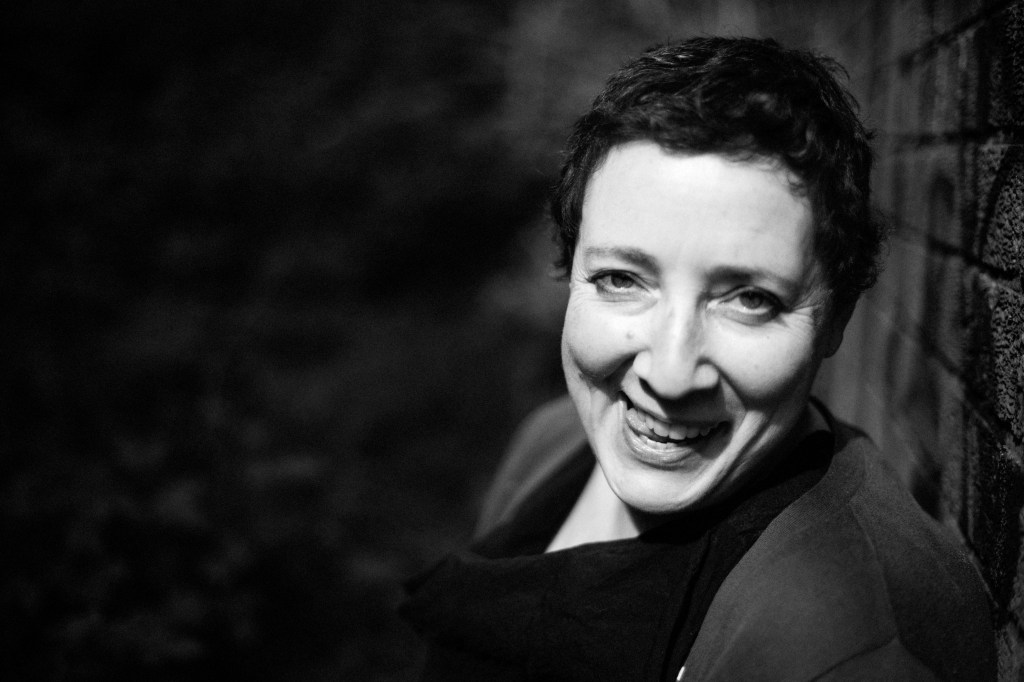
Black and white photograph of Tania Hershman by Grace Gelder. Thanks to Tania Hershman for permission.

“The Heir” by Anne Kelly: a novel inspired by a postcard.

Congratulations to Anne Kelly on the publication of The Heir. I had the pleasure of working with Anne in Clane Community College some years ago when I was teaching Creative Writing there. One evening after an exercise involving written and visual prompts, including postcards, Anne announced she was going to write a novel based on a postcard image of The Cradle by Berthe Morisot (1872).

Readers, she wrote the novel – The Heir – and I had the honour of launching it along with Celine Broughal in Naas Library and Cultural Centre last month.

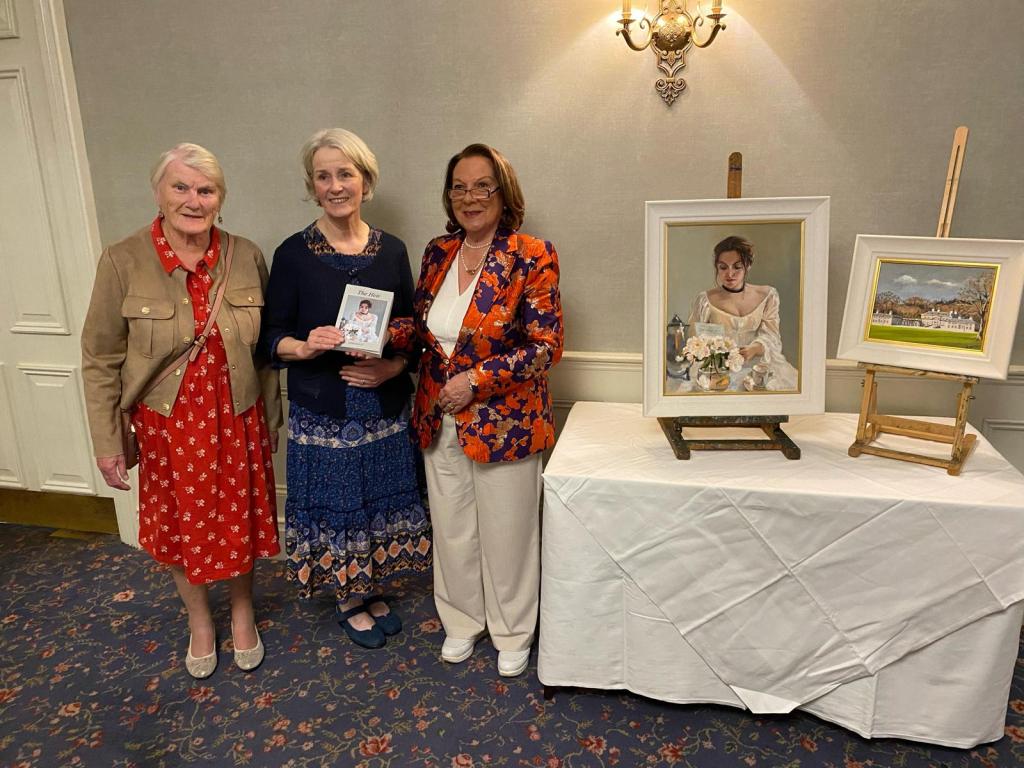
L to R: Celine Broughal, Anne Kelly, Shauna Gilligan at Naas Library and Cultural Centre, 16 October 2025 (Photograph with Anne Kelly’s permission).

See Photographer Tony Keane’s Gallery of The Heir launch.

The Heir has become an instant best seller in Barker and Jones and Anne is currently on a “launch tour” with this, her debut novel. Last week the novel was launched in ‘Comer in Kilkenny with fellow writers Betty Brennan and Jane Meally (both members of Clogh Writers) .

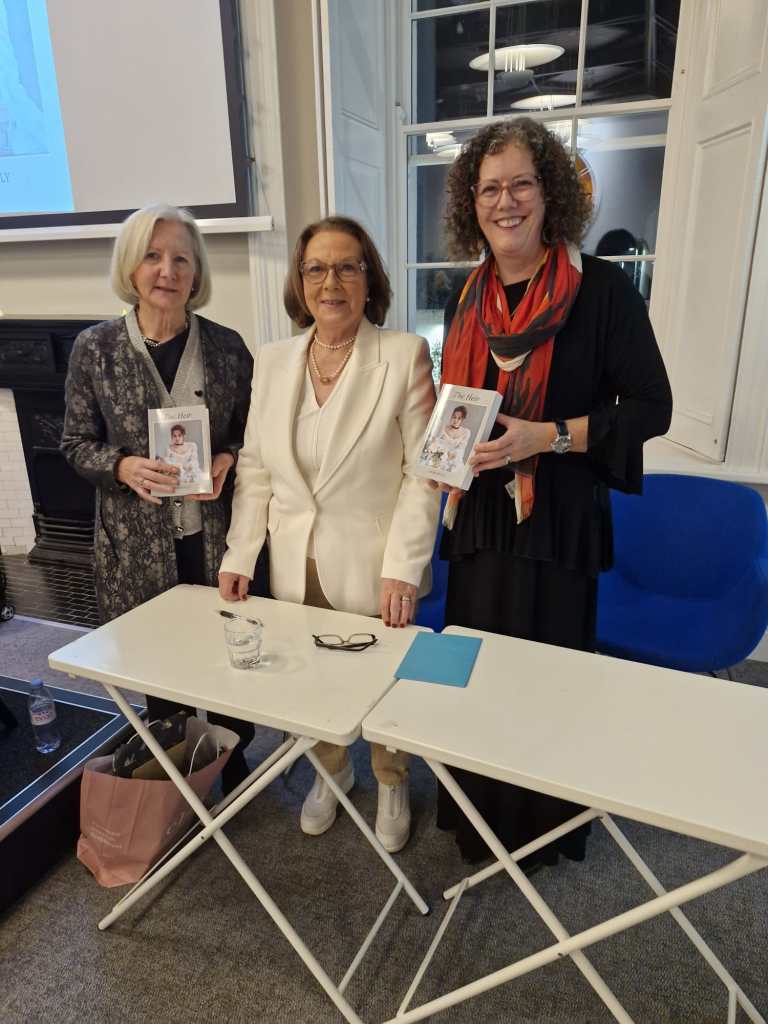
L to R: Betty Brennan, Jane Meally and Anne Kelly at “The Heir” launch in ‘Comer, Kilkenny, 28 October 2025 (Photograph with Anne Kelly’s permission)
  • For more on The Heir, read in an interview with Anne Kelly in Kildare Now.
  • The Heir can be purchased at Barker and Jones (Naas), The Kilkenny Book Centre, and The Coffee and Book Shop.
  • Anne will be signing in The Elms Christmas Event (Punchestown Naas Co Kildare) Thursday 6th November between 5 and 9pm.

Writers Chat 80: Colm Scully on “Neanderthal Boy” (Wordsonthestreet, 2025)

Colm, Welcome to Writers Chat. We’re talking about your second collection of poetry, Neanderthal Boy (Wordsonthestreet, 2025). It’s a collection that deserves to be read with care and with time and one that rewards the reader with each re-read. You’ve said that it was eleven years in the making which I can imagine as the collection has a heft and breadth to it, which intertwines past and present, as Matthew Geden puts it, “with a masterful touch”.

SG: Let’s begin with the sculpture on the cover and the title. I was intrigued as to why you used “boy” rather than “man” as so many of the themes and experiences that you explore in the collection have an “everyman” feel. Were you inspired by the sculpture or was it inspired by your words?

CS: Neither really, Shauna. The title poem was one of a series I wrote a few years ago about modern man’s antecedents, Cro Magnon Man, Neanderthal Man, Homo Sapiens. I think I was exploring our nature, as humans, through a deep search into our past. I have always been fascinated by evolution and how we as humans have an innate superiority complex over the rest of life forms. This may have helped us get to this point, but it could be hindering us now, as we deal with complex environmental and political problems. At least six or seven poems in the collection fall into this theme. I was actually going to call the collection, Stolen Memories, as I often take on a persona from history, but Matthew Geden, who was reading the collection for me, felt this was a clichéd title and suggested I run with Neanderthal Boy. I think the boy in the title refers more to the individual poem and evolution and change than hinting at boyhood as being a theme. This particular character just happens to be young, as are several other characters in the book.  As for the sculpture on the front, it was created by my daughter, Isabel, for a transition year project about four years ago. I loved it and probably connected it to my poem immediately, storing in the back of my mind the thought that I would use it as the front cover for my book.  My first book also had a male figure in the frontispiece, a shot from a Roman floor mosaic. It seemed like a good idea to create continuity with my book covers. Also, I often see people using art by family members on their books, and I think it’s a good way of personalising the work. Or maybe it’s just that I consider myself a boy, even though I am 58 years old.

Image of the front cover of Neanderthal Boy showing a sculpture of a boy against a black background.

SG: I like the idea of considering yourself a boy at 58, but I do believe that our creative selves are very closely connected to our child-selves. The importance of memory, the telling of childhood stories and identity formation comes through in many of the poems. In “The Electrician” the narrator follows in his father’s footsteps in his own way and in “Rote Learning,” you paint a moving picture of the power of memory, poetry and words and how different generations listen and remember. I loved how the “tools” of each trade – Electrician, poet/teacher – provide the link to your father and mother, and then on through the generations. Do you think writing poetry and making film-poems is your addition to this lineage?

CS: That’s a lovely thought. I suppose we always think about ourselves in isolation; what we want to do, what we are achieving, what we want to be. But your question makes a lot of sense, and I don’t think I thought of it like that before. Yes, I am a bit obsessed with family, history and what is kept or passed on, what we can learn from the past.  It would be nice to think that, in my own way, I am doing what I am supposed to be doing to pass on ideas, beliefs, traditions from previous generations, playing my part in that intergenerational human chain. As Heaney says in Digging,                 Between my Finger and my thumb, the squat pen rests, I’ll dig with it.

Maybe I  am doing a little electrical wiring, of a sort, with my poetryfilm, or passing on the love of poetry my mother gave to me. Hopefully.

SG: Up against this personal exploration are wider narratives – some political, for example, “A History of the Pharmaceutical Industry in Ireland 1990 – 2020”, “An Alternative History of Ireland” – can you speak about your interest in varying historical narratives coupled with the stories we tell ourselves and the official stories we are told about our country – and, more importantly, as you explore here, the voices that are silenced?

CS: Thanks for pointing out these poems, Shauna. Though they are not ones that I found easy to get published in magazines, I am quite fond of them. Political poetry is difficult, although some say that all poetry is political. I personally try to shy away from politics in poetry, at least away from the polemical. One has to be outrageously funny, like Kevin O’Higgins, to get away with that kind of work. I planned, once, to write a chapbook entitled, Alternative Histories, sparked by the aforementioned poem about the Travelling Community. It’s always a risk to take on the voice of a group of people that you are not a member of.  Cultural appropriation is a real thing. I do feel that Travellers have been treated unfairly, and we seem to have a blind spot, as a society, to their cause, while simultaneously portraying ourselves as liberal and inclusive in an international arena. I think we set up Traveller society to fail, through our policies over many decades. We should not be surprised, then, that the travelling community still has a lot of issues. It’s our fault. In the case of  A  History of the Pharma Industry, it’s not really a political statement against the multinationals or the pharma industry. It refers to my career as a chemical engineer for 30 years. It’s about capitalism and the realisation that dawns on us, after the fact, that we are mere adders of value to capital, in our working lives, creators of wealth for others.  Perhaps the stories in my poems can elaborate on a side to these topics that can be hard to illuminate in everyday discussion.

SG: It is a great poem, Colm. I also very much liked the re-imagining of and placing yourself in another voice or person at well-known historical moments or events. In “Stolen Memory” you bring us to Terence McSwiney’s funeral through the eyes of a child, and in “Easter Monday” an unnamed narrator remains at (her?) desk trying to complete her work “as per Mr Keane’s instructions,” unnerved by “the crashing and banging in the foyer below” by the men who have “taken over the post office.” In the “Lord Protector” you assume the voice of a Cromwell tired of Ireland who yearns to be in Essex and in “Sparrow Hawk” and “Sparrow Hawk II” you remind us of the violence of humans against animals. Assuming the voice and being of anther is part of being a writer. Did you enjoy delving into these alternative beings, and placing yourself (or your imagined narrator) at the heart of history?

CS: I loved it really. I always regret not doing history in my Leaving Cert, though I went on to study it in UCC as an evening arts course in my late twenties. History of all sorts really inspires me. When I combine this with my love of poetry and story telling it seems almost unavoidable that I should want to go to those places and tell a story through the eyes of someone who lived at the time. Almost always, with me, it’s an attempt to tell from another perspective, something that’s not the generally accepted narrative, We don’t tend to hear Oliver Cromwell’s side of things, or the point of view of a female office clerk in the GPO in 1916, or a child delighted with his day out, oblivious to the significance of a republican funeral. I take on these people’s personas to try to empathise and learn a little more about the times, maybe garner an insight or deeper understanding of what it was to be alive then and how it might illuminate our understanding of the complex world of today.

SG: And on understanding complexities in our world, there is a philosophical thread running through the collection. I found myself re-reading many poems and particularly enjoyed “Evolution,” “Cro-Magnon Woman,” and the chilling – and unnervingly fit for our times – “Saracens at the Gate.” There’s a great rhythm and chilling atmosphere in your exploration of the advancement of time and ideas, and how new discoveries and research change our perception of ourselves and our human histories. We all yearn to know the thread that links us to those who went before and yet what we think of as our firm knowledge can be questioned, and changed, with the contrary notion being true too – as in the opening line of “Evolution”: “These days I remember things that never happened.” Do you think this could be the overarching theme of the collection?

CS: Yes, I think it could be. I am not Heaney’s biggest fan, yet I find myself mentioning him for a second time in this interview. I think of his collection title, The Human Chain, as perhaps being a fitting catch-all for many of my poems. I do find it hard to pin down an overriding theme in the book, as all the poems, apart from the Progress of Man sequence, are quite independent of each other. I am aware that an overarching theme or subject is the de rigueur way to create a collection today, but I find it a difficult thing to do. I’d find it impossible to sit down and write twelve sonnets about the months of the year, for example. I said in another interview, recently, that my first collection was about finding my place in the world, whereas this one is about exploring our interactions as humans with the natural and built world. However, I feel that you may have summarised it better in your question.

SG: The everyday and individual memories or experiences that can also be interpreted as universal are very much present in the collection: for example, “The First Time The Pope Came,” “Purpose,” “Tea Ceremony” and “Interior Group Portrait of Penrose Family” with its perfect final line “We left as we entered, only our portraits remain.” This poem is also a mesmerising film poem. How did the themes examined in these poems influence their placement in the collection?

CS: Personal and familial poems have always had a place in my work. We are all aware that these are the poems that people connect and empathise with quickest. But, as they also tend to be the most frequent poems written, one must be selective about when and on what specific theme one writes, as sentimentality and nostalgia can easily overtake us. I know a successful poet who says he never writes a poem involving any of his family. This I mistrust, as family are so important in nearly all our lives.  The First Time the Pope Came is very much a memory poem,  narrating the weekend of the Pope’s visit to Ireland in 1979, as closely as I  can remember it. This, along with several other poems, got automatic inclusion in the collection because they were published in good journals (Cyphers in this case). I have to trust the eye of experienced editors as well. Tea Ceremony is quite a light Ars Poetica, Purpose I would consider a philosophical poem, whereas Interior Group Portrait is very much in the general theme of the book, connectedness and the anthropocene.  In terms of why they got in, I would say that my approach to this collection was very different from that taken for my first collection. In the first, I sent out about 100 possible poems to four different people: Poets, a short story writer, and my wife. I got them to vote for their favourites. Being a scientist, I used this to come up with my top forty. In retrospect, I think this was a mistake. Poetry is so subjective, and individual opinions vary so widely that a small sample of four cannot adequately seperate what is good from what is bad. This time, I decided to pick out my own personal favourites from several hundred that had been written over the intervening years. This included many poems that I felt were good, but that I never got published or received positive feedback on. I think I have learned that I am an ideas man, and sometimes the quality of the poetry suffers at the expense of the idea.  This time, I tried to pick poems that I felt were technically well constructed as well as having interesting content. 

SG: Thank you for your generous answers, Colm. We will end with a few light questions:

  • Quiet or music when writing? When editing?  Quiet. Silence if possible.
  • Coffee or Tea?  De caff tea. Indigestion has forced me off coffee.
  • Bog, Sea or Mountains?  All three. I love the open air.
  • Do you have a go-to book that you frequently re-read? Dubliners. I first read it when I was seventeen, and I can’t get over its beauty and genius.  He was twenty-three when he wrote it, but seems to be able to understand what it feels like to be any age, from young to old.
  • What are you working on now?  Right now, I am reworking short stories that I wrote over several years, hoping to get some of them published. Also, I have written a novel that needs a lot of work. Then, of course, there are the poetry films. I currently have too many things that I need to work on.

Thank you to WordsontheStreetPublications for the advance copy of Neanderthal Boy. It is available to purchase here.