Writers Chat 45: Linda Lappin on “The Soul of Place” (Travelers’ Tales: Palo Alto, 2015)

Following on from our recent Writers Chat, much of which focused on place, Linda and I decided that we’d like to revisit our 2015 Writers Chat about The Soul of Place A Creative Writing Workbook: Ideas and Exercises for Conjuring the Genius Loci.

Cover image of The Soul of Place

Linda, I was delighted to hear of a writing workbook dedicated to place. I feel it is something that the writing world needs – and place, which is so central to narrative, is often omitted from generic writing books. The ‘blurb’ describes the book as an “engaging creative writing workbook” in which you present “a series of insightful exercises to help writers of all genres—literary travel writing, memoir, poetry, fiction, creative nonfiction—discover imagery and inspiration in the places they love.”

Having had the pleasure to read your latest publication I found it a fascinating and easy read – before I even tried out some of the exercises with my writing groups. It left me with a number of wonderful ideas of how I might update writing prompts and exercises I regularly use with groups as well as introducing me to new techniques, and, more than anything, new perspectives on writing about place. This is what stays with me, now that I have put into practice some of your suggestions – how The Soul of Place sets out intriguing and original perspectives on writing into place, about place and from place. (I’ll be writing about this again, later!)  

SG: So, a few thoughts, questions, and considerations for you, Linda. Firstly, am I correct in my understanding that your premise for this book stems from your own journey in writing and in place and the knowledge gained that to go deep into our creative selves we must reach into the soul – the soul of place?

LL: Yes, this book retraces various itineraries I have explored through many places as a writer, a reader, and teacher.  It grew from two seeds, so to speak, the first is my own strong response to archetypal places which stir my imagination – islands, gardens, old houses, ruins, all of which appear in my fiction, essays, and in my life. The second was  a travel writing course I designed on “place-based writing” for students visiting Italy, where I live,  for the first time. My idea was to send them to interesting places, a medieval village, an Etruscan site, a baroque sculpture garden, ancient houses and churches, street markets, cafes, neighborhood festivals, train stations, a pilgrim’s road in the woods, to discover their own reaction to these environments while developing greater physical and intellectual awareness of the places themselves and engaging with the stories happening around them. I think creativity begins with awareness – taking time to notice who we are and where we are and with finding a new relationship to the space we live in and its contents.

SG: I agree with you about awareness, Linda. This is something that Julia Cameron and other artists talk about. Now you define the genius loci as “a form of intelligence operating within the environment in synergy with human beings.” Can you tell us a little more about how it affects our creativity, our writing, especially in relation to where we are writing (the physical place – e.g. an office, a school, a prison, a writers’ retreat etc)

LL: Architects and city planners, and before them geomancers and shamans have always known that architectural space and landscapes can be manipulated to produce certain feelings or induce certain behavior in human beings—to diverse ends.  Places, like people or planets, have emanations which may be the combined product of various forces –cosmic, terrestrial, conscious, unconscious, individual, collective, natural, artificial, historical, cultural. For me your question touches on two related but different issues.  The first and most obvious is, how can we obtain beneficial influence from our environment. I think it is possible to create  – or find — environments where our creativity and general well-being are enhanced, and discovering where those places are  can be a passionate, lifelong adventure for anyone, not just a writer or artist.   That doesn’t mean that your writing place has to be one with a stupendous view, but rather one where you are able to commune with yourself and summon your memory and imagination – and this can be anywhere, from an office to a prison cell to a picnic table at the park. It is a subjective thing, however. You have to find a place that feels right for you.  Very often we don’t really know how the places WHERE  we live affect us. Another issue this question raises concerns the type of influence which might come from the Soul of Place.  In some cases, it might not be a happy, or beneficial one, but a withering and painful one.  Some places may transmit to us violence and fear. Still in such places writers may find stories they feel compelled to tell, and an incredible energy may be available to help them at their task. Lastly, to reply to your mention of writing retreats: whenever we have the opportunity to write in a different setting and place, it helps refresh our senses, find new perspectives. I think that’s very useful.

SG: Sorry for such a loaded question, Linda, but I’m glad you mentioned perspectives – as your book is full of interesting insights about this. I was particularly taken with the section on Deep Maps – and blown away by the story you tell of Heat-Moon literally walking on the US Geographical Survey Maps covering Chase County, and then walking across the County section by section, and the fact that it took 8 years of research and 6 years of writing to complete PrairyEarth. It really epitomises what you are proposing in your book – that we pay (literal) attention to the ground we walk on, and with all our senses. Could you comment on that?

LL: What Least Heat-Moon discovered about his environment – its multilayered structure with deep roots resonating within  his own psyche, is something we can all find in the places where we are living now and where we have lived or only transited in the past if we take the time to investigate them with our senses, feelings, and curiosity.

SG: Curiosity is something that I sometimes think we are letting slip away – with so much information at our (literal) fingertips. Where is the meaning? And the discovery?

LL: I think you are right, we  are so bombarded by information, images, news, ideas, it is impossible to take it all in. That’s one reason, I think, that being centered in a physical place, even if only for a brief time, is so important.

SG: I like the way the workbook is structured – you discuss concepts, invite the reader to a selection of further reading, and illustrate the practice of these concepts or ideas using examples from literature and your own novels, and then present us with some exercises. Are there any readings or exercises you wish you could have included in the book?

LL: At one point this book was a third longer than it is now, with specific poetry exercises, journaling, fiction exercises that made it unwieldy, and so in my final version I scrapped some of them. I did have a section on recreating environments in historical fiction, something which really interests me, in fact all my novels are set in the 1920s and one, Katherine’s Wish, focuses on the historical character of Katherine Mansfield.  I decided not to include this material in the book, but to leave it for a later time. Another thing I didn’t include was a special exercise on masks, related to Carnival time, in Italy, and I hope to do something with that, too sooner or later!

SG: Oh that would be interesting – please keep me posted on new ventures; you might even have a second book on place and objects?

Well, I suppose it depends on the response to this book, but my own research has continued since I completed The Soul of Place. I’d like to something more with writing rooms and writers’s rooms for example, and my publisher had a great idea for a short video or two based on the ideas in the book.

SG: I am interested in arrivals and departures and how these movements connect to and disconnect from place and, because of this, form our emotional attachments (or detachments) to places and landscapes. You bring this notion a step further when you invite the reader to study every day places such as parks, gardens, markets but also to deeply explore sacred places and spaces, and labyrinths.

LL: Living in a place like Italy, you are literally immersed in layers of history – also religious history,  in places where Christian churches incorporated pagan sites where Neolithic people worshiped in even earlier times or in places where Renaissance artists rediscovering the humanism of the antique world  fused pagan and Christian symbols – The secret languages of myth, symbol, and the sacred are stamped on so many places here – gardens, towers, palaces, churches, grottoes, roads, you are constantly transiting from the bustle of contemporary life to these other zones which appeal to another part of our nature which is less concerned with the quotidian and hungry for feelings and sensations that make us feel part of a greater world. Most cultures do have special places, religious or natural sanctuaries, “set aside” to restore us from the frazzle of daily activities.  It can be very rewarding for writers to explore these different settings and their effect on our creativity.  

SG: It is clear that place – and placing cities, landscapes, exterior and interior to the forefront of your writing – is important to you. I know you discuss talismans in the book so can you tell us if there are any mementos that you carry with you? I, for example, have some Mexican milagros that go everywhere with me when I’m writing. I feel they connect me to place, and now that I have a name for it, thanks to your book, they connect me to the genius loci.

LL: Nowadays I tend to travel lighter than I once did.  As far as talismans go, I keep a ticket from the Paris metro in my wallet –hoping it will somehow anticipate my next visit to a place I love. The old house where my husband and I go on week ends sometimes is a talisman in itself. Full of curious objects accumulated in various ways, it definitely has a personality of its own.  Rather than taking things with me when I travel, there are certain things I love to bring back, like dried herbs, honey, or seeds. I  always bring back sea salt from Greece, Sardinia or France. People think I am crazy to bring back a kilo of salt from a Greek or French supermarket –but I just love the idea of adding a little touch of the Aegean or the Atlantic when I cook.

SG: Oh goodness, this has put a smile on my face – when I go to the west coast of France (which is pretty much every year), I always bring back large bags of sea salt. There’s nothing like it! The other day I made a wonderful salty caramel using it. Moving on from this, can you describe the place where you wrote this workbook?

LL: Different places: A sunny room in Rome with a balcony over a very noisy street, with jasmine and plumbago vines and a nest built by a pair of blackbirds that then never occupied it.  A darker room in an old house in a village outside Rome, with  a red brick floor and thick chestnut beams, with a view of the canyon, and a woodstove with a glass door through which I can watch the flames.  A courtyard in that same village, with lush Virginia creeper clinging to old stone walls and flowering hydrangeas concealing a fountain.

SG: I can just picture them – all so inspirational, magical and, of course, so full of vibrant colour. Tell me, where will you spend the summer months – and what will you be working on?

LL: I will be visiting relatives in the US and then hopefully,  will return for a short visit to Greece, where I am hoping to organize a five day Soul of Place Writing Workshop with a writing center on the island Andros next summer. I am trying to finish a memoir about a house sit in Tuscany, called Postcards from a Tuscan Interior, and also have a couple of novels on the fire, as well. Thanks so much for your interest in my book. Your questions have been quite challenging.

SG: Thank you for engaging so fully with the questions, Linda, and I wish you every success with your book which I will continue to use as part of my teaching and which I recommend – highly!
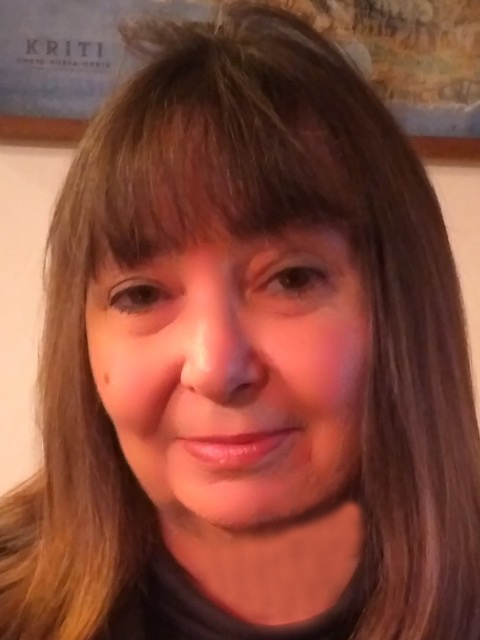
Photograph of Linda Lappin (Courtesy of the author)

Connect with Linda and Purchase The Soul of Place–A Creative Writing Workbook: Ideas and Exercises for Counjuring the Genius Loci (Travelers’ Tales: Palo Alto, 2015)
Where Would You Like The Bullet – Aidan Higgins Doc on RTE

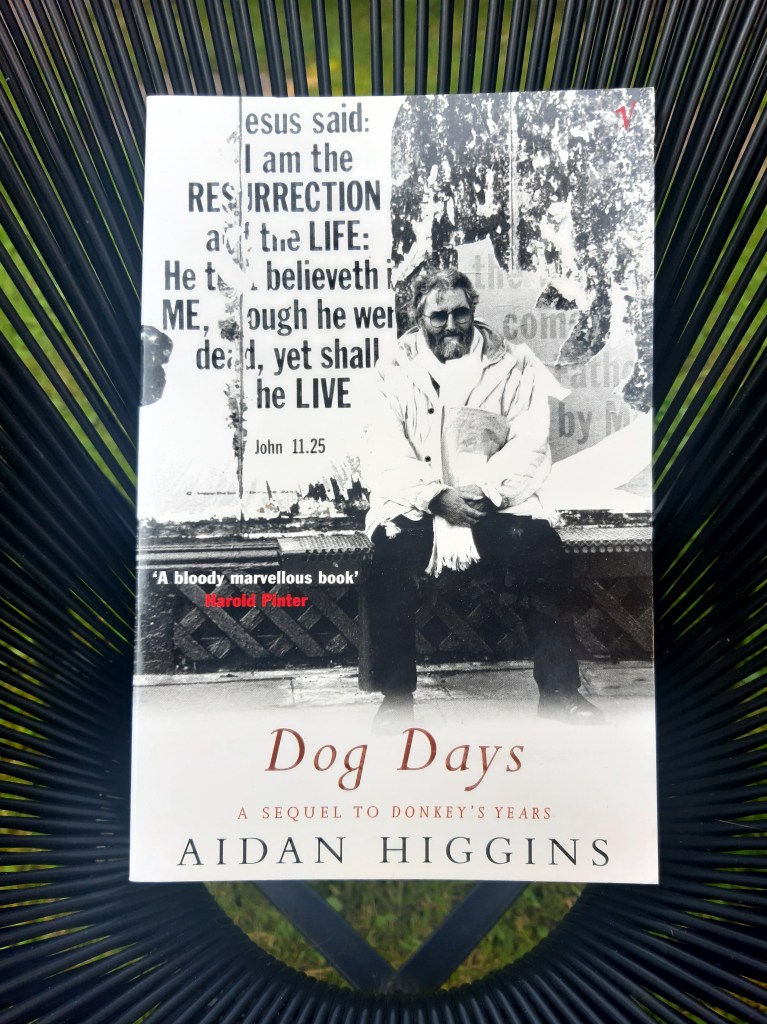
A few years ago I was delighted to take part in Neil Donnelly’s documentary on Irish writer Aidan Higgins edited by Seamus Callagy. The documentary premiered in the Irish Film Institute and this week aired on RTE. If you didn’t catch it, watch it here on playback. (I appear briefly in Part Three discussing Dog Days with other Kildare writers)

For more background and information about this documentary take a read of my 2019 Writers Chat with Neil.

Seamus Callagy writes for RTE about his experience on the documentary.

Watching the documentary has prompted me to return and re-read the extensive and expansive prose of Higgins and to explore Alannah Hopkin’s A Very Strange Man: A Memoir of Aidan Higgins.

Image of Dog Days: A Sequel to Donkey’s Years by Aidan Higgins

Writers Chat 44: Anamaría Crowe Serrano on “In The Dark” (Turas Press: Dublin, 2021)

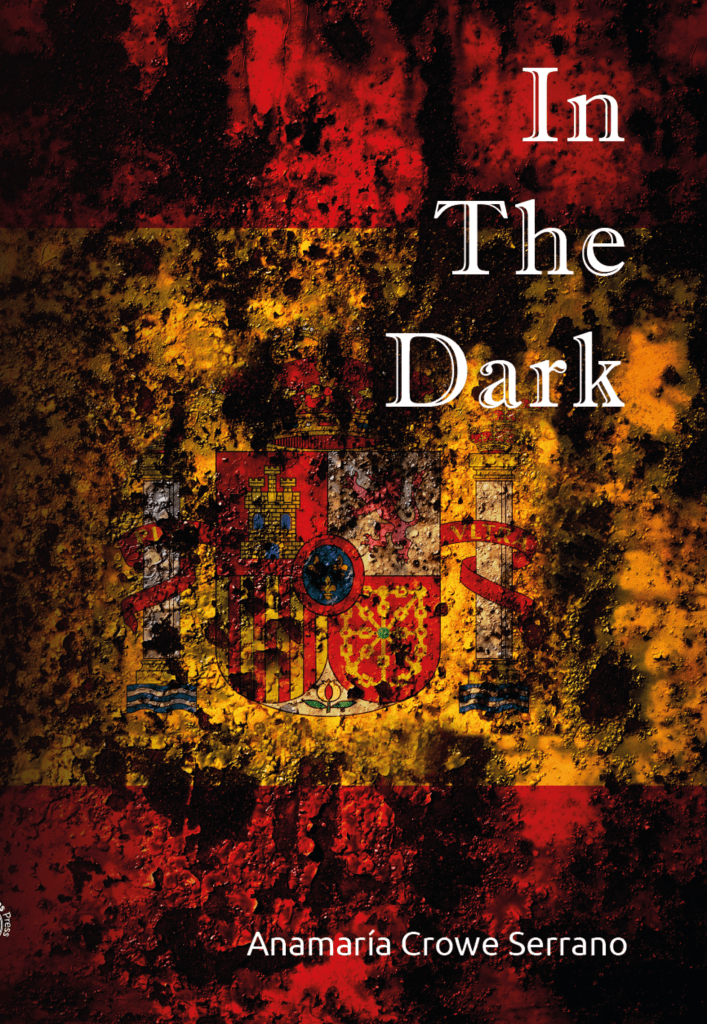
You’re very welcome to my Writers Chat series. We’re going to chat about your debut novel In The Dark (Turas Press: Dublin, 2021), which, from its captivating opening brings you right into the world – the house – of sisters María and Julita in north-east Spain, 1937.

Cover of “In The Dark”

Buy In The Dark from Turas Press

Disclosure here: I’m working on a trilogy set in the Spanish Civil War in the north west region of Asturias (prompted by my father-in-law, an extract of which was published in Reading The Future (Arlen House: Dublin, 2017)) so I was particularly interested to read about your personal connection to this period in Spanish history. I’d love to talk about personal connections, the difficulties in writing from personal history and on the ground research but that would take us too far away from your wonderful novel that we’re here to discuss!

SG: I read In the Dark in two sittings – I couldn’t put it down! So let’s start with the writing. From the brilliant opening and daring style, you exhibit real control over the language, moving the narrative along and introducing us to the characters in ways that keep us engaged and make us care.

Bar Joselito. The bustle and Joselito’s widow, Encarna, are one and the same thing. Encarna is tables and chairs. She is indoors, outdoors, shutters open, sawdust, chalkboard. She is tinkling glasses, barrels and rolling laughter…..

I don’t think I’ve ever read an opening in this style that brings character, setting and movement into such sharp and wonderful focus! Can you talk to us about the style of this novel and how it was for you to write in this form? Did your vast experience of poetry and translation influence this style?

ACS: Thank you, Shauna, for taking the time to read my novel so carefully and do this interview. Your own trilogy sounds fascinating. I really look forward to reading it. It seems that there’s a lot of interest in the Spanish Civil War at the moment, especially in Spain, of course, now that this generation have the benefit of hindsight from a remove of several decades.

Coming back to your question, I’m delighted the style grabbed your attention because style is the most important thing for me. I’ll put up with a less than satisfactory plot in a book I’m reading if the style is beautiful. Finding the right mode of expression took a while, but rather than force anything, I put the writing to one side for a year or two and did a lot of reading instead. It was a bit scary not having a clue how to go about writing, but I had to trust that the ideas and inspiration would eventually come. And they did, thanks to three books in particular whose styles jumped out at me and made me realise that what I was after was something very spare and evocative with a strong visual dimension. It’s no coincidence, I suppose, that the three writers of those novels are also poets. They were Han Kang’s The White Book, translated by Deborah Smith, Maryse Meijer’s Northwood, and Robin Robertson’s The Long Take. I loved the fragmented structure of their work, the silence of their blank spaces.

As you point out, my own background in poetry definitely influenced what I liked and how I wrote. I’m used to brevity and enjoy playing around with mood, distilling it to create more impact. When it came to writing from the point of view of the man hiding under the stairs, his thoughts fell naturally into an even briefer style that reflects the cramped dimensions of the space he is in, the lack of air, the disintegration of his state of mind.

SG: Thank you for such an expansive answer. I’m not familiar the writers or the three books you mention but I really must seek them out – the idea of the silence of blank spaces is fascinating.

The main story of In the Dark – and there are many stories within this novel – is narrated by the sisters, María and Julita, and through the secret the house holds – the man locked in the dark room under the stairs. I enjoyed the alternating viewpoints and how, as the plot was revealed to us, you brought in more narrators, including, the interesting (and brief) one of Julita’s son Fernando. Can you talk a little about how this device of multiple narrators served to unfurl the plot while keeping a steady pace?

ACS: The characters that take refuge in the house were good fun to write, I must say. In the beginning, I brought them in partly because I wanted to build tension – with all these people around it becomes more difficult to take care of the deserter under the stairs. But somehow their lighter side emerged and it was interesting to examine the way they could change the dynamic between the sisters. You are right that they also serve to provide their own stories. In some ways they highlight the horror of being stuck in the middle of the war with no homes of their own, unsure of what will happen to them even when the war ends. Through their political comments I also wanted to convey the complexity of the political situation, how ordinary people could only have a partial understanding of what was happening in Spain because the information they got in the media was censored or very biased. In that regard, Fernando, who is home on leave after almost a year, brings hope to the house, but knows he can’t really tell the family the truth about the disorder at the front because the family wouldn’t believe it. He, too, unwittingly becomes part of the censorship machine.

Something else that I was keen to get across was the power that creativity and the imagination have in helping us endure difficult circumstances. That’s where Fina’s character came in. She’s the dancer, the antidote to war, completely misunderstood and even ridiculed by characters who hold extreme views that lack flexibility or imagination. But her presence in the house is transformative for more open-minded characters.

To keep the plot moving forward with all these different voices vying for attention, I had to pace it carefully, making sure I interspersed the voices sufficiently, giving them turns to speak. At the editing stage, I had to juggle them a bit to make sure it worked and that no particular voice dominated.

SG: What a wonderful insight into your writing and editing process, Anamaría! In the Dark is set in Teruel, north-east Spain in the winter of 1937. We get a very convincing picture of the city yet it felt like a character, even an everycity – almost universal. Part of this is because of the descriptive and sensory language you use throughout the book to place us with and in character and show us the narrative drive.

“It’s easier for a village to swallow the darkness when there’s a rumour of light”

“Every cell in María’s body is bursting for fruit. A town is a living thing, she thinks, her progress almost static through the rubble. But shops and houses here are no more than skeletons of buildings. A town is its people. Dies with its people. Wheezing, spluttering, crumbling to demise.”

“Time expands and the world shrinks to the size of the house.”

Can you talk a little about the importance of place in In the Dark?

ACS: That’s a great question. For me, there are always two aspects to a place: the physical aspect – which has to do with its architecture, layout, geographical location – and the emotional aspect – which is its people and everything that goes with that. The two are usually interlinked, but people are ultimately more important than buildings, so in some way, there is this very human element to places that makes them what they are. I’m always struck by devastated cities in war zones. They hardly can be called cities anymore because so much of them is demolished, but as long as there are still people living there, trying to survive, we refer to cities as though they still exist – “this is such-and-such a place”. Once the people are gone, though, the place ceases to exist and is written into history: we say “that was such-and-such a place”.

The relationship between people and place gives the city its personality. There are places like public parks, libraries, that to me are a bit like friends. You go there to connect with the place because you want the feelings that it produces in you, you feel comfortable there in a similar way to when you pick up the phone to a friend because you want that particular connection. I think it’s why it seemed quite natural in the novel to personify the city sometimes. Like a character, as you say.

When the city changes dramatically because of a war – or a devastating flood like the one I witnessed in my teenage years in Bilbao – it’s as if some part of you dies with it. There’s a huge sense of loss. It takes years to rebuild a city and, even then, it’s never the same again. This, too, was something I wanted to capture.

SG: I love the idea of the public places/amenities being friends. You paint a convincing picture of sibling relationship – and all its nuances – in the characters of María and Julita and is, at times, most interesting seen through the eyes of the man in hiding who says they are “so unalike as sisters”. They represent different factions in the war – Nationalist/Fascist and Republican/Democracy – as well as different types of femininity and in their relationship to motherhood. Can you talk about the characterisation of the sisters?

ACS: With María and Julita I wanted to create characters that were complex and that, in Walt Whitman’s phrase, contain multitudes. I wanted characters that revealed one face to the world but who had another side to them that was less obvious, less understood. Julita, who supports the Communist party on the Republican side, comes across as bossy and insensitive, belittling others as a way to purge her inner pain – her husband was drowned in the war, after all, and her two older sons are fighting at the front – but in her own way she is selfless, staying in the besieged town to help María, and always doing whatever she can to help the war effort. María, on the other hand, appears to be generous in offering her home – albeit reluctantly – to the refugees, but she is grieving for her infant daughter, and finding it hard to cope with the tension that is building with the arrival of the refugees. She also dithers in her political position. She’s not fascist, but she questions what is happening in the Republic, the methods that are being used to bring about social reform.

I wanted their relationships with the important men in their lives to be less than straightforward too, in some ways because that’s often how life is, but also to hold another mirror up to the many ways that life and human relations disintegrate during war.

One key thing about the sisters that I wanted to convey was their resilience and their ability to adapt to the horrors of war. Women everywhere form the fabric of society, which is especially important when times are tough. It is a role that has long been undervalued across the world, but the quiet domestic role women play is like the soul of society – the unseen pulse that is vital for everyone’s wellbeing. Both María and Julita fulfil this role in their very different ways. 


SG: For me, one of the strongest voices was that of the man in hiding. You capture the physicality of his space – both physical and head – through your use of space and the page. One particular scene that struck me was one in which he experiences PTSD when he is trying to think of María:

…still pain persists–if only I had a cigarette [….] my whole body flinches–if only I could deny this body–disown it–be someone else…think–think her dark–her fingers slim around me–think the soft–her mouth–her tongue–the bullet–no–think–think […] think her soft–his guts–his–fuck–NO–María think–please–María please–his hole–his head….

Can you talk about the role of this narrator and how he holds the book together – being the voice of the war and of the house?

AMC: During the Spanish Civil War, like in many other wars, there were men who spent long periods of time, sometimes decades, in hiding so as not to have to fight. They lived in tiny spaces, the size of a coffin in some cases, or in attics, or under a stairs, with just one person, usually their wife, helping them. It was a horrific existence. In Spain they’re called “topos” (moles) because they often went blind from living in the dark. That’s what gave me the idea for this character.

He deserted from the war because of the atrocities he saw at the front and because his political allegiance shifted as the war progressed; he doesn’t want to fight for a cause he no longer believes in. I think many people in Spain at the time didn’t quite understand the full implications of the political situation and were misled by their leaders. George Orwell, famously, understood it but even though he wrote Animal Farm from his experience of the Spanish Civil War, that aspect of the Republican government’s vision for Spain doesn’t seem to have filtered much into the public consciousness. I wanted the man under the stairs to have the kind of clarity that other characters lack. It is ironic that his voice, the only one that seems to understand what’s happening politically, is silenced. He is physically in darkness but he has insight into the government’s mismanagement of the country, whereas the other characters are getting plenty of information from the media but, because of the censorship and propaganda, they are the ones in the dark as to what is really happening.

His desertion also represents a moral dilemma that runs throughout the novel. He is doomed to think about his position, which in many ways is an act of cowardice, while he watches everyone in the house through a crack in the wall. Even though he has no contact with anyone except María, he has his own kind of relationship with everyone in the house from his observations of what’s happening. He’s like a common denominator no one knows about. I hope readers might be conflicted about him – and other characters – even though there’s good reason to be sympathetic towards him. The more I researched this novel, in fact, the more I realised that people fell victim to circumstance in the lead-up to the war. It would seem wrong to judge from our privileged remove. Yet the moral questions remain for us to mull over.

SG: Although In the Dark is about war and how it destroys countries, villages, communities and families, it is also very much about the domestic and how women (María, Julita, Encarna, Fina, Senora Rojas) and children try to uphold a sense of normality and keep both families and communities surviving. I particularly enjoyed the struggles and triumphs of birthdays and Christmas and the joy – the times when “for a whole evening no one has thought of the war” – when in reality, “Moral is a fragile thing. Like happiness.”

How important was it for you to convey the domestic alongside the war?

ACS: This was one of the most important things I wanted to convey, apart from the political conundrums. Books about war, whether fictional or factual, seems to focus mostly on the fighting, on strategies, supplies for troops, but there is less mention of the women and children and older or infirm people who are living in the middle of a war zone, struggling desperately to stay alive in their own homes. I was very curious about this and wanted the novel to portray the resourcefulness of women. They had to adapt constantly to all kinds of deprivations – freezing temperatures, electrical outages, no running water, little fuel or food, poor access to medical services, blocked and/or dangerous streets, children at home because schools are closed, homes damaged by shelling… The list is endless.

The amazing thing is that humans somehow manage to rise above extreme hardship and find ways of bringing moments of joy, like the festivities you mention, into the day. It’s important to do that in order to counterbalance the grief and uncertainty. In the novel those celebrations tend to revolve around the children, but it’s clear that they are as important for the adults. So is the semblance of normality that you mention. The family play cards in the evening as they always have done. When the women go out, they make some effort to look well even though they have very little. They wear lipstick or use a good hat pin. It’s important to cling to some element of dignity, of one’s former self. It’s what keeps people sane.

SG: It’s so true what you say about how we “manage to rise above extreme hardship and find ways of bringing moments of joy into the day” – and that’s something that you capture so well in this novel, In The Dark.

So we’ll end this Writers Chat, Anamaría, with some short questions:

  • Beef or rabbit stew? Lentil stew. I’m vegetarian.
  • Mountains or beach? Mountains.
  • Red or white wine? White.
  • Music or silence when writing? SILENCE!
  • What are you writing now? I haven’t started writing yet, but I have an idea for another historical novel about an Irish man most people never heard of, but who was influential in changing the course of Western literature.

Thank you so much, Anamaría, for such a open and informative answers about your process and characters.

Readers who want to know more – here is a selection of articles by / interviews with Anamaría Crowe Serrano:

Connect with Anamaría Crowe Serrano via her website

Buy In The Dark from Turas Press

Thank you to Turas Press and Peter O’Connell Media for the advance copy of In The Dark