
Linda, You’re very welcome to my Writers Chat Series where we’re here to talk about your latest novel, Loving Modigliani: The Afterlife of Jean Hébuterne which has recently won the women’s fiction category in the IRDA (Indie Reader Discovery Awards) for 2021. Congratulations!
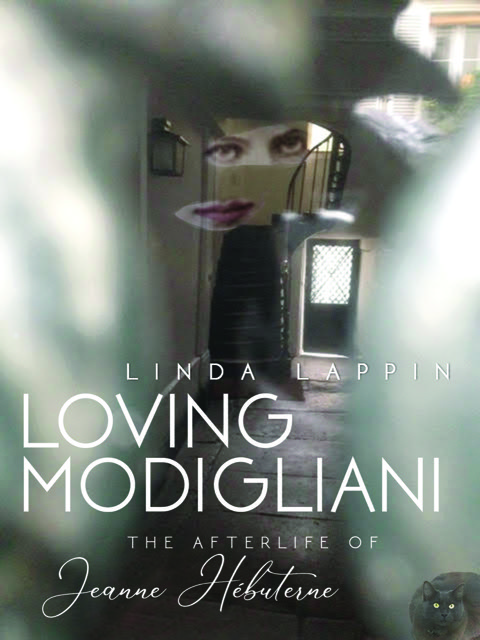
I thoroughly enjoyed the whirlwind journey you brought me on, Linda. From the atmospheric opening where we meet Jeanne Hébuterne, Amedeo Modigliani’s pregnant widow just after she’s died from jumping out a window to her search for Modi in the afterlife in the other Paris where “Sooty mist enveloped all, muting most colors but gray, purple, and black and draining the luster from things” to art students and curators in the twentieth and twenty-first century. Congratulations on an inventive and innovative novel that has been described as “Part ghost story, part murder mystery, and part treasure hunt…a haunting, genre-bending novel” (Gigi Pandian). Let’s start by listening to you read some of the opening of this novel.
SG: Thank you for that beautiful reading.
Tell us, what inspired you to write this wonderful story and in the structure in which you place it – six parts (Gothic Fairy Tale, Ghosts of Montparnasse, The Notebooks of Jeanne Hébuterne, The Missing Madonna, Afterlife and The Holy Family of the Circus). I know that you came upon the name Beatrice Hastings pasted on a wall when you were researching Katherine Mansfield (she was Mansfield’s lover and muse/lover of Modigliani). But from there…?
LL: Thank you so much for this invitation, and this opportunity to talk about Loving Modigliani. I am delighted by your response to the novel. And your questions are very stimulating. I became interested in Jeanne Hébuterne because quite by chance I saw an exhibition in Venice in 2000 where her artworks were being displayed for the first time in eighty years – perhaps the first time ever. Up until then, I had known Jeanne only as Modigliani’s common-law wife and favorite model. I did not know she had been an artist.
The drawings and paintings on display were eye-popping, and revealed Jeanne’s complex personality and considerable talent. I was instantly captivated and began researching her life—although at that time not much was available. This was partly because the Hébuterne family did not collaborate with biographers or writers in the decades immediately following her death; they were closed in the silence of grief. After Jeanne died, her artworks were taken by her brother, Andre, and basically shut away for eighty years, until he died, after which his heirs allowed them to be publicly exhibited (and more recently, auctioned).
I wrote an essay about this exhibition entitled Missing Person in Montparnasse: The Case of Jeanne Hébuterne, published in The Literary Review, in 2002, which was very well received and nominated for a Pushcart Prize. But I wasn’t ready to let Jeanne go! I began to mull over the idea of writing a novel about her life, using a narrative technique similar to the one I used in writing Katherine’s Wish, which is about Katherine Mansfield, but there were very few resources to draw on. Most biographers dismissed Jeanne’s artistic ambitions, if they mentioned them at all. The only traces I could find of her were in period memoirs and in a few biographies of Modigliani, especially in the books written by Jeanne Modigliani (the daughter of Jeanne and Modi, whom Modi called by her Italian name, “Giovanna”); and of course Modigliani’s portraits of her and her own artworks.
I also contacted the curator of the Venice show, Christian Parisot, author of many studies on Modigliani and interviewed him several times, in person and by email.
I did come across a lovely book by Patrice Chaplin which is very intriguing because she mentions being shown letters written by Jeanne to a friend, which do not seem to have been shared with other Modigliani-Hébuterne biographers. These letters supposedly came to light after the death of Jeanne Modigliani, who had collected documents pertaining to her parents in an archive. It may be that they have passed into other private hands, or have gone missing. Chaplin also mentions briefly a diary kept by Jeanne which so far has not surfaced publicly. These missing pieces of the puzzle obsessed me. Where were they? Were they being kept secret? Did they really exist?
I began writing Loving Modigliani as a diary kept by Jeanne from her sixteenth birthday onwards. However, I ran into a snag because the diary format would not allow me to write about her death. You can’t commit suicide and live to report it. Moreover, the relationship between Jeanne and Modigliani suffered a severe crisis near the end, mainly because of his illness- and I didn’t want to write a book with a gloomy atmosphere. I was also increasingly interested in Jeanne’s transformation through time: her afterlife, and the way she sprang out of a black hole, with her works resurfacing from a vacuum, and the changing perception of her work and of her role in Montparnasse.
So I put the diary aside for awhile and began writing the middle part, set in 1981, in which the unnamed narrator, a graduate student in art history, brushes elbows with Jeanne’s ghost. In this section, the narrator meets Madame Rosier, now an elderly lady who knew Jeanne and Modigliani in her youth and involves the narrator in a search for Jeanne’s legacy – the missing portrait, “The Holy Family of the Circus.” I didn’t realize at first that this narrative was part of the same project as the diary – but then it gradually dawned on me that I was writing a frame for the discovery of the diary.
The first section, the gothic fairy tale, was a surprise even to me. I saw a photo of Jeanne looking a bit vampirish – very pale with dark lips, a haunted, magnetic gaze – but also provocative. And I thought – well suppose I tell this story through the perspective of her ghost? And something clicked. I intended to write just a short prologue, but it kept getting longer and longer, and acquired a mythic dimension, with the Other Paris and Theo. Once Jeanne had become a spirit, it seemed natural that she should want to be reunited with Modigliani’s spirit – and so her journey became a quest, as in fairy tales, when the heroine must undertake a dangerous journey in order to be reunited with her beloved.
I have gotten a lot of comments about the creepy ambience of the Other Paris, “where dead people live,” as one reviewer said. My depiction of it had many sources of inspiration—the myths of Orpheus and Eurydice – including the film Black Orpheus, and Gilgamesh’s journey through the dusty underworld. The keeper of the Dome of Undoing has Tibetan associations. I also made a mental map by imagining Paris without color, and without markets, cafes, restaurants, food shops – what would be left?
My mother had just died when I started writing this part, and my father died two years later as I was finishing the novel. I don’t think I could have written about death in the same way – had they still been alive. I had a new familiarity with the subject. Also, this was my first real foray into magical realism. In my mind’s eye, I had a vision of Jeanne, accompanied by the little dead boy Pierre, and Theo the cat, walking through a cemetery at night, and it wouldn’t leave me. It was a sort of cartoon image firmly fixed in my imagination.
With regards to Theo: Among the apocryphal stories of Jeanne and Modi’s life in Paris is the mention of a cat Modigliani kept that ran away from the studio after they died. The cat in my novel was originally black, like the cat in one of Jeanne’s paintings. But then one day in Paris, I ran into an extraordinary gray cat who literally stared me down for over five minutes. Theo would have had eyes like that! So Theo became gray in the novel.
There is one odd thing, though: I wrote the description of Notre Dame destroyed by fire with truncated spires about two years before the fire actually occurred.
SG: Thank you, Linda, for such an honest and personal insight into your process. My deepest sympathies on the deaths of your mother and father. In the first part, Out the Window, which takes place in 1920, you bring us right into a fairy-tale of Jeanne who is in-between worlds, tethered by a string attached to her middle which is “clear and stretchy as a jellyfish tentacle, and a bit sticky, like old egg whites. It shimmered like mother of pearl.” You create an unsettled atmosphere yet also set up ghost-Jeanne’s narrative as a way to bring us on her adventure through time to find Modi (who died just two days before her). Later in the Notebooks section, Jeanne recalls seeing Modi across the room full of artists and realises that
There was a thin golden thread strung across the room from his body to mine, like honey dripping from a spoon.
Can you talk about writing this narrative with the thread of time and connection?
LL: Loving Modigliani is a cross genre, because it blends well-researched historical events and people in the real world, with fantastic events and elements – ghosts, the afterlife, etc. The two realms only come together in momentary flashes, or “spots of time,” when the mythic undercurrent intrudes upon the so-called real in the characters’ consciousness.
For example, in the prologue there is a blue door painted with symbols and Hebrew letters connecting the worlds of the dead and the living. In the real world of the diary, Jeanne glimpses that door in the mirror of her parents’ dining room. Rats stitch the worlds together in the novel, but so do crows and roses. There are several examples of these “spots of time” scattered through the book, particularly in the ending.
I think the mythic dimension – or call it the subconscious, or whatever, is always with us, guiding us towards certain choices, and allowing us to experience occasionally aspects of the greater reality in which we move unawares.
By the way that “blue door” actually exists, but in another part of Paris, not far from where I place it.
SG: Yes, I loved how you handled the subconscious and the various worlds throughout. Much of the novel revolves around desire – who desires whom, who is allowed to desire and how that desire is expressed. We know Jeanne’s family objected to her moving in with Modi and Jeanne rather than Modi was judged for being unmarried, giving birth to a girl and then leaving her with the nuns because she felt unable to give her the care she needed. Death seems to continue the barriers that life put in place for her as, just after she’s had to witness her own funeral – the talking cat Theo who brings her between the world, tells her that to find Modi, “there is one condition. The other person must desire equally ardently to be found by you. And also the circumstances must be right.” After she and Modi are lovers she recounts in her notebook:
I stand naked before the cheval mirror. My hair cascades to my knees—so dark on my pale skin, and my orange nipples showing between the glossy strands. This is the body of Eve, of a Pre-Raphaelite maiden. The body I have given to Modi. The body I refuse to let my mother control.
In Part 2, Ghosts of Montparnasse, recounting the fact that Jeanne was a talented artist in her own right, Madame Rosier says “Today a woman may be whatever she desires, except perhaps… a woman.”
Can you talk about desire, beauty, censorship, ownership and the body as themes?
LL: I will take you up on the body theme because it is vital to how I see Jeanne. When I first saw photos of Jeanne Hébuterne, aside from her extraordinary beauty, what struck me was how 1970’s she was –her long hair in braids, her ankle-length Pre-Raphaelite style dresses, which she designed and sewed herself, her beaded headbands and hand-crafted necklaces – she might have stepped off the stage at Woodstock or the Filmore West, or off a Pentangle album cover. If you had glimpsed her on a college campus, or on a street in San Francisco or London in 1972, you wouldn’t have thought she was someone from a different era.
And so many elements of her story coincide with family dramas of the 1970s: a young girl moving in with her boyfriend who is quite a bit older and also a drug user, an artist who rejects bourgeois values of marriage and monogamy, with no real income or home. An advocate of free love. And the young girl, fairly innocent, raised in a comfortable, protective, middle-class environment, is very attached to her family who has sheltered and pampered her – and yet rejects the stability and affection they offer in order to pursue her own passions. She willingly chooses poverty and precariousness as the rebel’s partner. It’s like a story out of the 60s and 70s, of the culture of fulfilled personhood we inherited from that era which prized freedom, creativity, nonconformity, self-realization and self-expression above all things. And the latter: self- realization and self-expression included sexual freedom and fulfilment: Jeanne wanted to be free and fulfilled as an artist, an individual, and a woman and we respond strongly to that today. We feel we have a right to freedom and fulfilment on whatever level we seek it. That conviction may be a legacy of feminism, or romanticism, –but it isn’t how 19th century society -or early 20th century- thought women should think, much less act.
Among Jeanne’s drawings are some nude sketches, believed to be self-portraits, which reveal that part of the female body which until recent times could not be portrayed, but had to be hidden by drapery or a fig leaf. Courbet’s famous painting of female genitalia, l’ Origine, was a great scandal and was not viewed publicly until our own era. Ten years prior to Jeanne’s enrolment in art school, women were excluded from drawing classes with nude models of either sex. So here is Jeanne at 18 or 19 – breaking all the taboos, drawing parts of herself which proper ladies should never even name, suggesting an ownership of her body and her celebration of it, quite remarkable for a young woman of her age and of her era. Certainly there were women like Kiki or Manet’s model, Victorine Meurent, who boldly displayed their bodies to the male gaze, and later became accomplished artists. Kiki had begun modelling nude at the age of 14. But being working class girls, they were much more streetwise than Jeanne and less dependent on their families. For Jeanne, those drawings are an extremely bold statement and a challenge. They aren’t the product of the male gaze or even intended for it. She is saying quite simply: This body is me and I have the right to draw it as I wish.
Yet there is a big difference between us and Jeanne: a difference that has evolved through women learning to own their own bodies and exercising control over them. Unlike women today in North America and Europe, Jeanne did not have access to birth control.
Rudimentary methods of contraception did exist in Jeanne’s times – but it is doubtful that a girl of Jeanne’s background would have known about them. Such things could not be talked about openly by people of a certain class. Jeanne’s first child was born in November 1918. She was nearly nine months pregnant with her second child when she died in January 1920 – so that, say from March 1918 – not quite 20 years old, until her death — she was either pregnant or nursing a baby. Motherhood was an enormous responsibility for Jeanne. It came too soon, and there is some suggestion that she suffered from postpartum depression. Her first meeting with Modigliani has been dated to somewhere between 1916 and 1917 – so their life together was quickly burdened with the responsibilities of parenthood.
Modigliani never painted Jeanne in the nude – but he did use a nude sketch of Jeanne on a program for an exhibition. In his portraits, she is always dressed, sitting or standing — it’s believed that was because he saw her as a proper young girl – a wife. But Jeanne had a different idea of herself.
Madame Rosier’s comment echoes a comment by Anais Nin, who held to a rather conservative standard of femininity and believed that although women should seek freedom of expression also sexually, they should not sacrifice their femininity by imitating males. She didn’t like women wearing jeans, for example, because she felt they were unfeminine.
I find it revealing to compare Jeanne’s fate with that of two other artists, her contemporaries. Georgio O’ Keeffe, ten years older than Jeanne, and Anais Nin, five years younger. Both lived long, full productive lives and championed the role of women in the arts and were our heroines and role models in the 1970s. Anais Nin writer, artist, dancer – in temperament is perhaps more similar to Jeanne, than O’ Keeffe, and a believer in women’s sexual and creative freedom. Yet both O’ Keeffe and Nin had what Hébuterne did not have: the moral, emotional, and economic assistance of a successful man who supported and advanced their careers. Nin had the support of several men – her husband, her psychoanalyst, and Henry Miller, who encouraged her work—along with several male editors. Jeanne had nobody supporting her art – and had to give her support to Modigliani.
SG: How interesting to compare her plight to that of Nin and O’Keefe – it comes back to agency and power again, of which Jeanne had neither in those year. Loving Modigliani: The Afterlife of Jean Hébuterne is also about family – the one that Jeanne left behind so that she could devote herself to Modi, the one she creates with Modi – almost unintentionally – and the one which the characters in the novel search for -the “Holy Family of The Circus”. Jeanne’s epitaph reads “Devoted companion to the extreme sacrifice.” Do you think family and the bounds of family in the story of Modi and Jeanne required such sacrifice?
LL: I think Jeanne did not have an adequate system of support – either among friends or family after she took up with Modigliani. Some of Modigliani’s friends looked askance at her because she was “bourgeois” and because she seemed timid and reserved in their company. She wasn’t “one of them.” Yet she lived and died at the heart of an unrepeatable moment in the history of art. Satie, Kiki, Foujita, Marevna, Picasso, Kisling, Cocteau – stars pulsing at the center, with dozens of parallel universes: Hemingway, Joyce, Sylvia Beach, Gertrude Stein, and their scintillating satellites. She was part of a creative explosion taking place in Paris, which corroborated her existence and validated her aspirations, although it could not give her emotional support, when times grew rough with Modigliani, or with adapting to motherhood while so young. And though their friends Kisling, Soutine, Zborowski, Ortiz de Zarate were like a family in some ways to them –some important levels of support were missing.
Her own family rejected Modigliani because they did not feel he was a suitable partner for Jeanne – for various reasons. Who wants their daughter to run off and get pregnant by an older man with a bad reputation? Possibly they also objected to the fact that he was Jewish, and her father would not allow her to be buried alongside Modi in the Jewish section of Père Lachaise cemetery. She was buried in a cemetery on the outskirts of Montparnasse, and it was only after her father’s death that her mother allowed her remains to be moved and placed in Modigliani’s grave. And yet, three years after her death, her parents issued a notarized statement, not exactly of forgiveness, but conceding that it was mutual love that bound Jeanne to Modigliani.
The Hébuternes did not welcome little Jeanne Modigliani into the world, and they did not adopt her when she was left an orphan. She went to live in Italy with her aunt, Modigliani’s sister, who kept her in the dark about Modigliani’s life. I believe as an adult she suffered greatly from the Hebuternes’ rejection of her. Jeanne Modigliani dedicated her life to trying to find out who she really was and what her parents were really like.
The Hebuternes had hoped that Jeanne would give up her baby for adoption, but Jeanne would not, and Modigliani doted on his daughter. There exists a letter written by Modigliani to his mother, expressing the love and joy he felt as the baby began to grow. However, when the child was boarded at a convent, Jeanne went every week to see her – Modigliani, it seems, never went. It is also unclear who paid for this arrangement. Possibly her parents. Or perhaps Zborowski, Modigliani’s agent, who feared the child’s presence in the studio might interfere with his work.
Jeanne’s relationship with her brother André was the most strained and stressful of her family ties. They were very attached to each other – and before going off to war, André was teaching her how to paint. Her relationship with Modi began after André was mobilized. His absence left a vacuum which Modigliani filled. Understandably, knowing of Modigliani’s reputation, her brother could not condone their relationship, and doubtless blamed himself for failing to dissuade Jeanne from the path she had taken – and also for her suicide, as she fell from the window while he was nearby, asleep. The rift between them was probably lacerating to both, but neither one would concede an inch. I try to catch this feeling in the notebooks in my novel: Her very strong affection for her brother, her worship of Modigliani, and the impossibility of reconciling the two. André’s pain at her death was infinite. He would not talk about her after her death.
Still it is worthwhile noting that by sequestering her artworks for decades in his studio, André Hébuterne also preserved them from the destruction of time and negligence. Since Jeanne’s status an artist was not recognized until our own times, it is unlikely that her works would have been carefully preserved.
SG: Yes, I felt that their relationship and I include post-death in this was so complicated but that the portrait you paint of him is that his actions were for the greater good. I felt like the novel was an education in art and artists; a joyful one. Through Jeanne’s notebooks we meet artists such as Foujita, get to roam around his studio which is “is crawling with plump, well-kept, mischievous cats and dozens of drawings and pictures of the same”, we get to know Soutine through Rosier and Mathilde and most of all we get to know Modi and Jeanne. Tell me about your research into the world of art and art critics, particularly in relation to the Venice exhibition and the ‘lost’ painting, The Holy Family of The Circus which symbolises the unity and passion that Modi, Jeanne and Giovanna shared.
LL: The Venice show in my novel draws inspiration from the first show of her work, which I saw in 2000, along with more recent events, including a major exhibition in Tokyo. During my research, I had opportunities to discuss Jeanne and Modigliani with other writers and researchers, and with Christian Parisot, who first “launched” Jeanne as an avatar of Montparnasse, and had worked closely with Modigliani’s daughter, in collecting documentation about Jeanne’s life. I also met someone who claimed to be descended from one of Modigliani’s illegitimate children.
But I also was drawn into the shadowy labyrinth of forgeries, falsified certificates of authentication, and other scandals–which have sullied the careers several people connected to Modigliani’s legacy. This is in itself a tantalizing story that cannot be told in our own times! The whole question of forgery is quite fascinating. In past eras, paintings were often attributed to the “school” of an artist – painted by a pupil trained to replicate the master’s style, which was perfectly acceptable. Today it would not be. Twenty percent of artworks currently in museums are thought to be forgeries. Some famous painters began by forging artworks by others. Michelangelo began by making Roman and Greek fakes. Other artists forge their own works – which is a bizarre concept. Artworks are sometimes misattributed, and some artists enjoy imitating someone else’s style as a joke or a challenge to their skill. Sometimes artists collaborate with each other on works which they then attribute to a fictional artist. I know of well-established artists who buy anonymous paintings in junk shops and then “improve them” for re-sale, or just for fun. We know that Jeanne and Modigliani occasionally painted the same models, in similar poses. Did they ever collaborate on the same painting, or add touches to each other’s works?– it’s possible.
There exists a canvas with a painting by Modigliani on the front and a sketch by Jeanne on the back. There exists a drawing of a man with a hat which has been identified as a portrait of André Salmon by Modigliani, but has also been identified as a portrait of Modigliani by Jeanne… So the whole question of authenticity is tenuous. Why is a scribble by Picasso worth millions, while one by a lesser known artist worth so little? How is it possible that Jeanne’s sketches were considered of little value and now sell for formidable sums? It is the myth surrounding the artist that gives a work its value. Successful artists nowadays spin myths around themselves while they are still alive; others accumulate new layers after their deaths. Reputations can be invented and manipulated at any point in the process. This has happened to Jeanne Hébuterne.
The missing portrait in my novel: The Holy Family of the Circus – doesn’t really exist. It is an object which changes over the course of a century, adding new elements and gathering new meanings as it travels through time, enduring war, occupation, censorship, greed, oblivion. Yet it remains faithful to the impulses which engendered it: tenderness, playfulness, love, the need to leave a mark, and the joy of making art. But is it genuine, a copy, or a fake? The reader must decide.
SG: I love that – I did that twist-and-turn thing of believing/not believing as I read it! In “In the Other Paris” and “The Harrowing,” the novel has a Kafaesque feel to it – where the rats are what stitch the two worlds together and Theo tells Jeanne that “there are other forms of disintegration which are even worse than physical death.” I love how you evoke place in the notebooks. Take this opening of the first one:
Saint-Michel-en-Grève, July 19, 1914: I like to sit here on this rock and look out over the ocean as I scribble in my notebook. I could spend hours gazing at those inky clouds, drinking in the colors with my eyes and my skin. I love the ocean in all weathers, even like today when the wind is raw and the salt stings in my throat and the mud from the field clings in globs to my shoes and dirties the hem of my cape.
Later in the narrative talking about Jeanne and Paris, Madame Rosier says “She wanted her life to be art, and art, her life” and the narrator thinks “Who doesn’t? I thought—isn’t that what we were all doing in Paris? Isn’t that what the city promises us?” In this novel you also take us to Nice and Rome as well as Gauguin’s Island (a fantasy). How important was place to you in the research and writing of this novel?
LL: There’s a lot to say on this: I have dedicated years of research, as you know, to the power of place, and the way places fashion our identity. Places inhabit us as we inhabit them, and sometimes let us glimpse those “mythic flashes” or “spots of time” or “shoots of everlastingness” connecting us to another current of experience. I am fascinated by the concept of the Deep Map – which I discuss in my book The Soul of Place, as a resource writers can use to conjure up stories and imagery. On the subject of maps, Mary Butts has written
As happens to people who become imaginatively conscious of a great city, he came to have a private map of it in his head. A map in which streets and groups of buildings and even the houses of friends were not finally relevant, or only for pointers towards another thing, the atmosphere or quality of certain spots… These maps are individual to each lover of a city, charts of his translation of its final significance, of the secret working of men’s spirits which through the centuries have saturated certain quarters, giving them not only character and physical exterior, but quality, like a thing breathed. Paris is propitious for the making of such magic maps.
For me, this is a partial description of the deep mapping process and of the genius loci. Elsewhere, Butts has described Paris as a person – or if you will – a sentient being – whose passions and stories its inhabitants enact unawares. A similar concept has been expressed by Lawrence Durrell in the Alexandria Quartet. The idea of place – and the specific place of Paris, as not just a setting, but a character, resonated in the back of my mind while writing Loving Modigliani. Much of my research for this book took the form of “deep map making,” over a period of years, with trips to Paris, a lot of walking and prowling about, also visiting museums, galleries, libraries, and bookstores, sifting through all kinds of resource materials, especially old photographs, and scribbling maps and time lines. But it also entailed meeting a few ghosts.
SG: Thank you, Linda for such full and generous answers. We may return to this theme when we revisit our 2015 The Soul of Place, Writers Chat. To finish up, some fun questions:
- Paris or Rome? Paris
- Modi or Jeanne? Jeanne
- Red or White Wine? White
- What are you reading now? “The Offing” by Benjamin Myers. A beautiful book!
- What are you writing now? I am rewriting my first unpublished novel about a castaway girl, a female Caliban, in 18th century Italy on an island where a penitentiary is about to be built. The title is Prisoner of Palmary. Another project is recording audio books of short stories and parts of my novels –with sound effects. I will be adding those to my website
Connect with Linda via her website and watch out for our next Writers Chat which will focus on creative writing and place. I wish Linda much continued success with this novel, Loving Modigliani: The Afterlife of Jean Hébuterne.


 Shauna Gilligan Writer