Writers Chat 79: Celia de Fréine on “Even Still” (Arlen House, 2025)

Celia, You’re very welcome to my Writers Chat series. We’re here to talk about Even Still (Arlen House, 2025) your debut short story collection in English which also includes “The Story of Elizabeth”, your short story shortlisted for Short Story of the Year Award at the An Post Irish Book Awards. The collection has been described as having “compelling” prose with “characters’ voices pitch perfect” and a “unique, characteristically stark, witty perspective on the lives of women and girls.”

SG: Even Still invites the reader into the emotional heart of each narrator – over a range of ages – and stays with some of them as they create life-paths out of places of poverty, away from damaged families and through schooling and employment that only echo where they’ve come from. Did these themed threads dictate the title and running order of the collection?

CdF: Thank you for the invitation, Shauna. I’m delighted to take part in the Writers Chat series. The word ‘debut’ seems strange applied to me at this stage of my life and so late in my literary career, but Even Still is indeed a debut collection of stories that were written on the side, over many years, while I worked in other genres. The title was chosen at the last minute, and with difficulty. I feel it suits the collection, however, as it suggests the possibility of alternatives. As for the running order, I thought it best to place the three stories that feature the character, Veronica, in chronological order. “My Sister Safija”, “Vive La Révolution” and “Irma” grouped themselves together. It seemed appropriate to place “La Cantatrice Muette” and “Félicité” between later stories, some of which have characters common to them. As you say, many of the stories explore the lives of  characters who emerge from disadvantaged backgrounds, then attend schools / are employed by institutions in which they are challenged as a result of that background; the question as to how they manage to improve their lot is one that intrigues me, not only in this book, but in general.

Cover image of Even Still showing part image of the painting ‘Fitzwilliam Square’ by Pauline Bewick – side profile of a woman on a balcony in Dublin looking down on a road on which seven cars move along.

SG: The collection is as much about place as people – starting with the cover art (‘Fitzwilliam Square’ by Pauline Bewick) – and the opening story “Pink Remembered Streets.” In these stories villages, towns, cities, and the buildings that form them rescue and trap their inhabitants. Can you comment on the importance of place in your stories?

CdF: The cover art, suggested by publisher, Alan Hayes, with its buildings, winding street and traffic, viewed by a woman from a height, is indeed appropriate. This is the first time I’ve been asked about place in my work and am happy to provide answers, insofar as they relate to this book. The buildings, in which the stories are set, are imagined, apart from the brief mention of a boarding school in “These Boots were Made for Me” and the houses described in “Pink Remembered Streets” and “The Accident”. Both of these houses were places in which I spent time; both were places of insecurity. The former is a flat in a house in Rathmines where I lived with my family during my early years, and from which we could have been evicted at a moment’s notice; the latter is my grandmother’s house in a seaside town in Northern Ireland where I spent my childhood summers, knowing the fun and happiness would end when summer drew to a close. Both houses have appeared in other work, as has security of tenure and the buying and selling of property. Another place that permeates the stories is the past, L.P. Hartley’s ‘another country’ where, in this case, there were few opportunities for girls and women.

SG: You tackle themes (such as domestic abuse, gun running, suicide, the poverty trap, cruelty) that could be weighty with, at times, a narrative voice that is wry and humorous. I’m thinking of the voices of Stella in “Panda Bears” and Eithne in “His Ice Creamio is the Bestio”. Was that a conscious, writerly decision or did those narrative voices emerge through the writing of the characters?

CdF: I tend to see the absurd in many situations and this is reflected in the stories “Panda Bears” and “His Ice Creamio is the Bestio”. In the former, Stella feels she must marry, not least on account of the urging of her friend, Eileen. The fact that both men she sleeps with wear hideous underwear and are poor lovers emerged naturally, as did the time in which the story is set: the opening occurs in late 1969, as suggested by the Mary Quant lipstick and the Beatles’ song; the fact that the timing of the gunrunning, set during the following Whit Weekend, coincides with the 1970 Arms Trial, was serendipitous. “His Ice Creamio is the Bestio” began life as a play in which I examined the lives of three generations of women from the same family, each of whom spent their formative years in different circumstances: grandmother, Eithne, from Northern Ireland, worked as a shorthand-typist during World War 11; her daughter, Francesca, an academic, grew up during the fifties in Dublin; Francesca’s daughter, Alannah, grew up in the Connemara Gaeltacht during the eighties. I found it bizarre, though credible, that three generations of one family could emerge from such different backgrounds on the same small island, and set out to explore how those differences impacted the characters.

SG: I’d love read a novel with these three generations! The stories often hold their power in the unsaid – or shown at a slant – whereby they rely on the readers’ close attention and intelligence to know or feel the real truth. Veronica’s stories, in particular, are great at this (the absence of Clara, for example). We know what happened to her – or we use what the narrative has stoked in our imagination. This makes it feel like these stories are a dialogue between writer/narrator and reader. Can you comment on this?

CdF: The subtlety probably spills over from my poetry where the number of words is more measured and the point never hammered home. I feel this approach works well in the Veronica stories, each of which focuses on the fate of a child: Clara, who falls prey to a paedophile in “Pink Remembered Streets”; the baby, Elizabeth, born of incest in “The Story of Elizabeth”; the unnamed boy, illegally adopted in “These Boots Were Made for Me”. I hadn’t planned that the common denominator in these stories would be the ‘child as victim’, as seen through the eyes of Veronica. Perhaps, because they are told at a slant, the stories demand the reader’s close attention, creating, as you say, an additional element to the usual dialogue between writer and reader; if this is the case, it was unintentional.

SG: And the unintentional is often the magic of the work! War, gender, and displacement are also explored in these stories, overtly in “Irma” and “My Sister Safija” which, as they’re bookmarked between other stories, seem to echo concepts of the outsider, whether it’s ideas of blow-ins, internal movement within the island of Ireland, or belonging through marriage. Did you set out to explore these themes or did they emerge through the stories?

CdF: War, gender, and displacement feature regularly in my poetry and it comes as no surprise that they have spilled over into Even Still. In addition, I should mention that some situations and characters in the collection are inspired by real events, though said situations and characters have been changed out of all recognition. The theme of the outsider, insofar as that person is from Northern Ireland, is one that worked its way into these stories. Having been born in the North and grown up in Dublin, I’ve always struggled to find out where I’m from, a question which drives much of my writing. I used to question whether I was entitled to explore my ‘Northerness’ as I hadn’t lived in the North during the Troubles but, more recently have come to  better understand how the fallout from the conflict reaches beyond the Border. Though I didn’t set out to write stories populated by Northerners, these characters presented themselves and exerted their influence to varying degrees on the situations in which they became involved. As for belonging through marriage, Stella in “Panda Bears” is a young woman from Dublin who ends up marrying a Kerryman and moving to Tralee. This idea was also triggered by personal circumstances: I worked for some years in the Civil Service where the vast majority of colleagues were from the country and cast me, the Dubliner, as outsider – even though when I finished work and went home in the evening I was cast, alongside my family, as outsider because we were from the North.

SG: Much of your writing has the poet’s eye for detail, the dramatist’s narrative curve, and the prose writer’s depth. Your descriptions and visual take on lives also has the film maker’s sensibility. Could you see any of these stories as short films? (I’m thinking of “The Short of It”, for example).

CdF: It has already been suggested to me that some of the stories would work on screen. As soon as someone gets back to me with a firm proposal, I shall give it my serious consideration! “The Short of It” is the only story I set out to write as part of an agenda. Some years ago I was devastated when my work was plagiarised and exploited on a very public platform. One of my sons suggested I write a revenge story in the style of Michael Crichton: Crichton finds novel way to exact revenge on critic | The Independent | The Independent. Although my son’s suggestion triggered “The Short of It”, the story changed out of all recognition once I got going and now bears no resemblance to the travesty which gave it its initial impetus. I like the juxtaposition between the narrator’s circumstances when young, cash-strapped and working in the Civil Service, she adapts sewing patterns to recreate dresses featured on the catwalk, and her response, years later, when she realises her writing has been plagiarised.

SG: You are a bilingual writer. Were any of these stories first written in Irish, and, if so, how did you find the translation process in terms of idioms, flow, and narrative voice? If not, would you consider translating any of them into Irish?

CdF: “My Sister Safija” was originally written in Irish and is published as “Mo Dheirfiúr Maja” in Bláth na dTulach (Éabhlóid, 2021) an anthology of work by Northern writers. As such, I had to transpose it to Donegal Irish and needed editorial assistance. You can listen to it, beautifully read by Áine Ní Dhíoraí, here: Mo Dheirfiúr Maja le Celia de Fréine – Bláth na dTulach (podcast) | Listen Notes. I would consider translating any of the stories in Even Still into Irish for a film script or play.

SG: We will end this Writers Chat, Celia, with some fun questions:

  • Bus or train? Tram. I love the LUAS. For longer journeys, I prefer the train but find myself travelling more by bus as bus stops are more accessible than railway stations.
  • Marmalade or jam? Marmalade. Thick cut.
  • Coffee or tea? An cupán tae, always.
  • What are you reading now? When I’m writing I read little other than newspapers (at the weekend) and research / fact-checking articles. As well as the above, at present I’m dipping into There Lives a Young Girl in Me Who Will Not Die (Penguin UK, 2025) the selected poems of Danish writer, Tove Ditlevsen. Recently I read The Forgotten Girls: An American Story (Allen Lane, 2023) by Monica Potts; and You Could Make This Place Beautiful (Canongate, 2023) by Maggie Smith (not the actor). All three books explore themes covered in Even Still.
  • These sound like great recommendations (I love Ditlevsen’s work!) What are you writing now? I’m about to sign off on the second edition of my poetry collection Aibítir Aoise : Alphabet of an Age (Arlen House, 2025); I’m also reworking my play Cóirín na dTonn with the team from An Taibhdhearc. Cóirín na dTonn was originally published as part of the collection Mná Dána (Arlen House, 2009 / 2019) and is recommended as an optional text on the Leaving Certificate Syllabus. I also have two projects on Louise Gavan Duffy, inspired by my biography Ceannródaí (LeabhairCOMHAR, 2018), on the back burner. As all these projects are based on, or inspired by, earlier work, I long to clear space for new poems, and get back to a YA novel in Irish which I began a couple of months ago.

Thank you, Celia, for such insight into your writing life and process. Here’s to finding clear space over the coming months and continued success with Even Still which can be purchased in Books Upstairs.
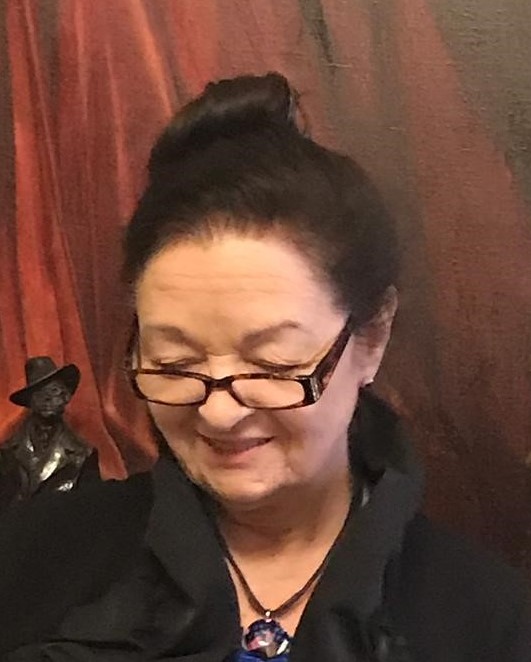
Photograph of Celia de Fréine, Princess Grace Library, by Judith Gantley used with permission.

New Short Story in Crannóg 58

I’m delighted to have a short story “Like a Hook” in the Spring 2023 Issue of Crannóg (Issue 58), it’s one of ten short stories in this issue. It’s a beautiful publication, with stunning art work, and a wonderful selection of fine poetry and prose. Brava to the editors. You can purchase Crannóg here. I was very disappointed not to be able to make the launch which was held in the Crane Bar, Friday 31st March. With thanks to the editors for accepting my work!

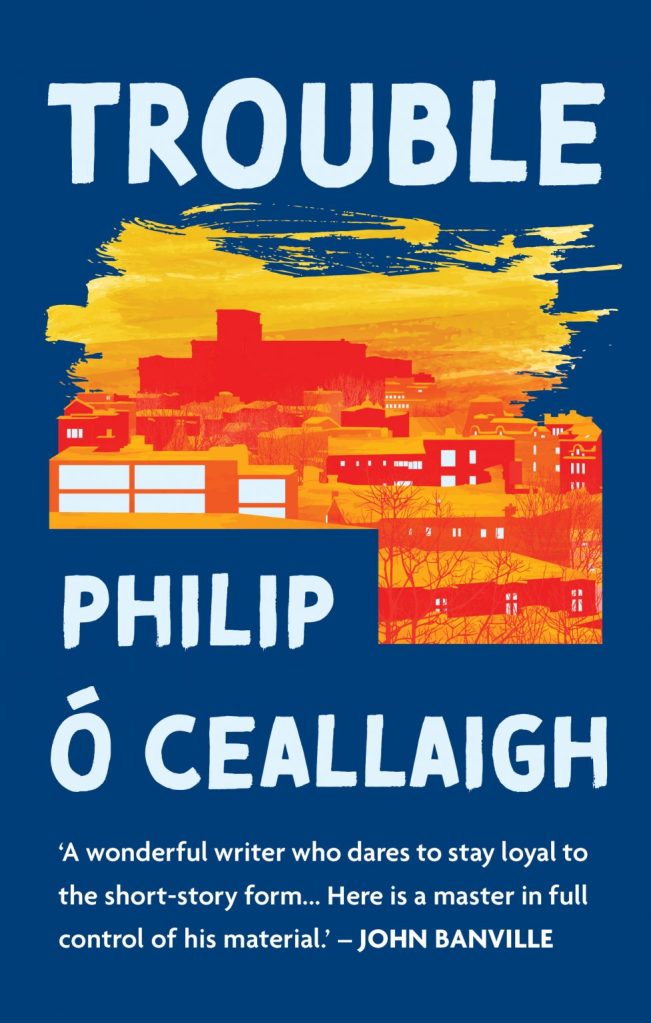
Writers Chat 41: Philip Ó Ceallaigh on “Trouble” (Stinging Fly: Dublin, 2021)

You’re very welcome to my Writers Chat series. We’re going to chat about Trouble (Stinging Fly: Dublin, 2021), your new short story collection which, in John Banville’s words, shows you as “a wonderful writer…a master in full control of his material.” I have to agree – the prose is tight and illuminating, the stories gritty and surreal.

I

SG: Let’s start with the form of the short story. You were awarded the Rooney Prize in 2006 for Notes from a Turkish Whorehouse. In an interview with the Irish Times you said “…all life is material you just don’t always know when it’s happening what you want to write about.” Tell me what draws you to and keeps you with the form of the short story – is it easier to write direct from life?

POC: I’m not sure what you mean by “direct from life”. But I’ve found that short narratives suit my way of writing, which is intuitive in the first draft, not guided by any great conception of what I’m doing in terms of ideas or where I’m going. I may be guided by an image or a mood or a situation. Anything that gets me writing the next line. After I have a draft, then I’ll start to see what I’m about. This resembles life a bit, in that we generally don’t know what’s happening to us while it’s happening, because we’re usually busy reacting to what’s thrown at us. Maybe later we figure things out and apply retrospective meaning. We’re creatures that feel things, and we create narrative sense as a way of dealing with what befalls us. So I’m guessing that what appeals to some readers in my stories – a sense of strangeness, disorientation, things happening – is what appeals to me in the writing, that nothing’s quite fixed or settled. And yet the written story needs to interesting enough, as a problem, that it remains afterwards, like a puzzle. At least this is how I experience films and stories that have some depth. I prefer not to feel that I’m being forced by forced by the director or author to feel something. You know, when it’s really blatant in a film, and the music tells you, feel sad now. If something is well put together you don’t have to resort to such cues, and the process isn’t finished when you leave the cinema or close the book. The story resembles something you take with you and needs to be absorbed, digested. Like an experience from real life.

SG: I love that you’re at ease with nothing’s fixed or settled as you write, as in life, and that you can still wrestle with the form – once the draft is down. And does writing in the short form tie in with your work as a translator (I’m thinking, here of For Two Thousand Years)?

POC: No. Except that it involves sentences, one at a time, trying to find the most elegant and concise rendering in one language of what appears in another.

SG: As a Part B to this question – There were a number of stories (“My Life in the Movies” and “My life in the City”) in which the same characters and places appear. I wondered if these could be the beginnings or middles of a novel – are you interested in the long form, at all?

POC: Of course I am, as an experiment, a challenge. I don’t feel limited in what I can do in the short form, but I have been curious to know what I can do, what happens if I push myself and try things I’m not immediately inclined to do. So I’ve written a couple of novels, but the experiment has not been successful, and it’s time consuming so it’s not an experiment that tempts me much now. I think that in a longer narrative you can’t – or I can’t – write at that unconscious level that excites me and makes the process worthwhile. If I have to plot things out I get bored and frustrated. Yes, My Life in the Movies and My Life in the City are cut from a novel-length story that I struggled with for years, and in the end rebelled against. Not only did I chop it to pieces, I discarded the profound conclusions the central character reached at the end! In the new version I leave him scratching his head, confounded by his own emotional and intellectual shortcomings. Which seems right. Since that’s what happened to the author.

SG: You have me smiling here. Maybe we’re all still confounded. What struck me most about Trouble, a collection of 13 stories, is the atmosphere that you create. It could be called voice but I think it’s more than just the writer’s voice. It feels like something more fundamental within the stories – a tone of deep yearning, for example in “Smoke”, that is reflected in the tautness of your prose, it pushes against the edges of the readers’ emotions. Can you comment on this?

POC: I don’t know about the yearning but I can talk about the tautness. It’s a matter of technique and it’s what should distinguish a page of a short story from that of a novel. A novel can afford to be loose. You can’t have a page or a paragraph of a short story that’s superfluous or where not much is happening. The short story should ask more of the reader’s attention, but it can only do this if it rewards the increased attention.

SG: Thank you for that precise distinction, one which is not always easy to articulate. Many of your narrators are philosophical and offer the reader wonderful witty asides. Take the narrator in the title story “Trouble”. He tells us that Garrity’s problem with sleep “had also turned him into a reader and provoked tremendous mid-life bouts of thoughtfulness”. “Relaxing into money is an art. It takes centuries to learn.”

In the poignant and gritty “London” we learn that “When his first child was born and he had held him in his arms he had learned what his own strength was for. The lesson was that strength existed to protect the defenceless. It was a simple trick nature played on the strong…”

In “The Book of Love” Sol tells us to “stop trying to nail happiness!”

Was this great mix of wit and philosophy intentional as part of the narrative drive or did it come from the characterisation?

POC: The tendency to get what you call philosophical. I have to watch it, to reign it in. It’s a matter of balance, you don’t want to load a narrative with meaning. There’s a natural weight that can be borne, that comes off as natural, as flowing from the action and the character.

SG: And these stories do have the balance you speak of. Dislocation, disconnection, disinterest come into many of the stories – movement from place to place, relationship to relationship, a sense that the narrators are often spectators in their own lives, on the edge of place and self. At times they appear to be actually living the life of others or not feeling at all, supressing everything. People all, of course, in search for connections.

In “The Island” the narrator, escaping his perceived reality, encounters an ever-growing band of copulating and arousing monkeys with their own social strata, realises that “every creature is tortured in its dreams, the lowest and the highest, always running, pursued by phantoms, even when stretched out unconscious on the ground…all my heavy flesh wished for was to wish for nothing, to lie there, kissed by nothingness.”

In “Graceland” the narrator, feeling his almost-ex-partner is “using” their child to get at him, “hushed the violence. He whispered to it and caressed it like you would a cat to gain its trust then he gripped the loose skin of the nape and removed it squirming from the room. No, nothing unpleasant was going to happen.”

Was this a theme that emerged as you put the collection together?

POC: Anything you can call a theme emerges after the writing. But the stories are more interesting gathered together, maybe less perplexing. The collection isn’t something that was plotted out in advance. It was one story at a time. But it’s the same mind coming at the same problems, obsessions, from different angles, different styles.

SG: Much of the writing is cinematic – take the opening of “My Life in the Movies” – “Opening scene: a bar in the old town”, which itself is about a man who makes movies and spends much of his time in a bar where

Around us, the new species of male that was invading the planet – skinny, blow-dried, finicky about attire and grooming. Aliens, hunched into the screens of laptops and hand-held devices, attentive as lovers, faces palely illumined in the hypnotic masturbatory glow.

In “My life in the City”, our narrator is often “quietly angry” and is finally “glad that the terrible dream city was not real, that I did not have to undergo its trials. My sole regret was I had lost the reels of film I had never shot.”

“The Book of Love” opens:

I was staring out through the plate-glass restaurant window at pensioners bearing cargoes of purchases and a young thug swearing into his phone, and a millionaire was telling me about the importance of cunnilingus.

Can you talk a little about the link between cinema and writing – if you think there is one.

POC: About ten years ago a Romanian director talked me into writing a screenplay. It was a terrible experience. This director knew nothing about telling stories and I knew nothing about writing screenplays. But I felt she was listening to my ideas and I could work with her. Except that she was a liar and the relationship deteriorated and she went on to make a crappy film. The mad thing is that making a film involves a lot of money and people and work, even if the product is a failure, or nonsense. I earned a lot of money from this shameful episode, relative to what I’ve earned for any of my books. It was a strange experience for me on another level too, because I think of storytelling as a way to make sense of experience. Here I was in a realm where the writing got garbled through the miscommunication between me and the director, her misreading of what I’d written. I envisaged the story as a comedy with a smart, thoughtful ending. The director made it serious, serious, serious – no relief, no contrast. Four top-class actors, they couldn’t save it. Lighting, editing, music, special effects – in vain. It was still crap. I didn’t attend the premiere, like Vali in the story; I slunk into a cinema in the afternoon and slunk out again. Writing for the cinema is not writing for the page and much depends on the relationship with the director. Even then, you have to be detached about the result. It doesn’t belong to you. I’ll be very happy if I can sell the rights of any of my stories for film. But wary of getting involved in screenwriting. Anyway, I got to write my story about Vali, who bumbles his way through these things as cluelessly as I did.

SG: It sounds like all this miscommunication was such a pity but as you say, a story came from this experience. Changing direction now, I was particularly moved and shocked by the genius story “First Love”. It is a semi-fictionalised rewriting of the diary of Felix Landau (1910 – 1983), recounting some activities as Judengeneral in 1941/2. “First Love” came as a shock – the title like a bitter taste as you read the disturbingly convincing narrator express so eloquently how love sick he is at the same time as he crisply recalls duties performed. In July he writes:

A precarious light, a mood, a few tinkling notes at the end of a melody. Sky oozing colour like those Bosnian cakes drip syrup. For the personal to assume such proportions now, when the world is being remade – madness….Reds didn’t know what hit them. Salvaged what we needed from what they left behind as the Jews scurried about, cleaning up. I have so many thoughts, impressions, but it is almost midnight and they’re all for Trude. I speak to her in my head, constantly. 

He also recounts his frustrations of not being immersed in combat: “I desire combat, end up shooting unarmed people. 23, including two women” and follows a detailed description of the shooting with this reflection: “It was mid-morning, I was exhausted but the usual administrative work followed.” 

“First Love” also stands out as being so different in style (diary entries) and context from the stories either side of it. As I read the stories in the order in which they’re presented, this came to me like a palate cleansing story. How did you decide on the placement of it in the collection?

POC: It’s a disruptive story so I wanted it somewhere in the middle. I have noticed in the past that what some readers dislike about some of my stories is that the narrators are strange or nasty or both. And some readers draw back from this challenge, because they think that they’re being asked to be complicit in the thoughts and acts of the narrator. And I suppose you inevitable identify with a first-person narrator or a central character. I like this kind of tension in a story, that such demands are made. We aren’t all nice all the time and fiction gives us a way of facing this complexity. So maybe there’s some slyness in the introduction of this narrator in the book, because the things he does are so categorically, criminally terrible, and I didn’t make them up. They’re a matter of historical fact. In a way, it allowed me to declare something about my technique for those who fail to get it. And to put the other characters in the book in some kind of perspective, morally.

SG: Oh that’s interesting. I hadn’t thought of how acceptable some of the behaviour/attitudes of other characters felt after this story. Very clever placement. The body and all its functions and the desire to escape its limitations and entrapments is to the fore in this collection.

In “The Book of Love” Sol, a “scientific wonder,” a man with “an animal head”, pays women to let him pleasure them, has “delicate hands for such a short, heavy man” but “he carried his bulk gracefully”. The body echoes our problems, “like memories,” and cars “shimmered and wobbled in the heat”, the same cars that allow us to actively enter the dream state.

Can you talk about the body – human, animal, mechanical, and the body of story – and how it both serves to contain and also offers escape.

POC: That’s what Leonard Cohen asked God, and God said unto Leonard:

He said I locked you in this body

I meant it as a kind of trial

You can use it for a weapon

Or to make some woman smile

Can’t beat that.

SG: Ha! You can’t beat that, not Leonard! So, we’ll end this Writers Chat, Philip, with some short questions:

  • City or Countryside?  Alternating.
  • Sounds like the best sort of life. And to drink? Carafe of red wine or bottle of beer?  Yes, but beer before wine.
  • Specific order! Music or silence when you write, and, if music, what type?  I often kick-start the writing with a song, and then listen to the same song each time I start a new writing session. But I’ll turn off the music once I get going, there’s a point at which it’s distracting. Nearly always something lyric-heavy. For example, for Island it was Dylan’s Thunder on the Mountain.
  • Yes, I can relate to the kick-starting and returning back to that point again. So, what are you reading now? Solzhenitsyn’s Gulag Archipelago. One of the most important books of the 20th century. I don’t know why we weren’t given it to read at school. Instead of Shakespeare.
  • Yes to Solzhenitsyn. He’s someone I need to return to. All the Russians. What are you writing now? A story about an academic, a historian of religion, whose career goes into a tailspin when it transpires that he transpires that he’s written somewhere, in a social media discussion, of Greta Thunberg: “The kid’s retarded!”

Wow. I can see why his career is in a tailspin, he sounds like he’d fit in with some of the characters in Trouble. So, thanks, Philip for taking part and engaging with this Writers Chat session. I want to go back to Trouble and re-read it now! Wishing you much further success with the collection.

Order Trouble directly from The Stinging Fly.

Thank you to Declan Meade, The Stinging Fly and Peter O’Connell Media for the advance copy of Trouble.