
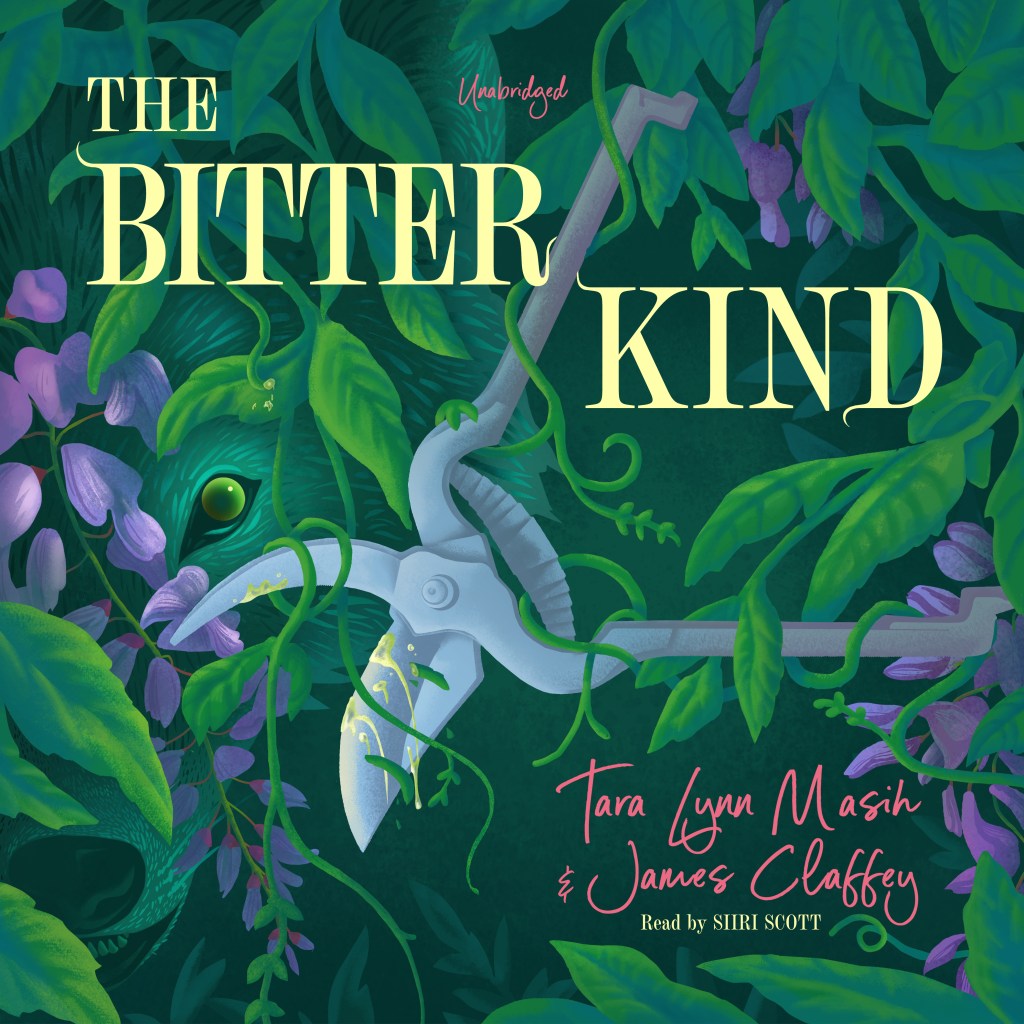
Tara, How lovely to feature your work again on my Writers Chat series. We last chatted in 2020, about The Bitter Kind, a flash novelette and today we’re talking about your latest publication, How We Disappear (Press 53: North Carolina, 2022), a novella and stories – a Millions Most Anticipated book!

SG: I had the sense that How We Disappear is as much about appearance, judgement and expectation as it is about how we disappear and are disappeared. I was particularly moved by the last story in the collection, “Notes to the World” where the protagonist, Grigori finds that the notes he is reading speak not just of the woman’s life but also of his own. I loved the effect of the stories mirroring – literally timeless – but also how you show the repetition of human behaviour in relationships, who lives/survives, who hunts/is hunted and that haunting last line, “let me hear your voice”. Can you explain your intentions with the collection and the title (and the beautiful cover)?
TM: The stories were written over a period of time (“Those Who Have Gone” was actually written decades ago), and there was no intent in any of them to link up. It wasn’t until I realized I had enough for a collection and started looking at the stories to order them that I saw the connection of disappearance.
I think the various ways disappearance can be examined or experienced is only partially shown in this collection, but I do think my personal relationship history together with my upbringing in the sixties as a mixed child in a very white community allows me to understand both the feeling of having been left and the feeling of not being seen. Of disappearing into the background. What most allows us to be seen? I don’t think it’s all through the visual (though there is visual judgment) as much as through auditory (I include sign language as “auditory”). I think we have a greater need to be “heard” than seen, though both are powerful, often interchangeable needs. I want readers who have always had the benefit of being seen and heard to understand what it’s like to fight to be recognized, and I want those who can relate to the themes to find themselves or find ways to make better decisions so they can function at their best. We’ve also been collectively traumatized by the covid pandemic and many have lost loved ones. I hope some of the stories allow readers to work through the grief process.
The cover image is gorgeous and designer Claire V. Foxx did a beautiful job of making the type reflect the theme. She is the one who noted that the woman could be viewed as either disappearing or emerging.
SG: I love how you bring in the senses and all types of language and communication here, Tara. In “Fleeing Gravity” you tell a story that feels like an epic fairytale, yet it is grounded in history and colonisation. Ghosts flit in and out of reality – physically and psychologically – and it seemed to me that it was their story as much as Brandy’s story of displacement, creation and destruction. He says of the female ghost Miz Annabelle Fourier, “It’s easy to love a ghost who asks nothing of you”. I also found that this story had echoes – in terms of the relationships – of “In A Sulfate Mist”. What was your thinking behind these two stories?
TM: There is no conscious connection between those two stories outside of the fact that I’m drawn to stories set in the natural world. I love placing characters into landscapes and allowing those exterior settings to influence story and behavior. “Fleeing Gravity” began with my wanting to set a character in a ghost town. What would it be like to live among ghosts on a daily basis? To be a caretaker and be the only one left there at the end of the day? I also wanted to highlight the plight of the Montana “Landless Indians,” as they called themselves, who fought for recognition from our government for decades. They were basically told they were not worthy to exist and should disappear into the landscape. I’m thrilled to report that before this book got published the Little Shell Tribe members finally achieved their goal and are now federally recognized. They have essentially become “visible.”
Which brings up other issues such as power. Who holds it, and how it’s wielded to make others powerless by making them invisible.
SG: I think you’ve done a great job of highlighting the plight of the Little Shell Tribe members and here is hoping that in now being officially “visible”, the needs and rights are upheld and the Tribe treasured. A number of the stories in the collection explore connections between environment, emotion and story. I’m thinking here, for example, of “Delight” and “Billy Said This Really Happened to Lucy.” Desire is by the sea, Lucy is by the marsh and they both have ambiguous relationships with their surrounds. I really enjoyed the characters’ realisation about themselves and the land/sea around them and the powerful role that parental stories play in forming impressions, teaching social norms, particularly in relation to gender, the body and control. Can you talk about this?
TM: While I love the natural world, I recognize its disinterest in us. And its destructive power. Nature is beautiful and restorative. Nature is full of fury and can obliterate anything in its path in seconds. There are many writers now exploring the genre of cli-fi fiction. My writing doesn’t go that far into what we are facing now, but perhaps as someone who is bicultural, I try to present the reality of both sides. The same for people. In “Delight,” we first see the father as a typical abusive parent. In the last scene, I hope readers catch something else. In the Lucy story, her mother returns in the guise of a poisonous snake. Lucy both welcomes this new interaction but is also wary of it.
We rarely see women in wilderness stories, though that is changing as well. But I still can’t tell you there is a large list of women who write about nature and place, especially in short stories. Men have long had that domain almost exclusively to themselves. My female characters are either learning to be comfortable in that male-dominated wilderness, sometimes with the help of men, or have found their own ways into the wilderness and are leading the way for the men who are following.
SG: I loved how you channelled the writing process – and formation of a writer – in the cleverly constructed “Agatha: A Life in Unauthorised Fragments”. In some ways this story feels like the spine of the collection; it is almost like a reflection on the story telling process. “Every story is an escape story.”
In a way this book helps the readers escape. Did the writing help you escape and do you think this is one of the roles of writing/reading in our lives – and in Agatha’s?
TM: Thank you. I just loved writing that story. I had studied Christie’s disappearance decades ago in high school. Besides loving her mysteries, I was obsessed with trying to find out what happened when she disappeared. When I realized I needed another story to flesh out this collection I recalled that long ago research and took to it again with great glee. As someone who has a minor in sociology, human behavior totally intrigues me and I have my own theory about what happened. It’s not anything ground-breaking, but I did channel my own experiences as a female writer, as a crisis counsellor, and as a woman who has been cheated on.
The epigram is just something that came to me when I was writing the story. Kind of a voice over, if you will. I think that all stories we tell are either escape hatches from our own lives or attempts to escape from someone or something or even ourselves. I was thinking of all that rather than of readers escaping into the stories, but yes, that is happening as well on the other end of listening or reading a story.
SG: Yes, I think we are touching on the very powerful invisible connection and dialogue between writer and reader! In the novella An Aura Surrounds That Night, a family views the news of the assignation of JFK on the TV, a child who captures slugs that escape and leave silvery trails on the bedroom ceiling comes of age and she begins to notice the inside/outside-ness of life:
“But there was Grammy below me, now trapped inside herself, while outside Japanese beetles, lightning bugs, moths, mosquitoes, gnats were flying into the window screens, banging and buzzing.”
Like other characters in the stories, she has the gift of second sight (hence the title) yet the gift cannot stop what is going to happen to her sister. I loved this novella and I think the placement in the book worked very well – the narrative carried much of the sensibility of the early stories and was one which I found really poignant. Have you any plans to write more of this story…?
TM: Ha! You are not the first to want more. I’m afraid at this point that story is as fully told as I can make it. It did begin as a novel and I just could not take it where it needed to go. But I kept tinkering with it, not wanting to lose the sisters entirely. When I finally recast it as a flash novella, it all fell into place. The writing flowed, the scenes congealed, and so I have to say it’s in the form it’s meant to be in, no more, no less. But never say never, right?
Thanks again for noticing and appreciating what I was trying to do not only with the story but the full collection. It warms my heart and helps keep me writing!
SG: Oh so wonderful to chat with you, Tara, and your writing warms many hearts. Now lastly, some fun questions:
- Beach or mountains? Beach for sure. Love the ocean and all things watery.
- Silence or noise when writing? Silence. Noise stresses me out.
- Kindle, paperback or hardback? Hardback or paperback. Nothing beats the tactile feeling of a book in hand.
- Dogs or cats? Love cats.
- I love cats, too! So, what is the most surprising read you’ve had this year? I found a book in a remainder bin and loved it. The Australia Stories by Todd James Pierce. I don’t know why I never heard of it. A hybrid novel that was likely ahead of its time.

Connect with Tara via her website.
Thank you to Press 53 and Tara for the advance copy of How We Disappear.


 Shauna Gilligan Writer