Writers Chat 82 Part 2: Liz McSkeane on “Aftershock” (Turas Press: Dublin, 2025)

Welcome back, Liz. We’re on Part 2 of our Writers Chat about “Aftershock” (Turas Press: Dublin, 2025). Part 1 can be read here.

Cover image of the novel “Aftershock” showing darkened ruins of old buildings against pink and orange skies.

SG: One of the standout take aways from Aftershock was the human need for the answer to that three-letter question why! Dom Sebastião searches for technical and structural answers to the natural disasters (“nothing must be allowed to obstruct this rebirth”) whilst also mercilessly searching for the traitors who plotted to assassinate the king; Father Malagrida tries to increase his power and influence over the vulnerable by preaching that these disasters happened because of God’s wrath on the people of Lisbon (“Lisbon is paying for the sins of her people.”)

It seems these two men epitomise philosophies of the day. Were you also looking for answers through this character-driven plot which explores societal beliefs and structures in late 18th – Century Portugal? 

LMcS: I agree with you that Dom Sebastião and Father Malagrida embody two diametrically opposed world views regarding the ‘why’ of the disaster – belief in reason and science as an approach to investigating the causes; and submission to the Divine Will. This was a real polemic of the day, though in practice, many people imbued with the principles of the Enlightenment also considered themselves good Catholics. But there is no doubt that this clash of world views existed at the time. It still exists, in many parts of the world. 

What makes this question so crucial in the context of the novel is that these opposing world views not only insist on two conflicting stories regarding the origins and reasons for the earthquake happening, but flowing from that, opposing views about the response human beings should have to it. Some of the most extreme of the clergy, including Father Malagrida, insisted that believers must submit to the Will of God and pray for mercy for their sins, a position which not only did not aid the rescue and recovery efforts, but in some cases actually obstructed it. The spirit of scientific enquiry, in contrast, sets out to rebuild and also, to devise ways of safeguarding against future events of the kind. Dom Sebastião really did conduct an extensive survey – today we would call it qualitative research – that asked survivors in great detail about the phenomena they experienced. This was one of the earliest systematic data-gathering studies of earthquake effects, and a significant precursor to modern seismology. He also oversaw the design of earthquake-resistant buildings that used an internal wooden frame – not so different from the principles used today.

The other aspect of the ‘why’ of the novel concerns the motivations of some of the characters – why they acted as they did. In spite of the vast amount of documentation and information about the ascendancy of the Marquis of Pombal before and especially, in the years after the earthquake,  there are still many, many unanswered questions about how and why events unfolded as they did.. For example – why did the king, on the night of the attempted assassination, decide to travel in a different carriage? And why did the nobility misjudge and colossally underestimate Dom Sebastiao? And more – all question that came to me as I was researching and writing. I did not try to provide answers to those questions but rather, allowed them to remain, for the reader to ponder. I think Chekhov would approve of my decision – didn’t he say something about the function of art being to ask questions, rather than answer them?

SG: I particularly enjoyed the descriptive language of Aftershock which serves to illuminate period detail and the landscape of the novel. We have the lush language used to describe the earthquake (through the eyes of Dom Sebastião); in “Living The Shock,” a beautifully crafted chapter which explores the impact of the disasters through a number of characters, we have descriptions that are as strong and impactful as the fire and flood they depict:

“There must be shelter, some corner or cellar, no, a place in the open air, the very centre of the square, perhaps, where tumbling debris may not reach. But now, through the swirling darkness, the skeleton of the Palace of the Holy Office of the Inquisition, this place which has passed judgement up on the final days of so many heretics, is lit up in glimmering spangles of yellow and orange.”

“The flood has not reached the Rossio. But that is a small mercy, perhaps no mercy at all, for all four sides are engulfed in flames. Leaping high in the air, they are devouring every morsel of floorboards, beams, window frames, every scrap of dry material integral to the construction of the edifices, grand and humble, every bench, table, carpet, curtain, tapestry, wall hanging, melting every glass or metal object, sacred or commonplace, silver plate, coins, golden altarpieces, artisans’ tools, grills and gates, chalices, kitchen utensils.”

“Impossible to believe that life had continued after the earth swallowed up so much of the city in just a few minutes, at the very time when the faithful were attending mass …The night is dark, light is needed, fire gives light and the memory of the terrible destruction inflicted by the fames must yield to the continuation of life.”

Language (and conversation) itself, of course, also plays a key role in the narrative:

“Rumour, gossip, the smallest detail, the slightest misunderstanding, had a way of infiltrating minds and tainting judgement, as the smallest drop of ink colours an entire pitcher of water.”

Did you enjoy writing the period detail?

LMcS: I really did. Just as I mentioned my desire to immerse myself psychologically in the perspective of the different characters, I found it fascinating to also inhabit the physical world, as far as I was able to with the information at my disposal. It is exciting to see how places and objects and the natural world, perceived through the eyes of the characters, can generate entire lines of thinking and insights. I also loved the process of gathering period detail – it felt like time travel through diaries, maps, architecture, streets. But the real pleasure was when the detail became atmosphere. A kind of emotional landscape.

That said, what I enjoyed most was what those details allowed me to say about the characters and about the society. Period detail became a way of showing how the physical world shapes human fate, especially in a disaster narrative. So yes, I enjoyed it, because it served the novel’s deeper questions.

SG: I’ve been to Lisbon multiple times though I can’t say I know the city well. I thought the Lisbon evoked in Aftershock is at once familiar and strange (not withstanding the period differences) and is, for this reader anyhow, the main character of the novel. The built environment and the key role it plays in how lives are lived, who survives a natural disaster and who doesn’t, who re-builds the city and for whom it is designed. Can you talk about the role of the city-as-character?

LMcS: Lisbon in Aftershock is absolutely a character for me. I wanted the city to have a kind of double presence: familiar enough that readers can recognize its rhythms, yet strange because the disaster reshaped the same streets, structures and spaces we think we know.

By showing Lisbon before, during, and after the shock, I wanted readers to feel the city exerting pressure on the characters just as much as the earthquake does. Its architecture, its beauty, and its fragility all shape the plot. The characters move through Lisbon, but Lisbon also moves through them. The city’s destruction and reconstruction becomes a moral and political arena, which is why it takes on such a vivid, almost human presence in the novel.

SG: Aftershock puts me in mind of the work of Hilary Mantel; the research is vast but seamlessly contained within character motivation and setting. You provide an extensive bibliography in the Acknowledgement section. Could you talk about your approach to the research needed for this novel? And for readers looking for writing historical fiction advice see this excellent article over on writing.ie.

LMcS: I started off with just one book – This Gulf of Fire by Mark Molesky  – then got another one about the earthquake, and several more. I soon began to notice the emergence of the character who would become my protagonist, the hero – or anti-hero – and at that point, I pivoted and began reading biographies of the future Marquis of Pombal, and also of the key people in his life. There is a vast amount of literature about the earthquake, and I was fortunate to be able to read some primary sources – actual eye-witness accounts of the disaster, some of them original manuscripts. It was a process of starting with a wide, fairly scattergun approach until I found my subject, and then focusing my attention on my subject, and on ancillary topics that illuminated it. I really enjoyed it! The trouble with research is that if you enjoy it too much, you can find yourself down the rabbit hole and the book might never get written! So at some point, you have to call a halt. Thankfully, I did. Eventually.

We will end this chat, Liz, with some short questions:

  1. Lisbon or Porto? Lisbon – I’ve never been to Porto! But I definitely want to visit.
  2. Last city outside of Ireland visited? Glasgow – back visiting old friends.
  3. Best historical novel you’ve recently read? I’ve been re-reading Hilary Mantel’s Wolf Hall trilogy – hoping that something of her colossal craft might rub off! I’ve just finished Bring Up the Bodies, about to start on The Mirror and the Light.  
  4. What character in Aftershock most surprised you? Dona Eleanor, the Marquis’ wife. I thought she would challenge him more as his methods became more brutal. She didn’t.
  5. What are you writing now? I am working on some short stories and I am at the rough notes stage of my next historical novel.

With thanks to Turas Press for the advance copy of Aftershock which can be purchased here.
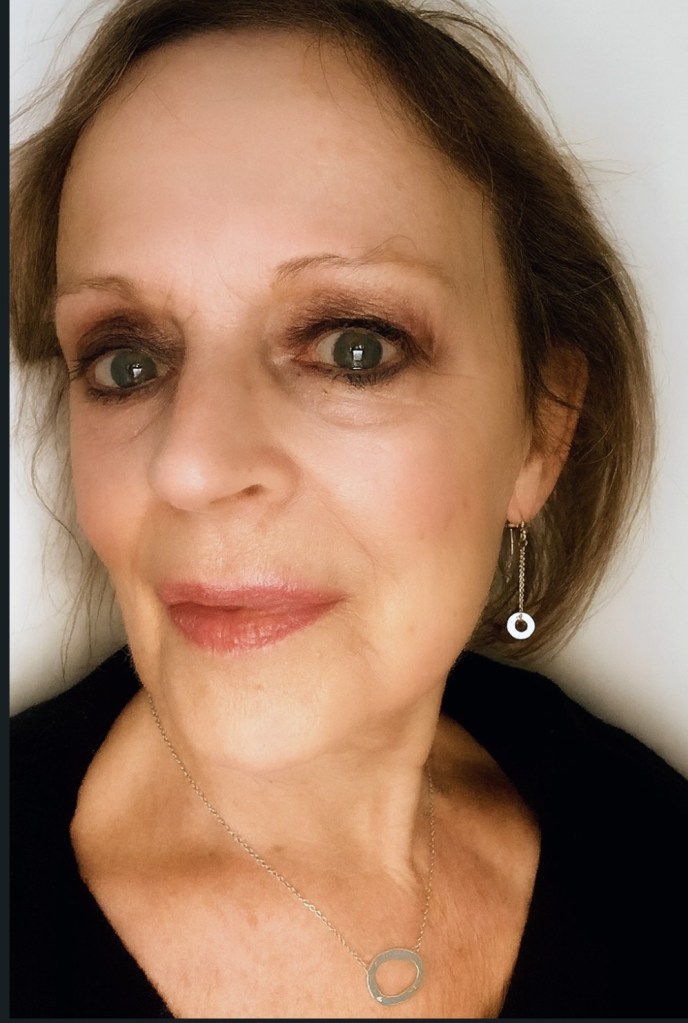
Photograph of writer Liz McSkeane, courtesy of Liz McSkeane.

Writers Chat 82 Part 1: Liz McSkeane on “Aftershock ” (Turas Press: Dublin, 2025)

Liz, you are very welcome back to my Writers Chat series. This time we’re discussing your debut novel Aftershock (Turas Press, 2025), which Lisa Harding has described as “relevant and shocking.” I had so many questions for you that I have divided this Chat into two parts so that we might cover most of the areas I was interested in exploring. Writers Chat: Part 1 covers the background to writing the novel, the structure, as well as dipping into the themes of personal/ political and gender/ marriage.

Cover image of the novel “Aftershock” showing darkened ruins of old buildings against pink and orange skies.

SG: Like all good historical novels, Aftershock not only brings us right to the heart of love, power, and ambition in 18th – century Lisbon, it also speaks to our times about the brutality of power. Can you tell us about how you came to write about All Soul’s Day, November 1st, 1755 a day when both an earthquake and a tsunami almost destroys Lisbon and threatens to shatter the beliefs of the city’s inhabitants; what was the genesis of your interest?

LMcS: Thank you, Shauna. I came to this subject by way of a radio interview I heard with a historian called Mark Molesky, about his book  This Gulf of Fire. It was about the 1755 earthquake that destroyed Lisbon and was so fascinated that I sat down to listen. I already had an interest in Portugal – I studied Hispanic Studies at university, which included Portuguese – and had spent some time in Lisbon as a student, so I was keen to find out more about the subject. When I started reading about the earthquake, I became fascinated by the politics of the time, in the lead-up to and in the wake of the disaster – and especially in the character of the man who would become the Marquis of Pombal. He both rescued and enslaved the country, and I found this an irresistible paradox to unravel.

SG: And this paradox snakes throughout the novel.

“At last, the earth is still.” What a great opening sentence that immediately grabs the reader. The sense that stillness can be vast runs through the novel – in relation to the land, the city, and, in our protagonist Dom Sebastião:

“For this man’s stillness deceives. It is a stillness that absorbs everything, understands everything, forgets nothing.”

Was this always the opening sentence of Aftershock?

LMcS: I am glad you find it so arresting! That is what we want, isn’t it! But in fact, that was not always the opening sentence. I had originally planned to start the novel with a dramatic event that occurred a few weeks after the earthquake and in fact wrote what I thought would be the opening chapter around that. But as with so many things in writing, things change. As I had the title from a very early stage, the opening you mention soon superseded my original idea. In a way, it was the title that gave me my opening sentence – which, as you mentioned, plunges us into the immediate aftermath of the earthquake, seen through the eyes of the person who would become the main focus of the novel. I think that quite often, the beginning of a piece – be it a novel, story or poem – sometimes emerges through a process of discovery, in a sense, reveals itself. I do find myself rewriting beginnings – almost as though the start of the story reveals itself.

SG: Aftershock is filled with ambitious characters who strive for what they want within a tightly structured society and clear political rules around church, state, and subjects. I found the conflict between individual desire and ambition (both personal and political – power) and the greater immediate good, to be in sharp focus in the exceptionally well-developed complex character Dom Sebastião. How did you hold the personal and the political within the writing and research?

LMcS: The tension between the private and public selves you mention in many ways is at the heart of the novel and one of the themes which drew me in. I find it both fascinating and shocking how far public events, national policies, can be influenced by the private ambitions and preferences and relationship of the actors. I am sure we can think of many contemporary examples of this. I suppose I should not be surprised, as the leaders who influence or seem to direct historical events are human beings, just like us, with all the foibles and insecurities we all share.

In relation to Aftershock, as I was researching the political events of the time, I became aware of the extent to which the impact of the personal relationships and aspirations of the individual actors were intertwined with what would become historical events. It therefore seemed to make sense to try to inhabit the perspectives of the different actors, to understand why they did what they did. Hence the multiple points of view which carry the narrative.

When I was researching the subject, I found I started with the public events – the earthquake, the measures that were put in place to support the survivors, the part played by other countries (this was one of the first disasters that attracted an international relief response) – and from there, found my way into the lives of the various actors. Their ambitions, as you point out, were often both personal and political. In a way, that made the intertwining of the personal and political both logical and necessary.

SG: Aftershock has an interesting four-part structure that both keeps us with the character-narrator and within the time. I liked your use of chapter titles – “Unwelcome News and a Request Rebuffed” – that hint at what’s in the chapter and, combined with an indication of the date, time, and place, serve to keep the reader knowing where they are in this vast detailed narrative whilst also reminding us of 18th-century letters. Was this a structure you began with or did it emerge as you wrote?

LMcS: To some extent, the structure emerged as I wrote. I had originally envisaged a three-act structure, and at a fairly late stage realised that the action and the characters needed more room to breathe. This resulted in some rearranging and expansion. So the four-act structure was a development of my original plan. 

SG: Again, such a skill in being able to grow original plans as the text develops! One of the themes running through Aftershock is that of the role of gender and marriage in high society – the often-conflicting views of church and state and how they hold power over women. Power, it seems, is not only inherited but also given; Dom Sebastião has the ear of the king (“the king’s favourite. His most trusted advisor”). The king is romantically entwined with the powerful Távora family and Father Malagrida believes he “answers to a higher authority than the king” and therefore can influence the king to stop at least this extra-marital relationship.

Early in the novel we have glimpses of the internal lives of Dom Sebastião’s Austrian wife, Eleanor; Princess Maria (in line to be queen) resents the conversations about finding her a match and Dom Sebastião’s influence over the family. She is aware that for her to be queen her father will have to die and only then will Dom Sebastião “face a bitter reckoning.” After the disasters, Queen Mariana Vitória realises that “Even at this terrible time, her husband’s thoughts are elsewhere.”

Aftershock makes it clear that the women – even those in powerful positions – are seen as useful to obtaining influence and keeping power. Can you comment on this?

LMcS:  Yes, this was one of the themes that was of great interest to me. All the women in the novel – Dom Sebastião’s wife, the queen, her daughter, the marchioness of Távora, the young lover of the king – have a very significant influence on his life, for good or ill. And they all have – up to a point – significant agency in their own lives. But only up to a point, for they are all – at least, this is my interpretation – either used, or discarded (or worse) in the service of his ambition. For example, Dom Sebastião’s access to the high aristocracy was due almost entirely to his two very advantageous marriages: his first wife, who died, was a Portuguese noblewoman and his second wife, Dona Eleanor Von Daun came from one of the noblest families in Europe. So those were women with influence who contributed enormously to his ascendency. On the other hand, there is the Marchioness of Távora – a very imposing matriarch from one of the most powerful dynasties in Portugal, who disdained and mistrusted Dom Sebastião – and greatly underestimated him. For which she paid the ultimate price.

But in some cases, this is a matter of interpretation.  One interesting source I came across was a novel about Dona Teresa de Távora, who was the lover of the king, which adulterous affair was thought by some to have been the catalyst for much of the tragedy that followed. This novel, by a contemporary Portuguese writer, presents Dona Teresa as a kind of proto-feminist, who was in charge of her own destiny and making bold choices. I saw her rather as a rather naïve woman who found herself swept along by events she could not control. Which shows how similar sources can produce very different interpretations!

SG: Oh that’s very interesting. You’re so right about interpretation and similar sources. Thanks for your generosity in answering these first set of questions, Liz. I look forward to Writers Chat: Part 2 which focuses on the language of the novel, the parallels of Dom Sebastião and Father Malagrida and Lisbon-as-character and we conclude with some light quick answer questions.

Writers Chat 58: Liz McSkeane on “What To Put In A Suitcase” (Turas Press: Dublin, 2022)

Liz, You are very welcome to my WRITERS CHAT series. Congratulations on What To Put In A Suitcase (Turas Press: October 2022) – a thought-provoking collection of sixteen stories that explore our everyday interactions and how we form our world, and transform it, for better or worse. Let’s start with the intriguing title (and provoking cover artwork) – What To Put In A Suitcase – I took it to refer to the essentiality of life and living, the people, things that we cannot do without. Can you speak a little about the genesis of the collection and the title?

Cover of “What To Put In A Suitcase” by Liz McSkeane – colourful art work depicting a smiling face

LMcS: Thank you, Shauna, for inviting me to take part in your Writer’s Chat series and to reflect on What to Put in a Suitcase as a whole, and in relation to the themes you have identified. Concerning the genesis of the collection – these stories were gathered over a long period of time. Some were written more than a decade ago but about two thirds were written in the last few years. When stories in a collection span a long period of gestation, it’s perhaps inevitable that they will delve into different topics, expressed in different styles and genres that reflect the writer’s current preoccupations and interests. That’s how it was for Suitcase.  And I did find myself asking at a late stage, what was the best way to pull these apparently diverse elements together.

At that point, I had just written the most recent story – which also gave me the title for the whole collection.  The story What to Put in a Suitcase was inspired by very recent events but is obviously also relevant, on a literal level, to many other geo-political crises of past decades which have resulted in mass movements of populations. It seemed to me that that title provided a kind of thematic umbrella within which the other stories could be contained, whether in a literal, or thematic, sense.

As you suggest, the process of making very practical decisions about which material possessions to take with them when starting out on a journey into the unknown, will distil the people’s vision of what life could or should be about; and also, about how they may prepare themselves to cope with uncertainty. It is a question that I have sometimes asked myself.  I think that the question also works on a metaphorical level, for what is life, if not a journey into the unknown, where we have to decide along the way what to keep and what to leave behind?

SG: Very interesting that your most recent story became the title story and that of the collection, and, as you say, so relevant to current events. I loved how many of the stories involve chance encounters where one or other party has expectations that are not met, or misunderstood, or where there is the potential for change that could have a ripple effect. It’s those Sliding Doors moments that happen to us all – quiet regularly. I’m thinking here of “Samaritan”, “A Hot Coffee”, and the opening story “Regression Analysis”. In “A Hot Coffee” we are told “The only reason she is here, handing this person a Fairtrade coffee in a recyclable cup, is because he is there.” It’s this interconnectedness that you explore so well in the collection. Can you talk about that?

LMcS: I am interested in what you say about chance encounters and the conflicts, anxieties and challenges these present and I think you’re right, that these encounters may appear trivial, but can force the characters to review their way of thinking and perhaps, generate epiphanies. Although the stories you mention are very different in terms of the actual events they depict, thematically they push the protagonist out of a particular comfort zone into a space – physical, psychological, emotional – where previously unquestioned certainties, or even just habits, are thrown into doubt. This in turn causes the narrator to examine not only the situation, the other person or people with whom they are interacting, but also themselves, their own attitudes, prejudices, assumptions.

Of course, this potential for change is not always realised – rather, it may be held in abeyance or else avoided, ignored, so that the habitual comfort zone is reasserted, albeit with a level of discomfort. And sometimes we are not even sure if the character will make any change as a result of what they have experienced. I guess I have an inclination not to wrap things up in certainties and often prefer to leave the reader to interpret, infer, to reflect on the possible actions, or lack of them, that might ensue.

SG: Yes, I liked how you made the reader work, that many of the stories leave us thinking. Children feature in many of the stories and I felt you captured that sense of childhood where wonder is gradually or suddenly replaced by a sense of loss or disappointment – reality – that you sense, as the reader, will sit with them forever. In “Ambush” we see the cruelty of adults trying to protect their own and in the poignant “The Games”, Kate knows “All the lochs and fields and rocks as far as you could see belonged to Donald” and believes her sense of self and identity is like one of those rocks, until she dances, and the rhythm of the music is not what she expected. In this story, her tears come with the onset of kindness. Again it struck me that when the expectations of people – adults and children – are at odds with their situations, shifts of self and future occur. Does this tie in with your intentions when you wrote these stories?

LMcS: I didn’t have a conscious intention to depict primal disappointments met in childhood but in telling the stories that spoke to me, I agree with you that that is one of the most salient themes in some of the stories.  I think that the impulse to make sense of the world starts at a very young age and the children in these stories experience the multiplicity of meanings, which are sometimes in conflict, in a very intense way, which can be confusing.  

     I think that such confusion is almost inevitable, as the messages we receive from the external world about almost everything – how to live, what is right and wrong, even who we are – are fraught with contradiction and, as we learn as adults, sometimes deliberately manipulated to serve the needs of others. Obviously, the children in Suitcase don’t consciously frame their experience of the world in that way but the reader looking over their shoulder can sense it and observe their puzzlement at the often conflicting messages they receive.  And it is true, what they want and expect does not always correspond to external reality.  I get the feeling that navigating this inevitable discord will filter into how these children manage their lives as adults. In fairness, though, I can’t in all honesty say that I consciously set out to explore those themes when I sat down to write the stories. Rather, they were the ideas that emerged in the process. For me, that happens quite often, perhaps most often – that the primal concerns and themes become clearer – though not necessarily completely clear! – in the process of writing.

SG: And often what emerges in the writing can be the most interesting to the reader! You captured shifts in sense of self within the confines of different bodily spaces, and examined the chasm between internal and external selves/voices against the backdrop of gender and space particularly well in “Underground”, and “Lebenstraum” where second person narrative works brilliantly:

“Powerful forces are ranged against you. Many are arising from within: from your currently dormant best self…a distant second, good manners…and from without: the tyranny of these people in their group…”

Do you think – within the realm of these stories – that our perceptions of self have shifted with the restrictions on movement over the last few years?

LMcS: I think that they have been heightened, to a significant degree and that sometimes, a sense of urgency emerges that might have not been there before to the same extent. Before the pandemic, the character in Lebensraum would not have minded sharing a table with other people in a café. It’s the crisis that produces her outrage at the invasion of her personal space.

     I found this scenario interesting, because I think it puts the spotlight on a dynamic which existed long before the pandemic and perhaps, has always existed:  a constant negotiation, a jostling, between the self and the boundaries with other selves.  What the restrictions did, I think, was to highlight the importance of a newly scarce commodity – space – and show how this plays out in interactions with others. And in this case, as often happens, some people decide to take all of this scarce resource for themselves, or at least try to, convinced of their own entitlement by spurious justifications. This, in turn, confronts the protagonist with the question of how to  defend her space or whether she should, and even, whether she has the right to do so.  

       Although this is obviously a ‘pandemic story’ I think I could have written a very similar encounter outside the context of the pandemic, as these struggles for resources – be that space or any other valued commodity – were not created by the circumstances following the lock-downs, but were highlighted by them. That is why I called this story Lebensraum, which as you know, was one concept that underpinned the Nazis’ rationale for annexing European territory, invading other people’s countries. Tragically, we see this being repeated today in Putin’s Russa.  Competition for resources, both tangible and intangible, has always fuelled the dynamic of interaction, on a personal, societal and also, a global level. It is a struggle which this story shows being played out in impulses within the individual human heart.

     Aggressive colonisation, invasion, the story concludes,  has to be resisted, starting with how this person conducts her personal interactions. Is she going to give up her spot to keep the peace? Or should she dig her heels in and refuse to be pushed out. And if the latter,  where does this leave tolerance, compassion, simple kindness? There is a time to yield, to be kind – and a time to resist. The challenge is, knowing which is which. It’s not an easy question to answer.

SG: I think you caught the tension of that question, Liz, so well. Interestingly, the placement of “Atlanta” and “Venice” side-by-side in the collection gave a wonderful continuity to the themes of the failing body and illness, located/dislocated in place and between people. In “Venice” a friend’s embrace fills the narrator

“with yearning and overwhelmed her with loneliness and longing, not for him, but for the desire to want him and everything that being with him would bring.”

I thought the title story “What To Put In A Suitcase” tied these themes together, creating an almost filling up then emptying out of a life, and its meaning – including our relationship to time. What interested you about exploring these themes in this way?

LMcS: I think that some of the stories do explore the notion that the awareness of loss is an inevitable part of living. To arrive at an acceptance of that truth is a different, more complex journey and I am not sure that most of the characters in these stories – with the exception of the final story, Leopold’s Violin – have accomplished that yet. Perhaps they are just embarking on that journey. At least two of the characters in Suitcase are confronted with a heightened sense of mortality, their own or other people’s, which for them is a kind of rite of passage, a point beyond which things are never the same. It is an  awareness does call into question their relationships with others, their aspirations, what to keep, what to change, what to leave behind. Like packing a suitcase!  One response would be to throw in the towel, retreat to a kind of apathy that refuses to decide, as nothing matters anyway.  And yet, these characters respond to loss by giving up but rather, by re-making. We may not know what they are going to do, but I think there is a sense that they will do something, make some significant change that will integrate their life experiences into how they live their lives into the future.

     Once again, I have to confess that I didn’t consciously set out to explore these themes. Rather, they emerged within the stories I found that I wanted to tell.  Perhaps it takes some time and distance – and an attentive reader! – to process them in a systematic way.

SG: Or perhaps, readers bring their own systems and patterns to what we read! To finish up, Liz, some fun questions:

  • Tea or Coffee?  Tricky one. Tea at home, coffee when out. I used to drink gallons of coffee, especially while I was writing, and eventually decided to cut down. So I only very occasionally have a coffee at home, but when I do, I go to a bit of trouble – I have one of those old-fashioned Bialetti percolators that takes forever.
  • Mountains or Sea? Definitely the sea. I have often thought I would like to live in Madrid again for a while (I lived there when I was a student) but I know I would miss being close to the sea if I was there for any length of time.
  • Trad or Disco? Neither. For me, it’s tango all the way. An addiction.
  • Music or quiet when writing? I can’t write when there is music on as I find my attention being pulled towards the melody, but I can filter out most other noises. Except the angle grinder. There’s a construction site nearby at the moment and as soon as the angle grinder is switched on, I grab my laptop and head for a local café.
  • I would defy anyone to create with an angle grinder switched on! What’s next on your reading pile? At the moment I am reading the final volume of Knausgaard’s My Struggle and when I finish that, I have Maggie O’Farrell’s The Marriage Portrait to look forward to; then a book I know nothing about – always exciting – which I got as a present, The Italian by Shukri Mabkhout; then the new George Saunders short story collection Liberation Day. So many books, so little time!

Thank you, Liz, for engaging with my probing questions. I wish you every deserved success with this collection of stories.

Author Liz McSkeane in the Irish Writers Centre at the launch of What To Put In A Suitcase (Photograph courtesy of Liz McSkeane)

Purchase What To Put In A Suitcase

With thanks to Turas Press for the advance copy of What To Put In A Suitcase