Photograph of stacked books. From bottom to top the titles are: Dubliners; Murder in the Monto/ The Geometer Lobachevsky; This Train is For: Keepsakes; Seven Steeples; Dolly Considine’s Hotel.
As followers of this blog will know, much of what I love doing is chatting to other writers, artists and readers. This week some beautiful book post arrived and I hope to chat to some of the creators on this blog soon…..Here is a little taste of what is to come as over the next few weeks there are exciting launches by Arlen House. Watch this space!
The second photograph above: Margo McNulty, Keepsakes; Mia Gallagher and Mario Sughi, Dubliners; Sara Baume, Seven Steeples
The third photograph below: Tony O’Reilly, Murder in the Monto; Bernie McGill, This Train is For; Adrian Duncan, The Geometer Lobachevsky.
LEFT TO RIGHT: Tony O’Reilly, Murder in the Monto; Bernie McGill, This Train is For; Adrian Duncan, The Geometer Lobachevsky.
Laura, You are very welcome to my WRITERS CHAT series. Congratulations on your second novel, Lenny (New Island, 2022) which I thoroughly enjoyed.
Cover image of Lenny by Laura McVeigh with a drawing of a canopy of trees with hanging foliage and blue skies lit up by stars
SG: Let’s start with the dual narratives in Lenny – that of the mysterious pilot in the Ubari Sand Sea in 2011 and that of Lenny in Louisiana in 2012. The narrative structure not only allows the narratives to converse with each other but, as they converge and the themes of home and belonging really come to the fore, they form a third, beautifully unifying story. Can you talk about your structural decisions when writing Lenny?
LMcV: I am always very interested in notions of time, memory, how we experience moments – and like to examine that in my writing, both in the substance and structurally. And one of the main themes within the novel for me in the writing was our relationship to time and reality, so a lot of the structure explores that in various ways. The dual narratives allowed me to create a sort of mirroring within the storylines – as you suggest, a kind of conversation – but also opened up the sense of time more broadly, allowing the reader to travel with that feeling in different ways. I wanted to stretch and bend narrative time in the storytelling, just as Jim, Lenny’s father suggests is possible later in the story.
When I write, I write fairly instinctively. So I don’t work out a structural scheme beforehand – I write into the story, and I find multiple narrative streams gives a depth and resonance to the writing, helping create echoes, connections – as you say, unifying. I pull the threads together as I go.
SG: I think your instinctual writing is very much reflected in the tone of Lenny, as it carries the reader in a sort of wonderworld. Something that stayed with me long after I’d read Lenny, was the feeling that somehow, we are ageless, or that age does not matter when we zoom out and consider the world as a universe. While characters such as Miss Julie and Lucy and indeed Lenny’s mother, Mari-Rose, find themselves limited or restricted by age, the cumulative impact of the thread of The Little Prince (referenced throughout) and narratives of the pilot and Lenny was that I was left really pondering how we limit ourselves in so many ways in opposition to our world rather than in harmony with it. Lenny remembers Mari-Rose telling him that sometimes
“A story can end all sorts of ways…sometimes it doesn’t end at all, it’s just beginning.”
And towards the end of the novel, we find Lenny is “stretching time all around him.” Was this playing with time something that you had consciously or unconsciously woven into the novel?
LMcV: I love this question. And the idea that we are ageless! But it’s true, why don’t we look at life in harmony with nature and time, and see that we are part of something much more beautiful, infinite and mysterious. In the story, we see Lenny’s watch that doesn’t work, the elastic band on Mari-Rose’s wrist, both symbols of how we try to hold on to the impossible. We tend to fear aging, fear death, decay. We are always fighting life, struggling – it’s in the very language we put upon ourselves constantly.
So within the novel, yes, I was very consciously playing with time and our understanding of time and the universe, and the part we play within it. In life we often look for narrative coherence – a story – a way of understanding a situation. We explain everything to ourselves via story. But of course stories, like time, don’t travel in straight lines, simply from one point to another. So I wanted to explore and play with all of that, and push against those limits. I hope the novel reflects that desire for openness and possibility.
SG: Yes, I think Lenny reflects your desire for openness and possibilities and I think it comes out also in the relationships Lenny has with Miss Julie and Lucy andhow though they both play mothering roles in the book, it’s Lenny who brings the women out of themselves, and opens the world to them. He starts off thinking that “believing is for adults” he comes to understand that to change the world and people, “you just had to believe”. It is such a beautiful message of hope. Did you feel you were writing a novel of hope when you were writing it or did this emerge through the writing process?
LMcV: Yes, that connection between Lenny and Miss Julie, or as the novel progresses with Lucy too. It’s so important for Lenny I think, at this point in his life to have someone looking out for him, someone who cares, but of course, it’s his spirit that is bringing healing and renewed purpose to them. I suppose it’s that sense that we gain when we give – that in caring for Lenny they are opening up to being more caring towards themselves too, becoming more forgiving, more open-hearted. I love that childhood sentiment of how life could be anything at all, so long as you believed it. I think we lose that sense along the way sometimes, and yet life is such a gift – even with all its hardship and pain – so how do we navigate that with grace and love? When I was writing Lenny, yes, I was seeking – whether consciously or unconsciously – to write a story full of hope and love, because I think sometimes we forget, we lose sight of hope. Our better angels, I think Miss Julie might call it.
SG: Oh yes, our better angels! I love it. Places (and worlds) are in themselves characters in the novel. I really enjoyed how you played around with the individual experience of place and how this bleeds into human connection at all levels. We’re all connected by place as the Imuhar way states:
A man who wanders is free…he is not tethered, neither to place nor possessions
You touch on the magic of place and I thought this came out in the relationship between the pilot who falls from the sky in Libya, a seemingly empty canvas, but also later in the budding relationship between Lenny’s father Jim (who “looked like all he wanted to do was to walk away from himself”) and Lucy (who “knew her heart was full with joy around him.”). Can you talk about Lucy, the lonely librarian/activist with her lovely cat?
LMcV: With Lucy, at first we discover her really as others might see her – and I wanted to capture that sense of how much there is beneath the surface view – for all of us. It’s not just the shorthand, the glance, the first impression. Lucy is a work in progress, and she recognises that about herself I think. She’s trying to heal after a lot of loss and hurt, and a sense of always feeling out of place. So I think Lucy is searching for ‘her place’ and in the novel she seems to find that in Jim. I love that there are lots of contradictions alive within Lucy – I find that very human. She’s caring and yet scared to open up her heart and life and let others in, she’s fearful of many things yet wants to live a bigger, fearless life. In the novel, she has to ask herself if she’s willing to stand up for the things she cares about, if she’s willing to put herself out there – I love that vulnerability and uncertainty coupled with her determination.
SG: And I think it’s both ways – for Jim also finds an idea of home in Lucy. Lenny experiences life by interpreting place and time through senses and memory. He imagines what life would be like if his mama had not left him, if his daddy had not learnt to fly, and if the chemical companies hadn’t come…
“Lenny, half reading, half daydreaming, blinked into the dust imagining other planets, similar to his own, yet different all the same.”
In Lenny you capture that uncanny ability children have, to inhabit the world and at the same time understand wholly that there exists an alternative reality. In what way is Lenny an exploration of this – the what if question?
LMcV: Absolutely. In the novel I wanted to explore that possibility. Science tells us it’s possible, indeed almost a certainty. And of course, in so far as life is perceived as experiential and experience is subjective, then we can accept that multiplicity of perception at the very least. In childhood we live in dreams, but what if that is actually closer to understanding the mysteries of life? Again, the novel, on one level, is really an invitation to think differently, to move outside of our daily preoccupations and take a longer, wider view of life.
SG: Big business (and big countries) and the impact on the environment is one of the strong themes in Lenny. I loved that as an author you don’t preach, and that the theme fit so well into the story of who Lenny is and where he’s from. Can you talk about the importance of this theme and how Lenny with his warmth and lovability is the perfect character to encourage readers to consider the environmental destruction?
LMcV: Within the novel I wanted to show how these things can affect a lifetime, a community, a place, land, and how what happens in one part of the world, impacts what happens in another. The novel really explores the ways in which war, big business, political interests all interconnect – so how do we stand up to that systemic challenge? How do we start to really understand that a problem for Libya, for example, (water shortage/land degradation/conflict/migration/political instability) or for Louisiana (land loss/climate uncertainty/environmental pollution/over-industrialisation/home instability) is also a wider, interconnected, global problem.
While the novel explores the idea of other possible worlds, it is also true that we all share this one planet – sadly unequally, often destructively. So how do we do better? What can we change?
The story therefore looks at the power of the individual to affect change, and that is where Lenny’s sense of ‘believing’ is essential. With hope, everything is possible.
SG: Again, we’re back to hope. But war changes land, and people. Miss Julie hangs on to Stanley, Mari-Rose tries to believe in Jim, Goose wants to believe in what Tayri and Izil offer him – and all of them are in denial about their own part in destruction, and their inability to protect. Yet Lenny, because he is a child, he still finds hope and can still see the stars and possibilities, even when his town is literally sinking. Can you talk about the impact of war on the story? It feels especially relevant given what’s happening in our world right now.
LMcV: I have always had a deep interest in writing about war, conflict and its impacts on individual lives and communities. I think this is born out of growing up in the North of Ireland in the 1980s in the Troubles’ years. Even as a young child, of around Lenny’s age, I would have been very interested in the idea of peace, of the importance of peace. So it’s a theme I continue to explore in writing.
In Lenny we see Lenny’s father Jim return from the war, broken, suffering from Post Traumatic Stress Disorder (PTSD), taking refuge in alcohol. Part of the structure of the novel is in a way a reflection of that mental state – the short chapters, the jumping from image to image, idea to idea, the forgetting and remembering within the story. But of course it’s not just Jim who is suffering – it affects his whole family, and all of his connections with other people. Miss Julie’s life too has been shaped by a war – with the absence of her husband Stanley since 1952. So there is that sense of a life’s possibilities taken. Izil and his family are surrounded by conflict and the impacts of conflict and are trying to navigate that all too dangerous reality in the desert sands. So the ‘what if’ questions become important and give us a way through to hope.
There are so many parts of our world where conflict and war is a daily lived reality for millions – Ukraine, Libya, Yemen, just a few that currently come to mind. Take a map of the world and colour in the countries where war or armed conflict is happening. Look at the history books and we see that war has always been with us. Does that mean we should surrender hope or look the other way? Or can we, even through small acts of hope and love, make for a better reality?
SG: And in a way, that is one of the important roles of literature in the world – to get us thinking, to ask questions, and to give a sense of hope and possibility. Thank you for your generous answers, Laura and we’ll now end with five short, fun questions.
Southern or Northern hemisphere? Wherever the story takes me.
Ha! A very writerly answer. Woods or Beach? Ideally a hike in the mountain woods with a view down to the water. Having grown up by the Mourne Mountains next to Carlingford Lough I love both, forest and sea.
I’ve been on a few hikes in the Mourne Mountains – stunning. Music or silence while you write? Both, silence for thinking, music for feeling.
What are you reading now?Io non ho paura (I’m not scared) by Italian writer Niccolò Ammaniti and Ursula K. Le Guin’s The Dispossessed but in Catalan – Els Desposseïts.
I loved I’m not scared when I read it a few years ago. And I must read more Le Guin! So, Laura, what are you writing now? I’m finishing a children’s novel for my daughter, writing the screenplay of Lenny, writing a collection of travel stories, and working on a new novel.
Well, that’s an astonishing amount of writing at once – your daughter’s a lucky girl! I especially look forward to the screenplay of Lennyand hope – and trust – Lenny will continue to reach many readers!
Black and White Photograph of author Laura McVeigh courtesy of Laura McVeigh
With thanks to Peter O’Connell Media and New Island Books for the advance copy of Lenny.
Photograph of the book Murder in the Academy (Alice Fox Murder Mysteries Book 1) by Maggie Feeley
Maggie, You’re very welcome to my WRITERS CHAT series. Congratulations on your debut novel, Murder in the Academy (Alice Fox Murder Mysteries Book 1) which was published last year by Poolbeg.
SG: Firstly, let’s start with your journey to writing. You worked in academia for years and, according to your acknowledgements, had been talking about writing a murder mystery with the themes of social justice for some time. How did you find the transition from academic to writer and how did you experience bringing your academic knowledge into fiction – which you do very well?
MF: Well, firstly thank you Shauna for giving me the chance to have this discussion. It’s interesting to think about the writing process and you’re right that I talked about writing Murder in the Academy, or MITA as it’s known in our house, for years before doing anything much about it. I had a title and a victim from the beginning and colleagues frequently asked me about my progress long before I started to write. The catalyst was the incongruous and often egocentric attitudes and behaviours I witnessed in some of the many educational institutions where I’ve worked. Much of it was too implausible to be believed even in a work of fiction. I joked to someone once that it was a testament to human restraint that murder didn’t happen more frequently in such circumstances and the idea of creating some therapeutic homicidal fiction was conceived.
I worked for severeal decades in the area of adult and community education and I came late to academia. As well as my own ethnographic research and teaching about educational inequalities, I had spent a lot of time ghost writing for other academics who had gathered data and hadn’t time or the impetus to write it up. It was sometimes a cash cow but also always about some aspect of social justice which is my passion. I liked all of that writing even when it was not my area of specialism and I gathered a lot of evidence about real social practice that I can draw on now in works of fiction. My writing head thinks about structure and argument almost automatically and so that imports usefully into crime writing. I have the discipline in terms of getting to the desk but once there, the experience is totally different now to my prior life. Where academic writing is tethered to data and the conventions of a particular discipline, I’ve found the freedom of fiction very liberating. A voice is emerging from the long shadows that makes me feel more alive and that is challenging and pleasureable at the same moment. I’m like a happy seagull that has found her thermal and is enjoying the destination-less trip.
My most troublesome ghost is a kind of academic compulsion. I’ve always been attentive to detail in academic work and shedding that is something I’m gradually learning. My academic duty to the voices of the researched and the entirity of their experience doesn’t transfer seamlessly to fiction which is more nuanced and leaves space for the reader to co-create. I cut 25,000 words from the first draft of MITA and I hope I am getting much better at letting go of surplus stuff.
SG: Hearing about the switching of writing registers, academic compulsion, and being true to life/the story is really interesting, Maggie, thank you for your honesty. The narrative, we could say, is framed by Alice Fox’s own story – she’s American, an ex-cop and current post-doc and, “If anything defined her, it was her low-key openness and composure, which she had worked very hard to develop.” Tell me about developing Alice’s character and the pivotal role she plays in the story (without plot spoilers!)
MF: A propos of nothing, Alice Fox is the name of my wife’s maternal grandmother so she has history. Using real names helps me get a hold of a character even though it is just a name and they get a totally fresh start from me. In MITA, Alice Fox brings the outsider’s eyes to the College, the staff, to Belfast and its community and culture. She is able to comment objectively and help create an awareness of individual and local idiosyncrasies. Because of her own life tragedy she has had to rethink her social standpoint. She has done a lot of work on herself and has the quietness of someone used to thinking things through before she speaks. She has strong views on social justice that go beyond mere words and her community work with socially disadvantaged young people is where she puts her belief in equality and social change into action.
I like who Alice has become and I find that along the way I have had to defend her (to myself and others) and explain her way of being in the world. My first writing of her was fluent and without much conscious analysis. Then I had to go back and clarify her chosen reserved and seemingly peripheral social position. People expect a hero to take up more space than Alice does. She doesn’t seek the limelight or monopolise the foreground of the action. Rather she is a thoughtful and often unnoticed observer of those around her. She struggles between the work of detection and the academic and community practice she has chosen after leaving Lowell Police Department. By the second book she has found a compromise position between the two and can see that much academic research is its own form of detection. In MITA, she is a newcomer to Belfast and although she has great inner and physical strength she is not showy or brash. She is a critical thinker, gently and unobtrusively finding her way at her own unhurried pace. Like us all, she is still becoming.
SG: Oh I love that idea of borrowing a real name as a way of creating a new character. I enjoyed being with Alice, as you say, the critical thinking and gentle way of being. Yet, as the title suggests, there is a murder in the academy! Academic Helen Breen is murderedin the Department of Peace and Reconciliation in a fictionalised Belfast university, and a murder investigation begins. I found the pace and plot to be cleverly constructed. Can you talk about your writing process – do you plot and plan or did your characters and themes come first?
MF: My intention has always been to use crime fiction to air issues of social harm and their consequences for the victims and perpetrators of my fictional killings. Most of us don’t use murder as a way of sorting out wrongs that we experience so in a way the kind of murders I am describing are symbolic in that regard. At the same time, having lived in the north throughout the ‘Troubles’ I also know something about killing and how injustices of many kinds can spill over into lives being harmed and prematurely ended for reckless and dubious motives. Initially I found the MITA murder hard to commit to paper … I wrote a lot of explanatory pieces that built towards the actual killing and in the end I let go of all that and just let the characters speak for themselves. I got out of their way and assumed my secretarial role of recording their thoughts and actions.
I once heard a crime writer respond to a question about the extent to which she planned what she wrote by saying: ‘I write like a reader. I have no idea what is going to happen next.’ That gave me a great sense of relief and therafter I realised that my characters do a lot of the work amongst themselves and sort out the plot when it hits a bumpy place.
Apparently PD James planned meticulously and could have told you what chapter she would be writing months in advance. I’m more loosey goosey! I do settle the structure in my head at the outset and consciously think about keeping the pace interesting for the reader but I think I am primarily led by the themes and characters.
SG: I love the idea of the writer-as-secretary, recording thoughts and actions rather than directing them. MITA captures the dynamics of academia exceptionally well from the administrative staff to the power play between academics – with great humour. I especially loved Mairéad Walsh – Department Operations Manager – the placement of her office as the hub of the Department and her eagle eyes and ears. Did you have fun with her part in the story?
MF: Mairéad Walsh is perhaps the character that is most true to someone I worked with a long time ago when I worked in a college in Belfast. She had many of those dramatic qualities that Mairéad displays and the wonderful knack of making fun of those who took themselves and their own importance far too seriously. In my experience of working in a whole range of educational establishments, it is invariably the administrator who keeps things running smoothly. She holds the pivotal role in terms of relationships with staff and students and is the primary custodian of information both professional and personal about the whole department. I had great fun with writing Mairéad … and now well over forty years since we worked together I am still friends with the woman she is based on! When she read MITA she remarked that Mairéad was a much more powerful character than she ever was, but that’s just her own modesty. She always was and still is sharp, entertaining and inspirational.
SG: Your answer is a real homage to write from what you know into what you don’t know! MITA immerses us in Belfast – geographically, socially, and, politically – creating an atmosphere of intrigue and mystery. We’re told that
“There was a time when spying and gathering anti-terrorism information was placed ahead of solving a crime, in terms of priority. Placed ahead of safeguarding life itself.”
Can you speak a little about your research and how Belfast serves as another character?
MF: I lived in the north for nearly fifty years and while I live in Dublin now, Belfast is clearly the place etched most deeply into my psyche and it provided the best fit for MITA. I did think of Belfast as an ever-present background character as I was writing. It’s a complex, misunderstood and often demonised place that is struggling to reconcile its very traumatic history without any supportive process for dealing with those legacy issues. The word ‘Troubles’ doesn’t really do justice to the particular type of war that took place there for decades. It began with partition and in many ways, despite the ‘peace process’, as current news broadcasts continue to illustrate, is still unresolved. There is ample recorded evidence of state collusion, corruption and cover-ups in terms of intelligence gathering and killings alongside the armed struggle of all those groups that felt that democratic structures offered no place for their cause to be peacefully resolved. These elements did not sit easily beside each other and in my background reading I found many catalogues of daily atrocities over decades, long lists of those killed and reports of state sanctioned undercover activity in communities and sanctioned by those in high office. I didn’t want to write a political history but it’s not possible to situate a story in the north without this chequered past being a part of it in some way.
SG: I think that having Alice “introduce” us to Belfast really served to bring all those elements into the story without preaching or over-explanation. Finally, it strikes me that MITA portrays the many inequalities in our society, whether it is due to gender, nationality, religion, or sexuality. I thought you weaved these themes deftly into the story. Alice
“was constantly patrolling the borders between what was seen as breaking the law and the idea of social harm, much of which was totally accepted as the just desserts of those from poor and minority communities.”
These themes put me in mind of American writer Attica Locke’s novels. How important were these themes to you, and how important were they to the various narrative strands?
MF: I firmly believe that much of the harm in society is caused by choices and policies made by the state that favour some social groups more than others. For example, the property and wealth of the privileged are safeguarded by the same state that neglects the education, health and housing of those who need that state’s support. The concept of the ‘brute luck’ into which we are born is very influential for me. Inevitably this ideological position creeps into everything that I do… including finding expression in the characters in the book. In a way I think that fiction is a better way of communicating these ideas than writing polemics or lecturing which only reaches a limited group of people. The important thing would be to have a light touch and not be overbearing and I hope I get that right.
I haven’t read any Attica Locke but like the sound of them. I’ll order some right now. Thank you for the new reference and for this digital chat.
SG: You’re right about the power of literature – and perhaps the role of literature, and the arts in general, in our society. It can serve to mirror that which we do not want to see. I think you’ll enjoy starting Locke’s work with Black Water Rising.
Lastly, Maggie, some fun questions:
Who is your favourite character to write? I like the wit and wholesomeness in the person of Mairead Walsh and the opportunities for spilling venom in writing about Helen Breen. Both offer their own catharsis.
Music or silence when writing? Mostly silence although noise doesn’t really disturb me. I can have music if there are no words.
Mountains or beach? I like both.
What are you reading now?On Earth We’re Briefly Gorgeous by Ocean Vuong. SG: I loved that book. Made me cry – several times.
What are you writing now? I’m just finished a first draft of Book 2 of the Alice Fox series – Just Killings – so I’m waiting to get the edits back. In the meantime Book 3 is simmering… mostly during the night while I’m asleep.
Well, Maggie, I wish you the best of luck with the edits and the simmering. I look forward to following Alice Fox’s challenges and learning more about her fight for justice and equality. Thank you again for your generous open answers!
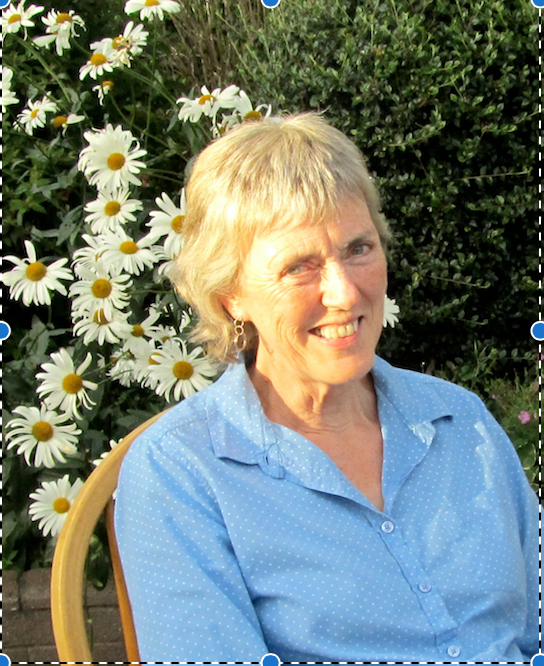
Photograph of author Maggie Feeley. (Courtesy of Maggie Feeley)


 Shauna Gilligan Writer