Writers Chat 81: Mary O’Donnell on “Walking Ghosts” (Mercier Press, 2025)

Mary, you are very welcome to my Writers Chat series. We’re here to discuss your short story collection Walking Ghosts, a collection which has been described by William Wall as “fascinating, and utterly compelling”.

Cover image of “Walking Ghosts” by Mary O’Donnell showing a collage of images including tarot cards, trees, a woman’s neck and hair, the sea, and silhouettes of a couple.

SG: I love the title, the fact that the ghosts are walking and how this connects to the importance of time in the collection. Many of these stories were published in journals and magazines nationally and internationally prior to their inclusion in this collection. Can you talk about how you compiled the collection – the order of and the naming of the 17 stories, and perhaps stories you might have left out?

MOD: Hi Shauna, great to be part of Writers Chat! The question of how a story collection comes together depends on the writer. For me, the stories are usually set down quite slowly, and I notice that in three of my short story collections there has been a ten year gap between each one. This is probably because I’m also a poet and novelist, which means I have other projects underway, or I’m thinking about them. When a short story seems urgent to me, I’ll set it down and get an early draft underway, before ‘parking’ it for a while in order to let the basic thrust of it to settle. Then, later, I’ll return and scrutinise what I’ve written and see if that’s true to what I intended. Anything can happen at that point.

SG: That sounds like good advice, Mary, thank you! Now the opening story “Cocoa L’Orange”, gives us a poignant yet humorous picture of a relationship whose troubles are revealed during lockdown.

Sasha, “considers reading to be a positive thing. Jake has never bothered with fiction, preferring non-fiction and biographies”

This sets the scene for an examination of identity, meaning, usefulness, and productivity in society and between people. How did this story come to you? During lockdown or afterwards?

MOD: It came to me in the final year of lockdown. I was very struck by how awful it may have been for some people, and how isolation enhanced difference or even great difference for some people, while others paddled along and were able to get through. In the case of Jake and Sasha, I imagine them actually getting through this together despite frictions, but the point is that his sense of masculinity has been undermined by the collapse of his business, to the point where he is emotional frozen. The only outlet that approaches a thaw is contained in the moments when he and his equally failed male neighbour gaze across the gap between their houses, from window to window, in a silent acknowledgement of some kind. I think if I were Jake I’d probably poison Sasha—the story is told from his point of view, not hers—because she is pragmatic and a little unsympathetic to his plight.

SG: Yes! Your use of silence was so powerful in that story. In many of the stories you bring us into the inner world of the protagonist allowing us to experience their world view. I thought this came through wonderfully in the moving “Edna” with the pitch perfect pace and tone which made me feel I was with Edna both in thought and in movement. Edna has “thoughts like a slow tide” as she moves slowly through a Dublin where she feels she is still not a “fully fledged” city person. She dispenses hugs and fivers to alleviate the deep well of missing her daughter who is pregnant and abroad and tries to make sense of people through snatches of conversation. In contrast, Roberta in “Like Queens not Criminals” moves through London, a city she is not familiar with, and tells herself as much as us that

“I do know something about beauty, how it lies in wait at the dark heart of our lives.”

Similar to “Edna”, “Like Queens not Criminals” is an exploration of loss and identity and finding solace in ordinary places. Both stories also serve as quiet critiques of how Ireland views the marginalised and bodily autonomy. Did these themes emerge through the characterisation or did you have them in the back of your mind as you wrote? 

MOD: That’s a really interesting comparison Shauna, one I hadn’t thought of. The theme of how we move through space interests me, and in ‘Edna’ I did want to place an older woman out in the city, someone whose sense of autonomy is quite strong, and who believes in helping others in unconventional ways. She is not a do-gooder trying to feed her ego, but nor is she quite prepared for what happens when she unintentionally breaks the body space of someone who is vulnerable. There is a beauty to both cities for each protagonist. In ‘Like Queens not Criminals’, Roberta is in London in the early 1990s for the purpose of having an abortion, so she views the city through highly self-aware eyes on the days she is there. She has abandoned her own country to do this. She has made a decision to do what she believes is best, just as Edna some twenty years later decides to do what she believes best but in her home city.

SG: There is much humour in this collection, too. “The Space between Louis and Me” had me laughing out loud; “The Stolen Man” had me smiling with recognition; “The Creators” had me nodding in agreement. Humour is, to use Dickenson’s phrase, a slant approach to more serious themes or topics that are explored in these stories yet there is a lightness of touch here too that makes me wonder if it came from the actual writing. Did you have fun writing these three stories in particular?

MOD: I find it difficult to keep my own sense of humour—sometimes ironic, sometimes satirical, and yet other times downright mocking—out of the narrative. This is probably because I’m an unreconstructed free thinker who is never more happy than when she discovers conventional boats being rocked. I do enjoy it when my characters take situations into their own sometimes inept or intolerant hands, because their intentions are good behind it all!

SG: I love that “inept or intolerant hands”! Finally, if there is an overarching theme to this collection it is how identity is fluid and formed and re-formed with and by those we meet – both intended and chance encounters – and where we are in the world we are – travel for all its reasons. I’m thinking here of “Luck” and “Peace, Love and Pushpanna” and the power of conversation. Can you comment on this?

MOD: We are constantly being pushed, nudged and prodded by our experience and by our encounters with others. In ‘Peace, Love & Pushpanna’ I took a newly married young woman in the late 1970s and her rather pedantic husband and situated them on a break with relatives in London. The cultural encounter—without giving anything away—is what is going to change her and (it is my hope if this were ‘real’) make her leave him. I hate boring people, or people who are boring to me, and I just had to suggest that there are better, happier ways for this fun young woman to live! In ‘Luck’, the central character, a tarot-card reader is himself extremely lucky on the day—a complete chancer, a man of weak character with betrayal in his background, he has somehow managed to turn his own fortunes around and has landed on his feet!

We will end this chat, Mary, with some short questions:

  1. Bus or train?  Train!
  2. Coffee or tea?  Coffee.
  3. Quiet or noise when you’re writing? Quiet-ish with people sounds from outside is best. Ideally, a library, but the last time that happened I was on holiday in Mallorca and the hotel had a small library with a balcony overlooking the reception area, so I was away from everything, yet part of a slight buzz of activity, and I was revising by hand the story ‘Edna’!
  4. Your favourite story that didn’t make it into Walking Ghosts? ‘Native’, a story which will be the title story of the Spanish translation of a different collection of stories, due out in January 2026. In ‘Nómadas’, as they’ve called it, a commercial watercolour artist and her daughter become drawn, even fascinated by a family of Travellers on the road they live on.
  5. What are you reading now? ‘Big Kiss, Bye-Bye’ by Claire-Louise Bennett (Fitzcarraldo Editions)
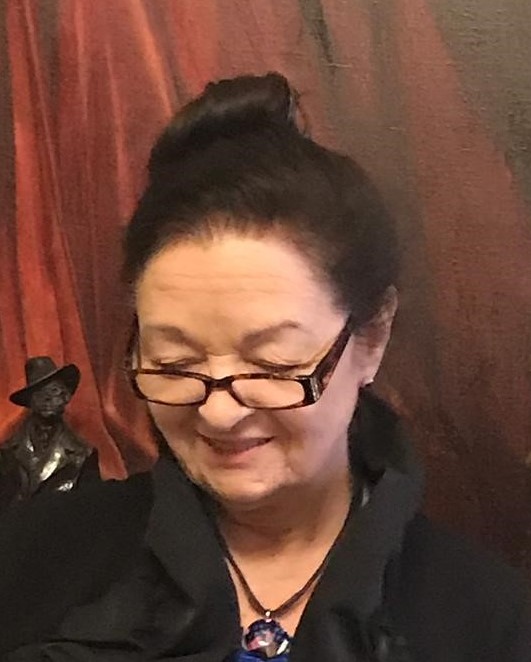
Mary O’Donnell reading from “Walking Ghosts” in Hodges Figgis, Dublin (Photograph used with kind permission from Mary O’Donnell)

Thank you, Mary, for participating in my Writers Chat Series and for your thoughtful answers to my probing questions! Walking Ghosts can be purchased directly from Mercier Press or from your local independent bookshop.

Writers Chat 80: Colm Scully on “Neanderthal Boy” (Wordsonthestreet, 2025)

Colm, Welcome to Writers Chat. We’re talking about your second collection of poetry, Neanderthal Boy (Wordsonthestreet, 2025). It’s a collection that deserves to be read with care and with time and one that rewards the reader with each re-read. You’ve said that it was eleven years in the making which I can imagine as the collection has a heft and breadth to it, which intertwines past and present, as Matthew Geden puts it, “with a masterful touch”.

SG: Let’s begin with the sculpture on the cover and the title. I was intrigued as to why you used “boy” rather than “man” as so many of the themes and experiences that you explore in the collection have an “everyman” feel. Were you inspired by the sculpture or was it inspired by your words?

CS: Neither really, Shauna. The title poem was one of a series I wrote a few years ago about modern man’s antecedents, Cro Magnon Man, Neanderthal Man, Homo Sapiens. I think I was exploring our nature, as humans, through a deep search into our past. I have always been fascinated by evolution and how we as humans have an innate superiority complex over the rest of life forms. This may have helped us get to this point, but it could be hindering us now, as we deal with complex environmental and political problems. At least six or seven poems in the collection fall into this theme. I was actually going to call the collection, Stolen Memories, as I often take on a persona from history, but Matthew Geden, who was reading the collection for me, felt this was a clichéd title and suggested I run with Neanderthal Boy. I think the boy in the title refers more to the individual poem and evolution and change than hinting at boyhood as being a theme. This particular character just happens to be young, as are several other characters in the book.  As for the sculpture on the front, it was created by my daughter, Isabel, for a transition year project about four years ago. I loved it and probably connected it to my poem immediately, storing in the back of my mind the thought that I would use it as the front cover for my book.  My first book also had a male figure in the frontispiece, a shot from a Roman floor mosaic. It seemed like a good idea to create continuity with my book covers. Also, I often see people using art by family members on their books, and I think it’s a good way of personalising the work. Or maybe it’s just that I consider myself a boy, even though I am 58 years old.

Image of the front cover of Neanderthal Boy showing a sculpture of a boy against a black background.

SG: I like the idea of considering yourself a boy at 58, but I do believe that our creative selves are very closely connected to our child-selves. The importance of memory, the telling of childhood stories and identity formation comes through in many of the poems. In “The Electrician” the narrator follows in his father’s footsteps in his own way and in “Rote Learning,” you paint a moving picture of the power of memory, poetry and words and how different generations listen and remember. I loved how the “tools” of each trade – Electrician, poet/teacher – provide the link to your father and mother, and then on through the generations. Do you think writing poetry and making film-poems is your addition to this lineage?

CS: That’s a lovely thought. I suppose we always think about ourselves in isolation; what we want to do, what we are achieving, what we want to be. But your question makes a lot of sense, and I don’t think I thought of it like that before. Yes, I am a bit obsessed with family, history and what is kept or passed on, what we can learn from the past.  It would be nice to think that, in my own way, I am doing what I am supposed to be doing to pass on ideas, beliefs, traditions from previous generations, playing my part in that intergenerational human chain. As Heaney says in Digging,                 Between my Finger and my thumb, the squat pen rests, I’ll dig with it.

Maybe I  am doing a little electrical wiring, of a sort, with my poetryfilm, or passing on the love of poetry my mother gave to me. Hopefully.

SG: Up against this personal exploration are wider narratives – some political, for example, “A History of the Pharmaceutical Industry in Ireland 1990 – 2020”, “An Alternative History of Ireland” – can you speak about your interest in varying historical narratives coupled with the stories we tell ourselves and the official stories we are told about our country – and, more importantly, as you explore here, the voices that are silenced?

CS: Thanks for pointing out these poems, Shauna. Though they are not ones that I found easy to get published in magazines, I am quite fond of them. Political poetry is difficult, although some say that all poetry is political. I personally try to shy away from politics in poetry, at least away from the polemical. One has to be outrageously funny, like Kevin O’Higgins, to get away with that kind of work. I planned, once, to write a chapbook entitled, Alternative Histories, sparked by the aforementioned poem about the Travelling Community. It’s always a risk to take on the voice of a group of people that you are not a member of.  Cultural appropriation is a real thing. I do feel that Travellers have been treated unfairly, and we seem to have a blind spot, as a society, to their cause, while simultaneously portraying ourselves as liberal and inclusive in an international arena. I think we set up Traveller society to fail, through our policies over many decades. We should not be surprised, then, that the travelling community still has a lot of issues. It’s our fault. In the case of  A  History of the Pharma Industry, it’s not really a political statement against the multinationals or the pharma industry. It refers to my career as a chemical engineer for 30 years. It’s about capitalism and the realisation that dawns on us, after the fact, that we are mere adders of value to capital, in our working lives, creators of wealth for others.  Perhaps the stories in my poems can elaborate on a side to these topics that can be hard to illuminate in everyday discussion.

SG: It is a great poem, Colm. I also very much liked the re-imagining of and placing yourself in another voice or person at well-known historical moments or events. In “Stolen Memory” you bring us to Terence McSwiney’s funeral through the eyes of a child, and in “Easter Monday” an unnamed narrator remains at (her?) desk trying to complete her work “as per Mr Keane’s instructions,” unnerved by “the crashing and banging in the foyer below” by the men who have “taken over the post office.” In the “Lord Protector” you assume the voice of a Cromwell tired of Ireland who yearns to be in Essex and in “Sparrow Hawk” and “Sparrow Hawk II” you remind us of the violence of humans against animals. Assuming the voice and being of anther is part of being a writer. Did you enjoy delving into these alternative beings, and placing yourself (or your imagined narrator) at the heart of history?

CS: I loved it really. I always regret not doing history in my Leaving Cert, though I went on to study it in UCC as an evening arts course in my late twenties. History of all sorts really inspires me. When I combine this with my love of poetry and story telling it seems almost unavoidable that I should want to go to those places and tell a story through the eyes of someone who lived at the time. Almost always, with me, it’s an attempt to tell from another perspective, something that’s not the generally accepted narrative, We don’t tend to hear Oliver Cromwell’s side of things, or the point of view of a female office clerk in the GPO in 1916, or a child delighted with his day out, oblivious to the significance of a republican funeral. I take on these people’s personas to try to empathise and learn a little more about the times, maybe garner an insight or deeper understanding of what it was to be alive then and how it might illuminate our understanding of the complex world of today.

SG: And on understanding complexities in our world, there is a philosophical thread running through the collection. I found myself re-reading many poems and particularly enjoyed “Evolution,” “Cro-Magnon Woman,” and the chilling – and unnervingly fit for our times – “Saracens at the Gate.” There’s a great rhythm and chilling atmosphere in your exploration of the advancement of time and ideas, and how new discoveries and research change our perception of ourselves and our human histories. We all yearn to know the thread that links us to those who went before and yet what we think of as our firm knowledge can be questioned, and changed, with the contrary notion being true too – as in the opening line of “Evolution”: “These days I remember things that never happened.” Do you think this could be the overarching theme of the collection?

CS: Yes, I think it could be. I am not Heaney’s biggest fan, yet I find myself mentioning him for a second time in this interview. I think of his collection title, The Human Chain, as perhaps being a fitting catch-all for many of my poems. I do find it hard to pin down an overriding theme in the book, as all the poems, apart from the Progress of Man sequence, are quite independent of each other. I am aware that an overarching theme or subject is the de rigueur way to create a collection today, but I find it a difficult thing to do. I’d find it impossible to sit down and write twelve sonnets about the months of the year, for example. I said in another interview, recently, that my first collection was about finding my place in the world, whereas this one is about exploring our interactions as humans with the natural and built world. However, I feel that you may have summarised it better in your question.

SG: The everyday and individual memories or experiences that can also be interpreted as universal are very much present in the collection: for example, “The First Time The Pope Came,” “Purpose,” “Tea Ceremony” and “Interior Group Portrait of Penrose Family” with its perfect final line “We left as we entered, only our portraits remain.” This poem is also a mesmerising film poem. How did the themes examined in these poems influence their placement in the collection?

CS: Personal and familial poems have always had a place in my work. We are all aware that these are the poems that people connect and empathise with quickest. But, as they also tend to be the most frequent poems written, one must be selective about when and on what specific theme one writes, as sentimentality and nostalgia can easily overtake us. I know a successful poet who says he never writes a poem involving any of his family. This I mistrust, as family are so important in nearly all our lives.  The First Time the Pope Came is very much a memory poem,  narrating the weekend of the Pope’s visit to Ireland in 1979, as closely as I  can remember it. This, along with several other poems, got automatic inclusion in the collection because they were published in good journals (Cyphers in this case). I have to trust the eye of experienced editors as well. Tea Ceremony is quite a light Ars Poetica, Purpose I would consider a philosophical poem, whereas Interior Group Portrait is very much in the general theme of the book, connectedness and the anthropocene.  In terms of why they got in, I would say that my approach to this collection was very different from that taken for my first collection. In the first, I sent out about 100 possible poems to four different people: Poets, a short story writer, and my wife. I got them to vote for their favourites. Being a scientist, I used this to come up with my top forty. In retrospect, I think this was a mistake. Poetry is so subjective, and individual opinions vary so widely that a small sample of four cannot adequately seperate what is good from what is bad. This time, I decided to pick out my own personal favourites from several hundred that had been written over the intervening years. This included many poems that I felt were good, but that I never got published or received positive feedback on. I think I have learned that I am an ideas man, and sometimes the quality of the poetry suffers at the expense of the idea.  This time, I tried to pick poems that I felt were technically well constructed as well as having interesting content. 

SG: Thank you for your generous answers, Colm. We will end with a few light questions:

  • Quiet or music when writing? When editing?  Quiet. Silence if possible.
  • Coffee or Tea?  De caff tea. Indigestion has forced me off coffee.
  • Bog, Sea or Mountains?  All three. I love the open air.
  • Do you have a go-to book that you frequently re-read? Dubliners. I first read it when I was seventeen, and I can’t get over its beauty and genius.  He was twenty-three when he wrote it, but seems to be able to understand what it feels like to be any age, from young to old.
  • What are you working on now?  Right now, I am reworking short stories that I wrote over several years, hoping to get some of them published. Also, I have written a novel that needs a lot of work. Then, of course, there are the poetry films. I currently have too many things that I need to work on.

Thank you to WordsontheStreetPublications for the advance copy of Neanderthal Boy. It is available to purchase here.

Writers Chat 79: Celia de Fréine on “Even Still” (Arlen House, 2025)

Celia, You’re very welcome to my Writers Chat series. We’re here to talk about Even Still (Arlen House, 2025) your debut short story collection in English which also includes “The Story of Elizabeth”, your short story shortlisted for Short Story of the Year Award at the An Post Irish Book Awards. The collection has been described as having “compelling” prose with “characters’ voices pitch perfect” and a “unique, characteristically stark, witty perspective on the lives of women and girls.”

SG: Even Still invites the reader into the emotional heart of each narrator – over a range of ages – and stays with some of them as they create life-paths out of places of poverty, away from damaged families and through schooling and employment that only echo where they’ve come from. Did these themed threads dictate the title and running order of the collection?

CdF: Thank you for the invitation, Shauna. I’m delighted to take part in the Writers Chat series. The word ‘debut’ seems strange applied to me at this stage of my life and so late in my literary career, but Even Still is indeed a debut collection of stories that were written on the side, over many years, while I worked in other genres. The title was chosen at the last minute, and with difficulty. I feel it suits the collection, however, as it suggests the possibility of alternatives. As for the running order, I thought it best to place the three stories that feature the character, Veronica, in chronological order. “My Sister Safija”, “Vive La Révolution” and “Irma” grouped themselves together. It seemed appropriate to place “La Cantatrice Muette” and “Félicité” between later stories, some of which have characters common to them. As you say, many of the stories explore the lives of  characters who emerge from disadvantaged backgrounds, then attend schools / are employed by institutions in which they are challenged as a result of that background; the question as to how they manage to improve their lot is one that intrigues me, not only in this book, but in general.

Cover image of Even Still showing part image of the painting ‘Fitzwilliam Square’ by Pauline Bewick – side profile of a woman on a balcony in Dublin looking down on a road on which seven cars move along.

SG: The collection is as much about place as people – starting with the cover art (‘Fitzwilliam Square’ by Pauline Bewick) – and the opening story “Pink Remembered Streets.” In these stories villages, towns, cities, and the buildings that form them rescue and trap their inhabitants. Can you comment on the importance of place in your stories?

CdF: The cover art, suggested by publisher, Alan Hayes, with its buildings, winding street and traffic, viewed by a woman from a height, is indeed appropriate. This is the first time I’ve been asked about place in my work and am happy to provide answers, insofar as they relate to this book. The buildings, in which the stories are set, are imagined, apart from the brief mention of a boarding school in “These Boots were Made for Me” and the houses described in “Pink Remembered Streets” and “The Accident”. Both of these houses were places in which I spent time; both were places of insecurity. The former is a flat in a house in Rathmines where I lived with my family during my early years, and from which we could have been evicted at a moment’s notice; the latter is my grandmother’s house in a seaside town in Northern Ireland where I spent my childhood summers, knowing the fun and happiness would end when summer drew to a close. Both houses have appeared in other work, as has security of tenure and the buying and selling of property. Another place that permeates the stories is the past, L.P. Hartley’s ‘another country’ where, in this case, there were few opportunities for girls and women.

SG: You tackle themes (such as domestic abuse, gun running, suicide, the poverty trap, cruelty) that could be weighty with, at times, a narrative voice that is wry and humorous. I’m thinking of the voices of Stella in “Panda Bears” and Eithne in “His Ice Creamio is the Bestio”. Was that a conscious, writerly decision or did those narrative voices emerge through the writing of the characters?

CdF: I tend to see the absurd in many situations and this is reflected in the stories “Panda Bears” and “His Ice Creamio is the Bestio”. In the former, Stella feels she must marry, not least on account of the urging of her friend, Eileen. The fact that both men she sleeps with wear hideous underwear and are poor lovers emerged naturally, as did the time in which the story is set: the opening occurs in late 1969, as suggested by the Mary Quant lipstick and the Beatles’ song; the fact that the timing of the gunrunning, set during the following Whit Weekend, coincides with the 1970 Arms Trial, was serendipitous. “His Ice Creamio is the Bestio” began life as a play in which I examined the lives of three generations of women from the same family, each of whom spent their formative years in different circumstances: grandmother, Eithne, from Northern Ireland, worked as a shorthand-typist during World War 11; her daughter, Francesca, an academic, grew up during the fifties in Dublin; Francesca’s daughter, Alannah, grew up in the Connemara Gaeltacht during the eighties. I found it bizarre, though credible, that three generations of one family could emerge from such different backgrounds on the same small island, and set out to explore how those differences impacted the characters.

SG: I’d love read a novel with these three generations! The stories often hold their power in the unsaid – or shown at a slant – whereby they rely on the readers’ close attention and intelligence to know or feel the real truth. Veronica’s stories, in particular, are great at this (the absence of Clara, for example). We know what happened to her – or we use what the narrative has stoked in our imagination. This makes it feel like these stories are a dialogue between writer/narrator and reader. Can you comment on this?

CdF: The subtlety probably spills over from my poetry where the number of words is more measured and the point never hammered home. I feel this approach works well in the Veronica stories, each of which focuses on the fate of a child: Clara, who falls prey to a paedophile in “Pink Remembered Streets”; the baby, Elizabeth, born of incest in “The Story of Elizabeth”; the unnamed boy, illegally adopted in “These Boots Were Made for Me”. I hadn’t planned that the common denominator in these stories would be the ‘child as victim’, as seen through the eyes of Veronica. Perhaps, because they are told at a slant, the stories demand the reader’s close attention, creating, as you say, an additional element to the usual dialogue between writer and reader; if this is the case, it was unintentional.

SG: And the unintentional is often the magic of the work! War, gender, and displacement are also explored in these stories, overtly in “Irma” and “My Sister Safija” which, as they’re bookmarked between other stories, seem to echo concepts of the outsider, whether it’s ideas of blow-ins, internal movement within the island of Ireland, or belonging through marriage. Did you set out to explore these themes or did they emerge through the stories?

CdF: War, gender, and displacement feature regularly in my poetry and it comes as no surprise that they have spilled over into Even Still. In addition, I should mention that some situations and characters in the collection are inspired by real events, though said situations and characters have been changed out of all recognition. The theme of the outsider, insofar as that person is from Northern Ireland, is one that worked its way into these stories. Having been born in the North and grown up in Dublin, I’ve always struggled to find out where I’m from, a question which drives much of my writing. I used to question whether I was entitled to explore my ‘Northerness’ as I hadn’t lived in the North during the Troubles but, more recently have come to  better understand how the fallout from the conflict reaches beyond the Border. Though I didn’t set out to write stories populated by Northerners, these characters presented themselves and exerted their influence to varying degrees on the situations in which they became involved. As for belonging through marriage, Stella in “Panda Bears” is a young woman from Dublin who ends up marrying a Kerryman and moving to Tralee. This idea was also triggered by personal circumstances: I worked for some years in the Civil Service where the vast majority of colleagues were from the country and cast me, the Dubliner, as outsider – even though when I finished work and went home in the evening I was cast, alongside my family, as outsider because we were from the North.

SG: Much of your writing has the poet’s eye for detail, the dramatist’s narrative curve, and the prose writer’s depth. Your descriptions and visual take on lives also has the film maker’s sensibility. Could you see any of these stories as short films? (I’m thinking of “The Short of It”, for example).

CdF: It has already been suggested to me that some of the stories would work on screen. As soon as someone gets back to me with a firm proposal, I shall give it my serious consideration! “The Short of It” is the only story I set out to write as part of an agenda. Some years ago I was devastated when my work was plagiarised and exploited on a very public platform. One of my sons suggested I write a revenge story in the style of Michael Crichton: Crichton finds novel way to exact revenge on critic | The Independent | The Independent. Although my son’s suggestion triggered “The Short of It”, the story changed out of all recognition once I got going and now bears no resemblance to the travesty which gave it its initial impetus. I like the juxtaposition between the narrator’s circumstances when young, cash-strapped and working in the Civil Service, she adapts sewing patterns to recreate dresses featured on the catwalk, and her response, years later, when she realises her writing has been plagiarised.

SG: You are a bilingual writer. Were any of these stories first written in Irish, and, if so, how did you find the translation process in terms of idioms, flow, and narrative voice? If not, would you consider translating any of them into Irish?

CdF: “My Sister Safija” was originally written in Irish and is published as “Mo Dheirfiúr Maja” in Bláth na dTulach (Éabhlóid, 2021) an anthology of work by Northern writers. As such, I had to transpose it to Donegal Irish and needed editorial assistance. You can listen to it, beautifully read by Áine Ní Dhíoraí, here: Mo Dheirfiúr Maja le Celia de Fréine – Bláth na dTulach (podcast) | Listen Notes. I would consider translating any of the stories in Even Still into Irish for a film script or play.

SG: We will end this Writers Chat, Celia, with some fun questions:

  • Bus or train? Tram. I love the LUAS. For longer journeys, I prefer the train but find myself travelling more by bus as bus stops are more accessible than railway stations.
  • Marmalade or jam? Marmalade. Thick cut.
  • Coffee or tea? An cupán tae, always.
  • What are you reading now? When I’m writing I read little other than newspapers (at the weekend) and research / fact-checking articles. As well as the above, at present I’m dipping into There Lives a Young Girl in Me Who Will Not Die (Penguin UK, 2025) the selected poems of Danish writer, Tove Ditlevsen. Recently I read The Forgotten Girls: An American Story (Allen Lane, 2023) by Monica Potts; and You Could Make This Place Beautiful (Canongate, 2023) by Maggie Smith (not the actor). All three books explore themes covered in Even Still.
  • These sound like great recommendations (I love Ditlevsen’s work!) What are you writing now? I’m about to sign off on the second edition of my poetry collection Aibítir Aoise : Alphabet of an Age (Arlen House, 2025); I’m also reworking my play Cóirín na dTonn with the team from An Taibhdhearc. Cóirín na dTonn was originally published as part of the collection Mná Dána (Arlen House, 2009 / 2019) and is recommended as an optional text on the Leaving Certificate Syllabus. I also have two projects on Louise Gavan Duffy, inspired by my biography Ceannródaí (LeabhairCOMHAR, 2018), on the back burner. As all these projects are based on, or inspired by, earlier work, I long to clear space for new poems, and get back to a YA novel in Irish which I began a couple of months ago.

Thank you, Celia, for such insight into your writing life and process. Here’s to finding clear space over the coming months and continued success with Even Still which can be purchased in Books Upstairs.

Photograph of Celia de Fréine, Princess Grace Library, by Judith Gantley used with permission.