Writers Chat 31: Noel Duffy on “Street Light Amber” (Ward Wood: London, 2020)

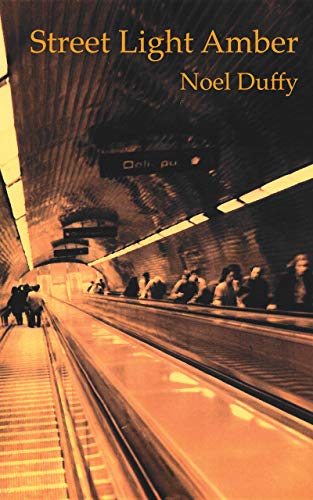
Cover of Street Light Amber

Noel, You’re very welcome back to my Writers Chat series. Last time we talked, we discussed your collection On Light and Carbon which we re-publish at the end of this chat. Today, however, we are focusing on your fourth collection, the wonderfully titled Street Light Amber. Launched by writer David Butler in Kindle format in April 2020, it was published in paperback in the summer of 2020.

Street Light Amber is bookended by a repeated poem in which the narrator, a nocturnal worker, at “The Department of Dead Letters” sorts through undelivered letters, having left behind the “question mark” of a woman still sleeping. He is a “a man among us who knows secrets” and he treats the letters with a tenderness that reflects how deeply he is moved by the love he encounters in an undelivered letter with cursive script “the love so carefully expressed, now his and his only.” Between this leaving and returning to love we have 33 poems. Was this structure there from the start or did it evolve with ordering the collection?

The repetition of the first poem at the end came later in the process as I had a different end poem that will be in (and inspired) the book I’m working on now. The first draft of this manuscript had a complex plot, but I realised people just didn’t get it. When I simplified the structure somewhat, the ideas and themes I thought I had lost actually came through more strongly, I realised. But the circular structure hints how we keep striving for things in life, in this case love, and will do so over and over despite the loss involved. (There is an echo of the Orphean myth in this which I explored in a short poem in my second collection called “Return” which could almost be read as a synopsis of this one, “I just never learned to not look back / to know for sure it was her hand I was holding…) In any case, somehow, it seemed very haunting to me to go back to the postal worker at the end. I don’t want to force an interpretation, but you might wonder if he is also the author of these ‘love letters’ (the poems) and is sending them to himself – or perhaps to his ex-lover who has moved houses so his letters find their way to him in the ‘Department of Dead Letters’ yet he continues to send them. Or maybe he is just a voyeur of their relationship hinting at his own need for love.  This repetition and close of the book are not meant to be comforting in any way. The poem, I think, has a very different impact when encountered a second time. There is a greater sadness in it, for me, given the story expressed in-between. The ‘lover’ has been replaced rather coolly by ‘the woman’ in the bed ‘a question mark against the sheets’ as you quoted. Is his chance of love gone forever, whoever this postal worker might be? I should point out there is one word that is different in the repeated version which no one notices. It’s in the last line, that’s all I’ll say.

Yes, I had spotted that – but it’s interesting because what it does, at least for this reader, was send me right back to the start, to re-view and re-read the love and the loss. Many of the poems feature lightness and darkness and explore how perception and memories are formed and change as time passes. You use the senses to examine the role of observer, voyeur, capturer of moments which is common to nearly all the poems. I’m thinking here of “the grey in-between” and “the coupled lights of cars” in “After a Long Absence, She Returns”. I’m also thinking of “the oyster shell grey” in “Eclipse”, and the evocative movement “Girl in Window” in which the girl “casually raises her hand to her red-streaked hair,/frozen to a moment in the monochrome of film.” And, of course, in the title poem “Street Light Amber”, the memories return “when you least expect them…”, as the image of “you” standing by the window looking out as the rain falls in amber street light to the sound of “Ella’s deep falsetto falling/to stillness…” Can you talk a little about the visual in your poetry? 

Many years ago, I came across A. Alvarez’s anthology of post-war British poetry (published in the late 60s) and I discovered a poet called Lee Harwood who had written a sequence called ‘Imaginary Love Poems’ with each poem taking the simple title ‘First Imaginary Love poem’ or ‘Seventh Imaginary Love Poem’ etc. This seeded in me the idea to write a sequence of poems called “12 Imaginary Postcards”. The concept was that each poem would be two halves: the first, a visual description of a place; and the second, an abstract reflection on that place. I had this notion for years but finally, in an idle period after writing my third collection, I decided to just test the concept and try to write very visually by deliberate intent. So, the visual aesthetic very much came from those early considerations. What started as a small experiment took on a bigger form as events in my life somewhat dictated it must, though I stuck to the first part of the imaginary postcard method. I should say, I think, in the most general sense, poets can be ascribed to two different camps: those who create striking images and those who create striking language and rhetoric. You might call these ‘image’ poets and ‘language’ poets. Neither is better than the other, but I have usually strived to create memorable images over memorable lines in my poetry. This collection pushed that further and made the idea of ‘looking’ – and specifically photography a key leitmotif for the entire work – central. Each ‘imaginary postcard’ creates an incremental movement through the relationship at the heart of the book until we come circle to that repeated poem. I should say, the book is written as a narrative sequence and is best experienced read in the order it appears.  

I felt the collection touched upon a type of every man/woman and the essence of human existence – that of living through time and trying again and again to capture moments of love that expire right as you are trying to preserve them. The experience of the individual is also and at once universal – that of loneliness, loss and love. “All Souls’ Day”, “The Forest”, “Sodium Orange” and in “Then” where the narrator “is a man searching for silver coins in the sands,/ lost in the confusion of his own hands.” In “Moon-Man”, the narrator realises “You weren’t special…moon-man,/ blind stenographer of what-might-have-been,/ combing the darkness for signs.” In the beautiful “The Fading Smile” we learn that “The future hasn’t happened yet./ For a moment time is held back in a smile.”

Yes, I totally agree with your assessment. The relationship at the heart of the book is meant to be heightened to the level of archetype. There is a man and woman trying to reclaim lost love. I deliberately never described either character physically in a pen-portrait in the way you might expect in, say, a novel. So whatever image people see in them is projected onto them. So, it operates in a way that is both very specific and very universal at the same time. And the essence of this relationship is captured though small, arrested moments, like photos, rather than through a ‘dramatic’ plot as such, though it is, as I mentioned, written to be read as a narrative collection. The lovers exist in a kind of bubble (as lovers often do) with the city a vivid backdrop to their story. Yet, their relationship is both ‘special’ and yet ‘not special’ at the same time, as “Moon-Man” suggests. It is meant to be typical, on some level. Most of all, though, I wanted to write a collection of poetry about love that didn’t rely too heavily on the tropes we might expect to find in such a collection. I hope I have achieved that, in some way with this work. As William Carlos Williams famously said,  the challenge with any form is to ‘Make it New’!  

Yes, I think you have indeed, made it new here. The city, of course, is also a character in this collection and moves with an invisible camera – or not so invisible in the preciseness of “Darkroom Notes” – capturing snapshots of love. In the Botanical Gardens (“Botanical Gardens”), beneath a Dublin statue (“In the Shadow of a Patriot”), before a shopfront (in “Shopfront”) where the narrator is lost in the beauty of Dublin’s geography and balance and turns, suddenly to be faced with a shopfront “in a splay of colour” with TV screens filled with actors “stealing our darkest desires in a simulacrum of pleasure.” In “Stations” the railway station is “the meeting place of all our love and longing,” and in “Postcard from Nowhere” the narrator contrasts the brightness of travel with how the “routine of our daily logics unveiled to a blurred snapshot”. Can you speak a little about the city and how it is weaved throughout the poems?

There is a great – indeed almost obsessive – tradition, in Irish poetry of ‘place naming’, let’s call it. You see this in the work of Kavanagh, Heaney, Montague and many others, where often poems are attempts at a negotiation between the poet and the environment, but one where the negotiation is one imbued with a sense of the historical/mythological context.  For these poets, the natural world is not just place but place and collective memory; a memory that moves down through the strata of location and personal history, forming a dialogue between geography and the lives of those who have inhabited it. That is fascinating, of course, but I wanted to try to do something different and dislocate place from collective memory in a certain way, so that while the city is filled with landmarks and buses and churches and people, it ‘belongs’ to the lovers alone, in a sense. It is a participant in their particular time together, and the challenge in writing about it as such, is to not to simply name places but to find their numen instead, rather in the way the lovers are trying to do so with each other. So, the city is unnamed by design and, rather like the two characters is, I hope, likewise raised to the level of archetype in the process, like a juxtaposition of the very particular and very abstract. But there are also moments, like in “Shopfront” as you pointed out, were the crassness of modern life crashes into the narrator’s world turning us all into voyeurs of a kind, and there is also a sense of seeping suburban disturbia  that grows as the story progresses, reflecting his increasingly disintegrating inner state of the speaker, perhaps best exemplified in the poems ‘Triage’ and ‘Crime Scene’. Anyway, most people who have read the book very clearly visualise the city as Dublin. I do wonder what others might see who have never been here?

Let’s do as we’re told to at the end – “Erase. Rewind. Start Again.” So going back to the title and cover image which go so well together and immediately bring the reader into the atmosphere that you create in this collection. Can you talk a little bit about the title and cover image?

As I was working on the collection and had assigned the title a friend pointed out that I have used the idea of ‘amber’ as a metaphor for memory at some place in all my collections. Given that this collection is highly preoccupied with that theme it made sense to keep it. I also hope it sounds intriguing. I’ve only ever had one hobby in my life and that was photography. For my 21st birthday my brothers bought me a beautiful manual camera, a Nikon if I remember correctly. Unfortunately that camera gave up the ghost some years ago and though I continued on using a digital SLR for some time, I really hated having to go into ‘screens’ to make adjustments to focus and light etc., so in the end I’m no longer interested in taking pictures. In any case, for the cover, I wanted to create something that strongly suggested an urban landscape. The photo is of an underground (taken on my old camera some years ago) in a city I won’t name, though if anyone can guess the answer they probably deserve a free copy/Kindle of the book. Hint: it’s not London. The picture was titled ‘Descent’ and I suppose I was slightly hinting there that the suite of poems that follows is a kind of descent into the underworld, so there are again shades of the Orphean myth in that as I mentioned earlier and takes us back to the earlier observation I made about the book operating on an archetypal level as well as a bricks and windows one. It’s a kind of double-exposure of the real and the hidden at the same time: the story of the lovers; the place it happens. I hope the cover image and title help reflect that.

Yes, I think both image and title do reflect that intention. Gosh, I will have to study the photo closely to try and figure out where it was taken! Lastly, Noel, some fun questions:

Kindle or paperback  – paperback, though the collection first came out on Kindle and I actually don’t have one so that was a little strange. Anyway, the book is now available in both versions so something for everyone’s reading preferences!

Painting or photograph – Given the preoccupation of photography in this collection I will have to go with photography on this occasion.

Coffee or tea – tea, most definitely tea!

Boat or plane – Boat though it’s been a very long time since I was on one. I remember a very memorably boat trip I took from Seattle to Vancouver some years ago. For my upcoming fiftieth birthday, I’d love to go on a cruise in Scandinavia.

Sandwich or salad – I do love a good Caesar Salad!

Thanks, so much Shauna for reading the book so closely and your very perceptive questions about it. It was really excellent to get the opportunity to speak at such length about it.

Thanks, Noel for such engaging and honest answers. Readers can purchase Street Light Amber direct from Ward Wood Publishing.

Noel Duffy – Photograph courtesy of Noel Duffy

ORIGINALLY PUBLISHED IN OCTOBER 2013 – Noel Duffy on his second collection, On Carbon & Light.  

Noel, congratulations on your second poetry collection On Carbon & Light. Tell me a little about the title and cover, they are both intriguing.

Well, I had the title for a poem called ‘On Light & Carbon’ for maybe ten years. I imagined it would be a kind of technical poem about photosynthesis and while it would crop up every now and then, I never managed to write it. When I started this collection in summer 2010, I finally approached it and the poem that resulted was totally different than one I envisaged, written in counterpoint and a naïve voice. That said, photosynthesis still made it in there. It struck me as I went on with the book and wrote quite a few science poems about light, as well as another about carbon, that this would be a good title for the whole book. In a way, the poem also poses the central question of the collection, as it moves between religious notions of the nature of life and scientific ones that sometimes seem to override those. So, it may seem like a strange title, but it suits somehow. The cover idea really came from talking to artist friend and he had planned to do the cover image by organically imposing the equation for photosynthesis onto actual leaves. In the end, we didn’t get around to it, but when I spoke to Mike at Ward Wood about the cover, I suggested we try do something along those lines. So the leaves in sunlight and the equation came from that discussion. I think it’s quite striking.

In what way do you feel your second collection links to your first, In the Library of Lost Objects, which was nominated for the Strong Award?

This book connects in some ways to In the Library of Lost Objects, exploring the intimate dramas of life against the backdrop of science. Here though, I’ve replaced Natural History with human history and anthropology for the most part, also exploring the role and meaning of myth and art in all this. So there is some cross-over, but I feel the tone is less lyrical and more metaphysical. I’ve also tried to push deeper into certain scientific ideas, but hopefully in a way that I bring the reader with me – whether they know much about science or not. That was part of the challenge.

Having read parts of the collection, it is, I feel, a challenge that you meet, Noel. Can you talk about your general approach to writing poems in the book, perhaps revealing a little about your process?

In the Library of Lost Objects had taken a long time to write as I often wrote fragments of poems and would add a bit and then leave it for months and then add something more. It was a very slow process, though oddly the three longer poems were written quite quickly in a kind of sprint over three or four days, and didn’t change that much after that. So, with this collection, it struck me to try that approach and see what might come out of it. One thing I found was when an idea or mood came it would immediately seem to suggest a title, but I also quickly realized I had to write a few lines down. This acted as a kind of key and a way back into the poem. Then, often the next day, I just riffed on the idea and wrote fragments down in a notebook.

At a certain point, when I felt a poem was beginning to suggest itself, I would move all this into the computer and generally very quickly find the shape and structure for the piece. I would then try complete a decent draft on that day. Working this fast somehow led to the poems being not over-thought and often the results took me by surprise. I discovered that once I started this process, other ideas presented themselves and I would gather momentum.

So I wrote like this for, say, three months at a time and would then stand back. Over three such (intense) spells of writing over a three year period, I produced the poems in the book – and a good deal more, I should add, that just didn’t quite fit the themes that came through most strongly over that time.

Noel, following on this, I’d like to focus on some of the poems. I am interested, in particular, in ‘Timepieces’. Tell me about the genesis of this long poem.

You know, there are a lot of poems about love or death or other subjects (I’ve written about them myself, of course) but very few about friendship, which is a bit odd when you consider the importance of friends in our lives. So this piece is about a friendship my dad struck up with a labourer at Dublin Bus, then known as CIE, where he worked in the late 70s. This man, PJ, turned out to be a respected amateur antiquarian and coin collector and drew my dad into his interests and they formed a great friendship through this, going to coin fares at the weekend or PJ coming over to teach my dad Ogham, which I explore in one section. Another crucial element to the poem is my perspective. It is really an initiation into both the adult world of male friendship, as well as how it awoke in me the excitement of the imagined past. I think it’s ultimately saying something about the power of art – both in terms of my dad and PJs story and my attempt to tell it.

So, I wanted this poem to be, in a sense, a kind of intimate epic, playing the ‘everyday’ notion of friendship against seemingly grand historical backdrops, such as Viking Dublin, or Imperial Rome. I’m reminded of Patrick Kavanagh’s great poem ‘Epic’, which centres on a dispute between two farmers over a land boundary and how Homer ghosts whispers to him “I made the Iliad from such / A local row…”. This sentiment is central to the poem and is echoed in the final lines of the Viking section where my dad and PJ had found a Viking child’s leather show in the waste ground where the city council were dumping the soil removed from the Wood Quay site:

It was to me as this frail object found, opened

a clearing in my mind: the prow of a longship

approached from the horizon with its cargo

of stories. I leaned down close and listened.

So the events are first real-life ones, made epic in the telling – even if the language in this case is not what you might expect in an ‘epic’. So it is a narrative poem, certainly, but a fractured narrative reflecting the nature of memory, both personal and collective.

Did the writing of ‘Timepieces’ evolve as you wrote it or did the idea come to you as a whole? I’m particularly interested in the back and forth of memory, imagined and real. 

Well, this was the one poem in the collection not written in the way I describe last week. For a start it’s a long piece of 300 lines, so that put it on a different footing. In a way, the approach was similar to two long poems in sections from my first collection. I tried to come at the subject matter in a non-linear way and attack it from several angles, with jumps in perspective across sections. I found the shape of the poem came quite quickly, say within three or four weeks. This poem does something similar to those earlier long pieces, creating a fractured narrative of sorts that moves backwards and forward in time – both in the historical settings and the timeframe of the friendship itself. So its jumps and shimmies about us, mixing the history and the story of the friendship.

But by attempting to create this intimacy between the local and the historical, I also tried to use a quite casual, yet intimate, tone and the nature of the poetry had to reflect that. So much of the poem is written in a relaxed conversational and invitational voice. So is that poetry or prose? Some would say the latter, but I’d argue that I’m using a – let’s call it – flat-footed line, where the rhythm isn’t strident (for the most part) and the music of the piece is quiet and muted, though certainly still poetry. The challenge of rewriting this kind of ‘casual’ line, is that it is extremely tricky to get just right and, indeed, for it not to drift into prose. So, it actually took a long time to achieve that effect, massaging the music rather than imposing it. That really was quite a challenge. The other major issue was that with such rich subject-matter, there was so much more detail I included early on but had to cut in rewriting so that the poem didn’t get weighed down with too much narrative information. It’s long, but I knew I needed to keep it moving also. So, it took time to get that balance right also.

How do you feel a long poem like this fits into the collection as a whole?

At about the mid-way point in writing the collection I had a lot of poems and started gathering them into some kind of coherent collection, which gave writing after that point a clearer focus. ‘Timepieces’ was actually one of the last poems to be written and accounts for nearly a quarter of the entire collection. As I said earlier, this work is less lyrical than that in my first collection, but I realized ‘Timepieces’ is the poem that grounds the book in some important way. It is key in that sense, so I wanted that grounding to occur in the first half of the book, bringing us to the midpoint before moving into the second half, which mostly deals with hitting forty and the questions that also asks of you, both personally and philosophically. So Timepieces is a poem, in the end, that contains so many ideas and motifs explored elsewhere in the collection, that it feels very central to the effect of the whole book.

Thanks so much, Shauna, for asking such interesting questions. It was especially nice to get to talk at length about ‘Timepieces’. I really hope you, and others, will enjoy that poem, and the collection as a whole.

You’re welcome, Noel and I wish you all the best with the collection. On Carbon & Light will be published 10th October 2013 by Ward Wood Publishing and launched by Theo Dorgan in November. See www.noelduffy.net for further details.
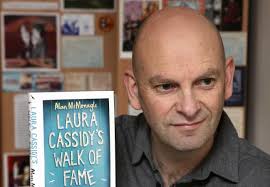
 

Writers Chat 27: Alan McMonagle on “Laura Cassidy’s Walk of Fame” (Picador: London, 2020)

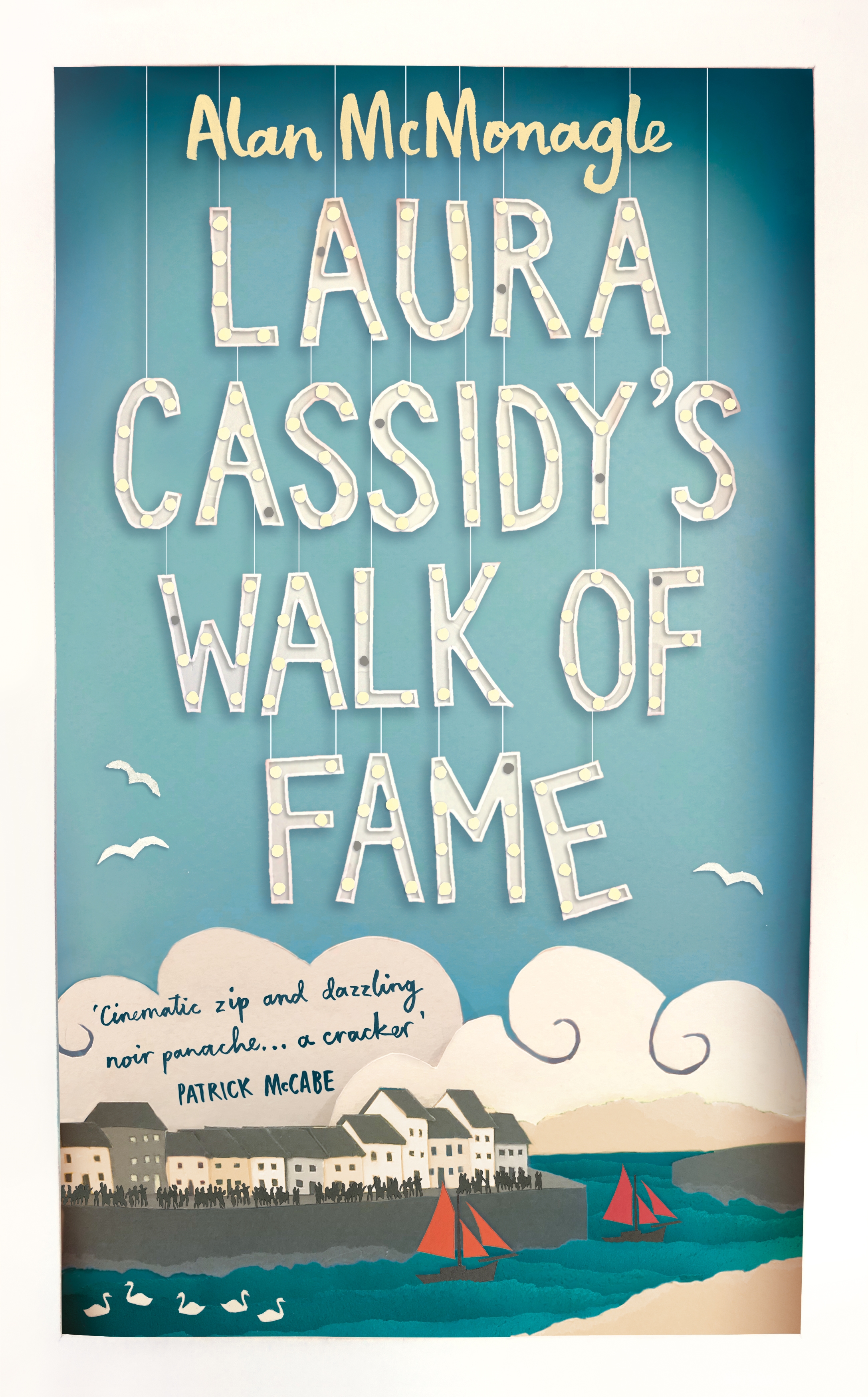
Alan, You’re very welcome to another WRITERS CHAT (readers see our last chat here). Your second novel, Laura Cassidy’s Walk of Fame, was launched to a huge crowd in Galway City Library in early March 2020 – just before the Pandemic lock-down – and has been described by The Irish Times as a “vigorous novel” and “an infectious portrayal of brazen optimism”. Laura Cassidy high res jpeg(with Quote)

SG: Can you tell us, firstly, about the genesis of the novel, which explores serious themes of grief and denial through what we might call a playacting lens?

AMcM: That’s not a bad descriptor. At the most rudimentary level it began as a voice. A voice that acquired flesh and blood. A voice that announced itself as a young woman, a burgeoning actress with a dream to pursue. A voice that swings both high and low, that flip-flops between the world of dream, invention, imagination and the more concrete world of the everyday. It was a voice that also, at times, misbehaves. And once misbehaving kicks in, things have a chance to become interesting…

SG: Yes, how messiness is always interesting – where we find the good stuff! I was particularly taken with the structure of Laura Cassidy’s Walk of Fame. It is divided into five parts and each part follows (literally!) Laura Cassidy’s “Walk of Fame” so that we feel we are walking with her. I love the titles and how each part is inspired by a different starlet and theme – for example, Part 1 Barbara Stanwyck “Just be truthful – and if you can fake that, you’ve got it made.” Seems like we should all be listening to that motto – especially the highly successful Imelda! Was this structure there from the start or did it come to you once you had the story down?

AMcM: The structure was born out of this playful lens you refer to in the previous question. And there was play aplenty involved early on, all in service to Laura’s perceived life as a famous star. I fabricated imaginary interviews which  Laura conducts with various journalists she is only too happy to wind up no end and lead down the garden path. From there other features, just as unlikely, quickly arrived. Acceptance speeches, movie pitches, interactions with directors, agents, film executives. I had great fun outlining a sequence of movie parts tailor-made for Laura, I even wrote an obituary for an her. Out of all this ‘play’ it is the mini-biographies of the starlets of yore that made the final cut. (Along with the rollercoaster life of Imelda J Ebbing.) And these bios had to be drastically cut down, from an initial number of over twenty, then fifteen, and finally to five – what a wrench that was. At times, I felt I was auditioning all these brilliant actresses from the era of classic cinema for a part in my novel. And now that I am talking this out with myself it occurs to me that this might be something interesting to explore in a piece of writing.

SG: That would be so interesting – a series of interviews with stars from the era of classic cinema. It sounds like you’re not quite done with the starlets and the star system! Laura Cassidy is well-drawn – she’s feisty, snappy, funny and endearing and also, at times, a very lonely and misunderstood person. Can you tell us a little about her development and journey as you wrote the novel?

AMcM: I think the death of her father looms large in Laura’s story. She witnesses his death. She is quite young when it happens. She also witnesses it at a crucial moment in her own life – she has just bagged the lead part in the school play and the first person she wants to share the good news with is the person who has planted this acting dream inside her to begin with, her father. I think she has a very complicated reaction to his untimely death. I don’t think Laura herself is aware of how and when this reaction is going to manifest itself. But it has damaged her psyche. There’s a fair old cocktail bubbling away inside her. A combination of grief and trauma, probably some guilt, she can do a nice line in denial. It’s a heady mixture, a combination that could potentially kipple her when it matters most. And so yes, Laura becomes a pocketbook of complications and contradictions; of uncertainty and confusion. She vacillates greatly between unusual levels of self-belief and deep-set fear; between self-sabotaging hope and blind optimism.

I find weighty themes such as grief, trauma, guilt very difficult to come at straight on. And of course setting out I wasn’t aware that these weighty themes were going to become a significant part of the story. My approach has to be more angular, slanted, with twists and knots and complications and contradictions. We’re in the realm of confusion and uncertainty. Chaos. And chaos is slippery, and tricky, tricky to meet head on. I think that as a writer it’s how I find my way towards that X on the treasure map. That X being a moment of discovery or realisation or revelation. And not knowing what this X might be is what kept bringing me back to the desk every day, to spend time with Laura, unearth what was making her tick – or, more accurately, not tick.

SG: I love that notion of slipping through the chaos towards discovery and finding moments of why. This brings us neatly on to the internal and external worlds of Laura. As much time as she spends in her head, her complex and witty self is revealed when she is with other people, even though it’s difficult for her. I’m thinking here of her relationship with Fleming and with her doctor, both of whom take her as she is. For example, speaking to her doctor she says

“Doc, you’ve been saving my life for a year now and I have to say I think you’re doing a terrific job. So I have no fears on that score. If you ever need a reference you know where to come.”

Laura is, as the doctor calls her “a charmer.” Can you talk a little bit more about this charm that brings us with her on her journey?

AMcM: Essentially, Laura is an unreliable narrator. And of course, as a writer, to a certain extent you must allow the reader in on this. So there is an attempt to strongly suggest – even from the get-go – that things are not going to go according to plan for Laura. This theatre/movie stardom dream of hers is going to remain out of reach. But as a counter to this I don’t allow Laura for one minute believe, certainly not in her interaction with the world, that she is not going to make it. And so the thing becomes a balancing act, a wire walk. And as is the way of wire walks, sometimes you fall. And when you fall, you’ve got to pick yourself up and go again. When we first meet her, I think there is a gap between where Laura is and where she would like to be. And for Laura, this gap becomes a place of invention, imagination and dream. And one thing I think the novel might be trying to do is emphasise or explore the power of dream and invention and imagination for those in the world who are more vulnerable than others. Explore the fine line between the language of dreams and reality. And so there is a version of herself Laura presents to the everyday world, and to those with whom she must interact in order to get through the days or her life. This so-called charm gets switched on. The humour and the wit. Lots of colour. After all, she sees herself as an actress, performing is second-nature. But we also become privy to the goings-on inside her head, when she is alone, contemplating, reflecting, in her own way dealing with all the headstuff that gradually declares itself and does it thing, as the dream and all that it might have entailed begins to unravel.

SG: Yes, the narrative captures that slow – and almost inevitable – unravelling quite beautifully. I’d say that most readers will identify with the difficulty of family: how we are defined by it, compared within it and have expectations imposed on us by it. Sibling rivalry and relationships are explored through the lenses of presence and absence, in particular, Laura’s relationship with her sister Jennifer and her young son Juan, Laura’s nephew. Can you talk a little about how you use humour, black humour and a lightness of touch to explore these themes?

AMcM: Laura and Jennifer. Obviously there are differences in their circumstances. Jennifer gets to fly the coop and ‘save the world’. Laura remains in the home house, in the throes of a much more interior journey, a journey into fantasy & delusion. Laura is clearly wary of, suspicious of Jennifer upon her return. She is dismissive and mocking of Jennifer. She definitely displays child-minding skills that, at best, can be described as questionable. Jennifer, too, initially offers her sunny side to the neighbourhood. There are humorous stories of her time abroad, she wants to tag along to the pub, shine in the presence of everyone and anyone. But, gradually, this is undermined. Her life is not going as smoothly as she would like everyone to believe. And so I think it’s fair to say they are both deluded in their separate and very individual approaches to the world. Laura with her hi-fantasy ambitions of stardom and Jennifer seemingly convinced she is some kind of modern day miracle worker. The humour, I think, becomes an attempt to throw light on the not-so-funny aspect of all of this. That is to say, how Laura and Jennifer have chosen to enter the world, get through the days of their lives. And for all their flaws and delusions and contradictions and mishaps and missteps, these respective approaches must be recognised and acknowledged as something valid.

SG: Yes, that resonates – that, despite ourselves, we do actually chose to enter the world and, as you say, get through the days of our lives in a certain way. So finally, let’s come to the acting, the stage, and the other side of this coin – that of grief. It always strikes me that there is something similar in acting to that of writing – it’s about escaping yourself and at the same time ‘becoming’ more yourself on the stage/page than off it. As Laura says

“For a time…. I could float, drift, hover wherever I liked, when the mood took me…I could be here and not here….I used to so enjoy imagining the world around me through the eyes of others….”

Without giving anything away, in Laura’s case it seems to be true that wanting to play the leading part in Streetcar Named Desire is more than just wanting that part. Her insistence and perseverance are both tragic and funny and I found myself despairing for her and also laughing at many of the scenes with the director Stephen (of the precisely and perfectly named Khaos Theatre). Was this something that emerged through the narrative and characterisation or something you were consciously interested in exploring?

AMcM: It’s a great question, as is your observation in relation Laura’s desire to snag this leading role she so craves being more than merely wanting the part.

There is something else at stake for her here, I feel. Pursuing her dream, not matter how unlikely her chances, may cost her dearly, but I suspect she has made this reckoning with herself at a very early time in her life and has decided that, come what may, chasing after whatever it is she is after will be worth it. The journey and all that it entails, hi-fantasy, setbacks, desperation and all, is what matters to her. I suspect she may feel trapped inside her own skin, that the only way she can become who she wants to be, or at least a semblance of who she wants to be, is through whatever viable outlet presents itself to her – in this case, through a life inhabiting many ‘roles’, a life performing, a life spent stepping in and out of the everyday world.

And again, I wonder has she realized that how she sets about getting through the days of her life will fall short of her expectations. It’s a complex question you’ve asked me, at least I think it’s complex, and I’m thinking about it as I write this, and yes, it is something I’m interested in exploring, and yes I do think it’s connected to the desire to create, to the magic place it comes from, to finding a way to be in the world and at the same time at a remove from it.

SG: Let us know what Laura has to say on that – maybe we could meet her 20 years from now….So lastly, five fun questions, Alan: 

  1. Theatre or Film? Yes!
  2. Dogs or Cats? Dogs.
  3. Coffee or tea? Coffee.
  4. Best ‘Coronavirus/Covid-19 Lockdown’ tip? Dance.
  5. Oh I love that one! So, what’s next on your ‘to read’ pile? Dance Prone by David Coventry.

SG: Thanks so much, Alan, for such thoughtful answers, I’ve thoroughly enjoyed our Writers Chat. 

Readers, hear and watch Alan read: at Cuirt Festival  at The Live Network and at The Holding Cell

alanCtrib2020

Readers can purchase Laura Cassidy’s Walk of Fame from all good bookshops and keep updated with Alan on his website.


Writers Chat 23: James Claffey on “The Heart Crossways” (Thrice Publishing: USA, 2018)

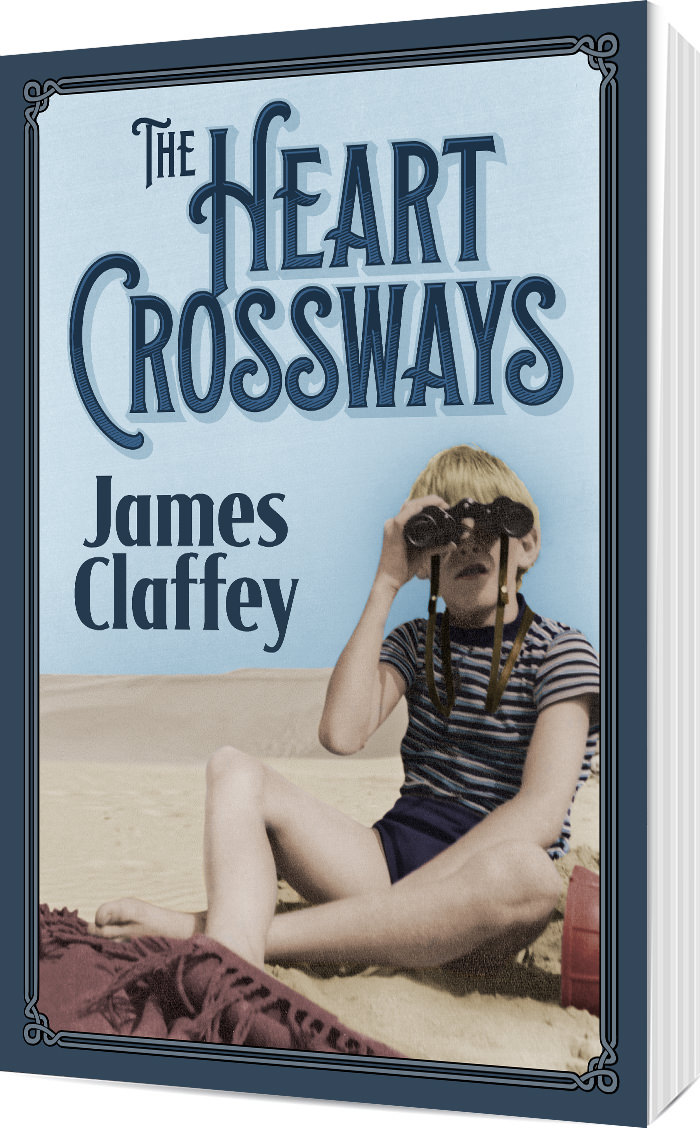
James, You’re very welcome back to my Writers Chat series. The last time we chatted, in 2012, we focused on Blood a Cold Blue a collection of short fiction. This time we’re chatting about your wonderful debut novel The Heart Crossways where you bring us into an Ireland that’s hardly recognisable today.Print

So, let’s start with language. As a tool it is very much part of the narrative of the The Heart Crossways. Take the wonderful opening section:

“On rainy days the time passes slowly. Trance-like, I tongue my bedroom window and lick the condensation from the glass. My nose smushes against the cold pane. The seagulls glower below, on the roof of the coal shed…”

How much of these wonderful verbs came to you on the first few drafts or was it when you edited the novel that they emerged? I am thinking of what Sheenagh Pugh once said – that great writing is in the editing.

JC: So, interestingly enough, Thrice Fiction Magazine published three short pieces in their March, 2012 issue, and one of those pieces was “Dublin On a Wet Day,” which was remarkably close to the opening beat of the novel. Over multiple drafts the frame of the book shifted considerably, and in several drafts the opening pages were completely different and set at a far different time in Patrick’s life. The image came to me in a memory of my childhood in Rathgar, and how on rainy days my brothers and I would stand at the windows, noses pressed against the glass, cursing the weather that forced us indoors. I went over and over different variations of that opening, changing tense, point of view, at least three to four times, and ended up with a first person narrator that finally seemed to work.

SG: It really is an arresting opening. I love that throughout the novel the power of books comes through. From the old blue ledger the Old Man uses to record transgressions and the books (from Mark Twain to Tennyson) our hero, Patrick, reads to escape. Was this one of those hidden symbols that emerged when you’d finished writing the book?

JC: Yes, I think the books as symbolism emerged through the drafting process, and the ledger idea came to me from an actual ledger from my father’s business, filled with the incoming and outgoing monies for quite a few years, in fact. In several places in the ledger are crude drawings we did of dinosaurs and lions when we were probably bored on rainy days! Further, I wanted to seed Patrick’s world in the literature and drama of the time, the importance that books played in young children’s lives, long before iPhones and Fortnite. I grew up in a house filled with books, drama, literature, and as kids my brothers and I would sprawl in front of the coal fire reading comics, books, and newspaper cartoons, composting that love of books and all things literary.

SG: What beautiful memories, James. The Heart Crossways is set in an era (mid-seventies) when appearances – that you are perceived as good in the eyes of the neighbours and the church – still count for everything. As the Mam says, “All you have in this life is your good name.” Patrick – not unlike Stephen in Joyce’s Portrait of the Artist as a young man – negotiates appearances and tracks his way through his father’s alcoholism, his mother’s worries and lusting after both Cathy and Mrs Prendergast by using humour. “Seducing Mrs. Prendergast is the mission I have accepted and in silence I try to plan how this will happen. Maybe she will wear a velvet cloak and come running to me like Maria in The Sound of Music?” Patrick is both teenage and reflective in his self-analysis. Can you talk about the development of Patrick’s character?

JC: Patrick began in those early stories as a lonely boy with time on his hands and parents too consumed with keeping hearth and home together to pay him much attention. I suppose there’s a part of him that’s living in his own head, thinking and overthinking life, and there’s a part of him that’s a small boy, desperate for his parents’, particularly his father’s attention. As the book unfolds, he moves from a more simplistic worldview, to one more complex, where he gains some understanding of the complicated nature of life in a Catholic and repressed Ireland. His use of humor as a compass to guide him through the fog of his life is, in my opinion, particularly Irish, in that we use humor to decode, to defuse, and to deflect the missiles life fires at us. And the sex. As a child of the seventies, Patrick is mired in the repression of the time, cosseted by his parents, stifled by the overshadowing Catholic hierarchy that divided the schools into same sex institutions where sex was what Kavanagh called the “wink-and-elbow language of delight.”

SG: A great phrase from Kavanagh! Yes, it is a particularly Irish trait, the use of humour. Continuing with this –  there are many laugh-out-loud incidents, for example, when De Valera (the aptly named three-legged greyhound that serves as a pet) chews on the Old Man’s false teeth, or when Patrick gets a bowl cut when the Old Man thinks the barber didn’t take enough off – are any of these taken from real life situations?

JC: Well, we never had a three-legged dog, but some years ago I was in Solvang, near Santa Barbara, for breakfast and there was a American Greyhound Society event taking place in the town. One of the greyhounds was three-legged, and that stuck with me as something that might become part of a story one day. As for haircuts, most of us growing up in Dublin have had our run-ins with the local barber, and mine was with Mr. Roche, whose son was in my class in primary school. We’d tramp up to Terenure Village and enter the barber shop with its red-and-white striped pole, wait for “Skinner” Roche to cut us to shreds, and appear at school the next day to bear the brunt of the insults. Eventually, my mother started taking us to the Peter Mark Salon, a more contemporary place to get one’s “hair did,” than at the “Skinner’s.” My dad always threatened us with the scissors and bowl if we didn’t behave, and my oldest brother grew a ponytail and drew the ire of our Old Man on many occasions.

SG: Oh I remember Peter Mark Salon – still going – it was the height of sophistication! One of the themes I picked up on was that of emigration, and with it, the importance of place – of leaving and returning – creating and re-creating new identities with each new ‘start’. Although the Old Man is a difficult character in every sense of the word, and plays the role of too-little-too-late father (or, as Patrick puts it “a one-man wrecking ball”), I can’t help but think that working on the oil rigs (if that is where he goes to – there is a sense, connected to his drinking, that he frequently disappears) can’t have been easy for him. This must do with economics; the Brogan’s aren’t well-off but they have food on the table and go on holidays. Can you comment on this theme and what it might mean to you, an emigrant yourself?

JC: The Old Man spends three weeks away working the oil rigs in the North Sea at a time, and the work is gruelling and tremendously hard on his body. Patrick’s dad, of course, isn’t used to graft and his body shuts down over time, leading to physical issues that emerge in the latter stages of the novel. Everything the Brogans experience in their lives, scrimping and saving, getting groceries on credit at the local store, are moments from my own childhood. We didn’t have much in terms of financial wherewithal, but we had food, shelter, clothing and warmth, those critical components of Maslow’s hierarchy of needs. Money for the Brogans is tight, and Patrick’s mother is adept at stretching the pounds, shillings, and pence to make their home as comfortable as possible. For me, as both an immigrant and a child who grew up with not enough money to go around, the theme of economics rings loud, knowing how in my early years in America, I worked a bunch of retail jobs, barely getting by, and only really found my feet financially when I graduated from university and became a high school teacher. Even now, decades later, my greatest fear is running out of money, and I go into a panic mode if our bank account ever gets too close to the bone. I feel my parents’ desperation in those moments and return to those fraught childhood days, until I remind myself I am not my parents and I can make different decisions than they may have.

SG: While religion snakes through the story I found that the sense of loss overtook it. While Patrick imagines “God as a bitter, angry one who takes delight as he metes out punishment to ordinary sinners” he also prays for his own sorrow and torments to end- his relationship with his father. Not wanting to give any of the plot away, the ending of The Heart Crossways was fitting and poignant.

JC: The Church looms large in the story, and the strict Catholic childhood I grew up in shaped me in many ways. I walked away from the whole Mass on Sunday world and found my own way of navigating faith and belief over the years. Today, I identify as a Unitarian Universalist, cleaving to the ideas of Jefferson, Emerson and the Transcendentalists. There’s a freedom, a breath of relief when I’m at a service, with no sense of guilt or shame. As for loss, it defines my life. My father lived his life grieving for the business he lost in the 1960s, never letting it go. He reached his dying day filled with regret, loss and anger towards those he perceived did wrong by him. Being Irish, for me at least, means embracing loss, finding comfort in that feeling, knowing that one cannot be happy every day of one’s life, and that loss is as big a part of life as love, or happiness. Emotions are our weather patterns and there’s a beauty to all seasons, even those that bring devastation to our door. I know this too well, having lived through recent wildfires and debris flows in the area I’ve settled in Southern California.

SG: That’s very poetic – embracing loss. Finally, James, a little on the character of the mother and the Bird. There’s something familiar in both of these and it was lovely to return to them after meeting them briefly in your short stories. Could you talk a little about how characters can re-appear in our writing in different guises, under different circumstances and across genre?

JC: The Bird is a character I brought to life from early flash fictions I wrote about growing up in Ireland. He was a real person, a customer in my father’s pub in Moate, Co. Westmeath. The reappearance of the Bird is timely, after a project I did with Matt Potter of “Pure Slush,”—A Year in Stories. I wrote twelve stories revolving around the Bird, and one of my favorite ones appeared in Causeway/Cabhsair a few years back. In January I returned to the rich vein of material the Bird springs from, and am working on a project where I write a page a day about his life. He never was my mother’s beau, but I remember her commiserating with my father one morning as he read the obituaries in the “Irish Independent,” and announced, “The Bird is dead. The poor auld hoor.” I love how characters ebb and flow in our work, receding for years at a time, only for a re-emergence years later as the tidal patterns of our creativity shift.

SG: I think you’ve just captured the real essence of creativity – the flow and ebb of characters in tandem with our own tidal patterns of creativity. So, to finish up, James, let’s have some fun questions: 

  • Kindle or paperback? Paperback
  • Novel or short story? Novel
  • Short story or flash? Flash
  • What’s the last sentence you read? “An aliveness that lit up the world,” Michelle Elvy’s The Everrumble.
  • Great sentence! What’s the last sentence you wrote? “Oh, poor man. The center of his universe hollowed out and collapsed.”
  • Another great sentence! The best jam in the world? Our family’s business is Red Hen Cannery, and we make the most delicious Boysenberry Jam.

Thanks, James for an engaging chat. The Heart Crossways can be purchased direct from the publisher or on amazon.  Connect with James on his website

Below is our chat from January 2012. 

*****************

WRITERS CHAT – JANUARY 2012 – ON “BLOOD A COLD BLUE”

Blood_a_Cold_Blue_cover

Welcome to James Claffey, originally from County Westmeath but now living in Carpinteria, CA, USA with his wife, writer and artist Maureen Foley. James is a prolific writer and his most recent full-length publication is Blood a Cold Blue, a collection of short fiction.

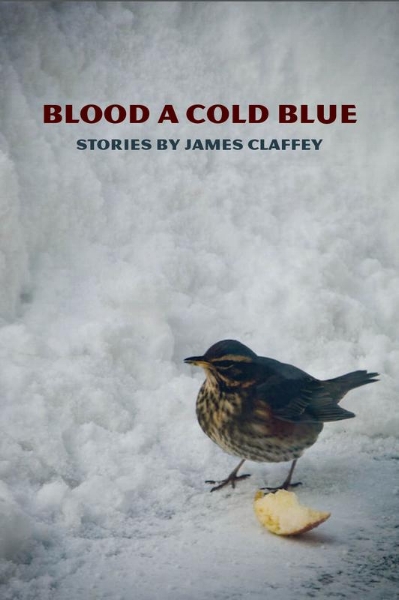
James, tell me about the title and cover of your collection Blood a Cold Blue. Was the title one you had in mind or one that emerged once you had the collection completed and formed? Tell me also about the photograph on the collection, I know you had trouble tracking down the photographer for permissions but was that image of a bird in snow with a crumb an image that you had in mind?

Yes, I submitted the collection to several places and it was always titled Blood a Cold Blue. I chose the title from a line in one of the stories that also bore the same name (I’ve got this habit of titling my stories with fragments from the text). As for the photograph, the publisher, Press 53, sent a couple of early cover suggestions that I didn’t like at all, and then they sent the bird photograph and I loved it straight away. It turned out to have been taken by an Icelandic photographer and he was unresponsive to the publisher’s attempts to contact him. We waited a week or two and there was no word so Kevin at Press 53 said we might want to look at other options including a new title completely, so I went on the hunt for the photographer. All the usual social media avenues were fruitless and on the verge of giving in, I did a last Google search and found an old LiveJournal blog he’d had years ago. It had an Icelandic email address and I sent a message asking him to contact Press 53 about the image and the next day he got in touch with Kevin and agreed to let us use the photograph.

Great to hear it all worked out! You’ve stated that “Skull of a Sheep” is your favourite story in the collection. Can you expand on the idea of having a favourite story?

“Skull of a Sheep” is a fictionalized version of a family vacation in Mayo when I was a kid, and the unpunctuated stream-of-consciousness mirrors the breathlessness of the drive down the country and back again, I found the story stirred my sense of hiraeth, that Welsh word that suggests nostalgia for home, but with some sense of longing for those departed. My father passed away in 2000 and the piece was written right before my mentor and friend, Jeanne Leiby, died in a car crash in Louisiana, so there’s a sense of this story having more weight because of these events. Also, the piece ran in the New Orleans Review, and that is a publication that means a great deal to me, having spent three years in the South, learning the ropes of what being a writer means.

There’s a great sense of compassion, compression and a long breath of emotion in that piece. You capture so much in it – all that lies beneath the landscape and landmarks.

I’d like to hear about how you get into character. Do you have a favourite character in the collection? If not, why not, if so, whom?

I do. The Bird, a character in a couple of stories I’ve written, is close to home for me. My father, if I recall correctly, who used to run a pub/grocery in the Midlands, had a customer who was called by the same name, The Bird, so I found myself putting myself in this man’s head and imagining what it would have been like to wander the streets and fields of my old hometown. I’m currently working on a year of stories for Pure Slush, an Australian publication edited by Matt Potter, with this same character. I find great latitude in taking on the task of creating a life from so few details.

That’s interesting to hear, James, as The Bird is one of the characters that stood out for me. Now tell me about settings. You have some wonderful ones that seep through via the use of names, the turn of phrase (for example “Fragments of the Bird”), from the absurd to the very real and named (for example “Fryday, June 17th, in the year 1681” or “Hurried Departure”). Do the settings come first, or come to you as you write? Or are they sometimes somewhat peripheral?

Thank you. Place is incredibly important to me, and I tend to write with almost reverence about certain locations—New Mexico, Ireland, Louisiana, California. “Fryday, June 17th…” came out of an old print of an Elephant’s skeleton and the story of its death, and I reimagined the actual events of the disaster, which actually took place in Dublin back in the 15th Century. As for “Hurried Departure,” it’s almost a fantastical world slightly based on the area surrounding our house in the avocado trees. Detail, even as liminal as the light over a stand of trees, is terrifically important to give a piece of writing an anchor in the world and as I’ve gotten less naïve as a writer, I find myself noticing the small details of objects and places much more than before.

I think, for me, anyhow, that’s what is so great about this collection. The myriad of different experiences in different settings that you (re)imagine/capture.

On writing, if you’re willing to reveal, what are you working on now?

Well, the year in stories project at Pure Slush, for one. Also, I’m working on an untitled novel with Thrice Publishing, and that’s about a small boy growing up in Dublin with a father who works away on the oil rigs in the North Sea and a mother who struggles at home to raise her son and deal with her own aging mother who lives with them. I’ve also got a novella project I’m collaborating on with another wonderful writer, and I’m very excited about that opportunity. On top of all that I’ve returned to teaching high school English, so I’m having to really be creative in terms of finding time to write, what with my wife and two kids to devote time to, and a dog that needs walking!

That’s a pretty full and creative life!  Finally, James, what three books are on your bedside table and what three books are on your ‘to read’ list.

Varieties of Disturbance by Lydia Davis, Bound in Blue, by Meg Tuite, and Gears by Alex Pruteanu, are on my bedside table, and to read are The Goldfinch by Donna Tartt, Transatlantic by Colm Toibin, and A Place to Stand by Jimmy Santiago Baca (a re-read).

Thanks, James, for such insightful and fascinating answers.You can find out more about James and his writing on his website and blog: www.jamesclaffey.com