Writers Chat 11: Jane Clarke on “The River” (Bloodaxe Books: Hexham, June 2015) and “When the Tree Falls” (forthcoming, Bloodaxe Books: Hexham, 2019)

I’m delighted that the eleventh post in my “Writers Chat” series is with Jane Clarke where we re-visit an old chat about her debut poetry collection The River and talk a little about her forthcoming second collection, When the Tree Falls

janeclarketheriversmaller

SG: Jane, since the publication of The River in June 2015, you’ve been kept busy with one foot in the camp of creating new material and the other in continuing to give public readings, appearances and workshops.

You have also won various awards such as the Listowel Writers’ Week Poem of the Year Award (2016), Hennessy Literary Award for poetry (2016). And, of course The River was shortlisted for the Royal Society of Literature Ondaatje Literary Award. Many congratulations!

How have you found this process of managing the private creation of new writing and the public promotion of ‘old’ writing?

JC: Thanks very much, Shauna, for republishing my previous interview. It has indeed been a very busy time but well worth it to have so many opportunities to read my work, to meet readers and to perform with other poets and also musicians. The River has taken me to all kinds of interesting places and I’ve been honoured and delighted with the response to the poems. The private work of the poet entails getting new poems going and then working to get each one as good as it can possibly be. You definitely need plenty of quiet, reflective time for this. But when the poems are ready, I believe it’s really important to get them out into the world; readings, prizes, social media, youtube are all ways of doing that. I once heard Don Patterson say that poetry is a public art and I agree. Poetry, like music, needs the interaction of writer and reader/listener through live events.

I never expected such a warm response to The River. It’s a privilege to touch other people’s lives in this way. There’s nothing better than someone telling me they have The River beside their bed, or that the copy on the kitchen table is dog-eared or that they’ve given it to a friend who’s ill or that someone borrowed their copy and never gave it back or that their mother loves it. I’ve learned that when you publish your poems, you give them away and these intense little objects gain meaning and resonsance for others that has nothing to do with me personally.

SG: Yes, for a writer it is heart-warming to receive responses like that from readers. There’s a magic to how published work gains a life and meaning of its own, a beautiful exchange of a gift between the writer/writing, and the reader/reading.

Can you tell us a little about what you’re working on now and how your second collection is coming along?

JC: Yes, I’m working on my second full-length collection, When the Tree Falls. It’s due for publication with Bloodaxe Books in the autumn of 2019, which I have to say is both daunting and exciting. I feel very fortunate to have the support and imprimatur of my editor, Neil Astley and all in Bloodaxe Books. The experience of accompanying my very close friend, poet Shirley McClure, and my father in their final illnesses has deeply influenced this collection.

I know there’ll be poets reading this interview who miss Shirley very much. She was warm, generous and beautiful, a gifted creative writing tutor and a smashing poet. Her many fans will be glad to know that her publisher, Arlen House, plan to bring out a Collected Shirley McClure over the next year or so.

I’m also working with the Mary Evans Picture Library in London on a sequence of poems in response to a World War I family archive of letters and photographs. I’ve never worked on a project like this before and I’ve learnt a lot about the First World War and also the wealth of other artistic responses to the war, including poetry. It’s quite a challenge to find fresh ways of writing about the experience. I’m conscious of the dangers of over-statement and worn-out imagery and have sought an allusive, “tell it slant” approach.

One other piece of work is co-editing, with Nessa O’Mahony, the special Irish issue of the much-loved UK poetry magazine, The North. It‘ll be published late this year with a big launch in Poetry Ireland. We hope it will showcase lots of wonderful work by Irish poets and reflect the incredibly vibrant poetry scene here. I’d like to acknowledge Peter and Ann Sansom’s generosity and vision in giving us this opportunity to present and promote Irish poetry.  It is particularly valuable and resonant in the midst of the anxiety and sadness about Brexit.

SG: Jane, it sounds like you are in a powerful creative space, right now.

I love the title of your next collection, When the Tree Falls. And what a wonderful tribute to your dear friend Shirley, and your father, that the privilege, heartbreak and grief around their passing has been so carefully and lovingly tended to in poetry.

It is heartening to hear that Arlen House will bring out Collected Shirley McClure.  

The world war poems sound fascinating, I’m already intrigued by the process. Thank you for sharing that.

I really look forward to The North, and congratulations on what sounds like a brilliant project.

Now I’d love to hear about any readings or events you have coming up over the next while.

JC: I’m looking forward to going to the Lake District to run a “Writing & Dry-Stone Walling” workshop with James Rebanks, the author of The Shepherd’s Life. Both our books were shortilisted for the Ondaatje Award and we’ve kept in touch since. The workshop is part of the Rural Writer’s Institute and I’m looking forward to meeting lots of other rural/nature writers there. http://www.kathrynaalto.com/writing/rural-writing-institute/

The poet, Eileen Casey, has edited a new anthology of poems responding to the poetry of Patrick Kavanagh. As he’s one of my favourite poets, I’m honoured to have a poem included, responding to a gorgeous short poem of his, “Consider the Grass Growing.” The anthology, The Lea-Green Down, will be launched in the Irish Writers Centre on the 18th July at 6.30pm. I also have a new poem in the Arlen House/Hodges Figgis Anthology, Reading the Future. I’ll be reading at one of the series of launches planned over the coming months.

At the end of August I’ll be going on the road with the wonderful traditional and classical musicians, Eamon Sweeney and Cormac Breathnach, for a series of concerts as part of Heritage Week, 2018.  I’m giving a talk about the First World War poets and reading from my own sequence in Richmond Barracks as part of the Festival of History in October. And on the horizon, there’s another trip to the US for a number of readings.

SG: It really sounds like you have a wonderful few months ahead of you, Jane. I wish you the very best of luck and I’m sure both you and your audiences will enjoy the events very much.

Thanks, once again, for stopping by and I’d love to have back to talk more deeply about your second collection.

Below is our Q&A originally published in October 2015.


Q&A with Jane Clarke originally published in October 2015. 

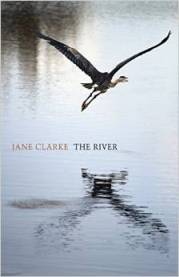
First of all congratulations, Jane Clarke, on the publication in June 2015, by Bloodaxe, of your debut collection The River. It is beautifully produced with a front cover image that somehow reflects the depth of the emotions and narratives within. I’m delighted to feature you on my blog and chat about The River.

SG: I’d like to learn more about the process of ‘producing’ The River. How did you select the 50 poems that made it to the final collection and how easily or difficult did the title come to you? And finally, did you have any input to the design?

JC: I began writing poetry ten years ago and about four years later I started to think about drawing together a collection. It took another four years before I had it ready to send out to publishers. Over that period I did an MPhil in Writing in the University of South Wales where I was given invaluable help with my growing collection, including the crucial advice not to rush it and to take more time. It was relatively easy to select the poems because I was adamant that only the very best of what I had written could go in. There were a few I wasn’t sure about which got moved in and out a number of times. The collection was accepted for publication in late July 2014 but I was still editing newer poems for it right up to the day I sent the final manuscript in March 2015. The hardest part of  “making” the collection was the sequencing, which I changed many times. In ways it was like writing a poem; doing a draft, reading it, redrafting, putting it away for a while and then coming back to it and drafting again. In shaping the collection I was looking for a thread through the collection as a whole as well as variety and movement and also resonances between and among poems. My friends and colleagues, Shirley McClure, Geraldine Mitchell, Grace Wells and Yvonne O’Connor all helped me with this along the way. Meantime my workshop group was helping me with individual poems.

One of my first ideas for the title was Where the river deepens so the river was there from the start. Somewhere along the way I realized I wanted it to be The River, to reflect what I saw as the strongest poem in the collection and also to reflect the themes of change and loss and what nature offers us.

I had very little input into the design and I was more than happy to leave that to Neil Astley.  When he wrote to confirm that he would be publishing my collection, he suggested the image of the heron, inspired by a line in one of my poems, “River at Dawn”.

………………………………………… A Heron flies up

from the callows, leads river and rowers

into the day, lean in, catch, pull back, release.


I love the cover and the lay-out and I have no doubt that the beauty of the production has brought quite a few readers to the book.

SG: As a fiction writer, I am always fascinated by and in awe at how poets often seamlessly feature place so strongly in their work. In this collection we move through fields, farmyards, rivers, lighthouses – some place-specific – and cities. Parallel to place, notions of ownership and belonging seep through as themes. Was there a conscious sense of themes corresponding to places in your life as you pieced the collection together in the order that it is in, or was this something that appeared organically?

JC: When I began writing I had no idea that place would feature so strongly in my work. But the poems kept coming out of the landscape and physical surroundings of various times in my life; growing up on a farm in Roscommon, my fifteen years studying and working in Dublin, living in Wicklow since then and other places that have mattered to me along the way. I can see now that the physical details of place both carry and express the emotions in my poems. The containment of place gives me a way of exploring relationships, ambivalent emotions and themes of belonging and identity. But I did not set out intentionally to do that. I have learned from drawing together my collection that if you let it, poetry will inevitably reflect and engage with your questions and concerns at the time you are writing. Some of these are questions you will repeatedly return to and others are of a particular time. I have been amazed to find how much of the process of writing poetry is an unconscious process. That is not to say that it doesn’t involve conscious dedication and craft but there is a well of unconscious associations influencing the work that sometimes seems magical. For example I only realised that “Among the Cows” was inspired by my grandmother’s life when I put it next to another poem about her in my collection.

SG: That’s fascinating, Jane, how the themes grew organically. It’s true that place in The River also extends to the place of our hearts – and memories. I’m thinking of the first poem in the collection: ‘Honey’ or ‘Rhode Island Reds’, poems which begin in one emotional, almost sentimental place, and end, shockingly and yet movingly, in an entirely different place. Or, in contrast, the brilliantly titled, heart wrenching ‘Every life’ which grounds us in the bodily place of possibility and impossibility.

JC: Thanks Shauna, I appreciate how you express your response to my poems. For me, part of the power of poetry is how it can allow the poet to write out of and into loss, either their own or the imagined loss of others. I have these lines from Macbeth on a yellow post-it above my desk, Give sorrow words; the grief that does not speak whispers the o’er-fraught heart and bids it break. To do this without sentimentality or self-pity, you need to be available to a depth of emotion as well as being able to stand at a distance from it. The restrictions of the poetic form can contain grief that feels uncontainable. Poems can’t give resolution or consolation but I have found that they can say what seems unsayable, evoke what has been unknown and that they can accompany, comfort and sometimes sustain others. Robert Frost says it for me: “A poem begins with a lump in the throat; a homesickness or a love sickness. It is a reaching-out toward expression; an effort to find fulfillment. A complete poem is one where an emotion has found its thought and the thought has found words.”

SG: That last line by Frost could apply to any form of creative writing, actually. Now while many of the poems are solid, and grounded in the specific, there are a few that have an undercurrent of the unconscious world of dreams, where danger is at the edges waiting to be acknowledged. The magical first stanza of ‘On the boat’:

“On the boat we were mostly virgins,/We talked about who we were going to be – /waitresses, seamstresses, nurses,/we didn’t talk about why we had to leave.”

Could you tell us a little bit more about this poem, for example the use of ‘mostly’ and the sense of journey and hope.

JC: I am always a little wary of talking about what a poem means for me because I don’t want to influence the reader’ response. But I know myself how interesting it is to hear a poet write about the background to a poem. “On the Boat” was inspired by Julia Otsuka’s novel, The Buddha in the Attic, about Japanese women migrating to the US in search of husbands. It set me thinking about all the Irish women who had migrated to the States in search of a better life.  A visit to the Tenement Museum in New York’s Lower East Side also influenced the poem. The first line is the first line in Otsuka’s novel and what I liked about it was the question in “mostly” that let us imagine all the many reasons women left their home places apart from poverty or a sense of adventure, including rape, sexual abuse and pregnancy outside of marriage. I think it is what is not said as well as the strong rhythm, rhyme and repetition of the pantoum form that conveys a sense of mystery and at times menace as well as hope. There is also the intimation that regardless of getting the opportunity to start all over again, there are memories both wanted and unwanted that we carry with us.

SG: Of course, it’s a bit of a tricky question – almost like asking about inspiration! And now to my last question. Kent Haruf, one of my go-to writers who sadly passed away last year said in his last interview “The obvious thing is to read, read, read, read, read. Then write, write, write. There is no way around it.” As a poet, can you relate to this? When you are not writing, what are you reading? And what are you reading right now?

JC: I loved Kent Haruf’s Plainsong, Shauna. I hadn’t read his advice before but I totally agree with it. I find that reading both prose and poetry feeds my work. Reading sets off thoughts, memories and emotional responses. It can be a place, a time, a person that is evoked or sometimes just one word or a mood or tone sets something alight. When I haven’t been writing or when I want to get something started but can’t find a way in, it helps to take out a poetry anthology or a collection from a poet that interests me, read through it at random and just see what is sparked off.  I always have a novel on the go; at the moment is Americanah by Chimamanda Ngozi Adichie whose writing is just getting better and better. I’m reading Caitriona O’Reilly’s latest, Geis and also Philip Larkin these days as well as dipping into Richard Mabey’s Weeds. I’m also reading Colm Tóbín’s  very personal study of  Elizabeth Bishop, who is one of my favourite poets. I remember when I first read her advice  to a younger poet, “read a lot of poetry – all the time… anything at all almost that’s any good, from the past – until you find out what you really like, by yourself”. Only then should one proceed to “the great poets of our own century… and not just two or three poems of each… read ALL of somebody. Then read his or her life, and letters, and so on… Then see what happens.”

As regards the second part of Haruf’s advice, “write, write, write”, it is good to be reminded of it. The more I write, the more I need to write. There can be so much fear asscoiated with writing; fear of exposure, of failure, of coming across as ridiculous and yet we have to risk it, we have to put ourselves into words if we want to move closer to the writer we want to become. The advice I would add to that of Haruf and Bishop is to join a writing group and to set up a poetry reading group, on the lines of a book club.

SG: Thank you to Jane for such informative, and open answers. You can listen to a wonderful interview and reading with Jane on RTE Arena here and keep up with Jane’s readings and poetry on her website.

Jane165HiRes


Writers Chat 6: Lisa Harding on “Harvesting” (New Island: Dublin, 2017)

Lisa, Welcome to “Writers Chat” and congratulations on the much-deserved accolades Harvesting (New Island, 2017) has been receiving, including being awarded The Kate O’Brien Award (2018), short listed in the Newcomer section for Irish Book of the Year in 2017 and now shortlisted for the Kerry Group Irish Novel of the Year Award (winners announced on May 30th in Listowel)

HARVESTINGbook pic

SG: Firstly, Lisa, let’s talk about the many stories behind Harvesting and what drove you to take on such a harrowing and emotional journey with your two strong female narrators Sammy and Nico.

LH: The book came about because of my involvement in a campaign called Stop Sex Trafficking of Children and Young People run by the children’s Rights Alliance and the Body Shop. At the launch of that campaign in 2012, I was invited in my capacity as an actress to read first-hand accounts of some of the girls who had been trafficked to Ireland. What shocked me was how prevalent the trade is, how young some of the girls are and also that some of the girls that fall into the rings are Irish. Up until that day I had no idea this trade was happening on our shores.

It took me three years before I allowed myself to start to write about the topic. I struggled with legitimacy around telling these stories: who am I to give voice to these girls’ experiences? I am not an expert, nor a survivor, but something had burrowed inside me and I genuinely felt haunted by the testimonies I read that day. I found myself unable and unwilling to forget, and so set out to give voice to these hidden victims of this dark, flourishing world.

Sammy and Nico, although purely fictitious character, are composites of some of the personal accounts I was furnished with.

SG: I think that is why both women come across as such authentic characters. Now tell me about your process – in getting into the psyches of these women, in being able to so aptly explore their inner and outer worlds. Did you find that your experience in play writing and acting helped? I’m thinking of scenes, for example, where Sammy says “I empty out inside and allow myself to go floppy” (p.209) or Nico when she reminds herself before she takes the man’s stray hairs: “If I don’t breathe I’m not really there, not really.” (p.213)

LH: I adopt an improvisational approach to any creative process, which is greatly informed by my training as an actress.  I always start with a voice, and if I feel I can channel that voice, step inside the character’s skin, fully embody it, the writing will flow naturally from there.  Initially I didn’t know Harvesting would be a novel, the form was mutable as I was allowing different voices space inside my head. It could have been a play, or a series of interconnected short stories, but over time two voices start to clamour for more attention and space on the page. The consciousness of Sammy and Nico felt more alive and embodied than any of the other characters. The novel is in essence a series of alternating monologues told from the perspective of an Irish girl and a Moldovan girl.

As Harvesting is written in the first person present tense, everything that happens to these girls is being experienced and written about in the moment. The process of writing in this way is rather like channelling, where you bypass the conscious mind, or the intellect as much as possible and give yourself over to your instinct.

SG: Oh how wonderful that you felt free enough to let the narrative evolve and become the form it needed to become to tell the story. Lisa, let’s consider the role of place in Sammy’s Dublin is both her anchor and the city which fails to save her, while Nico’s Moldova fades as Dublin – what she is exposed to as ‘Dub’ – engulfs her. It seems Sammy and Nico both loose who they are and where they’re from simultaneously.

LH: That’s a really interesting observation, and not one I was consciously aware of at the time of writing. For Nico, the natural world was her home, growing up in a rural Moldovan village where her favourite activities were climbing trees and swimming in the rivers. Suddenly she is wrenched from this environment, the only world she ever knew, and is transported in cars, boats and planes from Moldova to Italy to London to Belfast, then finally Dublin. She is disoriented and dislocated early on. She regularly reverts to her favourite childhood spots in the moment of trauma where she dissociates from herself and her actual environment. I imagined her focus was slightly blurred in a bid to protect herself and so Dublin is experienced as a characterless place that could be anywhere. She only sees the inside of the holding house and the inside of a car and the inside of bedrooms. She yearns for nature yet has no direct contact; all she sees through fogged up windows is grey skies and rain.

Sammy is a suburban Dublin girl, so her environment is less alien, but her experience is. They are both brought to a ghost estate and their life of entrapment is played out against the backdrop of private parties, convention centres, bars, hotels. I felt if I was looking out on their world in their particular emotional state it would be heightened, bizarre, terrifying. Even those environments that were previously familiar take on an outlandish, almost ghoulish quality.

SG: Without revealing anything, Sammy and Nico start off and end in very different places. Between their beginnings and endings in their relationship we encounter moving tenderness, humorous quips while they each try to protect and provide some sort of comfort – and even love – each other.

LH: My two main motivators for writing this book were: (1) How can this happen? And (2) how do the girls survive and assimilate this sustained level of abuse? This second question feeds into your observation about their relationship, which is intense, at times verging on the hysterical. They are teenage girls who form a fierce bond under siege. I fell in love with the two girls as they navigated an unlikely friendship that becomes their everything. In each other they find humanity in a brutal, uncaring world. I was surprised how both girls use humour to deflect, protect and ultimately bond. But then, I realised they are so young and so impressionable and they need that ferocious love and loyalty to survive.

SG: I love how, at times, your writing is stark – factual almost – and then, also beautifully poetic. Nico describes the pain of two sisters as “palpable – it beats in the air like injured birds, trapped” (p236) and in another scene “I squint and blur my vision, but cannot see a rescuing knight no matter how hard I try.” (p281)

Sammy, locked inside on a day that seems particularly long tries

“not to listen to the bird-song, which I can hear over the wind and thrum of the tumble dryer. She’s so loud and insistent for such a tiny thing. I know, I know, I get it, birdie, but shut the fuck up, will ya?” (p242)

Do you think using different styles and language to convey changes in emotional tempo shows us that in the most awful of circumstances there is often – though unfortunately, not always – a glimmer of hope?

LH: That’s a really lovely compliment, thank you! Again, an unconscious lucky accident,  although I imagine my history in theatre fed into that melding of styles. Writers like Tennessee Williams, and in a completely contrasting way Sarah Kane, bring poetry, lyricism and a heightened sensibility to experiences of brutality. The lives Sammy and Nico are living are so far removed from the norms of the everyday that I felt colloquial language couldn’t always express their complex interior lives. They are so outside themselves and unable to process what is happening to them in the moment that I did struggle at times to find words to express this turmoil. Music could perhaps better express this turbulent inner landscape of trauma. I guess in some ways, heightened theatrical or poetic language can offer a kind of transformation, or transmutation, so perhaps unconsciously this was what I was playing with.

Yes, hope. I felt the fact of them being alive and capable of loving each other meant there was always hope.

SG: You participated and read from Harvesting as part of a symposium on modern slavery in Armagh on March 8th. How powerful do you think writing can be in today’s world where brevity is king?

LH: That was an extraordinary event. It was humbling to realise the importance of the role of the arts in raising awareness. The organiser of the symposium had come across Harvesting some time ago and was moved to organise an entire event on modern slavery because of his experience reading the book. So, I guess we cannot underestimate the effect of writing, even in such a time-poor, social-media saturated climate where Netflix is king. I imagine a visual medium might have even more impact, but then we lose the intimacy and interiority that only the novel allows.

SG: I think the key is that the novel form encourages or even demands self-reflection from the reader after it’s been read – in a way that other forms don’t.

Lastly, Lisa, some fun questions:

What are you reading now? Troubling Love by Elena Ferrante.

I read that over Christmas – in one sitting – and really loved it. Both disturbing and beautiful.

What’s your go-to dinner? Stir-fry with veggies. I’m a terrible cook!

Well stir-fry sounds delicious!

What writing are you working on? A new novel about the generational impact of alcoholism and the limitations of recovery.

Oh, the limitations of recovery. I’m intrigued.

What’s next for you? The above novel, and then…hopefully others. I’m a newbie in love with the form.

Sounds like you’re on a roll, Lisa. Keep on going!

Launch pic

Thanks again for popping over for the sixth “Writers Chat”. I look forward to reading more of your work over time and wish you more of the very best with Harvesting which can be ordered here. 

Writers Chat 5: Patrick Chapman on his debut novel “So Long, Napoleon Solo” (BlazeVOX Books: NY, 2017)

I’m delighted to bring you a fifth WRITERS CHAT where Patrick Chapman talks to me about writing, characterisation, authorial intention and the role of place, era and music in novel writing…

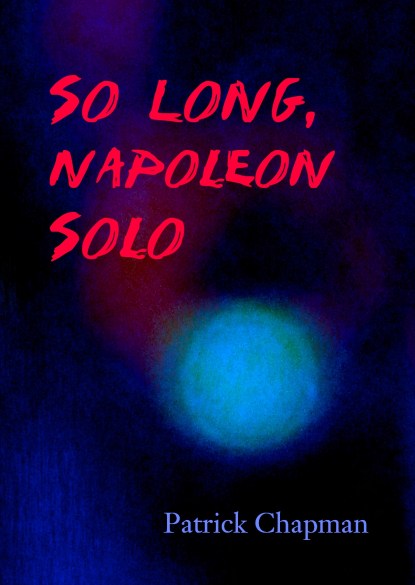
Patrick, you’re very welcome. You’re a much-published and critically acclaimed poet and writer but today we’re going to focus on your debut novel So Long, Napoleon Solo (BlazeVOX Books, 2017). Congratulations on the publication and the fabulous cover which has such a nice texture!

PATRICK: Thank you, Shauna. The cover is meant to evoke pulp novels of the 1950s and 1960s, though this is a modern story. The style is a hint at the spy stories of the protagonist’s childhood.

SLNS BLUE SUN.jpg

       Buy So Long, Napoleon Solo

SHAUNA: Oh yes, I can see that in the cover. A nice touch and a push towards the physical copy rather than the digital. Patrick, having published seven collections of poetry and two books of stories, written for TV, film and audio drama, and worked in advertising – how did you come to turn to the long haul of novel writing? Was So Long, Napoleon Solo always destined to be a novel or did it start life as something else?

PATRICK: So Long, Napoleon Solo was always going to be a novel, but I took a poet’s route to writing it. That’s to say, the book was composed without a plan, and along the way it yielded other pieces as I followed paths that didn’t end up belonging to the story at hand – a novella, Anhedonia, published four years ago, and a few short stories, all came off the flywheel as I whittled the novel down to its core. When BlazeVOX said yes last year, I enjoyed a few months of final editing, which gave the book its finish. So it was a long haul, but I loved the process of it.

SHAUNA: That’s the key with novel writing, isn’t it – you’re in for the long haul, however that ‘long’ is. Well, as writers it is often difficult to express that which cannot be expressed and one of these acts is that of suicide and the grief that follows. Having explored this in novel form myself, I understand how complex and delicate a theme it is. Although the death of Tom, an old childhood friend of our hero Jerome (“a sensible coward”) is pivotal to the whole narrative, So Long, Napoleon Solo isn’t really about suicide – I found it to contain a steady meditative thread on what we understand friendship to be, and how it changes over time and over our lives.

PATRICK: Friendship – its various forms, and how it evolves with time and circumstance – is definitely a theme of the novel. Some friendships calcify, some flower. Some were never how you remember them, or what you expected them to be.

Tom kills himself before the book begins, but the relationship he had with Jerome, is frozen in Jerome’s memory as that which they shared as boys. We only have our hero’s word for what it was actually like.

This novel went through the stages of grief, and came out the other side. In the composition, it seemed important to write fearlessly – not treating the subject of suicide with kid gloves but allowing it space to be what it is: imponderable at first and catastrophic yet human and, to my mind, having been around quite a few of them, eventually understandable and forgivable. Also there are one-liners in the book. I wanted this to be a black comedy, which is how it turned out.

SHAUNA: In the humour – some of which had me laughing aloud (“Humanity was turning into a species of mugwumps in suits”) there are some very poetic portrayals of emotion, such as the description of Tom’s mother Betty at his funeral:

Betty now bawled openly, a Magdalene of sorrow and no one’s feet to wash with her hair.

PATRICK: Humour can be how we cover our inability to face sorrow. Jerome deals with his – unacknowledged at first – using cynical humour; his character strengthens and deepens as the book goes on, and as his life crystallises into something new. Jerome’s armour is stripped away and he finds another way of facing his demons, which I won’t spoil, but he first has to get good at confrontation. This backfires amusingly on him. As for his sorrow – once laughter fades, the darkness in the face of which it sounded, wraps around him like a cloak and he has to find a way to wear it that looks good on him.

SHAUNA: Yes there is that depth of sorrow throughout the novel. But So Long, Napoleon Solo is full of journeys – from childhood to adulthood, regret to acceptance, blame to forgiveness. Jerome constantly balances himself on the tightrope between conforming to society’s expectations and being free.

In Dublin “his other pals had long since drifted away into fatherhood, depression or success”. Clea discouraged him from getting to know other women, as she had “put a lot of work into him.” And at home in the countryside he muses how the people

raced to become exactly the sort of people they were expected to be, then they could stop evolving and have done with it.

Tell me about the formation of this complex character that I found myself both loving and despising in equal measure.

PATRICK: Jerome’s character at the beginning of the book, is formed out of an idea of himself that he’s constructed in order to be able to get on with things. His attitude to his past is a way of distancing himself from who he used to be. It’s a protective layer he hasn’t learned to live without. As for his smart mouth, he’s projecting, and compensating for his own sense of isolation. There’s tenderness in his view of his upbringing, but pain too. His hometown is to him the place where his friend killed himself, and where the people who bullied him as a child, now exist in a hell of quiet desperation, at least to his mind. In fact they’re perfectly normal humans. Eventually, Jerome learns that everyone is lost and for some that’s not a problem, as they don’t realise it.

SHAUNA: This next question has two parts. 

Firstly, the novel is primarily set in Dublin and I loved how, through Jerome’s life, we see the streets, bars and cafes grow high, fall, as the Celtic Tiger comes and along with it greed, homelessness, prosperity, all the contradictions of a city that is essentially not quite grown up – like the ever nostalgic Jerome.

On the top floor of a house near Portobello bridge, he had taken his first taste of Red Lebanese, Leonard Cohen and nakedness with a woman, all in the same night. The hash had made him high, the music had made him smile and the woman had made him coffee in the morning.

Do you think So Long, Napoleon Solo is as much about Dublin as it is about its characters?

Secondly, as much as the city, the music guides both the reader and Jerome towards maturity and, as he finally lights a cigarette like a man, he smokes “pulling the future into his head”. I’d have loved a CD to accompany the novel!

PATRICK: The story was written during the boom years, but it’s not a ‘Celtic Tiger’ novel per se. That said, the city in which it’s set is very much the Dublin of that period – a new-money metropolis, a place that thinks it’s cosmopolitan but that will never be New York. It doesn’t wear its worldliness lightly. There’s an incuriousness in some of the background characters, along with a certain herd instinct at large upon the world, a movement towards conformity that Jerome disapproves of. He thinks himself outside all of that but really he doesn’t understand how everyone else seems to know what to do.

As for music, the songs of Jerome’s youth act as a comment on his not being able to reveal his small-town character. They represent his authentic self; he hides these albums from his city friends. When Ro turns up with her ‘anything goes’ attitude, she’s much more relaxed than he is, in music as well as in other areas. She couldn’t care less what he likes or doesn’t like. She has bigger problems. Real life is what’s playing on her Discman (the book is set just pre-iPod).

In lieu of a CD, here’s a Spotify playlist of some of the music and artists featured in So Long, Napoleon Solo

SHAUNA: Oh fabulous! I shall look forward to listening. Now on the topic of characterisation it struck me that the expression of female sexuality seemed often to be as an antidote to male power, in particular, how Clea and Ro are portrayed in relation to Jerome. Of course the narrative of So Long, Napoloen Solo is written from a close third-person perspective so we’re looking at these – at times very strong – female characters through the eyes of Jerome. In a way, I also couldn’t help thinking that Clea and Ro were extensions of different versions of Jerome – almost like you see couples begin to look like their dogs or each other. Did you envisage this interconnectivity for your characters?

PATRICK: Ro is used to taking what she wants sexually, as is Clea. That’s not to say that what either wants is particularly wild, though there’s a scene where Clea does something to Jerome that might raise certain eyebrows today.

In the sense that all characters represent aspects of their author, there is a relationship between these three, and they do reflect each other but they’re individuals. Ro is not a ‘manic pixie dream-girl’, yet she arrives as part of a world of anarchy that opens for Jerome. She’s tougher and more robust than that label, and she is not at all about the guy. There’s a strength to her, a recklessness, as well as frankness and kindness. Though she’s in a mess, she’s on more solid ground than at first it appears. Clea is witty and sophisticated on the surface but having had adventures in her youth, she now tends towards the conventional. She represents a certain kind of accommodation people often make with intolerable domestic situations, out of fear, a desire to fit in, or a sense that there’s no way out.

One thing these two characters have in common is that, although they see Jerome as a human being, neither takes him seriously as any kind of traditional male ideal. That’s liberating for everyone, as he doesn’t see himself that way, either.

SHAUNA: Yes, that’s what I thought – we see more of Jerome through Clea and Ro. Much of our curiosity in life is about finding the answer to This comes through very strongly in your novel, Patrick. Jerome wants desperately to find out why Clea can possibly go back to Harry when he is abusive towards her; both Jerome and Ro spend much of the novel trying to find out why Tom killed himself; and Jerome, like all of us, is a man constantly searching for meaning. In a way, isn’t the act of writing part of this search, part of the why?

PATRICK: Writing is all about ‘why’, as much as it’s about ‘what happens next’. It can be cathartic for the author to write in search of an answer but the journey needs to resonate with a reader – the writing becomes all about telling a good story. In this book, as in life, not every question has a clear answer, which is intentional. I try not to close the circle. For instance, what does the word ‘England’ mean, towards the end of the novel? A whole new world, perhaps.

SHAUNA: Although we never get to meet Tom, we get to know him through flashbacks and memories of those who knew him in life. Innocent play becomes tainted with adult knowledge and reason and in the light of suicide a simple childhood friendship takes on a heavy weight. Life is full of phases and people often pass through one phase, disappear and reappear in another phase. Friendships come and go. I couldn’t help wondering that if Tom hadn’t killed himself would Jerome even remember him?

PATRICK: Every now and then, Jerome would remember Tom as someone he had known long ago, a signifier of a different time, an imaginary friend which, in a way, is what he becomes in our story. Tom is more powerful as a memory. If he had turned up in person, we wouldn’t have this set of events. It’s a twisted memory too – what Tom leaves behind is poisonous and nuts, and the effect it has is transformative. You have to ask if reasonable people would take up the challenge of it the way Ro and Jerome do, but in this situation they’re not entirely reasonable. It’s an emotionally heightened reality for these characters.

SHAUNA: Yes, I felt that much of the pace of the book was driven by the heightened emotion of the characters. Finally, Patrick, let’s move to the title. As a young boy Tom is given a gun by a slightly dodgy uncle and he and Jerome decide to address each other by their secret names – Napoleon Solo and Illya Kuryakin – taken from the characters of the 1960s US TV show The Man from U.N.C.L.E. Do you think there are different interpretations of the story depending on the reader’s knowledge of The Man from U.N.C.L.E and The Girl from U.N.C.L.E? (Here I need to confess that though I’ve not seen either programme, my lack of knowledge did not affect my enjoyment of the novel.)

PATRICK: The reader doesn’t need to know these shows (or the recent movie) to enjoy the novel. The Man from U.N.C.L.E. is important only in that the two boys played at being those spies, and it’s clear soon enough in the story who Napoleon Solo and Illya Kuryakin were. As for the title, So Long, Napoleon Solo was inspired by my admiration for two other books with ‘So Long’ in the name. So Long, See You Tomorrow, by William Maxwell and So Long, and Thanks for all the Fish, by Douglas Adams. As a phrase, it didn’t show up in Google searches until Robert Vaughn died, so it seemed like a good one.

SHAUNA: Thanks so much, Patrick, for being so giving with your responses to my curiosity. I must look up those two books you mention.

I wish you much success with So Long, Napoleon Solo! 

READERS: Check out the track list to the novel and purchase Patrick’s novel here.

You might also be interested in Patrick’s poetry published by Salmon Press and you might like to read an article Patrick wrote for Writing.ie about So Long, Napoleon Solo


Chapman