Writers Chat 43: Catherine McNamara on “Love Stories for Hectic People” (Oxfordshire: Reflex Press, 2021)

Catherine, Welcome back to my WRITERS CHAT series. Today we’re discussing Love Stories for Hectic People, a slim volume of thirty-three charged flash fictions which recently won the Saboteur Award for Best Short Story Collection (congratulations!)
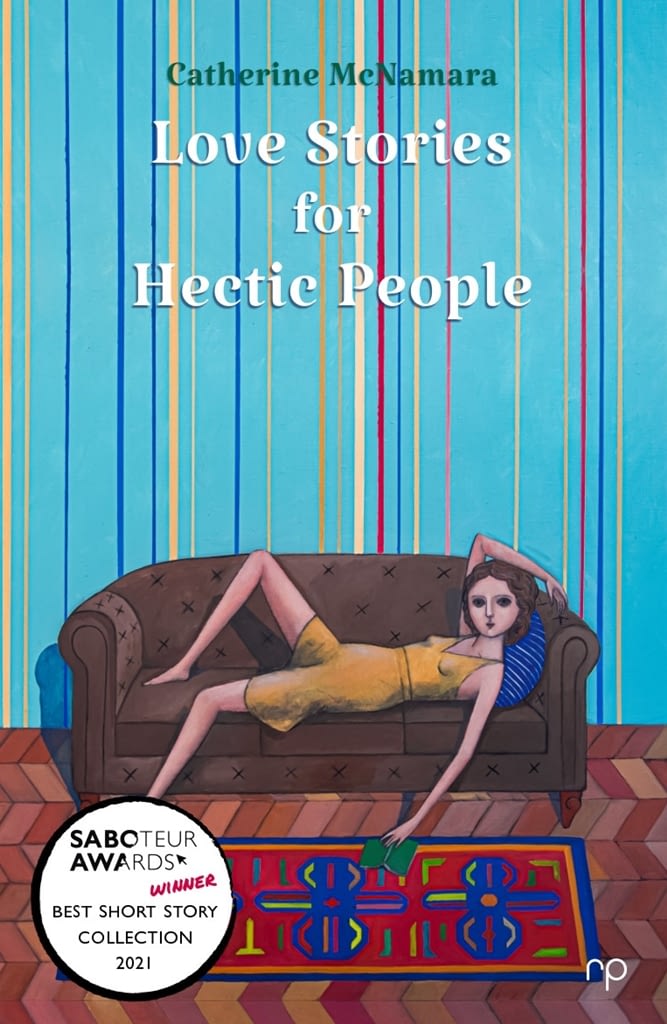
Cover image of Love Stories for Hectic People

SG: Firstly, let’s discuss the title and cover. It seems that these stories are not just for hectic people, they are about hectic people though much of what is explored in this collection is reflected by the cover image of a woman in a yellow dress pausing in her reading with the sense that she is full of feeling.

CMN: To be honest this title came about for another collection that outgrew its intention and vibe. I knew with the very first story – ‘As Simple as Water’ written first and barely edited – that I would be addressing the many shapes of love, so that would involve an array of people immersed in different lives. So Love Stories for Hectic People very quickly glued itself to the story series, which was written over the course of six months, until I reached the final piece – ‘Love Is an Infinite Victory’ – when I knew it was complete.

The cover image came afterwards, once the book had been accepted by Reflex Press. Before the pandemic I was in Venice for an opening, where I met an old friend who is a painter in Florence. I told him about the book of short fiction I’d had accepted, and he said why don’t you have a look at some of my works? This image spoke to me from the start and I can’t say how happy I am with it.

SG: What a lovely story about obtaining the image – so full of artistic synchronicity!

I love your use of brackets to bring the reader into the other side of the narrative. In “As Simple As Water” we meet Vasilis K and Marj B in Athens train station after the moment when Marj has fainted. As a woman – a stranger – helps Marj, Vasilis stands apart, watching:

Vasilis who has been making love to Marj most of the night (except when she wept in a corner of the bed and he waited) wonders about the pelvic cavern of all women which is filled with jostling organs and squelching tubes and lengthy orifices like vivid botanical sections drawn into slithering life.

So much is captured here – the stretch of time, of physicality, of distance and the point in which Vasilis removes himself from Marj. Can you talk about how you capture the depths of character and narrative in these short tales?

CMN: It’s going to sound very crazy but when I am in the zone and writing cleanly, it’s almost as though I am hearing a voice dictating the scene in my head, and I have to get it down quickly, and then halt before it turns to jibberish. Half of the time I am trying to slow and clarify what comes to mind, and make sure I am being faithful to the tract of the story, with some sort of carrot dangling ahead. Maybe it is madness. But I prefer to think of it as magical composition. Almost musical. Of course the downside is that sometimes it is irrelevant and nonsensical, or doesn’t piece together, but for me, this sort of freestyle writing sometimes brings me to the brink of lucid swimming ideas directly from the subconscious, which can be surprising and powerful. I do think writing is very much a practice, so one needs to find out what works best to produce some sort of truth or an honest portrait of some aspect of humanity. The brilliance of flash fiction is that you have zero time to get to the point, so you have to know the core of your story from the outset – and deliver! It’s a great, risky form.

All of the above said, I know that with this story I wanted to include the reader in the events leading up to Marj’s dramatic fainting at the train station, through the lens of Vasilis’s recollection. I don’t think the use of bracketed, almost-overview inserts works for every piece of work but in this case it seemed to fit with the raconteur style of voice. I think it helps us feel Vasilis’s discomfort and detachment within the fluid rush of action as it occurs, showing how the lover with whom he had been intimate is now a collapsed woman on a metro station floor and, later, a patient in a hospital, away from whom he walks back into his own life.

I think that to capture any sort of depth or truth you have be the character and be wholly faithful to how this person might act and react – even if this means changing the course of the story or using a certain voice or language style. Flash is brilliant for the shifting and intensity that it both allows and demands.

SG: You mention risky and flash together and I think with this collection you do take risks and even as you say, in the way you experience the dictation of the story and you get it down without letting the rational critic emerge.

As with much of your writing, it is through the senses that we get to know the characters. “Genitalia” captures the lived experience of periods, the messiness of our organs and the desire – by some – to tidy it all up, and in doing so, make women neater.

I loved the recollection of the unnamed woman painting “a line of hieroglyphics …on the yellow wall” of a hotel and that by now “the piece of mortar she painted would be lying in a pile of rubble along the river. Where it gleams at night” and how, at the end of this story, by becoming pregnant, all is calm again.

Can you talk a about how many of the stories here explore the power of the female body?

CMN: I really wanted to celebrate female blood in this story – a celebration of our moon-guided, timeless cycles and our power to reproduce. For me, the guy is almost irrelevant, in that he is so poorly informed about the wonders of the female body, and he has been grafted onto this young woman’s wondrous existence. I wanted to show that he would learn from and be enriched by her. Men are sometimes a little repulsed by the force and power of our bodies, and how we have this intrinsic connection to the tides, and even the gods if you like. I wanted to take up that thread and show this woman as a wild modern goddess.

SG: Yes! Many of the stories use sensory memories – or the creation of these memories, in “Citrus”, for example – to connect the child-self with the adult-self in the way that power permeates experience. Here the narrator – suffering abuse – notes that “Everything is fury, everything is rivalry.”

In “Slaughter of the Innocents”, power and police abuse of it simmers dangerously, represented by the “insignias on their shirts”, “a stitched leather holster nursing a gun” which make the narrator realise that she hates her father more than she loves her own life.

Can you talk about this theme of power and control?

CMN: I have experienced something of the violence of men and how this can filter down as a refracted code through a family. It’s something I know I will write about more. Probably anyone who has ever lived through violence is always one step away from this terror. So I think it is something I listen for when I am fishing for ideas, or when people tell stories.

The other thing I find is that we see so much violence on-screen that we are anaesthetised, so I think that my job as a writer is to strip back domestic violence to its daily tension and core dynamic, more than an orchestrated, visual drama. I wanted to get inside of violence with words and make the reader respond in a visceral way, perhaps striking familiar cords, but certainly in a more subtle way than televised or cinematic violence.

SG: That story deftly captures the refracted code of familial violence.

Languages and travel – and the liminal spaces between understanding and comprehension – add to the sense of surreal (and humour) in these stories. Often bodies and minds experience love separately.

In “Tokyo Frieze” Tanja and Kurt “always spoke freely; he with his accent and she with hers. Perhaps because of the zigzag through languages they were emboldened when addressing each other’s eyes.” Later Tanja recalls when she was younger and “had felt porous, hyper-human, tied to a common energy or saturation. But now she knew she was confined within the body around her and went no further. Her history was a stream of dioramas like this.”

I thought your use of language and travel as a way to delve into aging and the body was interesting. What are your thoughts on this?

CMN: It’s so true and curious the way that bodies and minds experience love separately. I love this zone!

‘Tokyo Frieze’ is one of my favourite stories in the collection and was originally published in Rowan Pelling’s The Amorist magazine. My interest in language and the languages of love stems from the fact that I left Sydney at 21 and though I speak English a lot of the time, I have lived in countries where other languages are spoken, and have learnt French and Italian, and am now studying Greek. So the characters in my life have mostly been European or West African, and I am fascinated by accents and attitudes and words. Travel too, as well as living in a foreign context and feeling at home within it, also figure in my experience so these aspects have become reference points for my stories.

In this way, utilising language and travel to address aging and the body, has been a natural modus operandi, in that my reservoir of story material comes directly from these areas. As I grow older as a female, a mother, a lover, a writer, a traveller, it’s not so much about recounting experience, as using the emotions generated by certain experiences in order to give authenticity to the stories that come about.

SG: I love how you express that, Catherine.

Using emotions generated by certain experiences in order to give authenticity to the stories that come about.

In essence, writing from what you know into what you don’t know.

Let’s end with five fun questions.

  • Coffee or Tea? Coffee – espresso!
  • Sandals or runners? Sandals
  • Sparkling water or non-carbonated? Non-carbonated
  • What are you reading now? Gina Frangella – Burn Down the House
  • What are you writing now? Novel rewrite and some budding flash stories

CMN: Thank you for having me again Shauna!

SG: Thank you, Catherine, for the joy reading your collection brought me and for your generous answers in our Writers Chat. I wish you much continued success with the collection.

Photograph of Catherine MacNamara

Thanks to Catherine McNamara and Reflex Press for providing me with a copy of Love Stories for Hectic People.

Writers Chat 42: Paul Perry on “The Garden” (New Island: Dublin, 2021)

Paul, You’re very welcome to my Writers Chat series. We’re going to chat about The Garden  (New Island: Dublin, 2021), your new novel which, in the words of Mia Gallagher is “vividly compelling.” I’d agree with Mia – and the critical praise that The Garden is receiving – it is a novel that compels you to keep reading and at the same time makes you pause and contemplate the land around us and how we treat it.  

SG: Can you tell us a little about the origins of the setting and the place of The Garden? In interviews you’ve referred to your own experience of working in Florida some years ago but I wonder if recent climate change and world events had any influence on the narrative at all?

PP: I lived in the states in the 1990s, and in Florida for 3 of those years. I was captivated by the place; its tropical beauty, the palm trees, the flowers, the rich and diverse landscape.  And the diversity of the people too – from Cuba, South and Central America, and all over the US and the world. And of course, the never-ending sunshine. I was really stimulated by the place – it felt almost hyper-real to me; and the vibrancy and the literature too from the Caribbean impressed me. You know it’s such a contrast to the dark and the rain-sodden streets I grew up on in Dublin. Florida to me felt like life on the edge, in many different, wonderful, and dangerous ways. It’s an exciting place. I guess that all came together in the novel, The Garden; and as you say the environmental crises that the everglades in particular face was in mind; that this place, a sanctuary for birds, reptiles, and endangered species was under threat seemed to be a suitable arena for the human drama that enfolds in the novel.

SG: To this reader it really felt like the perfect arena for the drama in The Garden. The novel moves at a pace but through the Irish narrator Swallow, also provides introspection. What struck me most about the novel is the atmosphere – at once foreboding and idyllic – that you create and how we’re brought into this. For example, when we’re with Swallow as he drinks his bitter coffee in the morning, we really feel we’re there with him:

Waking the senses. First the sounds of birds and men shuffling. The smell of earth, and the greenness starting to take back, or the swamp beneath us trying to reclaim what belonged to it – without human interference, all elemental.  

It seems you have taken the advice of your creative writing mentor Lester Goran and gone for (at least) one beautiful phrase per page. Can you speak a little about your use of language and description?

PP: I’m a writer – in prose – who does not like long winded description or exposition. I don’t like novels that seem too long, and are full of filler, or writers who spell out what is at stake or say, this is the plot. I aim for a purposeful narrative with pace, and menace that allows for the left-field, and the meaningful digressionary moment or scene; so many novels I read have the most artificial dialogue like the two characters talking with one another are actually listening to each other. That’s not my experience. I like also the short novel. And I like writing to get to the point without any puff. That being said – I also aspire to balances, cadenced sentence where the rhythm of the language is honoured, and there is a control of tone.  These things are very important to me as a writer and a reader. In terms of description, I like Mark Doty’s definition of description as being encoded desire. My background in poetry means that I rely on motif, image, and metaphor in my prose, or that I go to them at least – in subliminal, subtextual fashion, so that you are creating grooves, and patterns in the reader’s mind, so that one phrase – however inconsequentially sounding can detonate something impactful in the reader’s mind.

SG: I love how you put that, creating grooves and patterns. Mark Doty has some really interesting things to say about description. I love his book The Art of Description.

The Garden could be described as a fable, and the journey the characters are on echoes the journey of ‘the ghost’ the orchid at the centre of this tale; they are precious, illegal, homeless and all struggle with identity – many of them, including Swallow, try to find themselves in the power the Garden seems to offer, escaping from memories. As he says swinging in the hammock, “I was seeking answers but all I had was starlight.”  Others, such as the visually blind (but all seeing) Harper, and his marking of the map (“circling with the pencil, spiralling inwards”) know the real perils. Can you talk about the fable and, at times, the moral element to the narrative?

PP: It’s not something I planned or set out to do; the fable like quality of the novel emerged as I was writing; and in terms of a moral element, yes one could read the novel as a warning and such, but if you look at the characters’ lives and the messy relationships between them, I think it’s fair to say that the moral code of the novel is complex. If someone wants to read a moral into the novel, I say, be my guest; but there’s probably different and contradictory ways to read the novel; and the moral code of its characters is complicated. Certainly, I think when you write a novel, you want it to be more than just a yarn. For a novel to last or linger in the memory, or for it provoke questions in the reader’s mind, I think there does have to a kind of sub-soil of searching about all sorts of moral questions. So writing it, I thought about Camus – and his stranger – justice divine and civil, and I thought again about Gatsby and what he devoted his life to, and the small scenes where a whole moral world was revealed. 

SG: I’m nodding at this – the connections with Camus and Fitzgerald – how “small” scenes reveal a whole moral and complex world.

The men who live in the barracks in the Garden co-exist with brotherly love infused with marine/army rules. This comes from both Swallow’s influence as an ex-marine as Blanchard’s right-hand man and from the men’s invisible place in the official world. It can be seen in the friendship – and rivalry – between Swallow and Romeo who appears with a “muted swagger” and “looked as if he didn’t know how to shake the shadow of a malaise”. Yet it’s also evident in those outside of the Garden, looking for financial gain from those inside (drug money, the ghost orchid). Their names – such as Black Fox, Catfish – tie them  to ancestry, land and deeds.

Did the theme of male friendship and rivalry emerge as story developed or was this a theme that you began with?

PP: Well, the whole writing of the novel was a exploration in the dark – that’s what my subconscious came up with after I had written in a kind of fever dream; so yes, male friendship and rivalry is important to me, but I did not set out to write about those themes; I followed the story, thoughts and feelings of Swallow; it’s his story after all, but male friendship and rivalry does, as it happens, interest me; in a way, how could it not; shifting allegiances, friendship, brotherly love all of these things as a boy, and a man I have grappled with, embraced, and otherwise, but again that’s not to say the novel is a didactic playground to explore in a scientific way; human impulses, male or otherwise, are full of the irrational, the impulsive, and the passionate. And the novels is such an elastic form it allows you to unpack these things, but that’s got nothing to do with the writing of a story; the story is what matters, not its themes when one comes to write. As ee cummings wrote, ‘since feeling is first, who pays any attention to the syntax of things.’ You see, I even contradict myself. 

SG: How fascinating to learn that the whole writing of the novel was an exploration in the dark!

Moving on to another theme that interested me as I read and, like masculinity, appeared like a shiny thread. Swallow is aware of his privilege as a white male and often muses about this – including questioning Meribel about how she stays with a racist like Blanchard. She tells him that he (Blanchard) thinks her “white”. Swallow’s privilege is also seen through Lola’s plight as a precarious worker/lover/female. Towards the end of The Garden Swallow realises “The desperate lengths people will go to for beauty”.

These parallel threads seemed very current and I wondered, given that in many ways The Garden is timeless, if race and gender formed part of the wider commentary on the structures of society and power, or if they emerged through the characterisation? 

PP: Again, I wasn’t writing a novel to make a wider commentary on anything. There are better ways to do that, I think. Critics, and reviewers can put these kind of labels on the book, and so be it, but I’d like to get a way from the kind of reading of the novel, this novel, as a commentary, or vehicle for anything other than what it in itself – a story. If a writer sets out with a message it will damage the writing and the book. So, I think it would almost be disingenuous of me to say yes, this novel is a commentary on whatever. It is, of course, or could be seen as such, but I also think the novel is so various in contemporary letters and allows a writer so much freedom – that I welcome different readings of the novel, but I am hesitant to even suggest what themes readers should look for; race and gender are centrally central to how the story unfolds, but I also think of course they are – when Swallow looks around him this is what he sees. And it’s a brutally unequal, unfair world he lives in.

SG: Isn’t it wonderful how such depth of themes emerge when you are faithful to the characters and the story?

Nature as a character is the main driver of story and back story. I am thinking here of Swallow’s back story about his brother and of Lola’s brother who drowned. It feels that the more the characters try to get back what was taken from them (identity, agency, power), the more they fight for and with each other (for the illusion of profit and gain), and the more natural disasters such as dreadful hurricanes happen. As nature is disrupted, people become more vicious. Nature, like God, is “wrathful”.

Three events spring to mind as examples of the beauty of connection turning into the ugliness of pain – the beach scene with Romeo, one of the visits to the swap where a gator makes itself known and one of the final scenes involving Swallow and another man’s ears.

“Each season,” Swallow comments, “I wondered what it was we were doing…Sometimes I wondered whose dream I was in.” Later he says “Part of me thought I was going out of my mind, as if we were existing on some foreign orb, living out the game-time of another species, playing our roles badly, with violent and careless glee.”

It seems as if the knowledge of how land and people are all connected is almost within reach of Swallow’s consciousness but then it slips away. In the swamp he says, Something in my physical being knew this was a trespass of sorts.”

What are your thoughts on this?  

PP: I think Swallow is struggling with the reality which has manifested itself about him; he’s wondering like a lot of people how he got to where he’s at. He’s displaced, confused, and paralysed to a certain extent. I like your reading of the novel above, and I agree with it; I’ve dramatised those tensions. [Thank you!] I think the novel is interested in that notion of trespass – literal and otherwise; what transgression has been committed, and what of it. Does it keep the reader wanting to know what happens next. Much of my efforts in writing are in the compositional domain however; it’s like make the thing first, and then see what it means, if it means anything. It goes back to the writer writing without full knowledge; the writing is on a journey too, if they knew what message and themes they wanted to explore exactly, the game would be up. Better to work in ignorance, or partial ignorance; I feel now that the book is published that my guess is a good as yours. There’s a notion in lit crit of Intentional fallacy, a term used to describe the problem inherent in trying to judge a work of art by assuming the intent or purpose of the artist who created it. I kind of agree with this.

SG: Oh we could get into a whole Writers Chat about intentionality and purpose – and we could also talk about the death of the author (Barthes) and what the reader brings/re-writes.

I totally agree with what you say about the writer writing – make the thing first, then see what you’ve made. In a way, the writers job is not to make the meaning, it’s to allow the meaning to emerge.

On a personal note, I have to say I really connected with Swallow as both a character and narrator. Besides wanting to have a whole discussion on his name and back story, I’d love to see what happens next to the Garden. Will there be a follow on book or do you think you’ll return to the character of Swallow in another form or genre?

PP: I’m working on a new novel – but I’m loathe to get into it; I’m a little superstitious about talking or writing about something I’m writing; rather work in silence, in order not to break the spell.

SG: I totally understand that – I’m sure what emerges will emerge – and be as intriguing and magical as The Garden.

We’ll end this Writers Chat, Paul, with some short questions:

  • Mountains or beach? Beach
  • Swamp or bog? Swamp
  • Coffee or tea? Both
  • What flowers are in your garden now (if you have one!)? I’m working on some bamboo
  • Oh! Bamboo! I can hear it in the wind! Lastly, what are you reading now? Damon Galgut’s The Promise

SG: Thank you for your deep engagement with our Writers Chat, Paul and I wish you continued success with The Garden.

Photograph of Paul Perry (Courtesy of the author)

Paul Perry is an award-winning poet and novelist. He has published several collections of poetry, most recently Blindsight (above / ground press, 2020). He also co-authored four international bestselling novels as Karen Perry, including The Innocent Sleep with Penguin Random House. He directs the Creative Writing Programme at University College Dublin. The Garden is his debut novel as Paul Perry.

Thanks to New Island and Peter O’Connell Media for providing an advance copy of The Garden.

Reading, Reading, Reading

Photograph of two books: In The Dark by Anamaría Crowe Serrano and The Garden by Paul Perry
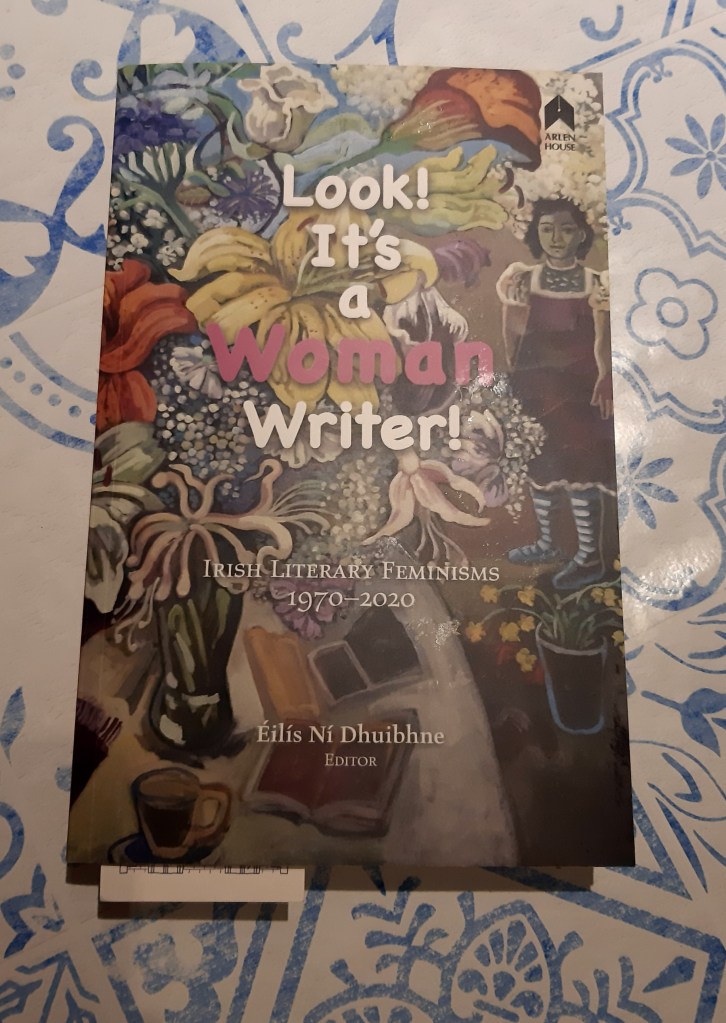
Photograph of the book Look It’s A Woman Writer! Irish Literary Feminisms 1970 – 2020
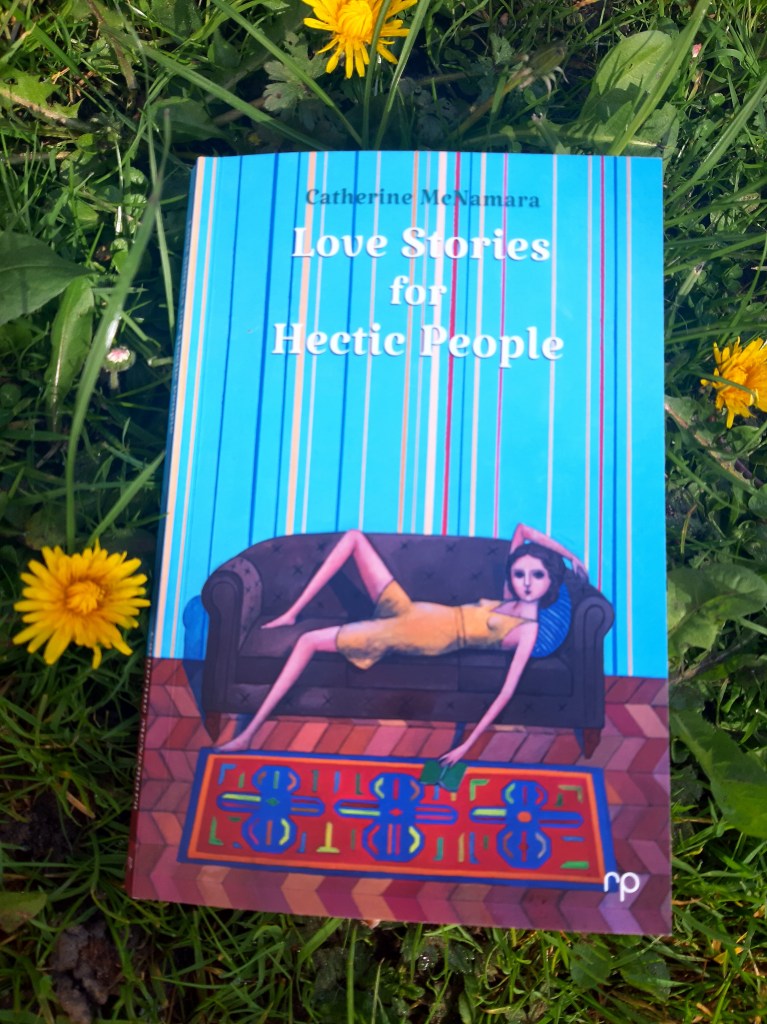
Photograph of the book Love Stories for Hectic People by Catherine McNamara

Yes! I’ve been readings LOADS and have some very exciting new Writers Chats coming up soon – from the page-turning The Garden to the wonderfully written In The Dark to the exquisite collectively created and produced Seed and the intriguing Love Stories for Hectic People.
If you haven’t been to your local bookshop or library, now is the time to go to catch up on new readings, new ideas and you’re in for layers of treats and generous stories of writing lives with the latest from Arlen House edited by Éilís Ní Dhuibhne Look! It’s a Woman Writer!

Go forth, and read, read, read.