Writers Chat 82 Part 2: Liz McSkeane on “Aftershock” (Turas Press: Dublin, 2025)

Welcome back, Liz. We’re on Part 2 of our Writers Chat about “Aftershock” (Turas Press: Dublin, 2025). Part 1 can be read here.

Cover image of the novel “Aftershock” showing darkened ruins of old buildings against pink and orange skies.

SG: One of the standout take aways from Aftershock was the human need for the answer to that three-letter question why! Dom Sebastião searches for technical and structural answers to the natural disasters (“nothing must be allowed to obstruct this rebirth”) whilst also mercilessly searching for the traitors who plotted to assassinate the king; Father Malagrida tries to increase his power and influence over the vulnerable by preaching that these disasters happened because of God’s wrath on the people of Lisbon (“Lisbon is paying for the sins of her people.”)

It seems these two men epitomise philosophies of the day. Were you also looking for answers through this character-driven plot which explores societal beliefs and structures in late 18th – Century Portugal? 

LMcS: I agree with you that Dom Sebastião and Father Malagrida embody two diametrically opposed world views regarding the ‘why’ of the disaster – belief in reason and science as an approach to investigating the causes; and submission to the Divine Will. This was a real polemic of the day, though in practice, many people imbued with the principles of the Enlightenment also considered themselves good Catholics. But there is no doubt that this clash of world views existed at the time. It still exists, in many parts of the world. 

What makes this question so crucial in the context of the novel is that these opposing world views not only insist on two conflicting stories regarding the origins and reasons for the earthquake happening, but flowing from that, opposing views about the response human beings should have to it. Some of the most extreme of the clergy, including Father Malagrida, insisted that believers must submit to the Will of God and pray for mercy for their sins, a position which not only did not aid the rescue and recovery efforts, but in some cases actually obstructed it. The spirit of scientific enquiry, in contrast, sets out to rebuild and also, to devise ways of safeguarding against future events of the kind. Dom Sebastião really did conduct an extensive survey – today we would call it qualitative research – that asked survivors in great detail about the phenomena they experienced. This was one of the earliest systematic data-gathering studies of earthquake effects, and a significant precursor to modern seismology. He also oversaw the design of earthquake-resistant buildings that used an internal wooden frame – not so different from the principles used today.

The other aspect of the ‘why’ of the novel concerns the motivations of some of the characters – why they acted as they did. In spite of the vast amount of documentation and information about the ascendancy of the Marquis of Pombal before and especially, in the years after the earthquake,  there are still many, many unanswered questions about how and why events unfolded as they did.. For example – why did the king, on the night of the attempted assassination, decide to travel in a different carriage? And why did the nobility misjudge and colossally underestimate Dom Sebastiao? And more – all question that came to me as I was researching and writing. I did not try to provide answers to those questions but rather, allowed them to remain, for the reader to ponder. I think Chekhov would approve of my decision – didn’t he say something about the function of art being to ask questions, rather than answer them?

SG: I particularly enjoyed the descriptive language of Aftershock which serves to illuminate period detail and the landscape of the novel. We have the lush language used to describe the earthquake (through the eyes of Dom Sebastião); in “Living The Shock,” a beautifully crafted chapter which explores the impact of the disasters through a number of characters, we have descriptions that are as strong and impactful as the fire and flood they depict:

“There must be shelter, some corner or cellar, no, a place in the open air, the very centre of the square, perhaps, where tumbling debris may not reach. But now, through the swirling darkness, the skeleton of the Palace of the Holy Office of the Inquisition, this place which has passed judgement up on the final days of so many heretics, is lit up in glimmering spangles of yellow and orange.”

“The flood has not reached the Rossio. But that is a small mercy, perhaps no mercy at all, for all four sides are engulfed in flames. Leaping high in the air, they are devouring every morsel of floorboards, beams, window frames, every scrap of dry material integral to the construction of the edifices, grand and humble, every bench, table, carpet, curtain, tapestry, wall hanging, melting every glass or metal object, sacred or commonplace, silver plate, coins, golden altarpieces, artisans’ tools, grills and gates, chalices, kitchen utensils.”

“Impossible to believe that life had continued after the earth swallowed up so much of the city in just a few minutes, at the very time when the faithful were attending mass …The night is dark, light is needed, fire gives light and the memory of the terrible destruction inflicted by the fames must yield to the continuation of life.”

Language (and conversation) itself, of course, also plays a key role in the narrative:

“Rumour, gossip, the smallest detail, the slightest misunderstanding, had a way of infiltrating minds and tainting judgement, as the smallest drop of ink colours an entire pitcher of water.”

Did you enjoy writing the period detail?

LMcS: I really did. Just as I mentioned my desire to immerse myself psychologically in the perspective of the different characters, I found it fascinating to also inhabit the physical world, as far as I was able to with the information at my disposal. It is exciting to see how places and objects and the natural world, perceived through the eyes of the characters, can generate entire lines of thinking and insights. I also loved the process of gathering period detail – it felt like time travel through diaries, maps, architecture, streets. But the real pleasure was when the detail became atmosphere. A kind of emotional landscape.

That said, what I enjoyed most was what those details allowed me to say about the characters and about the society. Period detail became a way of showing how the physical world shapes human fate, especially in a disaster narrative. So yes, I enjoyed it, because it served the novel’s deeper questions.

SG: I’ve been to Lisbon multiple times though I can’t say I know the city well. I thought the Lisbon evoked in Aftershock is at once familiar and strange (not withstanding the period differences) and is, for this reader anyhow, the main character of the novel. The built environment and the key role it plays in how lives are lived, who survives a natural disaster and who doesn’t, who re-builds the city and for whom it is designed. Can you talk about the role of the city-as-character?

LMcS: Lisbon in Aftershock is absolutely a character for me. I wanted the city to have a kind of double presence: familiar enough that readers can recognize its rhythms, yet strange because the disaster reshaped the same streets, structures and spaces we think we know.

By showing Lisbon before, during, and after the shock, I wanted readers to feel the city exerting pressure on the characters just as much as the earthquake does. Its architecture, its beauty, and its fragility all shape the plot. The characters move through Lisbon, but Lisbon also moves through them. The city’s destruction and reconstruction becomes a moral and political arena, which is why it takes on such a vivid, almost human presence in the novel.

SG: Aftershock puts me in mind of the work of Hilary Mantel; the research is vast but seamlessly contained within character motivation and setting. You provide an extensive bibliography in the Acknowledgement section. Could you talk about your approach to the research needed for this novel? And for readers looking for writing historical fiction advice see this excellent article over on writing.ie.

LMcS: I started off with just one book – This Gulf of Fire by Mark Molesky  – then got another one about the earthquake, and several more. I soon began to notice the emergence of the character who would become my protagonist, the hero – or anti-hero – and at that point, I pivoted and began reading biographies of the future Marquis of Pombal, and also of the key people in his life. There is a vast amount of literature about the earthquake, and I was fortunate to be able to read some primary sources – actual eye-witness accounts of the disaster, some of them original manuscripts. It was a process of starting with a wide, fairly scattergun approach until I found my subject, and then focusing my attention on my subject, and on ancillary topics that illuminated it. I really enjoyed it! The trouble with research is that if you enjoy it too much, you can find yourself down the rabbit hole and the book might never get written! So at some point, you have to call a halt. Thankfully, I did. Eventually.

We will end this chat, Liz, with some short questions:

  1. Lisbon or Porto? Lisbon – I’ve never been to Porto! But I definitely want to visit.
  2. Last city outside of Ireland visited? Glasgow – back visiting old friends.
  3. Best historical novel you’ve recently read? I’ve been re-reading Hilary Mantel’s Wolf Hall trilogy – hoping that something of her colossal craft might rub off! I’ve just finished Bring Up the Bodies, about to start on The Mirror and the Light.  
  4. What character in Aftershock most surprised you? Dona Eleanor, the Marquis’ wife. I thought she would challenge him more as his methods became more brutal. She didn’t.
  5. What are you writing now? I am working on some short stories and I am at the rough notes stage of my next historical novel.

With thanks to Turas Press for the advance copy of Aftershock which can be purchased here.

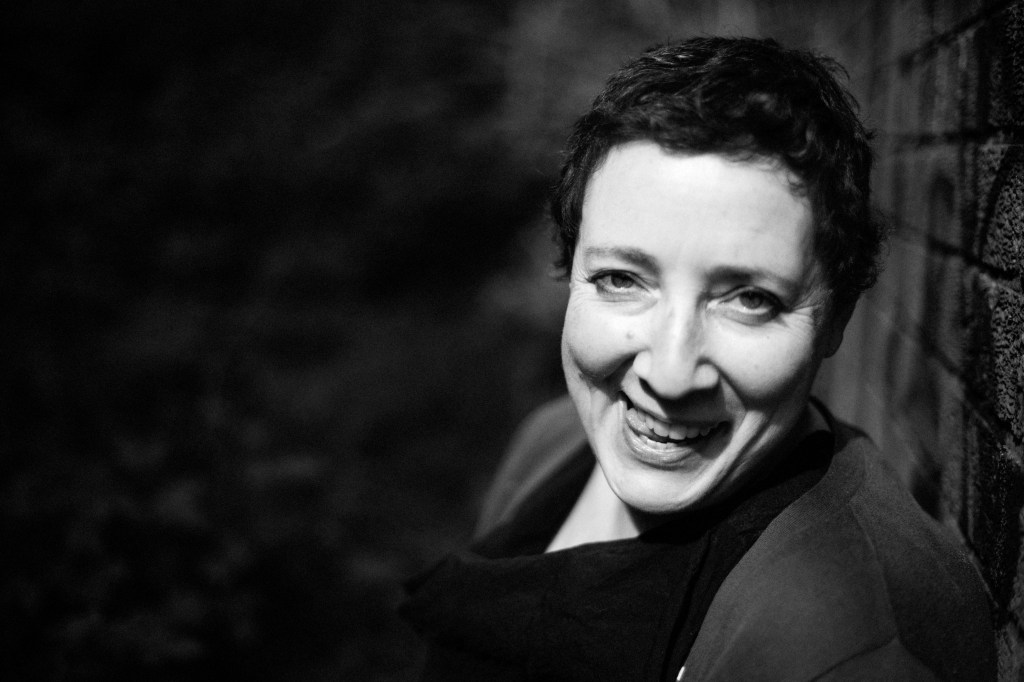
Photograph of writer Liz McSkeane, courtesy of Liz McSkeane.

Writers Chat 82 Part 1: Liz McSkeane on “Aftershock ” (Turas Press: Dublin, 2025)

Liz, you are very welcome back to my Writers Chat series. This time we’re discussing your debut novel Aftershock (Turas Press, 2025), which Lisa Harding has described as “relevant and shocking.” I had so many questions for you that I have divided this Chat into two parts so that we might cover most of the areas I was interested in exploring. Writers Chat: Part 1 covers the background to writing the novel, the structure, as well as dipping into the themes of personal/ political and gender/ marriage.

Cover image of the novel “Aftershock” showing darkened ruins of old buildings against pink and orange skies.

SG: Like all good historical novels, Aftershock not only brings us right to the heart of love, power, and ambition in 18th – century Lisbon, it also speaks to our times about the brutality of power. Can you tell us about how you came to write about All Soul’s Day, November 1st, 1755 a day when both an earthquake and a tsunami almost destroys Lisbon and threatens to shatter the beliefs of the city’s inhabitants; what was the genesis of your interest?

LMcS: Thank you, Shauna. I came to this subject by way of a radio interview I heard with a historian called Mark Molesky, about his book  This Gulf of Fire. It was about the 1755 earthquake that destroyed Lisbon and was so fascinated that I sat down to listen. I already had an interest in Portugal – I studied Hispanic Studies at university, which included Portuguese – and had spent some time in Lisbon as a student, so I was keen to find out more about the subject. When I started reading about the earthquake, I became fascinated by the politics of the time, in the lead-up to and in the wake of the disaster – and especially in the character of the man who would become the Marquis of Pombal. He both rescued and enslaved the country, and I found this an irresistible paradox to unravel.

SG: And this paradox snakes throughout the novel.

“At last, the earth is still.” What a great opening sentence that immediately grabs the reader. The sense that stillness can be vast runs through the novel – in relation to the land, the city, and, in our protagonist Dom Sebastião:

“For this man’s stillness deceives. It is a stillness that absorbs everything, understands everything, forgets nothing.”

Was this always the opening sentence of Aftershock?

LMcS: I am glad you find it so arresting! That is what we want, isn’t it! But in fact, that was not always the opening sentence. I had originally planned to start the novel with a dramatic event that occurred a few weeks after the earthquake and in fact wrote what I thought would be the opening chapter around that. But as with so many things in writing, things change. As I had the title from a very early stage, the opening you mention soon superseded my original idea. In a way, it was the title that gave me my opening sentence – which, as you mentioned, plunges us into the immediate aftermath of the earthquake, seen through the eyes of the person who would become the main focus of the novel. I think that quite often, the beginning of a piece – be it a novel, story or poem – sometimes emerges through a process of discovery, in a sense, reveals itself. I do find myself rewriting beginnings – almost as though the start of the story reveals itself.

SG: Aftershock is filled with ambitious characters who strive for what they want within a tightly structured society and clear political rules around church, state, and subjects. I found the conflict between individual desire and ambition (both personal and political – power) and the greater immediate good, to be in sharp focus in the exceptionally well-developed complex character Dom Sebastião. How did you hold the personal and the political within the writing and research?

LMcS: The tension between the private and public selves you mention in many ways is at the heart of the novel and one of the themes which drew me in. I find it both fascinating and shocking how far public events, national policies, can be influenced by the private ambitions and preferences and relationship of the actors. I am sure we can think of many contemporary examples of this. I suppose I should not be surprised, as the leaders who influence or seem to direct historical events are human beings, just like us, with all the foibles and insecurities we all share.

In relation to Aftershock, as I was researching the political events of the time, I became aware of the extent to which the impact of the personal relationships and aspirations of the individual actors were intertwined with what would become historical events. It therefore seemed to make sense to try to inhabit the perspectives of the different actors, to understand why they did what they did. Hence the multiple points of view which carry the narrative.

When I was researching the subject, I found I started with the public events – the earthquake, the measures that were put in place to support the survivors, the part played by other countries (this was one of the first disasters that attracted an international relief response) – and from there, found my way into the lives of the various actors. Their ambitions, as you point out, were often both personal and political. In a way, that made the intertwining of the personal and political both logical and necessary.

SG: Aftershock has an interesting four-part structure that both keeps us with the character-narrator and within the time. I liked your use of chapter titles – “Unwelcome News and a Request Rebuffed” – that hint at what’s in the chapter and, combined with an indication of the date, time, and place, serve to keep the reader knowing where they are in this vast detailed narrative whilst also reminding us of 18th-century letters. Was this a structure you began with or did it emerge as you wrote?

LMcS: To some extent, the structure emerged as I wrote. I had originally envisaged a three-act structure, and at a fairly late stage realised that the action and the characters needed more room to breathe. This resulted in some rearranging and expansion. So the four-act structure was a development of my original plan. 

SG: Again, such a skill in being able to grow original plans as the text develops! One of the themes running through Aftershock is that of the role of gender and marriage in high society – the often-conflicting views of church and state and how they hold power over women. Power, it seems, is not only inherited but also given; Dom Sebastião has the ear of the king (“the king’s favourite. His most trusted advisor”). The king is romantically entwined with the powerful Távora family and Father Malagrida believes he “answers to a higher authority than the king” and therefore can influence the king to stop at least this extra-marital relationship.

Early in the novel we have glimpses of the internal lives of Dom Sebastião’s Austrian wife, Eleanor; Princess Maria (in line to be queen) resents the conversations about finding her a match and Dom Sebastião’s influence over the family. She is aware that for her to be queen her father will have to die and only then will Dom Sebastião “face a bitter reckoning.” After the disasters, Queen Mariana Vitória realises that “Even at this terrible time, her husband’s thoughts are elsewhere.”

Aftershock makes it clear that the women – even those in powerful positions – are seen as useful to obtaining influence and keeping power. Can you comment on this?

LMcS:  Yes, this was one of the themes that was of great interest to me. All the women in the novel – Dom Sebastião’s wife, the queen, her daughter, the marchioness of Távora, the young lover of the king – have a very significant influence on his life, for good or ill. And they all have – up to a point – significant agency in their own lives. But only up to a point, for they are all – at least, this is my interpretation – either used, or discarded (or worse) in the service of his ambition. For example, Dom Sebastião’s access to the high aristocracy was due almost entirely to his two very advantageous marriages: his first wife, who died, was a Portuguese noblewoman and his second wife, Dona Eleanor Von Daun came from one of the noblest families in Europe. So those were women with influence who contributed enormously to his ascendency. On the other hand, there is the Marchioness of Távora – a very imposing matriarch from one of the most powerful dynasties in Portugal, who disdained and mistrusted Dom Sebastião – and greatly underestimated him. For which she paid the ultimate price.

But in some cases, this is a matter of interpretation.  One interesting source I came across was a novel about Dona Teresa de Távora, who was the lover of the king, which adulterous affair was thought by some to have been the catalyst for much of the tragedy that followed. This novel, by a contemporary Portuguese writer, presents Dona Teresa as a kind of proto-feminist, who was in charge of her own destiny and making bold choices. I saw her rather as a rather naïve woman who found herself swept along by events she could not control. Which shows how similar sources can produce very different interpretations!

SG: Oh that’s very interesting. You’re so right about interpretation and similar sources. Thanks for your generosity in answering these first set of questions, Liz. I look forward to Writers Chat: Part 2 which focuses on the language of the novel, the parallels of Dom Sebastião and Father Malagrida and Lisbon-as-character and we conclude with some light quick answer questions.

Writers Chat 79: Celia de Fréine on “Even Still” (Arlen House, 2025)

Celia, You’re very welcome to my Writers Chat series. We’re here to talk about Even Still (Arlen House, 2025) your debut short story collection in English which also includes “The Story of Elizabeth”, your short story shortlisted for Short Story of the Year Award at the An Post Irish Book Awards. The collection has been described as having “compelling” prose with “characters’ voices pitch perfect” and a “unique, characteristically stark, witty perspective on the lives of women and girls.”

SG: Even Still invites the reader into the emotional heart of each narrator – over a range of ages – and stays with some of them as they create life-paths out of places of poverty, away from damaged families and through schooling and employment that only echo where they’ve come from. Did these themed threads dictate the title and running order of the collection?

CdF: Thank you for the invitation, Shauna. I’m delighted to take part in the Writers Chat series. The word ‘debut’ seems strange applied to me at this stage of my life and so late in my literary career, but Even Still is indeed a debut collection of stories that were written on the side, over many years, while I worked in other genres. The title was chosen at the last minute, and with difficulty. I feel it suits the collection, however, as it suggests the possibility of alternatives. As for the running order, I thought it best to place the three stories that feature the character, Veronica, in chronological order. “My Sister Safija”, “Vive La Révolution” and “Irma” grouped themselves together. It seemed appropriate to place “La Cantatrice Muette” and “Félicité” between later stories, some of which have characters common to them. As you say, many of the stories explore the lives of  characters who emerge from disadvantaged backgrounds, then attend schools / are employed by institutions in which they are challenged as a result of that background; the question as to how they manage to improve their lot is one that intrigues me, not only in this book, but in general.

Cover image of Even Still showing part image of the painting ‘Fitzwilliam Square’ by Pauline Bewick – side profile of a woman on a balcony in Dublin looking down on a road on which seven cars move along.

SG: The collection is as much about place as people – starting with the cover art (‘Fitzwilliam Square’ by Pauline Bewick) – and the opening story “Pink Remembered Streets.” In these stories villages, towns, cities, and the buildings that form them rescue and trap their inhabitants. Can you comment on the importance of place in your stories?

CdF: The cover art, suggested by publisher, Alan Hayes, with its buildings, winding street and traffic, viewed by a woman from a height, is indeed appropriate. This is the first time I’ve been asked about place in my work and am happy to provide answers, insofar as they relate to this book. The buildings, in which the stories are set, are imagined, apart from the brief mention of a boarding school in “These Boots were Made for Me” and the houses described in “Pink Remembered Streets” and “The Accident”. Both of these houses were places in which I spent time; both were places of insecurity. The former is a flat in a house in Rathmines where I lived with my family during my early years, and from which we could have been evicted at a moment’s notice; the latter is my grandmother’s house in a seaside town in Northern Ireland where I spent my childhood summers, knowing the fun and happiness would end when summer drew to a close. Both houses have appeared in other work, as has security of tenure and the buying and selling of property. Another place that permeates the stories is the past, L.P. Hartley’s ‘another country’ where, in this case, there were few opportunities for girls and women.

SG: You tackle themes (such as domestic abuse, gun running, suicide, the poverty trap, cruelty) that could be weighty with, at times, a narrative voice that is wry and humorous. I’m thinking of the voices of Stella in “Panda Bears” and Eithne in “His Ice Creamio is the Bestio”. Was that a conscious, writerly decision or did those narrative voices emerge through the writing of the characters?

CdF: I tend to see the absurd in many situations and this is reflected in the stories “Panda Bears” and “His Ice Creamio is the Bestio”. In the former, Stella feels she must marry, not least on account of the urging of her friend, Eileen. The fact that both men she sleeps with wear hideous underwear and are poor lovers emerged naturally, as did the time in which the story is set: the opening occurs in late 1969, as suggested by the Mary Quant lipstick and the Beatles’ song; the fact that the timing of the gunrunning, set during the following Whit Weekend, coincides with the 1970 Arms Trial, was serendipitous. “His Ice Creamio is the Bestio” began life as a play in which I examined the lives of three generations of women from the same family, each of whom spent their formative years in different circumstances: grandmother, Eithne, from Northern Ireland, worked as a shorthand-typist during World War 11; her daughter, Francesca, an academic, grew up during the fifties in Dublin; Francesca’s daughter, Alannah, grew up in the Connemara Gaeltacht during the eighties. I found it bizarre, though credible, that three generations of one family could emerge from such different backgrounds on the same small island, and set out to explore how those differences impacted the characters.

SG: I’d love read a novel with these three generations! The stories often hold their power in the unsaid – or shown at a slant – whereby they rely on the readers’ close attention and intelligence to know or feel the real truth. Veronica’s stories, in particular, are great at this (the absence of Clara, for example). We know what happened to her – or we use what the narrative has stoked in our imagination. This makes it feel like these stories are a dialogue between writer/narrator and reader. Can you comment on this?

CdF: The subtlety probably spills over from my poetry where the number of words is more measured and the point never hammered home. I feel this approach works well in the Veronica stories, each of which focuses on the fate of a child: Clara, who falls prey to a paedophile in “Pink Remembered Streets”; the baby, Elizabeth, born of incest in “The Story of Elizabeth”; the unnamed boy, illegally adopted in “These Boots Were Made for Me”. I hadn’t planned that the common denominator in these stories would be the ‘child as victim’, as seen through the eyes of Veronica. Perhaps, because they are told at a slant, the stories demand the reader’s close attention, creating, as you say, an additional element to the usual dialogue between writer and reader; if this is the case, it was unintentional.

SG: And the unintentional is often the magic of the work! War, gender, and displacement are also explored in these stories, overtly in “Irma” and “My Sister Safija” which, as they’re bookmarked between other stories, seem to echo concepts of the outsider, whether it’s ideas of blow-ins, internal movement within the island of Ireland, or belonging through marriage. Did you set out to explore these themes or did they emerge through the stories?

CdF: War, gender, and displacement feature regularly in my poetry and it comes as no surprise that they have spilled over into Even Still. In addition, I should mention that some situations and characters in the collection are inspired by real events, though said situations and characters have been changed out of all recognition. The theme of the outsider, insofar as that person is from Northern Ireland, is one that worked its way into these stories. Having been born in the North and grown up in Dublin, I’ve always struggled to find out where I’m from, a question which drives much of my writing. I used to question whether I was entitled to explore my ‘Northerness’ as I hadn’t lived in the North during the Troubles but, more recently have come to  better understand how the fallout from the conflict reaches beyond the Border. Though I didn’t set out to write stories populated by Northerners, these characters presented themselves and exerted their influence to varying degrees on the situations in which they became involved. As for belonging through marriage, Stella in “Panda Bears” is a young woman from Dublin who ends up marrying a Kerryman and moving to Tralee. This idea was also triggered by personal circumstances: I worked for some years in the Civil Service where the vast majority of colleagues were from the country and cast me, the Dubliner, as outsider – even though when I finished work and went home in the evening I was cast, alongside my family, as outsider because we were from the North.

SG: Much of your writing has the poet’s eye for detail, the dramatist’s narrative curve, and the prose writer’s depth. Your descriptions and visual take on lives also has the film maker’s sensibility. Could you see any of these stories as short films? (I’m thinking of “The Short of It”, for example).

CdF: It has already been suggested to me that some of the stories would work on screen. As soon as someone gets back to me with a firm proposal, I shall give it my serious consideration! “The Short of It” is the only story I set out to write as part of an agenda. Some years ago I was devastated when my work was plagiarised and exploited on a very public platform. One of my sons suggested I write a revenge story in the style of Michael Crichton: Crichton finds novel way to exact revenge on critic | The Independent | The Independent. Although my son’s suggestion triggered “The Short of It”, the story changed out of all recognition once I got going and now bears no resemblance to the travesty which gave it its initial impetus. I like the juxtaposition between the narrator’s circumstances when young, cash-strapped and working in the Civil Service, she adapts sewing patterns to recreate dresses featured on the catwalk, and her response, years later, when she realises her writing has been plagiarised.

SG: You are a bilingual writer. Were any of these stories first written in Irish, and, if so, how did you find the translation process in terms of idioms, flow, and narrative voice? If not, would you consider translating any of them into Irish?

CdF: “My Sister Safija” was originally written in Irish and is published as “Mo Dheirfiúr Maja” in Bláth na dTulach (Éabhlóid, 2021) an anthology of work by Northern writers. As such, I had to transpose it to Donegal Irish and needed editorial assistance. You can listen to it, beautifully read by Áine Ní Dhíoraí, here: Mo Dheirfiúr Maja le Celia de Fréine – Bláth na dTulach (podcast) | Listen Notes. I would consider translating any of the stories in Even Still into Irish for a film script or play.

SG: We will end this Writers Chat, Celia, with some fun questions:

  • Bus or train? Tram. I love the LUAS. For longer journeys, I prefer the train but find myself travelling more by bus as bus stops are more accessible than railway stations.
  • Marmalade or jam? Marmalade. Thick cut.
  • Coffee or tea? An cupán tae, always.
  • What are you reading now? When I’m writing I read little other than newspapers (at the weekend) and research / fact-checking articles. As well as the above, at present I’m dipping into There Lives a Young Girl in Me Who Will Not Die (Penguin UK, 2025) the selected poems of Danish writer, Tove Ditlevsen. Recently I read The Forgotten Girls: An American Story (Allen Lane, 2023) by Monica Potts; and You Could Make This Place Beautiful (Canongate, 2023) by Maggie Smith (not the actor). All three books explore themes covered in Even Still.
  • These sound like great recommendations (I love Ditlevsen’s work!) What are you writing now? I’m about to sign off on the second edition of my poetry collection Aibítir Aoise : Alphabet of an Age (Arlen House, 2025); I’m also reworking my play Cóirín na dTonn with the team from An Taibhdhearc. Cóirín na dTonn was originally published as part of the collection Mná Dána (Arlen House, 2009 / 2019) and is recommended as an optional text on the Leaving Certificate Syllabus. I also have two projects on Louise Gavan Duffy, inspired by my biography Ceannródaí (LeabhairCOMHAR, 2018), on the back burner. As all these projects are based on, or inspired by, earlier work, I long to clear space for new poems, and get back to a YA novel in Irish which I began a couple of months ago.

Thank you, Celia, for such insight into your writing life and process. Here’s to finding clear space over the coming months and continued success with Even Still which can be purchased in Books Upstairs.

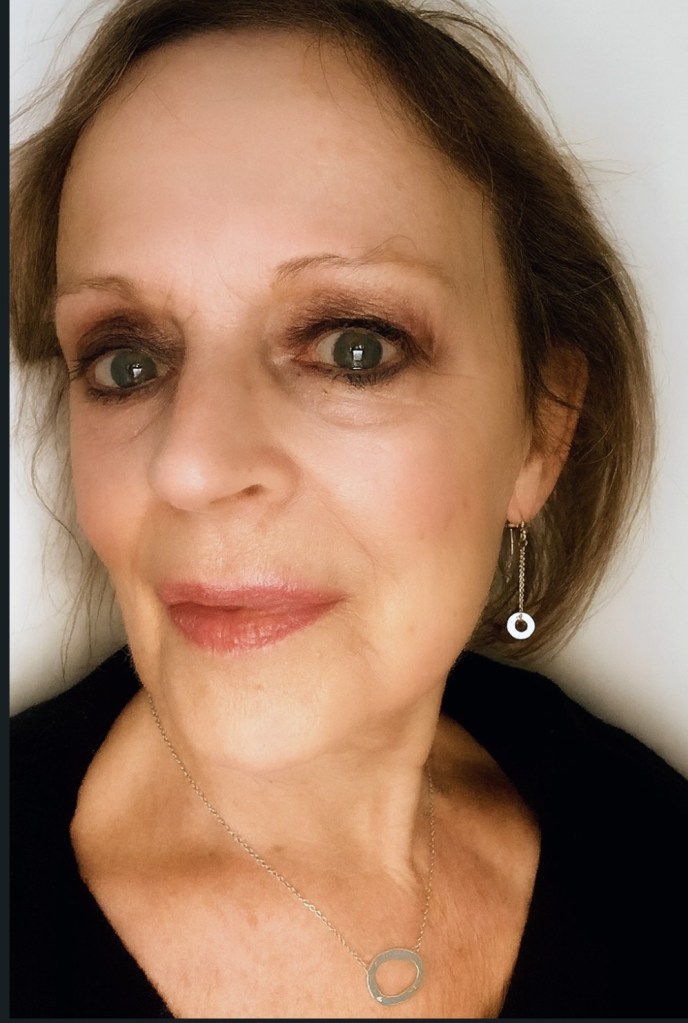
Photograph of Celia de Fréine, Princess Grace Library, by Judith Gantley used with permission.