Writers Chat 30: Sue Rose on “Scion” (Cinnamon Press: Wales, 2020)

You’re very welcome to my Writers Chat series, Sue. We’re going to explore your latest poetry collection Scion (Cinnamon Press: Wales, 2020). 

80652_original


SG: Scion is comprised of 46 poems and a glossary. As I glanced through the collection for the first time, I found myself pausing at the glossary and reading through it. It surprised me how many terms I knew and how many that were unfamiliar with me. I wondered how knowledge – or lack of – Yiddish or Hebrew would affect my reading. What I found was that my reading of the poems was not paused or interrupted by having to refer to the glossary – as with all good writing, meaning can be inferred by context. Tell me about including a glossary and how would you like readers to use it?

SR: Thanks, Shauna. I’m so glad you didn’t feel that the use of Yiddish or Hebrew words hindered your reading of the poems. I did agonise over whether to include a glossary or not for this book and considered initially just glossing a few of the more obscure terms, perhaps at the bottom of a poem. However, it’s very hard to second guess what people know – I think American readers may be more familiar with certain Yiddish or Hebrew terms than UK readers, but it’s impossible to generalise. Although in poems like Don’t Knock Me a Teakettle, I think all the terms are pretty much self-explanatory, I was concerned that the impact might be lessened in other poems by not knowing the meaning of a particular word or the importance of a Jewish custom, so I wanted to make sure that readers had the necessary tools, if they wanted to use them.  As the book came together, I found that I had used more Yiddish or Hebrew words in individual poems than I had expected or intended to and I don’t think I had realised in any self-aware way how much this vocabulary had permeated my upbringing, defined my relationship with my parents and shaped my identity. My glossary was an acknowledgement of that, while also functioning to an extent as a supplementary creative space, with the inclusion of a few less-than-objective definitions! I’d say really that the glossary is there as an aid, rather than required reading – I hope it sheds light on some of the poems but in an indirect, complementary, way, rather than being a necessary adjunct.

SG: I love the title Scion – how it refers to being both detached, living and descended from and how, in your opening title poem, we embody – literally –  the ghosts of our own mothers, anchored in our lineage. Did the title come first, or did it emerge when you put the collection together for publication?

SR: The title was quite a long time in coming, actually. Although I know poets who have their collection title very early on and work towards fleshing out its potential, I nearly always put together a book by theme and atmosphere, rather than title. In actual fact, I find titles very difficult. Before I put together this book, I had been working on a sequence of poems in response to black and white photos of trees by Lawrence Impey, which resulted in the limited edition hardback art book, Tonewood. As some of the poems in this sequence tackled themes of identity and heritage, I wanted to include them in this book. Ideally, therefore, I needed a title that could serve as an umbrella for themes relating to heritage, lineage, horticulture and Judaism! “Scion” was a gift – not only is it used to describe an offshoot in horticulture and a descendant of a family tree, it also suggests the word “Zion”.

SG: Scion really is a fine example of how writers can make the personal and specific mean something – through life movement and emotion – universally and collectively. I found myself intrigued by and particularly interested in how the collection explores the labels we give ourselves alongside those we are given; how we perceive and are perceived; and what we feel is core to our identity, or not.

If we consider “In Kaput Memoir”, a heart-wrenching piece of a beautiful life, the narrator, born in March 1929 informs us “I didn’t tell anyone I was Jewish – it never came up” and yet, generations later, our narrator is filled with identity conflict and confusion in the poem “Jew-ish.” Can you talk a little about how you managed to explore identity and belonging in a very personal context and yet have your poems speak universally about the commonality of life?

SR: I think I tend to work from the basis that all individual experience is shared experience in some way. When I write about the personal, I am completely invested in conveying the emotional truth of a situation and in crafting the poem in such a way as to make it a compelling vehicle for that truth. I think that when you do that, when you delve into your own fears, joys and sorrows in order to confront them, you allow other people to use your words and thoughts as a means of reaching their own fears, joys and sorrows, which can be similar or completely dissimilar – it doesn’t really matter. What matters is that moment of communication, of acknowledging that we are all human and that we all struggle with parts of our past, present and future.

I found it very interesting to touch on my parents’ sense of identity as Jews, their experiences as the descendants of Jewish immigrants, and how they were shaped by the political mood in the pre-war and post-war periods; how so many people were caught between assimilation and acculturation and how, in these turbulent times, when overt anti-Semitism seems to be on the rise again, it feels necessary to stand up and be counted, to lay out a stall for diversity…

“Jew-ish” and “Kaput Memoir” are like the bookends of this exploration. The former hints at my father’s Jewish past – his grandfather was a Rabbi and he was brought up in a very orthodox setting. The latter looks at my mother’s far more secular upbringing and tastes. It was important for me to have both voices in the book, as so much about my life has been influenced by my childhood, my upbringing and my conflicted relationship with religion. Scion is my attempt to see where I stand along this continuum of faith and culture – something that I think changes depending on age and where you are in life.

 SG: In this collection – at least as it appeared to me – lineage is an ongoing line, one which connects backwards as well as forward. Writer and poet Sheenagh Pugh in her review says the collection covers an “oddly reassuring timescale of centuries”.

You explore the darkness of place, almost accidental but terrifying in its relevance and how it can dictate life or death. I’m thinking here of “Tracks” whereby an everyman figure “let’s call him Rabbi Rosenstein” steps on to a train to Edgware and “can call the shots/on his passage; he can alight.”

Also I’m thinking of “Badges” where the ordinary fun of growing up is juxtaposed with and dominated by the political: “…not so far,/perhaps, from the stamps of history,/those special hats, yellow belts,/yellow taffeta, yellow stars,/the past beneath the skin.”

SR: I think there is no escaping the past, however distant it is. We are the product of a ‘slow relay’ that takes us from there to here in small increments. I do feel that lineage is a continuum and that we are related in equal measure to our distant forebears and our future descendants, as individuals and as part of humanity. Forgetting the lessons of the past and becoming complacent in the present is dangerous – as a writer, I think it is important to provide an aide-memoire so that past experiences, however painful or damaging, are not lost or squandered but become formative, preventive, both on a personal scale and on a collective one.

SG: Yes, I agree that we cannot escape the past – and I like what you say that we’re all products of a slow relay that takes us from there to here and yet we are also part of a continuum. That idea of the collective – with nature and with ourselves – and how we are interconnected.

As I read these poems, I found that grief runs through the collection, like tears collecting. I was very moved by “Growth, “Bedside”, and the particularly open and almost vulnerably wounded “Kaput Memoir.” In a way, you seem to anchor this grief in the every day. Can you talk a little bit about the order in which the poems appear and the themes that you explore in Scion. Would you consider that grief underpins the collection?

SR: I do think grief is a very present theme in this collection, as it was in my first Cinnamon Press collection From the Dark Room – many of the poems in that collection were written in response to the illness and death of my father, while quite a few of the poems in Scion were written about my mother’s dementia and death. However, I hope that grief is not the overriding emotion that readers get from the book – I would like to think of the poems handling loss and bereavement as poems of love rather than of death, because although they contain grief, they also celebrate the role those people played in our lives. As the proverb goes, “Grieve not that they are gone, rejoice rather that they lived.”  Other than that, as we’ve already touched on in this conversation, I think my main preoccupation with this book was an exploration of identity – with age, I think I’ve become more alert to the question of identity – as a woman, as someone regarded as elderly (even vulnerable in these Covid-19 afflicted times), and as a lapsed Jew with an agnostic bent. It is a questioning of my place in the world and of my relationships with others… However, although I would hesitate to call my work political, I have been worried and horrified by the growing menace of racism generally, and I cannot deny that this also influenced the mood of the book.

In terms of the ordering of the poems, as always this was a headache! I wanted the book to be an exploration of all the themes outlined above, but I also wanted it to be positive, celebratory and not mired in the past. As I mentioned, I was also keen to include some of the relevant poems from Tonewood, but not in the order that they had appeared in that book.  What I went for, and hope I achieved, was a roughly chronological meander through the past, passing the decline and death of my mother, to end with a celebration of family (as represented by Hava Nagila), the possibility of further discovery (Zion) and a recognition that we are more than the sum of our pasts.

SG: I particularly like what you say about the recognition that we are more than the sum of our pasts. In relation to the theme of grief also being about love and life, I found that you captured that circularity so perfectly.

Lastly, here are some fun questions:

  • Tea or coffee? Tea – Earl Grey with a splash of cold water or Yorkshire with a splash of milk! Or peppermint, or lemon and ginger…
  • Oh I love Earl Grey! Okay, Sea or mountains? Sea, every time.
  • City or countryside? This is hard – I’m not sure I can choose – I love both.
  • Jazz or rock? Again, I love all music (I work to Radio 3) – it depends on my mood.
  • Cats or dogs? Cats – always.

Thank you, Sue for such generous and enlightening answers.

Readers, you can purchase a signed copy of Scion direct from Sue Rose at suerosepoet@gmail.com or from Cinnamon Press

Sue Rose 2
Sue Rose, Poet

View Cinnamon Press’s virtual launch of Sue Rose’s Scion:

Two Poets Launch from Jan Fortune on Vimeo.


My interview with Ruth Danon published in The Cortland Review

I’m delighted to have my interview with American poet Ruth Danon published in Issue 83 of the wonderful The Cortland Review. 

 Thank you to Christian Gullette for accepting our interview for publication. Issue 83 has the most fantastic artwork on its cover (German Garden (Weather Report) 2019, oil on canvas by Wayne Koestenbaum), and features a myriad of poetry including Cynthia Atkins and Alison Hicks, as well as work in translation. Read the Editor’s Note here. 

WORD-HAS-IT

In our interview, Ruth and I talk about process, the subconscious, art and poetry – all in relation to her latest collection Word Has It. Ruth was very open and forthcoming in her answers to my questions which were often prompted by my emotional reaction to her powerful work.

ruth2
American Poet Ruth Danon

In the same issue of The Cortland Review, Clara Burghelea reviews R Word Has It. 

Thanks to Ruth for agreeing to the interview – you can connect with Ruth via her website. 

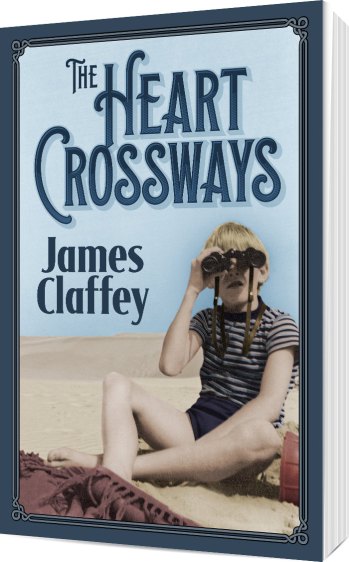
Writers Chat 23: James Claffey on “The Heart Crossways” (Thrice Publishing: USA, 2018)

James, You’re very welcome back to my Writers Chat series. The last time we chatted, in 2012, we focused on Blood a Cold Blue a collection of short fiction. This time we’re chatting about your wonderful debut novel The Heart Crossways where you bring us into an Ireland that’s hardly recognisable today.Print

So, let’s start with language. As a tool it is very much part of the narrative of the The Heart Crossways. Take the wonderful opening section:

“On rainy days the time passes slowly. Trance-like, I tongue my bedroom window and lick the condensation from the glass. My nose smushes against the cold pane. The seagulls glower below, on the roof of the coal shed…”

How much of these wonderful verbs came to you on the first few drafts or was it when you edited the novel that they emerged? I am thinking of what Sheenagh Pugh once said – that great writing is in the editing.

JC: So, interestingly enough, Thrice Fiction Magazine published three short pieces in their March, 2012 issue, and one of those pieces was “Dublin On a Wet Day,” which was remarkably close to the opening beat of the novel. Over multiple drafts the frame of the book shifted considerably, and in several drafts the opening pages were completely different and set at a far different time in Patrick’s life. The image came to me in a memory of my childhood in Rathgar, and how on rainy days my brothers and I would stand at the windows, noses pressed against the glass, cursing the weather that forced us indoors. I went over and over different variations of that opening, changing tense, point of view, at least three to four times, and ended up with a first person narrator that finally seemed to work.

SG: It really is an arresting opening. I love that throughout the novel the power of books comes through. From the old blue ledger the Old Man uses to record transgressions and the books (from Mark Twain to Tennyson) our hero, Patrick, reads to escape. Was this one of those hidden symbols that emerged when you’d finished writing the book?

JC: Yes, I think the books as symbolism emerged through the drafting process, and the ledger idea came to me from an actual ledger from my father’s business, filled with the incoming and outgoing monies for quite a few years, in fact. In several places in the ledger are crude drawings we did of dinosaurs and lions when we were probably bored on rainy days! Further, I wanted to seed Patrick’s world in the literature and drama of the time, the importance that books played in young children’s lives, long before iPhones and Fortnite. I grew up in a house filled with books, drama, literature, and as kids my brothers and I would sprawl in front of the coal fire reading comics, books, and newspaper cartoons, composting that love of books and all things literary.

SG: What beautiful memories, James. The Heart Crossways is set in an era (mid-seventies) when appearances – that you are perceived as good in the eyes of the neighbours and the church – still count for everything. As the Mam says, “All you have in this life is your good name.” Patrick – not unlike Stephen in Joyce’s Portrait of the Artist as a young man – negotiates appearances and tracks his way through his father’s alcoholism, his mother’s worries and lusting after both Cathy and Mrs Prendergast by using humour. “Seducing Mrs. Prendergast is the mission I have accepted and in silence I try to plan how this will happen. Maybe she will wear a velvet cloak and come running to me like Maria in The Sound of Music?” Patrick is both teenage and reflective in his self-analysis. Can you talk about the development of Patrick’s character?

JC: Patrick began in those early stories as a lonely boy with time on his hands and parents too consumed with keeping hearth and home together to pay him much attention. I suppose there’s a part of him that’s living in his own head, thinking and overthinking life, and there’s a part of him that’s a small boy, desperate for his parents’, particularly his father’s attention. As the book unfolds, he moves from a more simplistic worldview, to one more complex, where he gains some understanding of the complicated nature of life in a Catholic and repressed Ireland. His use of humor as a compass to guide him through the fog of his life is, in my opinion, particularly Irish, in that we use humor to decode, to defuse, and to deflect the missiles life fires at us. And the sex. As a child of the seventies, Patrick is mired in the repression of the time, cosseted by his parents, stifled by the overshadowing Catholic hierarchy that divided the schools into same sex institutions where sex was what Kavanagh called the “wink-and-elbow language of delight.”

SG: A great phrase from Kavanagh! Yes, it is a particularly Irish trait, the use of humour. Continuing with this –  there are many laugh-out-loud incidents, for example, when De Valera (the aptly named three-legged greyhound that serves as a pet) chews on the Old Man’s false teeth, or when Patrick gets a bowl cut when the Old Man thinks the barber didn’t take enough off – are any of these taken from real life situations?

JC: Well, we never had a three-legged dog, but some years ago I was in Solvang, near Santa Barbara, for breakfast and there was a American Greyhound Society event taking place in the town. One of the greyhounds was three-legged, and that stuck with me as something that might become part of a story one day. As for haircuts, most of us growing up in Dublin have had our run-ins with the local barber, and mine was with Mr. Roche, whose son was in my class in primary school. We’d tramp up to Terenure Village and enter the barber shop with its red-and-white striped pole, wait for “Skinner” Roche to cut us to shreds, and appear at school the next day to bear the brunt of the insults. Eventually, my mother started taking us to the Peter Mark Salon, a more contemporary place to get one’s “hair did,” than at the “Skinner’s.” My dad always threatened us with the scissors and bowl if we didn’t behave, and my oldest brother grew a ponytail and drew the ire of our Old Man on many occasions.

SG: Oh I remember Peter Mark Salon – still going – it was the height of sophistication! One of the themes I picked up on was that of emigration, and with it, the importance of place – of leaving and returning – creating and re-creating new identities with each new ‘start’. Although the Old Man is a difficult character in every sense of the word, and plays the role of too-little-too-late father (or, as Patrick puts it “a one-man wrecking ball”), I can’t help but think that working on the oil rigs (if that is where he goes to – there is a sense, connected to his drinking, that he frequently disappears) can’t have been easy for him. This must do with economics; the Brogan’s aren’t well-off but they have food on the table and go on holidays. Can you comment on this theme and what it might mean to you, an emigrant yourself?

JC: The Old Man spends three weeks away working the oil rigs in the North Sea at a time, and the work is gruelling and tremendously hard on his body. Patrick’s dad, of course, isn’t used to graft and his body shuts down over time, leading to physical issues that emerge in the latter stages of the novel. Everything the Brogans experience in their lives, scrimping and saving, getting groceries on credit at the local store, are moments from my own childhood. We didn’t have much in terms of financial wherewithal, but we had food, shelter, clothing and warmth, those critical components of Maslow’s hierarchy of needs. Money for the Brogans is tight, and Patrick’s mother is adept at stretching the pounds, shillings, and pence to make their home as comfortable as possible. For me, as both an immigrant and a child who grew up with not enough money to go around, the theme of economics rings loud, knowing how in my early years in America, I worked a bunch of retail jobs, barely getting by, and only really found my feet financially when I graduated from university and became a high school teacher. Even now, decades later, my greatest fear is running out of money, and I go into a panic mode if our bank account ever gets too close to the bone. I feel my parents’ desperation in those moments and return to those fraught childhood days, until I remind myself I am not my parents and I can make different decisions than they may have.

SG: While religion snakes through the story I found that the sense of loss overtook it. While Patrick imagines “God as a bitter, angry one who takes delight as he metes out punishment to ordinary sinners” he also prays for his own sorrow and torments to end- his relationship with his father. Not wanting to give any of the plot away, the ending of The Heart Crossways was fitting and poignant.

JC: The Church looms large in the story, and the strict Catholic childhood I grew up in shaped me in many ways. I walked away from the whole Mass on Sunday world and found my own way of navigating faith and belief over the years. Today, I identify as a Unitarian Universalist, cleaving to the ideas of Jefferson, Emerson and the Transcendentalists. There’s a freedom, a breath of relief when I’m at a service, with no sense of guilt or shame. As for loss, it defines my life. My father lived his life grieving for the business he lost in the 1960s, never letting it go. He reached his dying day filled with regret, loss and anger towards those he perceived did wrong by him. Being Irish, for me at least, means embracing loss, finding comfort in that feeling, knowing that one cannot be happy every day of one’s life, and that loss is as big a part of life as love, or happiness. Emotions are our weather patterns and there’s a beauty to all seasons, even those that bring devastation to our door. I know this too well, having lived through recent wildfires and debris flows in the area I’ve settled in Southern California.

SG: That’s very poetic – embracing loss. Finally, James, a little on the character of the mother and the Bird. There’s something familiar in both of these and it was lovely to return to them after meeting them briefly in your short stories. Could you talk a little about how characters can re-appear in our writing in different guises, under different circumstances and across genre?

JC: The Bird is a character I brought to life from early flash fictions I wrote about growing up in Ireland. He was a real person, a customer in my father’s pub in Moate, Co. Westmeath. The reappearance of the Bird is timely, after a project I did with Matt Potter of “Pure Slush,”—A Year in Stories. I wrote twelve stories revolving around the Bird, and one of my favorite ones appeared in Causeway/Cabhsair a few years back. In January I returned to the rich vein of material the Bird springs from, and am working on a project where I write a page a day about his life. He never was my mother’s beau, but I remember her commiserating with my father one morning as he read the obituaries in the “Irish Independent,” and announced, “The Bird is dead. The poor auld hoor.” I love how characters ebb and flow in our work, receding for years at a time, only for a re-emergence years later as the tidal patterns of our creativity shift.

SG: I think you’ve just captured the real essence of creativity – the flow and ebb of characters in tandem with our own tidal patterns of creativity. So, to finish up, James, let’s have some fun questions: 

  • Kindle or paperback? Paperback
  • Novel or short story? Novel
  • Short story or flash? Flash
  • What’s the last sentence you read? “An aliveness that lit up the world,” Michelle Elvy’s The Everrumble.
  • Great sentence! What’s the last sentence you wrote? “Oh, poor man. The center of his universe hollowed out and collapsed.”
  • Another great sentence! The best jam in the world? Our family’s business is Red Hen Cannery, and we make the most delicious Boysenberry Jam.

Thanks, James for an engaging chat. The Heart Crossways can be purchased direct from the publisher or on amazon.  Connect with James on his website. 

Below is our chat from January 2012. 

*****************

WRITERS CHAT – JANUARY 2012 – ON “BLOOD A COLD BLUE”

Blood_a_Cold_Blue_cover

Welcome to James Claffey, originally from County Westmeath but now living in Carpinteria, CA, USA with his wife, writer and artist Maureen Foley. James is a prolific writer and his most recent full-length publication is Blood a Cold Blue, a collection of short fiction.

James, tell me about the title and cover of your collection Blood a Cold Blue. Was the title one you had in mind or one that emerged once you had the collection completed and formed? Tell me also about the photograph on the collection, I know you had trouble tracking down the photographer for permissions but was that image of a bird in snow with a crumb an image that you had in mind?

Yes, I submitted the collection to several places and it was always titled Blood a Cold Blue. I chose the title from a line in one of the stories that also bore the same name (I’ve got this habit of titling my stories with fragments from the text). As for the photograph, the publisher, Press 53, sent a couple of early cover suggestions that I didn’t like at all, and then they sent the bird photograph and I loved it straight away. It turned out to have been taken by an Icelandic photographer and he was unresponsive to the publisher’s attempts to contact him. We waited a week or two and there was no word so Kevin at Press 53 said we might want to look at other options including a new title completely, so I went on the hunt for the photographer. All the usual social media avenues were fruitless and on the verge of giving in, I did a last Google search and found an old LiveJournal blog he’d had years ago. It had an Icelandic email address and I sent a message asking him to contact Press 53 about the image and the next day he got in touch with Kevin and agreed to let us use the photograph.

Great to hear it all worked out! You’ve stated that “Skull of a Sheep” is your favourite story in the collection. Can you expand on the idea of having a favourite story?

“Skull of a Sheep” is a fictionalized version of a family vacation in Mayo when I was a kid, and the unpunctuated stream-of-consciousness mirrors the breathlessness of the drive down the country and back again, I found the story stirred my sense of hiraeth, that Welsh word that suggests nostalgia for home, but with some sense of longing for those departed. My father passed away in 2000 and the piece was written right before my mentor and friend, Jeanne Leiby, died in a car crash in Louisiana, so there’s a sense of this story having more weight because of these events. Also, the piece ran in the New Orleans Review, and that is a publication that means a great deal to me, having spent three years in the South, learning the ropes of what being a writer means.

There’s a great sense of compassion, compression and a long breath of emotion in that piece. You capture so much in it – all that lies beneath the landscape and landmarks.

I’d like to hear about how you get into character. Do you have a favourite character in the collection? If not, why not, if so, whom?

I do. The Bird, a character in a couple of stories I’ve written, is close to home for me. My father, if I recall correctly, who used to run a pub/grocery in the Midlands, had a customer who was called by the same name, The Bird, so I found myself putting myself in this man’s head and imagining what it would have been like to wander the streets and fields of my old hometown. I’m currently working on a year of stories for Pure Slush, an Australian publication edited by Matt Potter, with this same character. I find great latitude in taking on the task of creating a life from so few details.

That’s interesting to hear, James, as The Bird is one of the characters that stood out for me. Now tell me about settings. You have some wonderful ones that seep through via the use of names, the turn of phrase (for example “Fragments of the Bird”), from the absurd to the very real and named (for example “Fryday, June 17th, in the year 1681” or “Hurried Departure”). Do the settings come first, or come to you as you write? Or are they sometimes somewhat peripheral?

Thank you. Place is incredibly important to me, and I tend to write with almost reverence about certain locations—New Mexico, Ireland, Louisiana, California. “Fryday, June 17th…” came out of an old print of an Elephant’s skeleton and the story of its death, and I reimagined the actual events of the disaster, which actually took place in Dublin back in the 15th Century. As for “Hurried Departure,” it’s almost a fantastical world slightly based on the area surrounding our house in the avocado trees. Detail, even as liminal as the light over a stand of trees, is terrifically important to give a piece of writing an anchor in the world and as I’ve gotten less naïve as a writer, I find myself noticing the small details of objects and places much more than before.

I think, for me, anyhow, that’s what is so great about this collection. The myriad of different experiences in different settings that you (re)imagine/capture.

On writing, if you’re willing to reveal, what are you working on now?

Well, the year in stories project at Pure Slush, for one. Also, I’m working on an untitled novel with Thrice Publishing, and that’s about a small boy growing up in Dublin with a father who works away on the oil rigs in the North Sea and a mother who struggles at home to raise her son and deal with her own aging mother who lives with them. I’ve also got a novella project I’m collaborating on with another wonderful writer, and I’m very excited about that opportunity. On top of all that I’ve returned to teaching high school English, so I’m having to really be creative in terms of finding time to write, what with my wife and two kids to devote time to, and a dog that needs walking!

That’s a pretty full and creative life!  Finally, James, what three books are on your bedside table and what three books are on your ‘to read’ list.

Varieties of Disturbance by Lydia Davis, Bound in Blue, by Meg Tuite, and Gears by Alex Pruteanu, are on my bedside table, and to read are The Goldfinch by Donna Tartt, Transatlantic by Colm Toibin, and A Place to Stand by Jimmy Santiago Baca (a re-read).

Thanks, James, for such insightful and fascinating answers.You can find out more about James and his writing on his website and blog: www.jamesclaffey.com