

We were delighted and humbled by the response of early readers to the anthology. Some of these responses are printed in part in the published book. Below are the full texts of two of the responses.
We are grateful to Catherine Dunne (author of A Good Enough Mother) for her considered and carefully crafted response:
In Fire, a tribute to ‘the sacred feminine, Brigid, and the heritage of Kildare’, editors Shauna Gilligan and Niamh Boyce have together created a rich and colourful tapestry of words and images from around the globe.
They received in excess of 500 submissions for Fire, many of them collaborations. Collaborative work, the editors believe, ‘opens up new spaces and new ways of seeing and knowing’. Many of those ‘new ways’ are represented in this varied and vibrant collection.
Images abound here: from Boyce’s own Goddess to McKenna’s Interwoven, to Ramsey’s Brigid’s Mantle and Scully’s Crios.
Several of the poems trace the changes in Irish society, explored through the lived experience of its women: from all the ‘vanished Brigids’ of the past, who ‘languished in cottages’ to the struggling Brigids of today. A modern Brigid who has to ‘stretch her children’s allowance/ to cover the table’, as the Brigid of Kildare once spread her cloak to cover the land.
The ancient power of land and nature is everywhere, often symbolised by the presence of holy wells. Magic and mythology intersect in tales of conception and motherhood. The protective role of Brigid is acknowledged throughout, the power ‘to heal all ills’ that resides in her, along with her ability to free from the ‘body’s tyranny’ those who long to be mothers. Stitched into tales of memory and identity are themes of rage and loss, of death and renewal.
By turns reflective and enraged, tender and playful, the compelling contributions in this volume illuminate, each in its own way, the sacred feminine. Each in its own way pays vivid tribute to the Brigid of myth, memory and imagination.
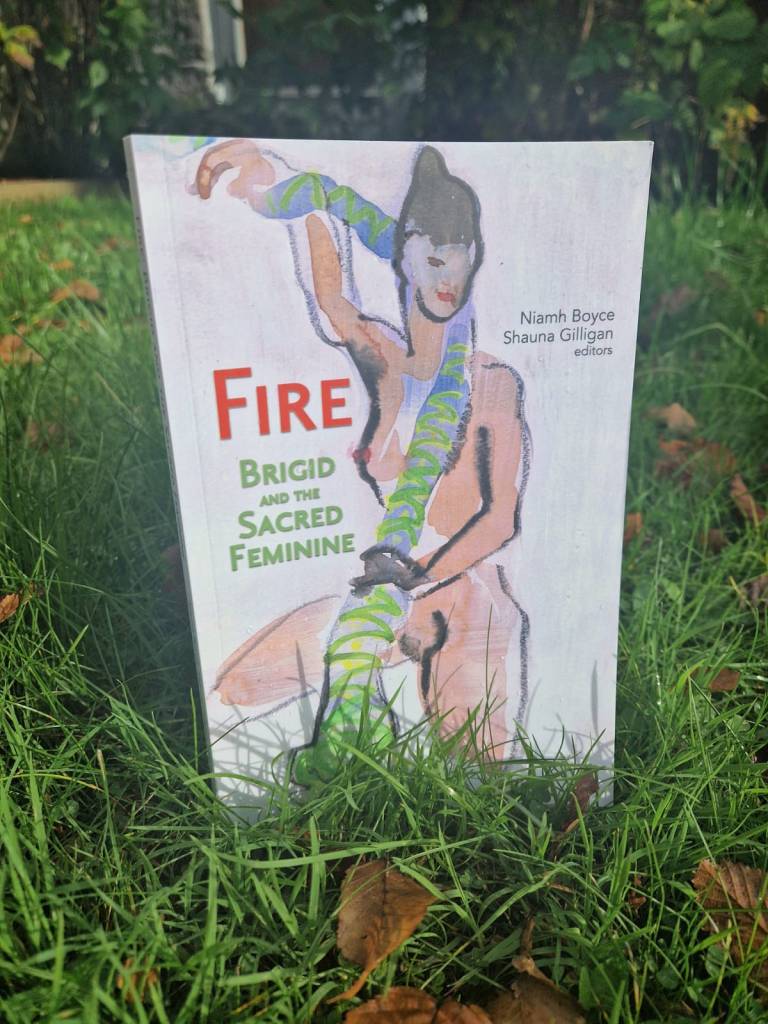
Dr Niamh Wycherley, Medieval Historian, Department of Early Irish, Maynooth University approaches Fire: Brigid and The Sacred Feminine from the perspective of an historian. For her response we are most grateful:
Some of the earliest surviving written literature in Ireland, from fourteen centuries ago, was inspired by Brigid, saint and founder of Kildare. One of these texts, that written by the cleric Cogitosus, was so accomplished and well-crafted that it was carried beyond Ireland and copied, read and listened to in great numbers on the Continent. Fire is a book which continues this ancient tradition of honouring this feminine figure, who has become a repository for the experiences, struggles, strengths, and skills of women for many generations. It was a genuinely emotional experience for me to read how Brigid, who I understand as a flesh and blood historical individual, continues to stimulate such talent and creativity. This anthology is a deeply personal, evocative and at times blissfully painful testimony to Brigid’s enduring legacy. As a historian, my task is often to provide stonily neutral commentary on a past full of dates, facts and figures. This carefully curated collection of visual art and writing demonstrates how alive and dynamic our supposedly ancient history remains today.
Writing, by its nature, is a solitary occupation but when you are co-editing a diverse and expansive collection of work with a fellow writer-and-artist, the task takes on a different hue. You always have fresh eyes – that of the other – and by way of a meeting, an email or a spoken conversation you have doubts smoothed and joy shared. It was great working with Niamh Boyce on Fire: Brigid and The Sacred Feminine. Niamh is currently finishing up her residency in the Centre Cultural Irlandais, Paris and will be reading from her novel Her Kind as part of the Samhain Events at the Centre. If you’re in Paris be sure to go along – see @centreculturelirlandais Brava!
FIRE: Brigid and the Sacred Feminine can be purchased from Seanchaí Books in Kildare Town, KENNYS in Ireland (free postage in Ireland) and BLACKWELLS (free worldwide postage).
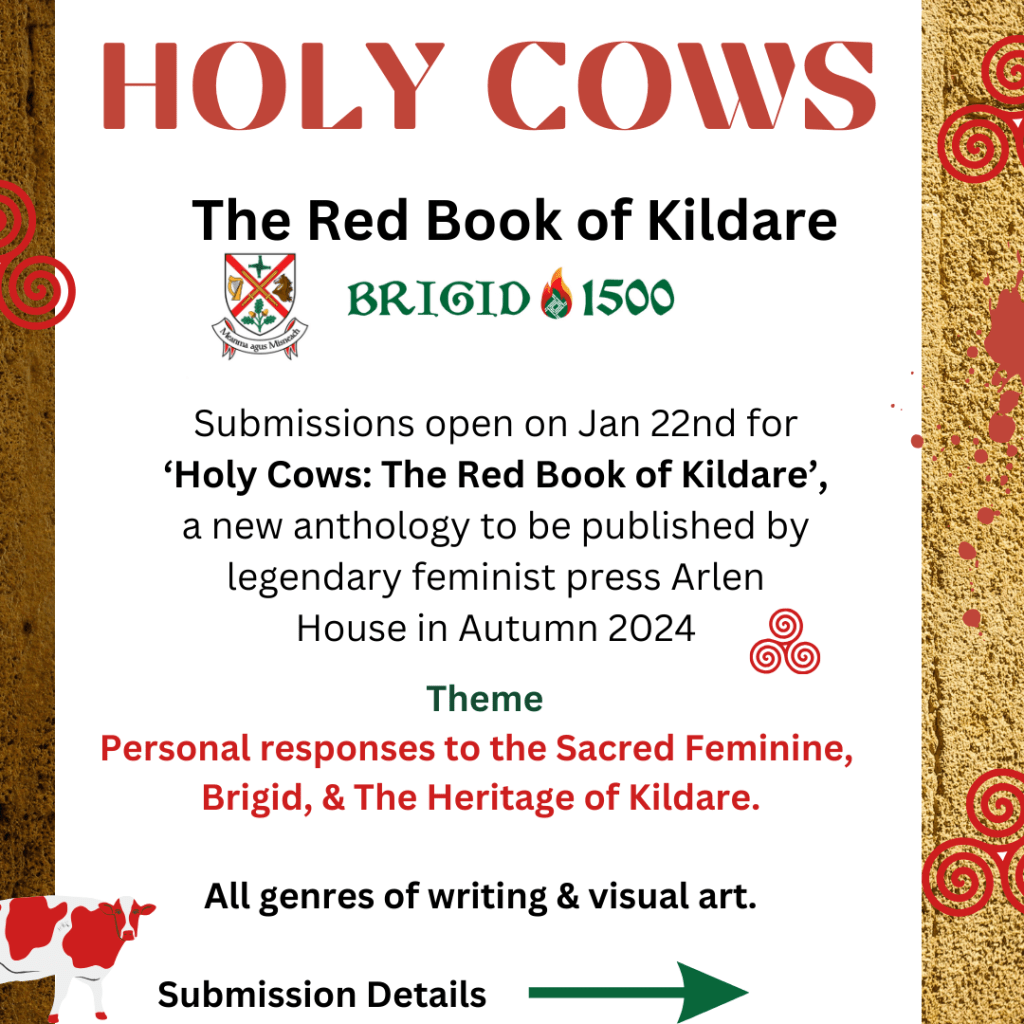
THANK YOU again to funders, Brigid 1500 and Kildare County Council



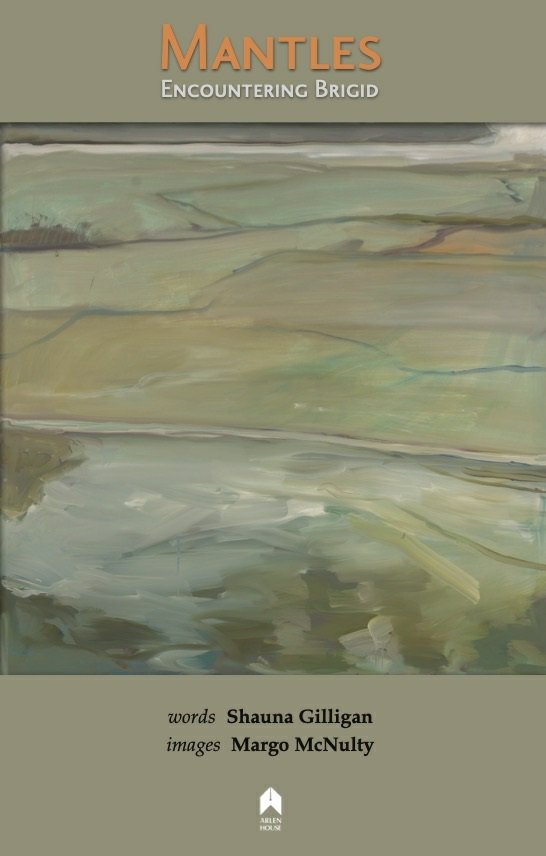
 Shauna Gilligan Writer