Writers Chat 42: Paul Perry on “The Garden” (New Island: Dublin, 2021)

Paul, You’re very welcome to my Writers Chat series. We’re going to chat about The Garden  (New Island: Dublin, 2021), your new novel which, in the words of Mia Gallagher is “vividly compelling.” I’d agree with Mia – and the critical praise that The Garden is receiving – it is a novel that compels you to keep reading and at the same time makes you pause and contemplate the land around us and how we treat it.  

SG: Can you tell us a little about the origins of the setting and the place of The Garden? In interviews you’ve referred to your own experience of working in Florida some years ago but I wonder if recent climate change and world events had any influence on the narrative at all?

PP: I lived in the states in the 1990s, and in Florida for 3 of those years. I was captivated by the place; its tropical beauty, the palm trees, the flowers, the rich and diverse landscape.  And the diversity of the people too – from Cuba, South and Central America, and all over the US and the world. And of course, the never-ending sunshine. I was really stimulated by the place – it felt almost hyper-real to me; and the vibrancy and the literature too from the Caribbean impressed me. You know it’s such a contrast to the dark and the rain-sodden streets I grew up on in Dublin. Florida to me felt like life on the edge, in many different, wonderful, and dangerous ways. It’s an exciting place. I guess that all came together in the novel, The Garden; and as you say the environmental crises that the everglades in particular face was in mind; that this place, a sanctuary for birds, reptiles, and endangered species was under threat seemed to be a suitable arena for the human drama that enfolds in the novel.

SG: To this reader it really felt like the perfect arena for the drama in The Garden. The novel moves at a pace but through the Irish narrator Swallow, also provides introspection. What struck me most about the novel is the atmosphere – at once foreboding and idyllic – that you create and how we’re brought into this. For example, when we’re with Swallow as he drinks his bitter coffee in the morning, we really feel we’re there with him:

Waking the senses. First the sounds of birds and men shuffling. The smell of earth, and the greenness starting to take back, or the swamp beneath us trying to reclaim what belonged to it – without human interference, all elemental.  

It seems you have taken the advice of your creative writing mentor Lester Goran and gone for (at least) one beautiful phrase per page. Can you speak a little about your use of language and description?

PP: I’m a writer – in prose – who does not like long winded description or exposition. I don’t like novels that seem too long, and are full of filler, or writers who spell out what is at stake or say, this is the plot. I aim for a purposeful narrative with pace, and menace that allows for the left-field, and the meaningful digressionary moment or scene; so many novels I read have the most artificial dialogue like the two characters talking with one another are actually listening to each other. That’s not my experience. I like also the short novel. And I like writing to get to the point without any puff. That being said – I also aspire to balances, cadenced sentence where the rhythm of the language is honoured, and there is a control of tone.  These things are very important to me as a writer and a reader. In terms of description, I like Mark Doty’s definition of description as being encoded desire. My background in poetry means that I rely on motif, image, and metaphor in my prose, or that I go to them at least – in subliminal, subtextual fashion, so that you are creating grooves, and patterns in the reader’s mind, so that one phrase – however inconsequentially sounding can detonate something impactful in the reader’s mind.

SG: I love how you put that, creating grooves and patterns. Mark Doty has some really interesting things to say about description. I love his book The Art of Description.

The Garden could be described as a fable, and the journey the characters are on echoes the journey of ‘the ghost’ the orchid at the centre of this tale; they are precious, illegal, homeless and all struggle with identity – many of them, including Swallow, try to find themselves in the power the Garden seems to offer, escaping from memories. As he says swinging in the hammock, “I was seeking answers but all I had was starlight.”  Others, such as the visually blind (but all seeing) Harper, and his marking of the map (“circling with the pencil, spiralling inwards”) know the real perils. Can you talk about the fable and, at times, the moral element to the narrative?

PP: It’s not something I planned or set out to do; the fable like quality of the novel emerged as I was writing; and in terms of a moral element, yes one could read the novel as a warning and such, but if you look at the characters’ lives and the messy relationships between them, I think it’s fair to say that the moral code of the novel is complex. If someone wants to read a moral into the novel, I say, be my guest; but there’s probably different and contradictory ways to read the novel; and the moral code of its characters is complicated. Certainly, I think when you write a novel, you want it to be more than just a yarn. For a novel to last or linger in the memory, or for it provoke questions in the reader’s mind, I think there does have to a kind of sub-soil of searching about all sorts of moral questions. So writing it, I thought about Camus – and his stranger – justice divine and civil, and I thought again about Gatsby and what he devoted his life to, and the small scenes where a whole moral world was revealed. 

SG: I’m nodding at this – the connections with Camus and Fitzgerald – how “small” scenes reveal a whole moral and complex world.

The men who live in the barracks in the Garden co-exist with brotherly love infused with marine/army rules. This comes from both Swallow’s influence as an ex-marine as Blanchard’s right-hand man and from the men’s invisible place in the official world. It can be seen in the friendship – and rivalry – between Swallow and Romeo who appears with a “muted swagger” and “looked as if he didn’t know how to shake the shadow of a malaise”. Yet it’s also evident in those outside of the Garden, looking for financial gain from those inside (drug money, the ghost orchid). Their names – such as Black Fox, Catfish – tie them  to ancestry, land and deeds.

Did the theme of male friendship and rivalry emerge as story developed or was this a theme that you began with?

PP: Well, the whole writing of the novel was a exploration in the dark – that’s what my subconscious came up with after I had written in a kind of fever dream; so yes, male friendship and rivalry is important to me, but I did not set out to write about those themes; I followed the story, thoughts and feelings of Swallow; it’s his story after all, but male friendship and rivalry does, as it happens, interest me; in a way, how could it not; shifting allegiances, friendship, brotherly love all of these things as a boy, and a man I have grappled with, embraced, and otherwise, but again that’s not to say the novel is a didactic playground to explore in a scientific way; human impulses, male or otherwise, are full of the irrational, the impulsive, and the passionate. And the novels is such an elastic form it allows you to unpack these things, but that’s got nothing to do with the writing of a story; the story is what matters, not its themes when one comes to write. As ee cummings wrote, ‘since feeling is first, who pays any attention to the syntax of things.’ You see, I even contradict myself. 

SG: How fascinating to learn that the whole writing of the novel was an exploration in the dark!

Moving on to another theme that interested me as I read and, like masculinity, appeared like a shiny thread. Swallow is aware of his privilege as a white male and often muses about this – including questioning Meribel about how she stays with a racist like Blanchard. She tells him that he (Blanchard) thinks her “white”. Swallow’s privilege is also seen through Lola’s plight as a precarious worker/lover/female. Towards the end of The Garden Swallow realises “The desperate lengths people will go to for beauty”.

These parallel threads seemed very current and I wondered, given that in many ways The Garden is timeless, if race and gender formed part of the wider commentary on the structures of society and power, or if they emerged through the characterisation? 

PP: Again, I wasn’t writing a novel to make a wider commentary on anything. There are better ways to do that, I think. Critics, and reviewers can put these kind of labels on the book, and so be it, but I’d like to get a way from the kind of reading of the novel, this novel, as a commentary, or vehicle for anything other than what it in itself – a story. If a writer sets out with a message it will damage the writing and the book. So, I think it would almost be disingenuous of me to say yes, this novel is a commentary on whatever. It is, of course, or could be seen as such, but I also think the novel is so various in contemporary letters and allows a writer so much freedom – that I welcome different readings of the novel, but I am hesitant to even suggest what themes readers should look for; race and gender are centrally central to how the story unfolds, but I also think of course they are – when Swallow looks around him this is what he sees. And it’s a brutally unequal, unfair world he lives in.

SG: Isn’t it wonderful how such depth of themes emerge when you are faithful to the characters and the story?

Nature as a character is the main driver of story and back story. I am thinking here of Swallow’s back story about his brother and of Lola’s brother who drowned. It feels that the more the characters try to get back what was taken from them (identity, agency, power), the more they fight for and with each other (for the illusion of profit and gain), and the more natural disasters such as dreadful hurricanes happen. As nature is disrupted, people become more vicious. Nature, like God, is “wrathful”.

Three events spring to mind as examples of the beauty of connection turning into the ugliness of pain – the beach scene with Romeo, one of the visits to the swap where a gator makes itself known and one of the final scenes involving Swallow and another man’s ears.

“Each season,” Swallow comments, “I wondered what it was we were doing…Sometimes I wondered whose dream I was in.” Later he says “Part of me thought I was going out of my mind, as if we were existing on some foreign orb, living out the game-time of another species, playing our roles badly, with violent and careless glee.”

It seems as if the knowledge of how land and people are all connected is almost within reach of Swallow’s consciousness but then it slips away. In the swamp he says, Something in my physical being knew this was a trespass of sorts.”

What are your thoughts on this?  

PP: I think Swallow is struggling with the reality which has manifested itself about him; he’s wondering like a lot of people how he got to where he’s at. He’s displaced, confused, and paralysed to a certain extent. I like your reading of the novel above, and I agree with it; I’ve dramatised those tensions. [Thank you!] I think the novel is interested in that notion of trespass – literal and otherwise; what transgression has been committed, and what of it. Does it keep the reader wanting to know what happens next. Much of my efforts in writing are in the compositional domain however; it’s like make the thing first, and then see what it means, if it means anything. It goes back to the writer writing without full knowledge; the writing is on a journey too, if they knew what message and themes they wanted to explore exactly, the game would be up. Better to work in ignorance, or partial ignorance; I feel now that the book is published that my guess is a good as yours. There’s a notion in lit crit of Intentional fallacy, a term used to describe the problem inherent in trying to judge a work of art by assuming the intent or purpose of the artist who created it. I kind of agree with this.

SG: Oh we could get into a whole Writers Chat about intentionality and purpose – and we could also talk about the death of the author (Barthes) and what the reader brings/re-writes.

I totally agree with what you say about the writer writing – make the thing first, then see what you’ve made. In a way, the writers job is not to make the meaning, it’s to allow the meaning to emerge.

On a personal note, I have to say I really connected with Swallow as both a character and narrator. Besides wanting to have a whole discussion on his name and back story, I’d love to see what happens next to the Garden. Will there be a follow on book or do you think you’ll return to the character of Swallow in another form or genre?

PP: I’m working on a new novel – but I’m loathe to get into it; I’m a little superstitious about talking or writing about something I’m writing; rather work in silence, in order not to break the spell.

SG: I totally understand that – I’m sure what emerges will emerge – and be as intriguing and magical as The Garden.

We’ll end this Writers Chat, Paul, with some short questions:

  • Mountains or beach? Beach
  • Swamp or bog? Swamp
  • Coffee or tea? Both
  • What flowers are in your garden now (if you have one!)? I’m working on some bamboo
  • Oh! Bamboo! I can hear it in the wind! Lastly, what are you reading now? Damon Galgut’s The Promise

SG: Thank you for your deep engagement with our Writers Chat, Paul and I wish you continued success with The Garden.

Photograph of Paul Perry (Courtesy of the author)

Paul Perry is an award-winning poet and novelist. He has published several collections of poetry, most recently Blindsight (above / ground press, 2020). He also co-authored four international bestselling novels as Karen Perry, including The Innocent Sleep with Penguin Random House. He directs the Creative Writing Programme at University College Dublin. The Garden is his debut novel as Paul Perry.

Thanks to New Island and Peter O’Connell Media for providing an advance copy of The Garden.

Reading, Reading, Reading

Photograph of two books: In The Dark by Anamaría Crowe Serrano and The Garden by Paul Perry
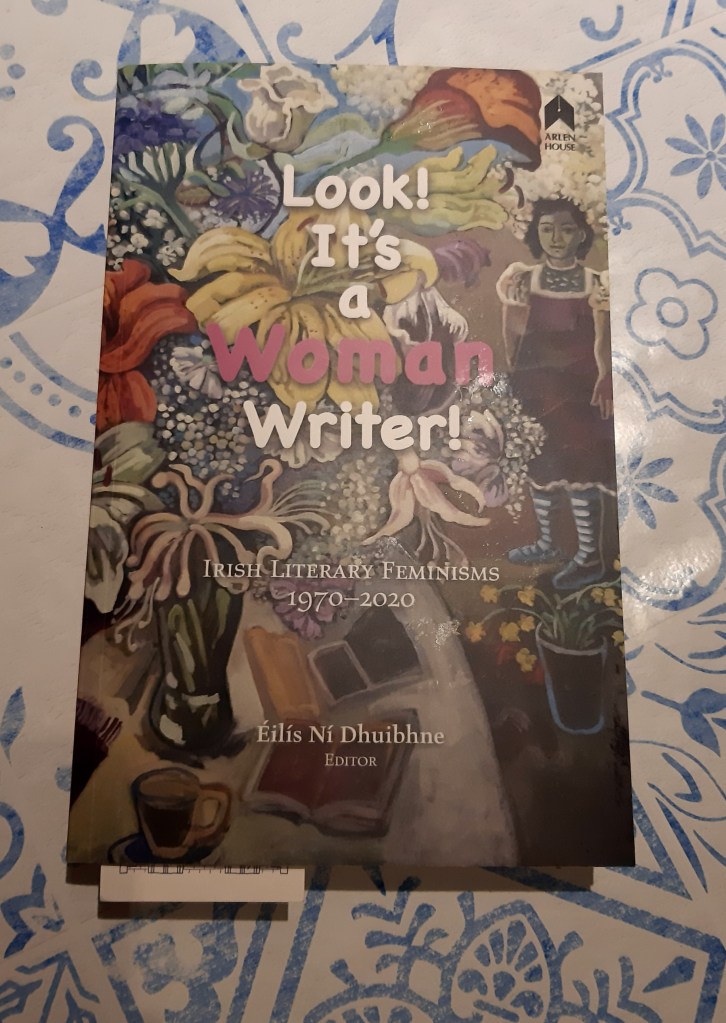
Photograph of the book Look It’s A Woman Writer! Irish Literary Feminisms 1970 – 2020
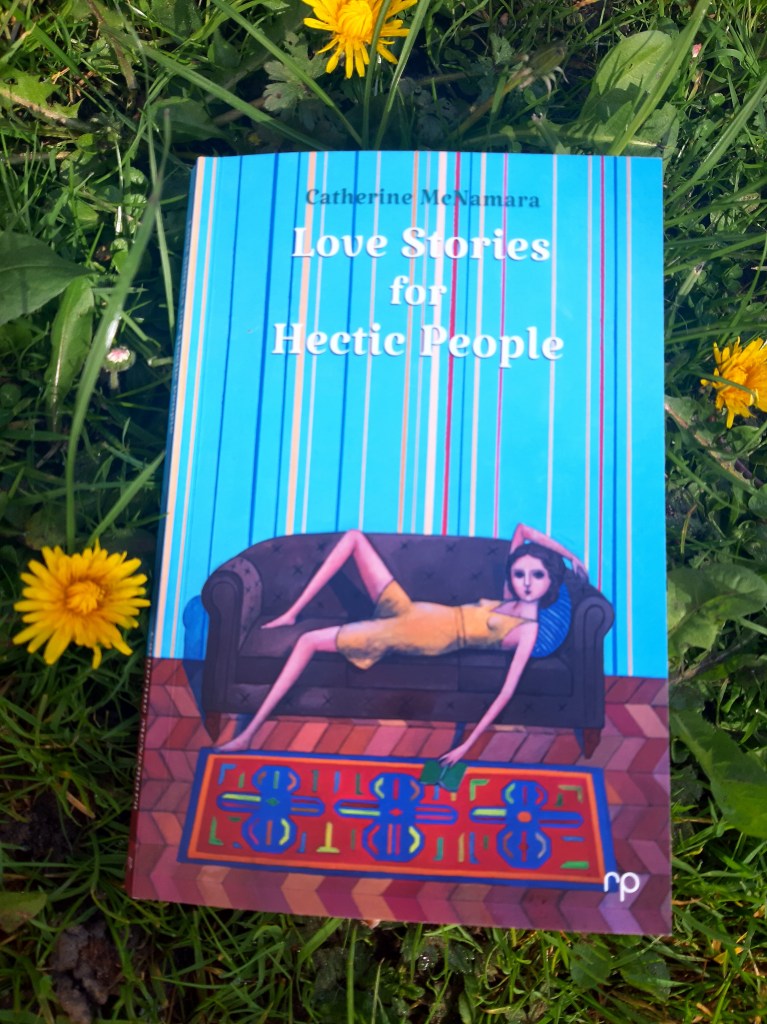
Photograph of the book Love Stories for Hectic People by Catherine McNamara

Yes! I’ve been readings LOADS and have some very exciting new Writers Chats coming up soon – from the page-turning The Garden to the wonderfully written In The Dark to the exquisite collectively created and produced Seed and the intriguing Love Stories for Hectic People.

If you haven’t been to your local bookshop or library, now is the time to go to catch up on new readings, new ideas and you’re in for layers of treats and generous stories of writing lives with the latest from Arlen House edited by Éilís Ní Dhuibhne Look! It’s a Woman Writer!

Go forth, and read, read, read.

Writers Chat 37: Nuala O’Connor on “Nora” (New Island: Dublin, 2021)

Nuala, You’re very welcome back to my Writers Chat series. This time we’re here to chat about Nora, your fifth novel, lauded by Edna O’Brien as “a lively and loving paean to the indomitable Nora Barnacle”. I read the US version published by Harper Perennial and the Ireland/UK publication with New Island was published April 10th.

Photograph of cover of NORA by Nuala O’Connor

SG: Much has been written about your lyrical, sensual prose and Nora is filled with it from when Jim and Nora leave Dublin on October 8, 1904: (“The air is salt-sweet and cool, the portholes beam light into the dusk”) to the letters and the food, which we’ll return to. But let’s start with “the indomitable Nora Barnacle” – by the end of the book I really felt I’d lived through Nora’s life with her, I felt like I knew her, I cared for her. You have managed to re-create Nora who feels real and complicated, a woman who knows her own mind and whose strength lies in her patience and openness to the human condition. Tell me about how you got to know Nora through your research.

NOC: I knew Nora Barnacle as Joyce’s strong, loyal, loving wife and muse but I was curious about how she felt about her life. Bio-fiction is about creating an interior world for people and I disliked the smudging of Nora by history. So I dug out my teenage copy of Brenda Maddox’s fantastic biography of Nora and was, once again, enthralled by her earthy dynamism, and by their love story. So I did what I often do when my interest is piqued, I wrote a short story about Nora. My story – ‘Gooseen’ – records their meeting in Dublin and their first date on 16th June 1904 – now immortalised as Bloomsday – and their flit to Europe. The story did well – it won a prize and was published in Granta – but I found I didn’t want that to be the end of my communion with Nora, I wanted to stay in her company for longer, and so I wrote on and on and on.

My aim was to illustrate that the so-called ordinary woman by Joyce’s side is, in fact, extraordinary. Nora felt, thought, lived and contributed hugely to their life, just as Joyce did. Nora helped Joyce stay grounded as she was pragmatic, optimistic, earthy, big-hearted, good humoured, forthright, and resilient – she was just what Joyce needed as a shy, sensitive, kind, loving, nervy, accusatory, opinionated intellectual. Nora flowed with Joyce, was water to his fire. They were both, like all of us, trying their best, and were under the influence of their upbringing, the prevailing mores and politics of their era, and their own personal quirks and passions – Joyce drank, he was unfaithful, he asked Nora to go with other men. Neither was a paragon – the same way we’re not – and my bio-fiction aims to show that.

SG: You have had glowing reviews and The New York Times declared that Nora is “entirely convincing in her raw sensuality, her stubborn determination, her powerful sense of grievance and her inability to stop loving a deeply erratic, wildly manipulative yet enormously talented man.

Nora is essentially about the relationship between her and James/Jim Joyce. On the one hand they are well matched physically and erotically, and on the other, Nora is always left to keep the family together, taking in dirty laundry (“I scrub away other people’s sweat, blood, piss, cack and grime with scalding, soapy water”) when they are short of money or when Joyce drinks his wages. How did you maintain that balance between the actual hardship of life – moving frequently, living through two World wars, worries about their young and then adult children – and depicting the deep physical and emotional love between Nora and Jim?

NOC: I don’t think Edwardian era Irish women expected an easy life – Nora had seen her mother, Annie Barnacle, battle through with eight kids and a drinking husband, and eventually separate from Mr Barnacle. If Nora had stayed in Galway, she most likely would have married and settled into a life like her mother’s: mass-going, having babies (lots of them), living within a State that was increasingly wedded to the church, that ruled people into submission; she would’ve been scarred by Civil War and the exodus of men to WW1 etc. By escaping to Europe, Nora was released from a strict, rigid, low expectation path. Fintan O’Toole believes Nora liberated Joyce from shame and snobbery; she certainly uplifted him by being strongminded, flexible, loyal, and direct. Nora’s head wasn’t bothered the way Joyce’s was – she was naturally optimistic, loving, and cheerful, so she could drag them both through a lot of their troubles. Her bravery hooked me into her story; her defiance of patriarchal rules, her bending away from State and church morals.

I like mavericks, women who push against societal norms. So Nora’s courage and her willingness to love the man she aligned herself with, despite his many faults, speaks well of her. She accepted, to an extent, much of what was unruly about Jim – his sensitivity, his need to drink, his discomfort with other people – because she was better able to negotiate all of that. Her love protected him and buoyed him up. In turn, his admiration of her strength, their bedroom bond, his love of her physicality and her stories, and his generosity in adorning her with furs, and tweed and jewellery, pleased them both.

SG: And all of that comes through, so very clearly, in NORA. Continuing with their relationship, you used the real Joyce letters (which you wrote about in The Paris Review ) as a basis to frame the many absences from which both Jim and Nora suffer equally. I loved the letters and how their passion contrasted greatly with the reality of ever-changing homes, circles of friends and cities. The constant is their relationship and, from your depiction, Nora is quite the scribe and knows to use words and food to keep Jim on her side! One letter opens with: “My lonely bed is tortured with desire for you, my mind leaps to disturbed places, I see you over me posed and preening, chaste, grotesque, languid…” Can you talk a little about how their use of letters opened the door for your Nora to be as much the erotic voice as Joyce (as we know and expect him to be!), as much present in her body as he is?

NOC: Joyce and Nora were in touch with their sensuality: they met as two young people who were proud of their bodies, and unafraid of sharing themselves wholly with each other. Joyce frequented prostitutes as a teenager and Nora had some experience of young men by the time she met Jim; she had walked out with at least three men that she told him about. And both Joyce and Nora enjoyed the erotic writings of Leopold Ritter von Sacher-Masoch, for whom masochism was named.

I had to rewrite Joyce’s letters as they are still in copyright – they were first published in 1975. And Nora’s half of the correspondence was not available, missing – perhaps destroyed – and I had to fill those gaps with imagined letters of my own. So I re-wrote Joyce’s letters by mimicking his real letters as closely as I could. I wrote Nora’s part of the correspondence using Joyce’s letters as a call-and-response guide. When he praised her for using certain stimulating phrases and words, I included them in her letters to him. Joyce planted the seed for the erotic letters – suggesting to Nora that there was a certain type of letter he would love to have from her while he was in Dublin and she was at home in Trieste – and she was well able to oblige.

SG: Yes, and even though she is a sensuous woman – shown though your sensory writing, the fabrics of clothes, furniture, the preparation of and eating of food – Nora is also practical. When Hitler annexes Austria in March, she tells us “I could fall apart thinking about it all – war, Lucy, Georgie – or I can get on with it. I decide to choose the latter” – which shows the strong woman she is – but at the same time, Jim is, she proclaims, “my whole life now…we have to get on with things as best we can, as a pair.” Despite his unreliability he does give her strength.

Real life events such as wars, the Rising, the Civil War in Ireland punctuate their lives and I thought you convincingly depicted some of the parallel difficulties – even for Joyce! – of the world of writing and publishing. We sometimes forget – when reading Ulysses or Dubliners, for example – that Joyce wrote from a particular place, in a specific era and, as you portray, often with serious health issues, notably his eyes. But in a way he could fall apart because Nora always understands him even when he is absent because “he needs to swallow stories many times in order to construct better ones himself”.

Thinking of the broader themes of the book I wondered if it was because their notion of home and nationhood was always changing, as well as the strength of their relationship and the financial and creative supports such as Weaver, that Joyce was able to continue writing, and write so much from the body?

NOC: They were extremely nomadic because Joyce liked novelty, but they remained loyally Irish, even if they grumbled about Ireland and Irishness. Joyce’s fiction is a prolonged love letter to Ireland. Nora liked newness too, but she understood its damage, also, and longed for a settle spot. Joyce needed tumult in order to write; in his biographer’s words, Joyce ‘throve on flurry’. Naturally, he needed stretches of quiet too, to write. As a couple, and later as a family of four, the Joyces moved house over and over, following a pattern set in Joyce’s own childhood, when his father led the family from their lodgings at night to avoid bailiffs. Uprooting home and family every few months, or years, is a sure way to have new writing fodder; in Paris alone they lived at nineteen different addresses.

You have to wonder what Joyce’s monomania about writing, as Brenda Maddox described it, cost the family as a whole. Maybe it was unfair on Nora, Giorgio and Lucia to be constantly relocated because Joyce needed discomfort in order to write, a sort of constant unsettledness, that settled him into the creative work.

SG: NORA had me wondering about that -his discomfort and creativity, the family being constantly uprooted. As well as passion there is much humour in the book. Sam Beckett, in particular, had me laughing. One of my favourite scenes was Bloomsday in Paris in 1929 where they go on an excursion and the “normally rather serene and usually very mannerly” Beckett and McGreevy sing “endless old songs like a pair of escaped lunatics.” It doesn’t help, of course, that Lucia is madly in love with Beckett, or that Jim “drinks wine until it nearly pours out of his eyes.” Once again, Nora is the rock of sense, the protector, with a wonderfully dry sense of humour. As through the novel I felt I was with them! Do you think that in narrating their lives through Nora’s viewpoint you gained greater insight and humour?

NOC: They were a humorous pair; both of them loved jokes, fun, wordplay, odd language, and silly songs, and Joyce’s letters to family and friends are full of mischief. He used humour in his work but also personally, to create levity in what were really quite difficult years to be alive, Ireland and Europe being war-torn and so on; their various health issues; the publishing challenges he faced.

The 1929 Bloomsday was celebrated that way – Joyce was feeling narky and he was envious of the youthful freedoms of Beckett and McGreevy, because they could make a show of themselves, whereas he, as famous writer and family man, was required to behave. I haven’t seen much discussion about Joyce’s drinking and the very real problems it both masked and caused. That Bloomsday Nora was fed up with it, as she must have been quite often. But she was naturally light-of-outlook and, clearly, she had a well of forgiveness to dip into too, so she was able to keep her heart out and get on with life.

SG: For our final question Nuala, I’d like to concentrate on the beautiful portrait you paint of the relationships between Nora and her children, Giorgio and Lucia. I was particularly taken with the portrait of Lucia from childhood to adulthood, Lucia who, polar opposite to Nora herself, “neither knows who she is nor cares to find out”.

On one of Lucia’s many hospitalisations as a result of her violent tendencies, both Jim and Giorgio point to the, at times, difficult relationship between Nora and Lucia, insisting that Nora not visit her in case she might be agitated. I felt you touched a little on the ‘mother blaming’ here. Nora wonders “if it’s the rearing we gave …or if it’s something that was already in her when she grew inside me. We’re born with a soul, maybe we’re born with all our faults, too?” (Later, after so many institutions and doctors and years of worry, Lucia is diagnosed with schizophrenia.) Can you talk a little about this mother-daughter relationship?

NOC: In NORA, I have great sympathy for the Joyces as parents of a child with mental illness. I have particular empathy with Nora as mother to Lucia, whereas others have demonised Nora, for her apparent lack of care about Lucy, who was diagnosed with schizophrenia in her twenties and institutionalised for fifty years. I don’t agree with this anti-Nora stance; it’s clear that Nora loved Lucia hugely and did as much as she could to help her, until Lucia’s illness became too much to handle in the home environment. Nora had Lucia’s care and, in my novel (and, I believe in life), Nora is fearful, concerned, but loving towards her daughter; crucially, she’s also pragmatic – she can see Lucia needs professional help.

Lucia hit her mother and threw furniture at her; she was volatile, unpredictable, sexually permissive, prone to disappearing for days on end, and she was sometimes catatonic, and often violent, and it fell to Nora to care for her. It’s frightening and worrying enough to have a child who suffers mentally, without being in fear of them too, and Nora bore the brunt of Lucia’s aggression. Added to that Joyce, for a long time, refused to believe there was anything seriously wrong with Lucy, which must have been an isolating experience for Nora, who could see that she was ill, out of control, and needed proper help. It was, in fact, Giorgio who first had Lucia sent to an asylum, but it is always much easier, in our patriarchal world, to blame the woman.

When Lucia was committed, Nora was often advised to stay away as she ‘excited’ Lucia. In 1936, in an institution in Ivry, Lucia tried to strangle Giorgio and Joyce when they visited. So they ‘excited’ her too, but that’s not what people choose to remember. Once, when Nora visited her daughter in a Zürich hospital, Lucia had painted her face with ink and was wearing an opera cloak. She was clearly very unwell and Nora wanted her taken care of properly. When Lucia went to Ireland to live with her cousins in Bray, she took naked sea swims; lived on a diet of champagne, cigarettes and fruit; went out without underwear and told people that; she went to pubs alone (unheard of for women); and set fires in her cousins’ house, putting them all in danger. Her condition meant she was volatile to be around and she must have found her own self troubling too. I feel strongly that Nora did her best in difficult circumstances; Lucia needed professional care and she got that.

SG: Thank you, Nuala for such insight into your process and research. We’ll end with some short questions:

What was your favourite city out of the those you visited as part of your research?Trieste was a revelation; I hadn’t been there before, so it had a shiny, newness for me. It’s a seductive place, ‘the jewel of the Adriatic’, sitting by that blue, blue sea. It’s still very ancient, with a huge piazza and winding cobbled streets, but it has wonderful food and a bright, light, cosmopolitan feel to it. We went as a family and the kids loved it too. We look forward to going back.

If you had Nora and Jim as dinner guests, what would you serve, and why? Hearty Irish food – bacon and cabbage, or some such. It’s not my kind of food (as a longterm veggie) but they would love it. Apple tart and custard for dessert – Joyce mostly preferred sweet things.

You’re very good – pandering to their choices! What are you working on now? Another bio-fictional novel about another feisty Irish woman, This one set in the 18th century. It’s been good fun, and I’m free to invent more, as there are very few hard facts about this woman. I’m enjoying it.

What are you reading now? About a gazillion things. Research books for the novel I’m writing (other novels set in the 18th C, court trials, history books) but, also, Elizabeth Bowen’s short stories for a reading group I’m in (we exclusively read Bowen). I’m also reading/reviewing Julia Parry’s The Shadowy Third about Parry’s grandfather’s affair with Bowen and it’s really, really good.

More on NORA:

NORA launches online in Galway on 23rd April in association with Cúirt International Festival of Literature where Nuala will be interviewed by Elaine Feeney. Time 5.30pm.

Nora was launched online in Dublin on 9th April at 7pm, in association with MOLI to a large audience. It was a great event.

See Nuala’s website for details of more upcoming events.

Black and White Photograph of Nuala O’Connor