Doris Sommer in her article “Art and Accountability” (which investigates, among other things, cultural agency), declares that “Constraint is a condition of creativity, not a nemesis.” In this, a time of world-wide constraint, it is worth turning to our creative impulses and seeing how they behave. Out on a hill walk with my daughter, I was reminded as I watched her count the rings on a tree trunk, of Vanessa’s The Coward’s Tale. I remembered the woodwork teacher (son of a carpenter and seamstress) and how he carved wooden feathers (what a great image), I remembered, as I picked up a stone or two, how Baker Bowen returned to his baking. How he
knows then that his hands are made from the same stuff as those that worked here long ago. That there is memory deep in these hands, in the bones and the flesh.
I’d bought it in hardback – I just loved the cover – take a closer look at those beautiful feathers! It sat on my self, then on my bedside locker and was finally opened. I sat down, for a short read – a break from an intense writing session – while in residency at The Tyrone Guthrie Centre, Annaghmakerrig. I stopped reading when I finished the story that frames all the stories in The Coward’s Tale – that of Ianto Jenkins, who declares that he “is a coward” which is worse, he says in reply to our other hero, Laddy Merridew, who declares himself a “cry-baby.” Neither characters’ declarations of self are true – what we realise when we reach the end of the novel is that any statement of being is merely a statement which echoes the constraints of identity imposed by the surroundings. This is no accident. Take a look at Gebbie’s wonderful map connecting place and character on her blog.
On the surface, this is a novel about an invented Welsh mining village in which there has been a mining disaster, narrated by Ianto, the beggar man who is befriended by the bullied Laddy. Predictably, we know from the start that these characters – one old, one young – will teach each other a moral of sorts. Yet this is something of a red herring.
The real story, the depth of the novel, lies in the way Gebbie weaves notions of fate through the telling of family histories. Ianto, is the cultural agent. He sees what others do not. He sees how people know things through their senses, through their skin. Maggie, wife of the publican, dances with the curtains open, knowing that she is being watched and yet she
sways and turns, her skin heavy and glowing in the streetlights, then she pauses, shadows playing on her dark places.
All the characters have been touched by the mining tragedy (they are, as the ‘book tree’ calls them, The Kindly Light Generations) and those who try and change through love or hurt what is in their genes, are unable to do so. Take Peter, whose father beats him so that he will learn and read, so that he will not go down the mine. Peter, who becomes a gifted story-teller, feels and hears the stories in each stone, each nugget of coal he picks up. He cannot help it. It isinhim. Through some beautifully poetic phrases, Gebbie creates a sense of hope.
Peter…felt not just the hardness of a stone in his palm, but instead, he felt inside himself the snouting of a beast deep in the years, foraging among tree roots long gone.
Sommers says that
Like writers, composers, painters, and playwrights, humanists who interpret and teach about art can also raise expectations that creativity may contribute to democratic social change.
What Gebbie has her well-crafted narrator do is essentially this. His stories – part fable, part biblical, part historical – and how they are told changes the nature of the people in the village.
Firstly, through a very dramatic ending in which they show their love for this outsider, and secondly, through coming together as a community, in unity with the landscape that surrounds them (rather than against it) in an act of hope rather than despair. In the words of Ianto Passchendaele Jenkins
If you have love to give it has to go somewhere, for it cannot go nowhere.
In the end, we are all cry-babies and cowards but in the very, very end, love and hope will prevail.
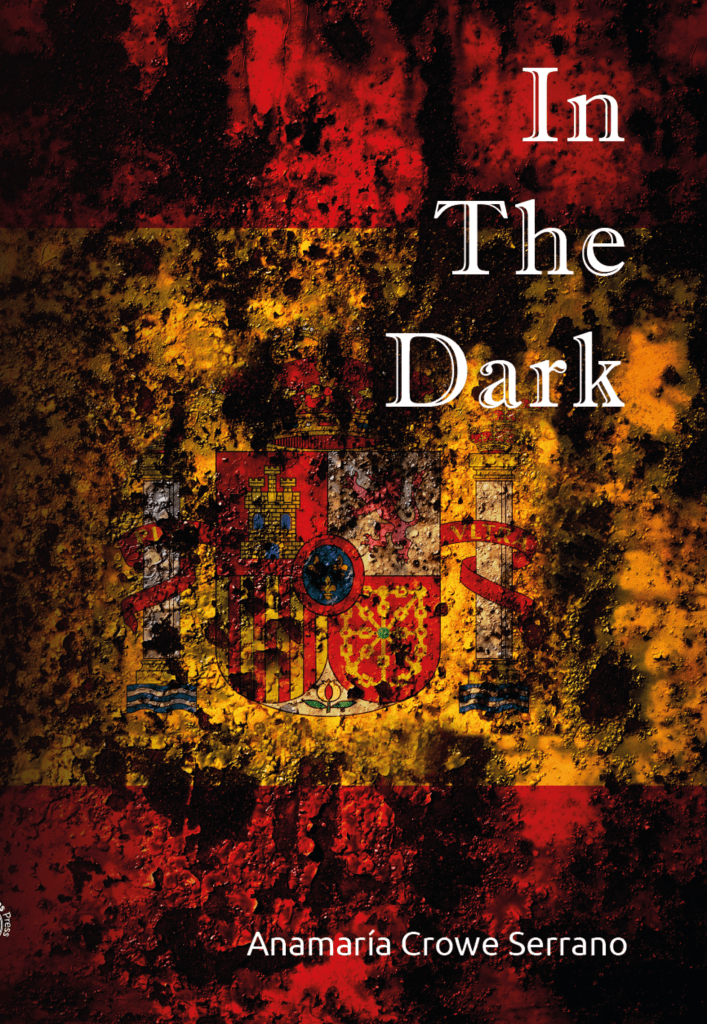
You’re very welcome to my Writers Chat series. We’re going to chat about your debut novel In The Dark (Turas Press: Dublin, 2021), which, from its captivating opening brings you right into the world – the house – of sisters María and Julita in north-east Spain, 1937.
Disclosure here: I’m working on a trilogy set in the Spanish Civil War in the north west region of Asturias (prompted by my father-in-law, an extract of which was published in Reading The Future (Arlen House: Dublin, 2017)) so I was particularly interested to read about your personal connection to this period in Spanish history. I’d love to talk about personal connections, the difficulties in writing from personal history and on the ground research but that would take us too far away from your wonderful novel that we’re here to discuss!
SG: I read In the Dark in two sittings – I couldn’t put it down! So let’s start with the writing. From the brilliant opening and daring style, you exhibit real control over the language, moving the narrative along and introducing us to the characters in ways that keep us engaged and make us care.
Bar Joselito. The bustle and Joselito’s widow, Encarna, are one and the same thing. Encarna is tables and chairs. She is indoors, outdoors, shutters open, sawdust, chalkboard. She is tinkling glasses, barrels and rolling laughter…..
I don’t think I’ve ever read an opening in this style that brings character, setting and movement into such sharp and wonderful focus! Can you talk to us about the style of this novel and how it was for you to write in this form? Did your vast experience of poetry and translation influence this style?
ACS: Thank you, Shauna, for taking the time to read my novel so carefully and do this interview. Your own trilogy sounds fascinating. I really look forward to reading it. It seems that there’s a lot of interest in the Spanish Civil War at the moment, especially in Spain, of course, now that this generation have the benefit of hindsight from a remove of several decades.
Coming back to your question, I’m delighted the style grabbed your attention because style is the most important thing for me. I’ll put up with a less than satisfactory plot in a book I’m reading if the style is beautiful. Finding the right mode of expression took a while, but rather than force anything, I put the writing to one side for a year or two and did a lot of reading instead. It was a bit scary not having a clue how to go about writing, but I had to trust that the ideas and inspiration would eventually come. And they did, thanks to three books in particular whose styles jumped out at me and made me realise that what I was after was something very spare and evocative with a strong visual dimension. It’s no coincidence, I suppose, that the three writers of those novels are also poets. They were Han Kang’s The White Book, translated by Deborah Smith, Maryse Meijer’s Northwood, and Robin Robertson’s The Long Take. I loved the fragmented structure of their work, the silence of their blank spaces.
As you point out, my own background in poetry definitely influenced what I liked and how I wrote. I’m used to brevity and enjoy playing around with mood, distilling it to create more impact. When it came to writing from the point of view of the man hiding under the stairs, his thoughts fell naturally into an even briefer style that reflects the cramped dimensions of the space he is in, the lack of air, the disintegration of his state of mind.
SG: Thank you for such an expansive answer. I’m not familiar the writers or the three books you mention but I really must seek them out – the idea of the silence of blank spaces is fascinating.
The main story of In the Dark – and there are many stories within this novel – isnarrated by the sisters, María and Julita, and through the secret the house holds – the man locked in the dark room under the stairs. I enjoyed the alternating viewpoints and how, as the plot was revealed to us, you brought in more narrators, including, the interesting (and brief) one of Julita’s son Fernando. Can you talk a little about how this device of multiple narrators served to unfurl the plot while keeping a steady pace?
ACS: The characters that take refuge in the house were good fun to write, I must say. In the beginning, I brought them in partly because I wanted to build tension – with all these people around it becomes more difficult to take care of the deserter under the stairs. But somehow their lighter side emerged and it was interesting to examine the way they could change the dynamic between the sisters. You are right that they also serve to provide their own stories. In some ways they highlight the horror of being stuck in the middle of the war with no homes of their own, unsure of what will happen to them even when the war ends. Through their political comments I also wanted to convey the complexity of the political situation, how ordinary people could only have a partial understanding of what was happening in Spain because the information they got in the media was censored or very biased. In that regard, Fernando, who is home on leave after almost a year, brings hope to the house, but knows he can’t really tell the family the truth about the disorder at the front because the family wouldn’t believe it. He, too, unwittingly becomes part of the censorship machine.
Something else that I was keen to get across was the power that creativity and the imagination have in helping us endure difficult circumstances. That’s where Fina’s character came in. She’s the dancer, the antidote to war, completely misunderstood and even ridiculed by characters who hold extreme views that lack flexibility or imagination. But her presence in the house is transformative for more open-minded characters.
To keep the plot moving forward with all these different voices vying for attention, I had to pace it carefully, making sure I interspersed the voices sufficiently, giving them turns to speak. At the editing stage, I had to juggle them a bit to make sure it worked and that no particular voice dominated.
SG: What a wonderful insight into your writing and editing process, Anamaría! In the Dark is set in Teruel, north-east Spain in the winter of 1937. We get a very convincing picture of the city yet it felt like a character, even an everycity – almost universal. Part of this is because of the descriptive and sensory language you use throughout the book to place us with and in character and show us the narrative drive.
“It’s easier for a village to swallow the darkness when there’s a rumour of light”
“Every cell in María’s body is bursting for fruit. A town is a living thing, she thinks, her progress almost static through the rubble. But shops and houses here are no more than skeletons of buildings. A town is its people. Dies with its people. Wheezing, spluttering, crumbling to demise.”
“Time expands and the world shrinks to the size of the house.”
Can you talk a little about the importance of place in In the Dark?
ACS: That’s a great question. For me, there are always two aspects to a place: the physical aspect – which has to do with its architecture, layout, geographical location – and the emotional aspect – which is its people and everything that goes with that. The two are usually interlinked, but people are ultimately more important than buildings, so in some way, there is this very human element to places that makes them what they are. I’m always struck by devastated cities in war zones. They hardly can be called cities anymore because so much of them is demolished, but as long as there are still people living there, trying to survive, we refer to cities as though they still exist – “this is such-and-such a place”. Once the people are gone, though, the place ceases to exist and is written into history: we say “that was such-and-such a place”.
The relationship between people and place gives the city its personality. There are places like public parks, libraries, that to me are a bit like friends. You go there to connect with the place because you want the feelings that it produces in you, you feel comfortable there in a similar way to when you pick up the phone to a friend because you want that particular connection. I think it’s why it seemed quite natural in the novel to personify the city sometimes. Like a character, as you say.
When the city changes dramatically because of a war – or a devastating flood like the one I witnessed in my teenage years in Bilbao – it’s as if some part of you dies with it. There’s a huge sense of loss. It takes years to rebuild a city and, even then, it’s never the same again. This, too, was something I wanted to capture.
SG: I love the idea of the public places/amenities being friends. You paint a convincing picture of sibling relationship – and all its nuances – in the characters of María and Julita and is, at times, most interesting seen through the eyes of the man in hiding who says they are “so unalike as sisters”. They represent different factions in the war – Nationalist/Fascist and Republican/Democracy – as well as different types of femininity and in their relationship to motherhood. Can you talk about the characterisation of the sisters?
ACS: With María and Julita I wanted to create characters that were complex and that, in Walt Whitman’s phrase, contain multitudes. I wanted characters that revealed one face to the world but who had another side to them that was less obvious, less understood. Julita, who supports the Communist party on the Republican side, comes across as bossy and insensitive, belittling others as a way to purge her inner pain – her husband was drowned in the war, after all, and her two older sons are fighting at the front – but in her own way she is selfless, staying in the besieged town to help María, and always doing whatever she can to help the war effort. María, on the other hand, appears to be generous in offering her home – albeit reluctantly – to the refugees, but she is grieving for her infant daughter, and finding it hard to cope with the tension that is building with the arrival of the refugees. She also dithers in her political position. She’s not fascist, but she questions what is happening in the Republic, the methods that are being used to bring about social reform.
I wanted their relationships with the important men in their lives to be less than straightforward too, in some ways because that’s often how life is, but also to hold another mirror up to the many ways that life and human relations disintegrate during war.
One key thing about the sisters that I wanted to convey was their resilience and their ability to adapt to the horrors of war. Women everywhere form the fabric of society, which is especially important when times are tough. It is a role that has long been undervalued across the world, but the quiet domestic role women play is like the soul of society – the unseen pulse that is vital for everyone’s wellbeing. Both María and Julita fulfil this role in their very different ways.
SG: For me, one of the strongest voices was that of the man in hiding. You capture the physicality of his space – both physical and head – through your use of space and the page. One particular scene that struck me was one in which he experiences PTSD when he is trying to think of María:
…still pain persists–if only I had a cigarette [….] my whole body flinches–if only I could deny this body–disown it–be someone else…think–think her dark–her fingers slim around me–think the soft–her mouth–her tongue–the bullet–no–think–think […] think her soft–his guts–his–fuck–NO–María think–please–María please–his hole–his head….
Can you talk about the role of this narrator and how he holds the book together – being the voice of the war and of the house?
AMC: During the Spanish Civil War, like in many other wars, there were men who spent long periods of time, sometimes decades, in hiding so as not to have to fight. They lived in tiny spaces, the size of a coffin in some cases, or in attics, or under a stairs, with just one person, usually their wife, helping them. It was a horrific existence. In Spain they’re called “topos” (moles) because they often went blind from living in the dark. That’s what gave me the idea for this character.
He deserted from the war because of the atrocities he saw at the front and because his political allegiance shifted as the war progressed; he doesn’t want to fight for a cause he no longer believes in. I think many people in Spain at the time didn’t quite understand the full implications of the political situation and were misled by their leaders. George Orwell, famously, understood it but even though he wrote Animal Farm from his experience of the Spanish Civil War, that aspect of the Republican government’s vision for Spain doesn’t seem to have filtered much into the public consciousness. I wanted the man under the stairs to have the kind of clarity that other characters lack. It is ironic that his voice, the only one that seems to understand what’s happening politically, is silenced. He is physically in darkness but he has insight into the government’s mismanagement of the country, whereas the other characters are getting plenty of information from the media but, because of the censorship and propaganda, they are the ones in the dark as to what is really happening.
His desertion also represents a moral dilemma that runs throughout the novel. He is doomed to think about his position, which in many ways is an act of cowardice, while he watches everyone in the house through a crack in the wall. Even though he has no contact with anyone except María, he has his own kind of relationship with everyone in the house from his observations of what’s happening. He’s like a common denominator no one knows about. I hope readers might be conflicted about him – and other characters – even though there’s good reason to be sympathetic towards him. The more I researched this novel, in fact, the more I realised that people fell victim to circumstance in the lead-up to the war. It would seem wrong to judge from our privileged remove. Yet the moral questions remain for us to mull over.
SG: Although In the Dark is about war and how it destroys countries, villages, communities and families, it is also very much about the domestic and how women (María, Julita, Encarna, Fina, Senora Rojas) and children try to uphold a sense of normality and keep both families and communities surviving. I particularly enjoyed the struggles and triumphs of birthdays and Christmas and the joy – the times when “for a whole evening no one has thought of the war” – when in reality, “Moral is a fragile thing. Like happiness.”
How important was it for you to convey the domestic alongside the war?
ACS: This was one of the most important things I wanted to convey, apart from the political conundrums. Books about war, whether fictional or factual, seems to focus mostly on the fighting, on strategies, supplies for troops, but there is less mention of the women and children and older or infirm people who are living in the middle of a war zone, struggling desperately to stay alive in their own homes. I was very curious about this and wanted the novel to portray the resourcefulness of women. They had to adapt constantly to all kinds of deprivations – freezing temperatures, electrical outages, no running water, little fuel or food, poor access to medical services, blocked and/or dangerous streets, children at home because schools are closed, homes damaged by shelling… The list is endless.
The amazing thing is that humans somehow manage to rise above extreme hardship and find ways of bringing moments of joy, like the festivities you mention, into the day. It’s important to do that in order to counterbalance the grief and uncertainty. In the novel those celebrations tend to revolve around the children, but it’s clear that they are as important for the adults. So is the semblance of normality that you mention. The family play cards in the evening as they always have done. When the women go out, they make some effort to look well even though they have very little. They wear lipstick or use a good hat pin. It’s important to cling to some element of dignity, of one’s former self. It’s what keeps people sane.
SG: It’s so true what you say about how we “manage to rise above extreme hardship and find ways of bringing moments of joy into the day” – and that’s something that you capture so well in this novel, In The Dark.
So we’ll end this Writers Chat, Anamaría, with some short questions:
Beef or rabbit stew? Lentil stew. I’m vegetarian.
Mountains or beach? Mountains.
Red or white wine? White.
Music or silence when writing? SILENCE!
What are you writing now? I haven’t started writing yet, but I have an idea for another historical novel about an Irish man most people never heard of, but who was influential in changing the course of Western literature.
Thank you so much, Anamaría, for such a open and informative answers about your process and characters.
Readers who want to know more – here is a selection of articles by / interviews with Anamaría Crowe Serrano:
Paul, You’re very welcome to my Writers Chat series. We’re going to chat about The Garden (New Island: Dublin, 2021), your new novel which, in the words of Mia Gallagher is “vividly compelling.” I’d agree with Mia – and the critical praise that The Garden is receiving – it is a novel that compels you to keep reading and at the same time makes you pause and contemplate the land around us and how we treat it.
Cover image of The Garden
SG: Can you tell us a little about the origins of the setting and the place of The Garden? In interviews you’ve referred to your own experience of working in Florida some years ago but I wonder if recent climate change and world events had any influence on the narrative at all?
PP: I lived in the states in the 1990s, and in Florida for 3 of those years. I was captivated by the place; its tropical beauty, the palm trees, the flowers, the rich and diverse landscape. And the diversity of the people too – from Cuba, South and Central America, and all over the US and the world. And of course, the never-ending sunshine. I was really stimulated by the place – it felt almost hyper-real to me; and the vibrancy and the literature too from the Caribbean impressed me. You know it’s such a contrast to the dark and the rain-sodden streets I grew up on in Dublin. Florida to me felt like life on the edge, in many different, wonderful, and dangerous ways. It’s an exciting place. I guess that all came together in the novel, The Garden; and as you say the environmental crises that the everglades in particular face was in mind; that this place, a sanctuary for birds, reptiles, and endangered species was under threat seemed to be a suitable arena for the human drama that enfolds in the novel.
SG: To this reader it really felt like the perfect arena for the drama in The Garden. The novel moves at a pace but through the Irish narrator Swallow, also provides introspection. What struck me most about the novel is the atmosphere – at once foreboding and idyllic – that you create and how we’re brought into this. For example, when we’re with Swallow as he drinks his bitter coffee in the morning, we really feel we’re there with him:
Waking the senses. First the sounds of birds and men shuffling. The smell of earth, and the greenness starting to take back, or the swamp beneath us trying to reclaim what belonged to it – without human interference, all elemental.
It seems you have taken the advice of your creative writing mentor Lester Goran andgone for (at least) one beautiful phrase per page. Can you speak a little about your use of language and description?
PP: I’m a writer – in prose – who does not like long winded description or exposition. I don’t like novels that seem too long, and are full of filler, or writers who spell out what is at stake or say, this is the plot. I aim for a purposeful narrative with pace, and menace that allows for the left-field, and the meaningful digressionary moment or scene; so many novels I read have the most artificial dialogue like the two characters talking with one another are actually listening to each other. That’s not my experience. I like also the short novel. And I like writing to get to the point without any puff. That being said – I also aspire to balances, cadenced sentence where the rhythm of the language is honoured, and there is a control of tone. These things are very important to me as a writer and a reader. In terms of description, I like Mark Doty’s definition of description as being encoded desire. My background in poetry means that I rely on motif, image, and metaphor in my prose, or that I go to them at least – in subliminal, subtextual fashion, so that you are creating grooves, and patterns in the reader’s mind, so that one phrase – however inconsequentially sounding can detonate something impactful in the reader’s mind.
SG: I love how you put that, creating grooves and patterns. Mark Doty has some really interesting things to say about description. I love his book The Art of Description.
The Garden could be described as a fable, and the journey the characters are on echoes the journey of ‘the ghost’ the orchid at the centre of this tale; they are precious, illegal, homeless and all struggle with identity – many of them, including Swallow, try to find themselves in the power the Garden seems to offer, escaping from memories. As he says swinging in the hammock, “I was seeking answers but all I had was starlight.” Others, such as the visually blind (but all seeing) Harper, and his marking of the map (“circling with the pencil, spiralling inwards”) know the real perils. Can you talk about the fable and, at times, the moral element to the narrative?
PP: It’s not something I planned or set out to do; the fable like quality of the novel emerged as I was writing; and in terms of a moral element, yes one could read the novel as a warning and such, but if you look at the characters’ lives and the messy relationships between them, I think it’s fair to say that the moral code of the novel is complex. If someone wants to read a moral into the novel, I say, be my guest; but there’s probably different and contradictory ways to read the novel; and the moral code of its characters is complicated. Certainly, I think when you write a novel, you want it to be more than just a yarn. For a novel to last or linger in the memory, or for it provoke questions in the reader’s mind, I think there does have to a kind of sub-soil of searching about all sorts of moral questions. So writing it, I thought about Camus – and his stranger – justice divine and civil, and I thought again about Gatsby and what he devoted his life to, and the small scenes where a whole moral world was revealed.
SG: I’m nodding at this – the connections with Camus and Fitzgerald – how “small” scenes reveal a whole moral and complex world.
The men who live in the barracks in the Garden co-exist with brotherly love infused with marine/army rules. This comes from both Swallow’s influence as an ex-marine as Blanchard’s right-hand man and from the men’s invisible place in the official world. It can be seen in the friendship – and rivalry – between Swallow and Romeo who appears with a “muted swagger” and “looked as if he didn’t know how to shake the shadow of a malaise”. Yet it’s also evident in those outside of the Garden, looking for financial gain from those inside (drug money, the ghost orchid). Their names – such as Black Fox, Catfish – tie them to ancestry, land and deeds.
Did the theme of male friendship and rivalry emerge as story developed or was this a theme that you began with?
PP: Well, the whole writing of the novel was a exploration in the dark – that’s what my subconscious came up with after I had written in a kind of fever dream; so yes, male friendship and rivalry is important to me, but I did not set out to write about those themes; I followed the story, thoughts and feelings of Swallow; it’s his story after all, but male friendship and rivalry does, as it happens, interest me; in a way, how could it not; shifting allegiances, friendship, brotherly love all of these things as a boy, and a man I have grappled with, embraced, and otherwise, but again that’s not to say the novel is a didactic playground to explore in a scientific way; human impulses, male or otherwise, are full of the irrational, the impulsive, and the passionate. And the novels is such an elastic form it allows you to unpack these things, but that’s got nothing to do with the writing of a story; the story is what matters, not its themes when one comes to write. As ee cummings wrote, ‘since feeling is first, who pays any attention to the syntax of things.’ You see, I even contradict myself.
SG: How fascinating to learn that the whole writing of the novel was an exploration in the dark!
Moving on to another theme that interested me as I read and, like masculinity, appeared like a shiny thread. Swallow is aware of his privilege as a white male and often muses about this – including questioning Meribel about how she stays with a racist like Blanchard. She tells him that he (Blanchard) thinks her “white”. Swallow’s privilege is also seen through Lola’s plight as a precarious worker/lover/female. Towards the end of The Garden Swallow realises “The desperate lengths people will go to for beauty”.
These parallel threads seemed very current and I wondered, given that in many waysThe Garden is timeless, if race and gender formed part of the wider commentary on the structures of society and power, or if they emerged through the characterisation?
PP: Again, I wasn’t writing a novel to make a wider commentary on anything. There are better ways to do that, I think. Critics, and reviewers can put these kind of labels on the book, and so be it, but I’d like to get a way from the kind of reading of the novel, this novel, as a commentary, or vehicle for anything other than what it in itself – a story. If a writer sets out with a message it will damage the writing and the book. So, I think it would almost be disingenuous of me to say yes, this novel is a commentary on whatever. It is, of course, or could be seen as such, but I also think the novel is so various in contemporary letters and allows a writer so much freedom – that I welcome different readings of the novel, but I am hesitant to even suggest what themes readers should look for; race and gender are centrally central to how the story unfolds, but I also think of course they are – when Swallow looks around him this is what he sees. And it’s a brutally unequal, unfair world he lives in.
SG: Isn’t it wonderful how such depth of themes emerge when you are faithful to the characters and the story?
Nature as a character is the main driver of story and back story. I am thinking here of Swallow’s back story about his brother and of Lola’s brother who drowned. It feels that the more the characters try to get back what was taken from them (identity, agency, power), the more they fight for and with each other (for the illusion of profit and gain), and the more natural disasters such as dreadful hurricanes happen. As nature is disrupted, people become more vicious. Nature, like God, is “wrathful”.
Three events spring to mind as examples of the beauty of connection turning into the ugliness of pain – the beach scene with Romeo, one of the visits to the swap where a gator makes itself known and one of the final scenes involving Swallow and another man’s ears.
“Each season,” Swallow comments, “I wondered what it was we were doing…Sometimes I wondered whose dream I was in.” Later he says “Part of me thought I was going out of my mind, as if we were existing on some foreign orb, living out the game-time of another species, playing our roles badly, with violent and careless glee.”
It seems as if the knowledge of how land and people are all connected is almost within reach of Swallow’s consciousness but then it slips away. In the swamp he says, “Something in my physical being knew this was a trespass of sorts.”
What are your thoughts on this?
PP: I think Swallow is struggling with the reality which has manifested itself about him; he’s wondering like a lot of people how he got to where he’s at. He’s displaced, confused, and paralysed to a certain extent. I like your reading of the novel above, and I agree with it; I’ve dramatised those tensions. [Thank you!] I think the novel is interested in that notion of trespass – literal and otherwise; what transgression has been committed, and what of it. Does it keep the reader wanting to know what happens next. Much of my efforts in writing are in the compositional domain however; it’s like make the thing first, and then see what it means, if it means anything. It goes back to the writer writing without full knowledge; the writing is on a journey too, if they knew what message and themes they wanted to explore exactly, the game would be up. Better to work in ignorance, or partial ignorance; I feel now that the book is published that my guess is a good as yours. There’s a notion in lit crit of Intentional fallacy, a term used to describe the problem inherent in trying to judge a work of art by assuming the intent or purpose of the artist who created it. I kind of agree with this.
SG: Oh we could get into a whole Writers Chat about intentionality and purpose – and we could also talk about the death of the author (Barthes) and what the reader brings/re-writes.
I totally agree with what you say about the writer writing – make the thing first, then see what you’ve made. In a way, the writers job is not to make the meaning, it’s to allow the meaning to emerge.
On a personal note, I have to say I really connected with Swallow as both a character and narrator. Besides wanting to have a whole discussion on his name and back story, I’d love to see what happens next to the Garden. Will there be a follow on book or do you think you’ll return to the character of Swallow in another form or genre?
PP: I’m working on a new novel – but I’m loathe to get into it; I’m a little superstitious about talking or writing about something I’m writing; rather work in silence, in order not to break the spell.
SG: I totally understand that – I’m sure what emerges will emerge – and be as intriguing and magical as The Garden.
We’ll end this Writers Chat, Paul, with some short questions:
Mountains or beach? Beach
Swamp or bog? Swamp
Coffee or tea? Both
What flowers are in your garden now (if you have one!)? I’m working on some bamboo
Oh! Bamboo! I can hear it in the wind! Lastly, what are you reading now? Damon Galgut’s The Promise
SG: Thank you for your deep engagement with our Writers Chat, Paul and I wish you continued success with The Garden.
Photograph of Paul Perry (Courtesy of the author)
Paul Perry is an award-winning poet and novelist. He has published several collections of poetry, most recently Blindsight (above / ground press, 2020). He also co-authored four international bestselling novels as Karen Perry, including The Innocent Sleep with Penguin Random House. He directs the Creative Writing Programme at University College Dublin. The Garden is his debut novel as Paul Perry.
Thanks to New Island and Peter O’Connell Media for providing an advance copy of The Garden.




 Shauna Gilligan Writer