The International Translation and Linguistic Rights Committee (TLCR) of PEN International are hosting their 6th Annual Poetry Marathon, amplifying voices from diverse linguistic communities.
Today I listened to a moving and urgent poem written and performed in Kalaallisut by Julia Pars (Greenland) “Where are you, world leader?” (Link opens YouTube – poem is 2.34 mins)
You can tune in every Saturday for a new poem and listen back to previous Poetry/Video Marathons. English, Spanish, and French translations provided.
On their website PEN International explain the background to the International Translation and Linguistic Rights Committee:
Founded in 1978, the PEN International Translation and Linguistic Rights Committee (TLCR) works to defend linguistic diversity and promote translation as a vital act of cultural solidarity. From its early efforts to expand access to world literature to its pioneering advocacy for “minoritised” languages, the Committee has consistently challenged the political and cultural forces that marginalise languages and the communities that speak them.
You can read more about PEN International and indeed, consider joining Irish PEN/PEN na hÉireann which aims to promote friendly co-operation among writers in every country in the interests of literature, responsible freedom of expression and international goodwill.
I’m delighted to chat to Tania Hershman about her latest hybrid publication it’s time: a chronomemoir (Guillemot Press: Cornwall, 2025) in my Writers Chat series (watch Tania’s book launch here). This post is published today, 31st December, also the date of the release of the first audio section of the book: audio sections, read by Tania, will appear on the day they appear in the book on Tania’s free Substack.
SG: So Tania, the book, it’s time: a chronomemoir begins (first) on 31st December 2018 and finishes (at least by the last date noted) 26th April 2021. It seems – to this reader anyhow – both a linear and circular book, a series of questions and answers to and from (your) self in relation to time and the space you’re within at every given (sometimes labelled, sometimes not labelled) time. A fascinating premise in and of itself, can you talk about the origins of this book?
TH: The seed of an idea for this book was planted more than a year before I started writing it! I was driving back from holiday with a friend, and Cornwall to Manchester is a long, long drive. I was driving, and at a certain point my friend asked how much further to go – and I noticed that I answered in hours, not miles, in time not distance. And then suddenly, my brain exploded with thoughts about what we as a society, as a culture, have made time into. This is quite dangerous when driving… At the next service station, I started making a list of time-related topics I wanted to explore, and I also told my friend she couldn’t go to sleep and leave me to my thoughts, she had to keep talking so I wouldn’t be distracted!
I didn’t start the book straight away because I was finishing a PhD, and wanted to get that done before beginning something new – although I’m generally always writing at least two things at once. As you see from the first page, I had told myself I would start on Jan 1st 2019 – but couldn’t quite wait that long! I had never written a book like this, which I call “hybrid creative non-fiction”, but I do these days give myself permission to write the books I want to write in the way I want to write them, so I started writing to find out what the book might be. It started as a diary and then, as you know, certain things occurred to make me loosen that!
Cover of “it’s time: a chronomemoir” by tania hershman showing aubergine coloured illustrations of seeds, trees, apples, pips, worms, teeth against a faded purple/cream backgraound. Image thanks to Tania Hershman.
SG: And I loved how your response to “things occurred” is recorded in the book too. I have to remark on the beautiful design and production, especially given our leaning towards digital things. I love the soft cream against the aubergine purple which highlight the beautiful cover art. Can you tell us a little about the design and how it fits with the themes of the book?
TH: It’s such a beautiful object, isn’t it! I can’t take any credit for that, it’s what the wonderful Guillemot Press does – my publisher, Luke, adores paper, different thickness, different weights and types, and I knew after he published my first hybrid book in 2020 that he would also create something gorgeous. He commissioned an illustrator he works with regularly, CF Sherratt, to design the cover, and I was blown away when I first saw it. I had worried that they’d come up with something involving clocks. But what he did took the themes of the book and presented them in such a surreal and stunning way, with a seed, a tree, and a kind of flow-chart. I love it and I love the colours. This is one of the joys of working with small presses who care so deeply about each book!
SG: It’s a joy to have input into and direct feedback on the physical book, isn’t it? Early on, on page 11 to be exact, you say,
Time is everything: waiting, patience, duration, longing, memory, hope. Time is change, evolution, decay. Time is life, and death. Time is what makes everything relative – I am happy, then I become happier. Time is outside me, keeping me in check and giving me something to rebel against, and my organs and tissues also take time in their own way.
I found myself returning to this passage (having underlined it and then wrote beside it ‘time!’) as I read the book, again when I finished it, and yet again when I started to formulate these questions. It seems to encapsulate what your book is about: the mind and body of time, our minds and bodies in time, your book written in multiple times and spaces, and therefore read in infinite time and spaces, and places. It brought to mind (!) Roland Barthes’ theory of the death of the author – once a text obtains a reader, the author (as they were as they wrote the text) no longer exists, and therefore is no longer needed. It struck me that in reading your text – and thinking about it in my own time – I was, as Barthes might (not) say, re-writing your text within time. Have you any thoughts about this?
TH: My thought is: I love it and, as the author of the original words, I can’t imagine anything better than a reader rewriting the text. I have always – first in my short and very short stories, then in things called poems, and more recently in more uncategorizable pieces I call “hybrids” – left space for a reader, invited them in to be part of the creative process. I don’t like to read things I considered to be sewn up tightly, with no space for me, I find it can feel suffocating. You’ve paid me the greatest compliment, you never know what a book might do when it’s out in the world – and I never assume when I am writing, even though this is my tenth book, that I will have even one reader, that it will be published at all. I write the sort of books I would want to read. I love the process of writing so much, that’s what is the most important to me. Everything else – your comments and questions, anyone who chooses to get in touch to talk about a book – is a wonderful and joyous bonus!
I decided recently, after someone who heard me do a short reading from the book at a Zoom event asked if there would be an audio book (which my publisher doesn’t do), that I would start reading the book in audio instalments, publishing each one on my Substack on the day they appear in the book, which, as you know, is (loosely) structured as a diary, starting on Dec 31st! It’s completely free to listen to, and I am looking forward to what thoughts and questions and comments this new format might bring forth from listeners. (Sign up here if you’d like me to read to you; older instalments are available if you miss the beginning – or, rather, beginnings!)
SG: Having attended your Zoom launch and heard you read, I will look forward to hearing you read more passages. You channel Einstein and Woolf throughout the narrative and I visualised them, like book ends on a bookshelf, or a frame around your multiplicities of stories in and of time, guiding, prompting, and more than anything, playing with you. Alongside, them of course, like a backbone to this book was Viktor Frankl’s incredible attitude to and use of time, which saved him, as outlined in Man’s Search for Meaning. Did you feel the presence of guiding lights of science and literature – essentially your two halves – as you wrote, as you thought?
TH: I love all this too, thank you for sharing how you see it. I never have a plan when I write, I write for me, I write to find out what I want to say. Einstein has been coming up for me for many years, since studying physics as an undergrad. My adoration of all things Virginia-Woolf-related has been more recent, I only began reading her work about seven years ago. Viktor Frankl’s writings saved me when I was in a very dark place, and they save me over and over whenever I need reminding. I have never thought about it in terms of their presence as I write, but I have so many voices in my head, and a psychic once told me that Einstein was watching me and found me very amusing, that I wouldn’t be surprised if they were some of my guides! Virginia is coming up in almost everything I write these days, so she is a bit of a stronger presence now, especially since the novel I am working on is partly set in a post-patriarchal society (see below).
SG: I had so many quotes marked throughout to ask you about and now that I find myself writing these questions, my overall sense of what I took from your book focuses on:
“wonder” (p215)
how your writing knows more than you do, teaches you things that you are only just realising, “about time and timeliness and living inside and outside the cage of time, the cellphones and the satellites with their rubidium atomic clocks” (p158)
your description of your imagination “where you imagine, and where you listen to all the clocks inside you, ticking” (p179),
How you address your Future Self and Past Self and the Growing Block
How we are not just beings we are doings (p234), thinkings (p236)
And the overall sense that you’re writing about the writing process as much as life in time – the re-reading, the fresh eyes, the taking time slowly, and when you are stunned by James Woods’ words about Woolf “the novelist who has become nothing less than time itself” (p226), I too was stunned into thinking that actually, if Woolf is time, and the novelist is time, you as novelist/writer are also time. So what this reader has re-written is that it’s time: a chronomemoir could also be entitled it’s Tania….Have I misunderstood completely or touched on a metanarrative that runs through the book?
TH: Once again, and at the risk of becoming very repetitive, I love this! As I mentioned, I don’t plan before I write anything, and I write to find out what I want to write about, what is preoccupying me at the time. It has turned out, in the few book-length works I’ve written and the one I am writing now, that I am always writing about the writing process in some way, because it really is fascinating to me, how and why I do what I do (which has changed and changes over time), which I have been doing in one way or another since I was a kid.
I learned after my first book, a short story collection, came out in 2008 that once a piece is out in the world, it is not for me to say what it’s about, so there is no possibility of you or any other reader “misunderstanding” anything, that’s just not an option. Everything on your list is something that is important to me, that I’ve been thinking about for many years, and at the same time I know other readers have taken other things from the book. It’s for me to let it go and be whatever it wants to be for each reader, as that co-creation you so beautifully talked about.
SG: And that ability and willingness you have to “let it go” beautifully shines right through your work, Tania.
The text – your text, your thoughts – is punctuated by google searches related to time, and poems relating to (it seemed) your state of mind within a particular stage of time. The Covid Pandemic hit the world in the last third of the book and you bring us into Lockdown Time. I smiled at this, as it seemed oddly appropriate to the book you were writing, as if time itself was having a laugh, playing with you – just when you seemed to have completed your research and interviews with scientists and biologists and other specialists in time* and thought/wrote your resulting theories/thoughts, along came the world and asked for a pause. Looking back on this now, how has your perception of and attitude towards time changed as a result of both your book, the pandemic and the uncertainty of life?
* too many to mention here but I loved Jordana Cepelewicz, I adored the 365 knitting clock by Siren Elise Wilhelmsen, your experiment with Kwa time, no time, not using Gregorian time, the poetry…..
TH: I definitely thought that Time was having a laugh, as my conversations with Time were showing me that Time has a wicked sense of humour! Me documenting my own Illness Time a year before Covid arrived seemed very interesting “timing”, or perhaps “Time-ing”, too. I finished the book a few years ago, and funnily – or perhaps not – it was only over the past year, as we were proofreading etc… to get ready for publication last July, did I make some major shifts in my own approach to the kinds of time our society insists on us, which I can do as someone who works at home and for themselves. I decided to stop wearing a watch about a month before the book came out, and I really like that. If I need to “know” the time, there’s always something around that can tell me. I also decided to stop making such a hard and fast distinction between what we call “weekdays” and “weekend”, because I noticed there were things I gave myself permission to do on weekends, like turn off the Internet and spend the day reading, which made me feel peaceful and happy, so why wasn’t I doing this during this thing we call a “week” too? I feel that Time approves. I’d love to hear about any other things people have done to mess with Time!
SG: Lots to consider there, Tania!If Time plays with us, we can play it wit, too. We will finish up with some short, fun questions:
Coffee with or without milk? With – oat milk.
One or more cats? One cat, a different beautiful companion from the one who kept me company while I was writing It’s Time.
Watch, clock, mobile time or sky time? As I mentioned above, none of those.
What are you currently writing? I am in what may be the final stages of a book that looks like a more “traditional” novel, but is still my kind of playful. I am imagining a version of our society where people like me, happily moving through life alone, are the norm, and not only has marriage fallen out of fashion, there is no such thing as a “couple” either. It’s a thought experiment! I am alternating between sections set in this society and sections set 100 years or so before, around the time of WWI, where I imagine this shift could have taken place. So it’s a sort of alt-history/speculative fiction, and I am having fun making changes to the historical timeline, and also – given that I don’t plan anything – constantly finding my characters surprising me! I wasn’t expecting women’s football to play such a huge role in the historical sections. I’m having SUCH fun, which, for me, is what writing is all about. I want to finish it and also I don’t want to finish it, I will miss them all terribly.
That sounds amazing – both as a process and what the text might bring to the reader. Lastly, what are you currently reading? I am always reading several things at once: I read mostly sci fi and fantasy novels at night, they help get me to sleep, the most recent being Poisoned Saints by Sarah KL Wilson, which I was completely gripped by. I have also just read a non-fiction book, Night Magic, by Leigh Ann Henion, about the joys of nighttime and darkness, which is such a beautiful and thought-provoking book. I am definitely going to run one of my Unbox Your Words Zoom writing workshops inspired by Night Magic at some point in 2026, and I chose some sections as Unbox Your Words writing prompts for December over on my Substack.
Welcome back, Liz. We’re on Part 2 of our Writers Chat about “Aftershock” (Turas Press: Dublin, 2025). Part 1 can be read here.
Cover image of the novel “Aftershock” showing darkened ruins of old buildings against pink and orange skies.
SG: One of the standout take aways from Aftershock was the human need for the answer to that three-letter question why! Dom Sebastião searches for technical and structural answers to the natural disasters (“nothing must be allowed to obstruct this rebirth”) whilst also mercilessly searching for the traitors who plotted to assassinate the king; Father Malagrida tries to increase his power and influence over the vulnerable by preaching that these disasters happened because of God’s wrath on the people of Lisbon (“Lisbon is paying for the sins of her people.”)
It seems these two men epitomise philosophies of the day. Were you also looking for answers through this character-driven plot which explores societal beliefs and structures in late 18th – Century Portugal?
LMcS: I agree with you that Dom Sebastião and Father Malagrida embody two diametrically opposed world views regarding the ‘why’ of the disaster – belief in reason and science as an approach to investigating the causes; and submission to the Divine Will. This was a real polemic of the day, though in practice, many people imbued with the principles of the Enlightenment also considered themselves good Catholics. But there is no doubt that this clash of world views existed at the time. It still exists, in many parts of the world.
What makes this question so crucial in the context of the novel is that these opposing world views not only insist on two conflicting stories regarding the origins and reasons for the earthquake happening, but flowing from that, opposing views about the response human beings should have to it. Some of the most extreme of the clergy, including Father Malagrida, insisted that believers must submit to the Will of God and pray for mercy for their sins, a position which not only did not aid the rescue and recovery efforts, but in some cases actually obstructed it. The spirit of scientific enquiry, in contrast, sets out to rebuild and also, to devise ways of safeguarding against future events of the kind. Dom Sebastião really did conduct an extensive survey – today we would call it qualitative research – that asked survivors in great detail about the phenomena they experienced. This was one of the earliest systematic data-gathering studies of earthquake effects, and a significant precursor to modern seismology. He also oversaw the design of earthquake-resistant buildings that used an internal wooden frame – not so different from the principles used today.
The other aspect of the ‘why’ of the novel concerns the motivations of some of the characters – why they acted as they did. In spite of the vast amount of documentation and information about the ascendancy of the Marquis of Pombal before and especially, in the years after the earthquake, there are still many, many unanswered questions about how and why events unfolded as they did.. For example – why did the king, on the night of the attempted assassination, decide to travel in a different carriage? And why did the nobility misjudge and colossally underestimate Dom Sebastiao? And more – all question that came to me as I was researching and writing. I did not try to provide answers to those questions but rather, allowed them to remain, for the reader to ponder. I think Chekhov would approve of my decision – didn’t he say something about the function of art being to ask questions, rather than answer them?
SG: I particularly enjoyed the descriptive language of Aftershock which serves to illuminate period detail and the landscape of the novel. We have the lush language used to describe the earthquake (through the eyes of Dom Sebastião); in “Living The Shock,” a beautifully crafted chapter which explores the impact of the disasters through a number of characters, we have descriptions that are as strong and impactful as the fire and flood they depict:
“There must be shelter, some corner or cellar, no, a place in the open air, the very centre of the square, perhaps, where tumbling debris may not reach. But now, through the swirling darkness, the skeleton of the Palace of the Holy Office of the Inquisition, this place which has passed judgement up on the final days of so many heretics, is lit up in glimmering spangles of yellow and orange.”
“The flood has not reached the Rossio. But that is a small mercy, perhaps no mercy at all, for all four sides are engulfed in flames. Leaping high in the air, they are devouring every morsel of floorboards, beams, window frames, every scrap of dry material integral to the construction of the edifices, grand and humble, every bench, table, carpet, curtain, tapestry, wall hanging, melting every glass or metal object, sacred or commonplace, silver plate, coins, golden altarpieces, artisans’ tools, grills and gates, chalices, kitchen utensils.”
“Impossible to believe that life had continued after the earth swallowed up so much of the city in just a few minutes, at the very time when the faithful were attending mass …The night is dark, light is needed, fire gives light and the memory of the terrible destruction inflicted by the fames must yield to the continuation of life.”
Language (and conversation) itself, of course, also plays a key role in the narrative:
“Rumour, gossip, the smallest detail, the slightest misunderstanding, had a way of infiltrating minds and tainting judgement, as the smallest drop of ink colours an entire pitcher of water.”
Did you enjoy writing the period detail?
LMcS: I really did. Just as I mentioned my desire to immerse myself psychologically in the perspective of the different characters, I found it fascinating to also inhabit the physical world, as far as I was able to with the information at my disposal. It is exciting to see how places and objects and the natural world, perceived through the eyes of the characters, can generate entire lines of thinking and insights. I also loved the process of gathering period detail – it felt like time travel through diaries, maps, architecture, streets. But the real pleasure was when the detail became atmosphere. A kind of emotional landscape.
That said, what I enjoyed most was what those details allowed me to say about the characters and about the society. Period detail became a way of showing how the physical world shapes human fate, especially in a disaster narrative. So yes, I enjoyed it, because it served the novel’s deeper questions.
SG:I’ve been to Lisbon multiple times though I can’t say I know the city well. I thought the Lisbon evoked in Aftershock is at once familiar and strange (not withstanding the period differences) and is, for this reader anyhow, the main character of the novel. The built environment and the key role it plays in how lives are lived, who survives a natural disaster and who doesn’t, who re-builds the city and for whom it is designed. Can you talk about the role of the city-as-character?
LMcS: Lisbon in Aftershock is absolutely a character for me. I wanted the city to have a kind of double presence: familiar enough that readers can recognize its rhythms, yet strange because the disaster reshaped the same streets, structures and spaces we think we know.
By showing Lisbon before, during, and after the shock, I wanted readers to feel the city exerting pressure on the characters just as much as the earthquake does. Its architecture, its beauty, and its fragility all shape the plot. The characters move through Lisbon, but Lisbon also moves through them. The city’s destruction and reconstruction becomes a moral and political arena, which is why it takes on such a vivid, almost human presence in the novel.
SG: Aftershock puts me in mind of the work of Hilary Mantel; the research is vast but seamlessly contained within character motivation and setting. You provide an extensive bibliography in the Acknowledgement section. Could you talk about your approach to the research needed for this novel? And for readers looking for writing historical fiction advice see this excellent article over on writing.ie.
LMcS: I started off with just one book – This Gulf of Fire by Mark Molesky – then got another one about the earthquake, and several more. I soon began to notice the emergence of the character who would become my protagonist, the hero – or anti-hero – and at that point, I pivoted and began reading biographies of the future Marquis of Pombal, and also of the key people in his life. There is a vast amount of literature about the earthquake, and I was fortunate to be able to read some primary sources – actual eye-witness accounts of the disaster, some of them original manuscripts. It was a process of starting with a wide, fairly scattergun approach until I found my subject, and then focusing my attention on my subject, and on ancillary topics that illuminated it. I really enjoyed it! The trouble with research is that if you enjoy it too much, you can find yourself down the rabbit hole and the book might never get written! So at some point, you have to call a halt. Thankfully, I did. Eventually.
We will end this chat, Liz, with some short questions:
Lisbon or Porto? Lisbon – I’ve never been to Porto! But I definitely want to visit.
Last city outside of Ireland visited? Glasgow – back visiting old friends.
Best historical novel you’ve recently read? I’ve been re-reading Hilary Mantel’s Wolf Hall trilogy – hoping that something of her colossal craft might rub off! I’ve just finished Bring Up the Bodies, about to start on The Mirror and the Light.
What character in Aftershock most surprised you? Dona Eleanor, the Marquis’ wife. I thought she would challenge him more as his methods became more brutal. She didn’t.
What are you writing now? I am working on some short stories and I am at the rough notes stage of my next historical novel.
With thanks to Turas Press for the advance copy of Aftershock which can be purchased here.
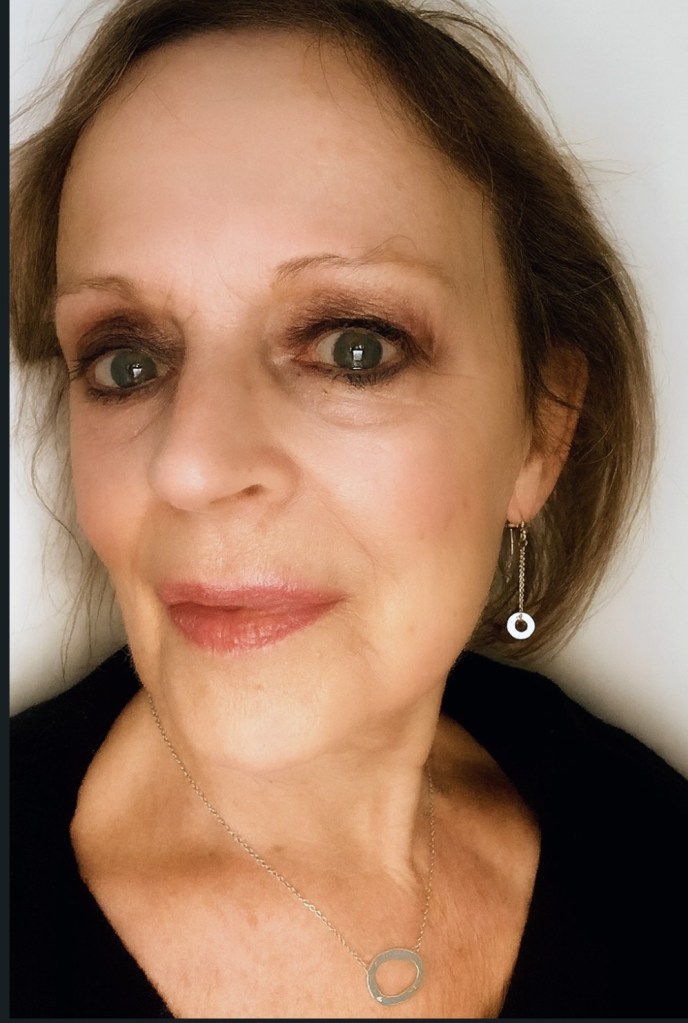
Photograph of writer Liz McSkeane, courtesy of Liz McSkeane.



 Shauna Gilligan Writer