Writers Chat 69: Mary O’Donoghue on “The Hour After Happy Hour” (The Stinging Fly: Dublin, 2023)

Mary, you are very welcome to my Writers Chat series. We’re here to discuss your short story collection The Hour After Happy Hour, a collection which has been described (rightly!) by Mike McCormack as “Measured and ceaselessly inventive.”

Cover image of The Hour After Happy Hour showing the title and author name in white writing with an illustration (of women) in shades of blue. Courtesy of The Stinging Fly.

SG: You’ve stated on Arena that The Hour After Happy Hour took ten years to write and in The Irish Times that “The book moves through waiting places and limbo states, very often situated in emigration and transit.” Can you talk about what the act of writing means to you – do you think it is in and of itself a limbo state?

MOD: Thank you for hosting me as part of your series, Shauna. I’m pleased to be in conversation with you. Yes, the stories in the book travel the course of ten years, during which time I, a Clarewoman, have lived and worked in both the southeast and northeast of the United States. The oldest story in the book is “The Sweet Forbearance in the Streets,” written in 2013; the youngest story is the closing story, “The Rakes of Mallow,” written in the early weeks of 2023. So, a decade’s worth of work. Your question accurately captures the act of writing as a limbo state. If we factor in waiting to state of limbo, then so much of writing is waiting. Waiting for a form, a voice, an image upon which the mechanism of a story, or indeed a poem, might turn. Writing might also be considered a liminal condition: transition or threshold. And honest process demands that the writer succumb to change and crossing over.

SG: Oh that’s a wonderful way into process… waiting, and then succumbing to change and crossing over. The opening and concluding stories, both titled “The Rakes of Mallow,” I thought, were brilliant. To me it felt like you distilled the essence of the emigrant experience through the lens of gender. Could you comment on this? 

MOD: The opening story “The Rakes of Mallow” was written in 2015. Not until much later did I realise I had some unfinished business with that story! In the first version I wanted to explore a small and collective emigrant experience: shared disappointments and sorrows, defiant efforts to ‘work one’s way back in’ to the country of origin, which is very clearly Ireland. The story takes its title from the 18th century song (which has had a 20th century life). In the song those rakes know themselves for “Beauing, belling, dancing, drinking/ Breaking windows, cursing, sinking.” And that “sinking” crystallized the first “Rakes” story for me: disobedient, disarrayed, disappointed Irish emigrants who were surely male and “still for Mallow waters crying.” Ten years on I wrote the story anew, this time from the perspective of women and women-identified emigrants. The second “Rakes” is more widely choral, non-protagonist centred, and in solidarity with other emigrants who are not necessarily Irish. And perhaps the biggest difference of all is that the second “Rakes” are more defiant. They decide not to go home. They come close, but they don’t give in. They will not give up their independence. I’m fond—differently fond–of both branches of the “Rakes” family.

SG: Thanks for such insight, Mary. And through the “Rakes” family you also capture the push-pull of belonging and the outsider. In “At the Super 7” – possibly my favourite story in the collection – you capture a wonderful sense of both loneliness and despair with an uncomfortable undertone. Identity, it would seem, is given by virtue of being a father, an identity which the protagonist holds onto dearly. When this is gradually eroded, he is unable to read signs, or accept his new (or non?) place in his son’s life.

“Anger teemed through him. A gale of hurt and dread.”

The lack of drama only serves to build on this anger and yet there is such sadness in the story. Can you talk about that see-saw of emotions?

MOD: I’m glad you like this story. It surfaced one evening in Boston as I walked past a hotel I’d been walking past for many years, seeing the same doorman through those years. The hotel is near a train station. I imagined this doorman taking a train as part of being in a new relationship. Those elements in play, I began to explore what a close but intense brush with parenthood might mean to him. I’m interested in parental roles that include step-parenting (I’m a stepmother), guardianship, proxy parenting. The protagonist of “At the Super 7” is ardent in his guardianship of his girlfriend’s son; he is proud of what this new role has afforded him. When his chance at that other life is ‘eroded’—I like your word here—he wishes to persist in that guardian role, and goes to extremes, and wilfully misses his ex-girlfriend’s cues and requests. I find him fueled more by love than anger. His drive from Boston to Florida is an extravagantly long, sad gesture that’s also beautiful in its commitment. Following him on those journeys allowed me to rest the fiction awhile in places I find enchanting for their melancholy: the motels, small towns, and flashy beaches he comes to know all too well over the course of his campaign to remain relevant in the boy’s life.

SG: That’s what really struck me – he is fueled more by love than anger, contrary to what we might assume of a male protagonist. Many of the characters in the collection are seeking something; many don’t know what it is that they seek. I felt that the placement of “Mavis-de-Fleur” next to “At the Super 7” made these two stories talk to each other about what it means to parent, to love, the need we have to be constantly seeking, and the sense of a widening disconnection. Can you talk about these themes?

MOD: I’m interested to hear that you found symmetry between “Mavis-de-Fleur” and “At the Super 7.” It’s not something I noticed as I placed those stories in close proximity. Now that I’m attending to what you’ve noticed, I recognise that they do share a tone, a tone that combines defiance and lonesomeness. The collection as a whole is certainly interested in failed connections—or connections that have simply grown up or given up over time. All fiction might be said to work from within the emotional breach of what is quickly said and what is truly felt. It’s a tremulous balance, and perhaps we find it especially familiar in the twenty-first century. “Mavis-de-Fleur” is my underworld story. In November 2023 I dedicated a reading of the story to my friend David Ferry, the great poet and translator who had recently died at the age of ninety-nine. I referred to having spent a lot of time “among the shades” with David (he translated the Aeneid and Gilgamesh and more). Even the shades are supplicating to be heard and known.

SG: “All fiction might be said to work from within the emotional breach of what is quickly said and what is truly felt.” Beautiful! One of the pleasures in reading this collection is your descriptive and precise language. You create a clear sense of place as well as capturing how your characters are in the given spaces – “Late Style” and “Maenads in the Terminal” are great examples, with the later bringing a wicked humour rooted in reality:

“I had passed through security in hotshot style, lights popping and voices raised high as weapons. I wore zipless, unriveted garments, and a pad that if soaked through in an hour I was to call an emergency.”

Can you comment on your writing process in relation to precise language, for example, adding in details as you edit? Using notes from notebooks?

MOD: Aren’t you’re mischievous to quote that passage from “Maenads in the Terminal”! Well, I work for accuracy—which often means not giving a damn about the proprieties. Let’s just say that that is not the only soaked pad in the collection! Accuracy is a slow, accretive process in my writing. I suspect that the word ‘unriveted’ came early in the making of that sentence; I know I was thinking about metal fixtures setting off security alarms. Maybe Erica Jong came whispering with ‘zipless.’ Thereafter the work lay in building around those words, building a stance, a condition, a psychology, and a grammar. The punctuation of ‘a pad that if soaked through in an hour I was to call an emergency’ is correct, but it makes for an intentionally bumpy reading experience. I’m devoted to grammar and all it can offer a fiction writer. I value punctuation for many of my efforts at precision. Thereafter it’s about layering version upon version upon version of a sentence, until the sentence becomes incontrovertibly itself.

SG: I’m being mischievous while also identifying! I love your explanation of your work building in, on, and around words and layering multiple versions of sentences until each one “becomes incontrovertibly itself”. A broad print for excellent writing.

Well, we will end this chat, Mary, with some short questions:

  • Bus or train? Train for the rakes and the reading. Bus for seeing a city above its subway innards.
  • Fabulous answer! Coffee or tea? Coffee: espresso and steamed milk. (Milk: whole fat.)
  • Quiet or noise when you’re writing? Some background noise when writing; quiet when revising and editing.
  • Your favourite character in The Hour After Happy Hour? A critic once said the only way they could fault Peter Carey was for loving his characters too much. My form might be a little too ruthless to have favourites. But a minor character like Rascal the dog in “S’addipana”—né Raskolnikov—I’m drawn to his simple striving “to find the last flea,” and because he “fails.”
  • What’s the next three books on your reading pile? El Llano in Flames (1950s) by Juan Rulfo, My Phantoms by Gwendoline Riley and A Shock by Keith Ridgway (one for rereading).

Thank you Mary for such insightful glimpses into your craft and congratulations again on a superb collection.

Mary will be running a seminar on Tuesday, 13th February 2024 entitled “Writing and Re-Vision” as part of The Stinging Fly Seminar Series. See here for details.

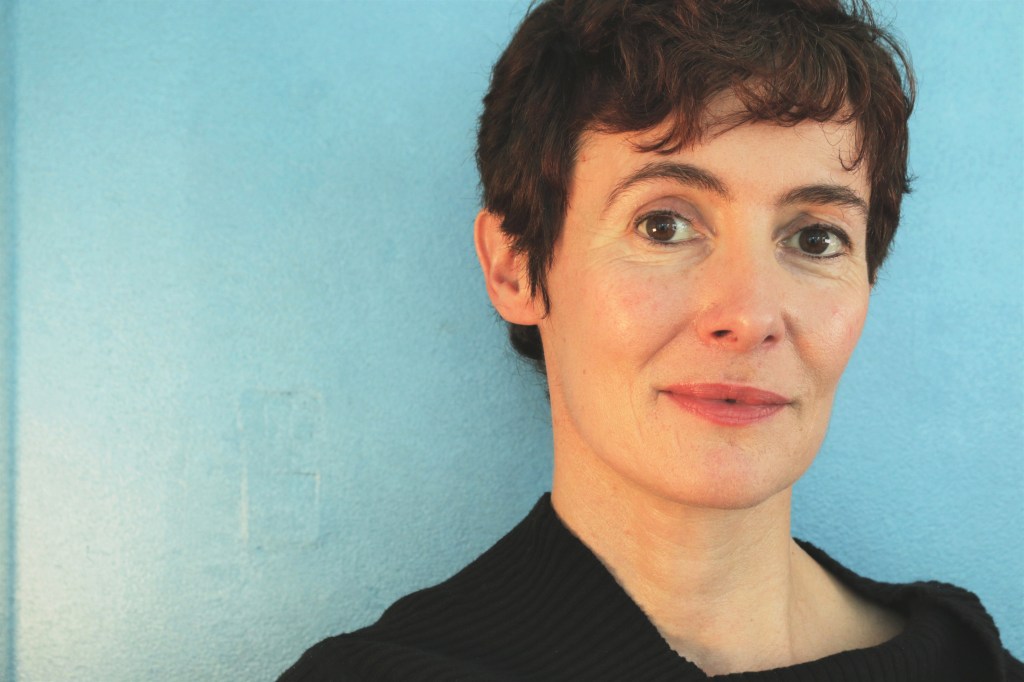
Photograph of Mary O’Donoghue courtesy of The Stinging Fly, July 2023

Thank you to The Stinging Fly for the Advance Copy of The Hour After Happy Hour and to Peter O’Connell Media for introducing me to Mary.

Order The Hour After Happy Hour here.

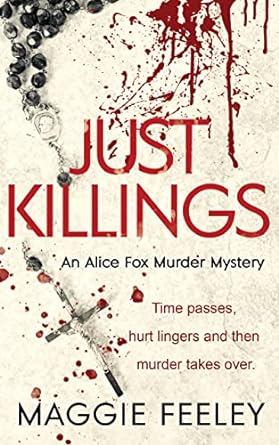
Writers Chat 67: Maggie Feeley on “Just Killings”(Alice Fox Murder Mysteries Book 2) (Poolbeg Crimson, 2022)

Congratulations on the second book in the Alice Fox Murder Mysteries. We last chatted about the first book in the series, Murder in the Academy (Alice Fox Murder Mysteries Book 1) (Poolbeg, 2021) and it’s great to be back with Alice and Caro in a slightly changed Belfast setting.

SG: Let’s go back to your writing, now that you’re deep into a series of novels – or is it a trilogy? Tell us about character development from book to book, in particular, our heroine Alice. I feel she’s grown in insight and confidence in the second book, (or maybe I know her a bit more). Does this relate at all to your experience in writing Just Killings?

MF: You’re right Shauna. The third Alice Fox mystery Wrestling with Demons was published by Poolbeg in August 2023, so I’ve got as far as a trilogy for the moment. Alice and I, and the other characters that carry forward from the first book, are all developing together, I’d say. I can’t claim to fully understand how that growth in each character comes about but I am coming to know each of them in an instinctive way and to understand how they will react and behave in each new context. I don’t feel that I am manipulating them to suit the plot rather that the context comes first and then they become more and more fully themselves against that backdrop. In this case, confronted by the distinctive signature murder of two men of the cloth, the Murder Squad with the help of Alice Fox, begin to investigate why these particular victims might have been murdered.

I’m influenced by reader feedback to some extent and think now about the amount of explanation I include. I’ve learned that readers don’t always want to know a lot of the detail I might serve up and so I’m more inclined now to withhold some of what I know about the people in the books. People like to create their own version of characters and I need to leave space for that to happen. At the same time, I’m not a pushover and when someone says they don’t want to read about social justice issues then I think, you’d better read someone else’s books because for me absolutely everything is about some form of in/equality.

In Just Killings Alice has settled into life in Belfast. She has links in Dublin and her work with young people in West Belfast fills the space left by her work in the College. As the work with the EXIT youth group deepens so do the relationships she makes there and we learn incidentally through these lives about the past and present in Belfast with the special legacy issues that the Troubles have bequeathed to people there. Individuals, families and communities have been coloured in by their particular history with the war and Alice, as the outsider, allows us to observe the detail of that in the day-to-day present. For the same reason there will always be an all-island element to the books as although some people identify almost entirely with one jurisdiction, others are constantly balancing the awkward reality of belonging in both places.

SG: I love the notion that you are growing with and as your characters grow and develop! Just Killings, unlike Murder in the Academy is framed not so much by Alice Fox’s own story but by differing government and societal responses north and south of the border to the revelations of institutional abuse by priests in the Catholic Church, and the Murphy and Ferns reports. We open with a rather gruesome description of a murder – I felt like I was in the Netflix series Criminal Minds – which firmly connects these threads. From our last Writers Chat, I know you like the story to lead you, rather than have it plotted out. Did this opening scene come at the start of the drafting process and then lead on to the second murder or did you work out the details at a later stage? 

MF: I’m always surprised when people say they are taken aback by the way that I can produce such gruesome murder scenes that don’t match their understanding of me. In the first book I found the murder hard to create but it’s becoming easier with practice! I’m not sure what that means for the future…  In the case of Just Killings I actually began with the murder that is discovered in the church in Belfast and added what becomes the initial Wicklow scene some time afterwards when I began to incorporate the Ryan report findings into the story. The structure unfolds gradually as the plot develops and I move pieces around to suit that.

You are right that I always see the structural framework behind individual and community social practice. The connection between clerical abuse in parishes and institutional abuse in Irish industrial schools has always been clear to me. The abuse by clerics of women and girls, boys and vulnerable young men was widespread for much of the last century and fictionalising those events, or their consequences absorbed me. I am familiar both personally and academically with the minutiae of how the patriarchal church and state behaved when those abuses took place and how they responded as the subsequent inquiries proceeded. I remain unconvinced by their acts of contrition and incorporating that into a murder mystery allows for the personal impact of those criminal events to become imagined and elaborated.

SG: Thanks again for the great insight into your writing self, Maggie, how a certain type of writing might be difficult at first, but with practice becomes more manageable, or familiar. A key theme in this book, for me, was family and society’s definition and denial of it. I really enjoyed how various characters’ experiences of this were shown in parallel narratives. We see-sawed from Jed’s search for answers to his family’s hidden history to Alice and Caro’s open making of their own history. This threading of the individual/ communal as much as Alice Fox links all your books. Can you talk about these links?

MF: In the 1980s, feminist Barbara Demming published We Are All Part Of One Another and cemented for me the belief in our irrevocable interconnectedness. I see feminism as the antithesis of all things patriarchal and families in their diversity are another site of that struggle. The Irish church made use of the family structure and women’s role in it to support its own power and influence at the same time as it was covertly causing havoc in individual lives. Those individual hurts and harms that were perpetrated by members of the clergy against vulnerable people placed in their care were inexcusable. As were the behaviours against those who trusted the holy personna they projected and then betrayed. The survivors of these abuses became communities of the wronged whose damage extends across generations and who, with their allies, have struggled to get some kind of recognition of how the patriarchal church has offended against them. In Just Killings I take the liberty of hitting out against the hypocrisy of the church and imagining what would happen if the victim claimed some measure of personal justice. I do believe strongly that it is solidarity that can take down oppression and Alice and Hugo as well as the survivor communities north and south are the expression of this in Just Killings.

SG: Yes, this sense of solidarity is what Alice hones and fosters in both herself and those she works with. Just Killings not only takes place in Belfast but spans the island – from the second murder site, to discussions of institutions in the West of Ireland. While this is a work of fiction, it feels that many of the fictitious institutions are based on real places. Are you at liberty to discuss your research and reading, besides the influence of your other publications such as Learning Care Lessons, on the societal structure, class and disadvantage.  

MF: Just Killings is a form of historical fiction in that it is based on the reality shared with me by survivors of abuse. From 2002-2007 I carried out an ethnographic study in the community of survivors of abuses in Irish industrial schools. I was particularly interested in their memories of the learning of literacy in those institutions and how the absence of care impacted on the capacity to learn. It is not by accident that there is a literacy thread in all my books. I have been involved in adult literacy learning for most of my working life and am clear that literacy is a real barometer of in/equality in society. From my immersion in the survivor community I gathered stories and details of experiences that allowed me to write Learning Care Lessons: Literacy, love, care and solidarity. Having unmet literacy needs is directly linked to all forms of inequality and disadvantage. In my research, care was uncovered as a vital element in learning and it is ironic then that those taken from their families into the care of the state were deprived of the most minimal level of literacy learning.  Those who preserved even some small element of familial affection were much more likely to learn than those who didn’t. These small loves emerged as hugely significant and always strike me as an undervalued source of social sustenance.

Far beyond the impoverished educational elements of life in these institutions, people shared deeply personal memories of family circumstances, of the isolation a child experienced when deprived of the company of siblings, of physical neglects in terms of hunger and emotional trauma brought about by the constant fear of corporal punishment, humiliation, sexual grooming and repeated assault. Much of what is written in Just Killings is rooted in those and other recollections of adults who survived their time in the care of the state and have bravely shared their truth about what happened behind those closed doors.

What is totally shocking is that the fictional revenge sought in Just Killings is the only detail that isn’t informed by my first hand experience and research. For the most part, survivors were avid adult learners, solidary supporters of their fellow survivors and focussed on making the best life for themselves and their families. Causing hurt to others was not on their agenda.

SG: That is most shocking indeed, Maggie. Thank you for sharing these insights into your research and most caring work. This leads us to our final focus which is the title – Just Killings. Alice reflects on this

It was a very different role to be facilitating the detection and capture of someone, maybe himself a victim, who had decided to punish acts that had incurred little or no punishment inside the legal system. Did that reluctance within the system to bring these abusers to book make it okay for someone to take the law into their own hands? Should those who are wronged be expected to behave more morally than their leaders?

I like how you, and the story, leave the reader to also reflect, without providing answers. Can you talk a little about this, for example, were you tempted to expand on these questions or even answer them for the reader?

MF: Justice is a slippery concept and I’m struck by the way the people that tend to fall foul of the law are often those that the social structures have treated most unequally. Literacy levels are lower in prison than in outside society and the two-tier Irish education system is allowed to persist and perpetuate these inequalities. It often seems as if state systems are constructed to protect the powerful, even when they behave in a negligent and harmful manner and at the same time to find the least influential at fault for even minor misdemeanours. Childhood institutional abuse, state sanctioned mother and baby homes, Direct Provision for those seeking assylum and protection from torture and ill-treatment in their country of origin are examples of systems exposed as critically flawed yet where the damage experienced is slow to be acknowledged and reform comes far too late for many users. Those who are harmed in these structures past and present are not known for fighting back.

In Just Killings I was imagining what revenge might look like in the context of institutional and clerical abuses. I am not a believer in violence as a means of tackling injustice. War is an extreme example of how physical fighting does not resolve disputes and where justice is easily dropped from the agenda. Nevertheless in fiction and especially in crime fiction I think there is room to raise the hypothesis of a ‘just killing’ in order to bring the underlying contextual factors into question. I leave the questions unanswered because the important issue is always social inequality of some kind and reconfiguring that is the only action that can lead to just and lasting solutions.

SG: Well, I would love to see, instead of just killings, a just society! Lastly, Maggie, some fun questions:

  1. Coffee or Tea? I have always preferred coffee to tea but now a chronic bladder condition prevents me from having either unless all caffeine is removed which seems a bit pointless. My current favourite herbal tea is liquorice.
  2. Dogs or Cats? I admire the self-centreredness of cats however my wife Ann is allergic to both so my admiration has to be from afar.
  3. Most surprising reader reaction to your Alice Fox Murder Mysteries? After reading Murder in the Academy someone went on a weekend mission to Belfast and did an Alice Fox tour retracing all Alice’s movements. That surprised me quite a lot!
  4. I love that! What writer would you most like to have afternoon tea with? I’d like Claire Keegan to let me into her secret of writing short, rich and absorbing stories.
  5. What are you writing now? I’m having a break while moving house, incubating Alice Fox 4 and dabbling in some short story writing.
Photograph courtesy of Maggie Feeley, showing Maggie, seated in a garden with daisies behind her. She smiles with a blue-eyed gaze to the camera wearing a blue shirt.

Thank you to Maggie for her insightful answers, particularly about her writing processes, research and passion for social justice that lie behind many of her novels. I wish her much continued success and many more eager readers!

Allow: Space and Time

reading and listening to music: the triumphs of being not myself

Susan Sontag, Pilgrimage

It started with my mobile – old, about four, five years old – which had reached its storage limit. And I thought, that’s right. Too much and too many. So instead of adding storage – more, more, more – I started letting go. Removing. Deleting. Images. Files. Applications. Accounts. Email lists. Subscriptions.

I began to hear the space, to feel my thinking, to let things be. I returned to reading for the act in and of itself, without a question in mind, without a purpose or a deadline. A gift of time. Let the body chose the words it needs: what calls? The cover – the title – the cover image – the first line – a page opened at random and a word?

And it continues. The shedding. And in doing so, a containment of sorts. An affirmation. Re-affirmation. Con-firmation. What is it we tell ourselves we need – or can release – with all this virtual and physical stuff? To remind ourselves of who we are? Or to be someone else?

Above, a photograph of books currently in progress or recently read:

  • Mary O’Donoghue The Hour After Happy Hour
  • Johanna Hedva Your Love Is Not Good
  • Amy Key Arrangements In Blue
  • The Paris Review 243
  • Susan Sontag Stories
  • Not pictured but recently read: Helen Blackhurst Swimming on Dry Land and Alison Wells Random Acts Of Optimism.

While I have disconnected myself from Twitter/X, and will, into the future, very occasionally use Instagram and Facebook, you can still connect with me through this blog.